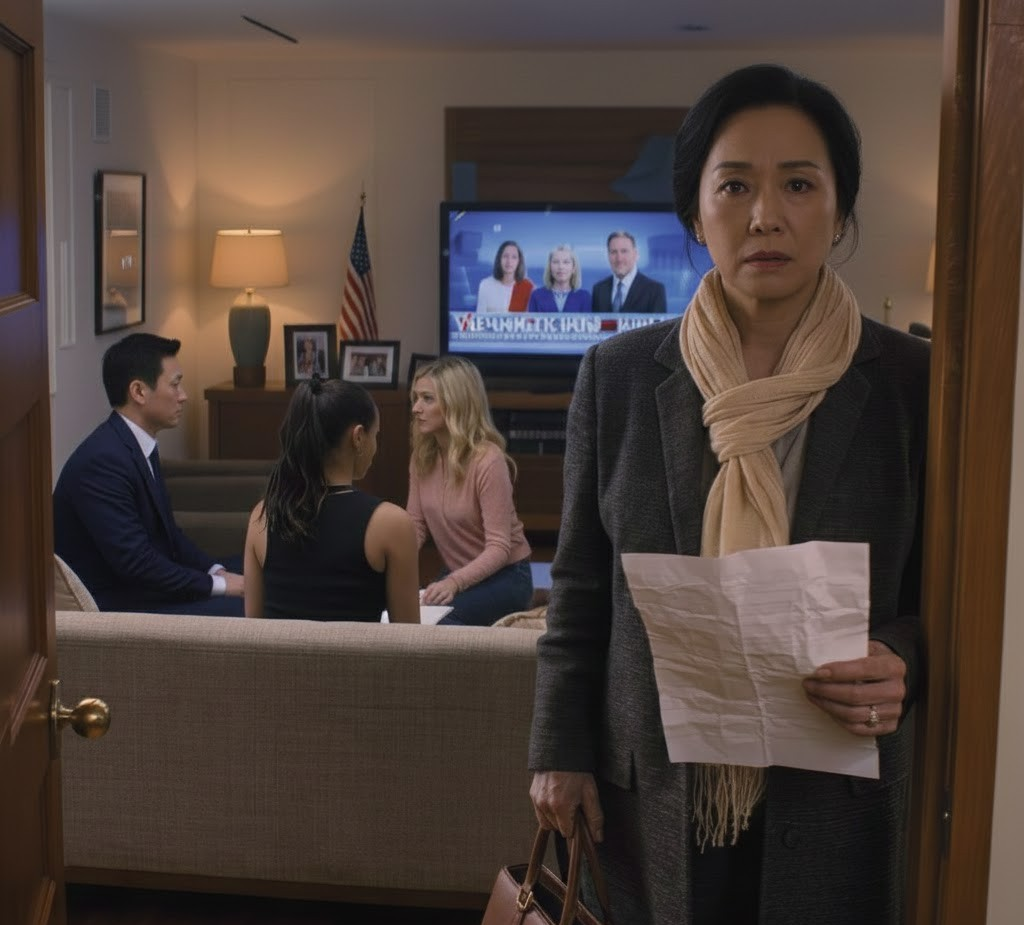
The first time she knocked on my door it was just after midnight. I had been reading by lamplight, the only sound the soft turning of pages and the hum of the radiator. When I opened the door, the hallway gasped — cold, empty, quiet. My neighbor, across the narrow hall, looked tired and harried, her eyes bloodshot and worried. She said, in a shaky voice, “Your grandchild — she’s making too much noise.” I blinked. My heart dipped into my shoes. “I don’t have a grandchild,” I said carefully. I don’t have children. The words hung in the air like a rejection. She closed her eyes, exhaling slowly, like she didn’t trust me. She adjusted the scarf around her neck, gave a forced nod, and walked away.
That night I lay awake listening to silence. I leaned against the headboard and felt the stillness press against me like a question. The windows were shut. The radiator hissed in its regular rhythm. No footsteps creaked across the floor. No whisper. No sobbing. Only the slow tick of the old clock on the wall. I told myself she must have been mistaken — tired, anxious, imagining things. Maybe the stress of her own home, her own problems, making her hear things. I tried to sleep. But the suspicion lingered.
A few nights passed. I noticed small things at odd hours — a soft creak in the floor above, maybe wood settling; a distant rustle of fabric, like a coat being readjusted; the faint sigh of air through the vents. Nothing loud. Nothing I could pinpoint. Nothing that sounded like a child. I tried to ignore it. I told myself I was safe. That it was just an old building moaning with age.
Then the knocks came again — same time, same neighbor. Her eyes wide, glare pleading. She insisted, “I hear a child crying. Every night. I know it’s you.” Her voice had desperation now. “If it’s your grandchild, at least take care of her. We deserve quiet. I have to work early.” I shut the door softly. My hands shook. I didn’t yell. I didn’t argue. I just watched her leave and my own reflection fading in the dark. I thought: maybe I should say nothing. Maybe it was easier if she believed what she wanted.
But sleep fled me. The hallway felt alive with shadows. Every breeze seemed to carry whispers. Every creak sounded like a sob. I stopped reading. I stopped leaving the house after dark. I sat under the warm glow of lamps, watching the walls as if they might breathe, waiting for a sign. I checked the locks, I closed the windows, I searched every room for hidden corners. There was nothing. Nothing but silence. And maybe — something else.
The next evening I heard it. A whimper. Soft. Low. From somewhere beyond the living room wall. My skin prickled. I froze. I listened. The sound slipped away, faint as a memory. I stood. My heart thundering. I touched the wall beside me. It was cold. Solid. No gap. No whisper of air. I stole across the room, every footstep careful, cautious. I opened the door to the hallway. The floorboards creaked. The air smelled like stale wood and winter dusk. I leaned over the banister — nothing. Empty staircase. Empty halls. Only the creak of the floor under my shoes. No sounds. No signs.
Night after night it happened. A sob here, a whimper there, soft enough that when I strained I could hear it — and loud enough that when I told my neighbor she nodded, satisfaction flickering in her eyes. Security. Validation. Proof. But every time I searched — walls, doors, attic, basement — I found nothing. No toy in the closets, no hidden door, no signs of life. Just the emptiness echoing back at me.
I wondered if it was all in her head. Or mine. I wondered if she — or I — was losing something that made reality blur. But then, one night, I saw movement. A shadow. At the edge of the living-room window. It flickered — a shape crouching, still, watching. My breath froze. I stared. The shape dissolved when the streetlight outside flickered off. My heart thundered. I grabbed a flashlight, aimed it toward the window. Nothing. Only the glass reflecting the single beam back at me. I exhaled, shaky.
I nearly called the police. I nearly told myself this was all too weird, too scary, too unreal. But in my bones I knew: if someone was hiding, if someone was pretending — they counted on me doubting myself. On me believing I was seeing things. Hearing things. On me being silent. So I didn’t call. I waited.
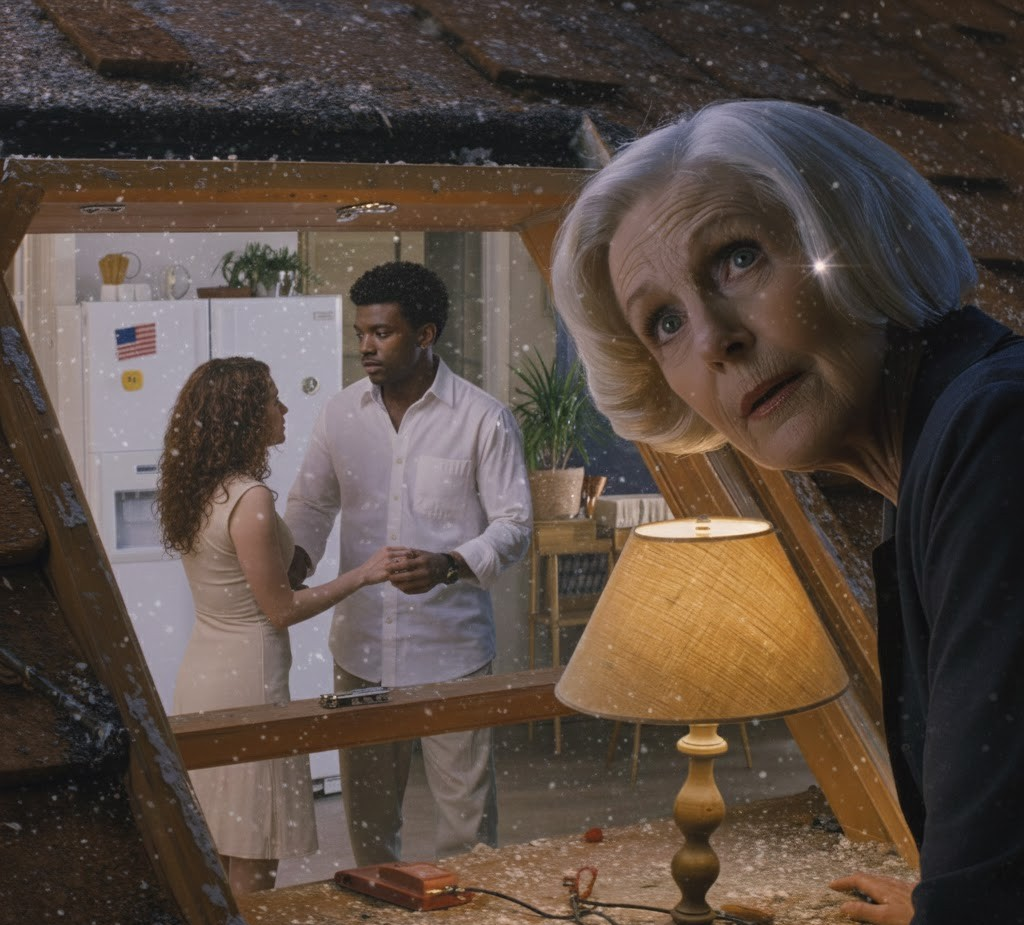
The final night came when I was almost too exhausted to notice anything — until I woke up at the sound of a cry unlike any I’d heard before. High-pitched. Terrified. Human. Real. I wrapped my robe around me, hauled myself out of bed, and followed the sound into the hallway. It echoed as if coming from the attic. My blood froze. I grabbed the broom — whatever protection I could muster — and crept upstairs, each step loud in my ears. The door to the attic stood slightly ajar. The sobbing came from within. I pushed the door open slowly, breath caught.
Inside was empty. A dusty room, old boxes stacked against the walls, beams of moonlight cutting through cracks in the roof. The sobbing stopped the moment the door opened. Silence. The echoes died. I dropped the broom slowly, dread pooling in my gut. I searched again. Floorboards creaked under my weight. Shadows shifted. My light flickered. I saw nothing. No child. No toys. No sign of any living thing. Nothing but the cold wood and drifting dust motes.
I turned to leave — and that’s when I felt it. A soft brush behind me. A breath on my neck. Ice ran down my spine and I spun around, broom raised, heart pounding, expecting a person. But there was nothing. Just the attic, unchanged. Still. Empty. I swallowed hard. The room felt alive with absence. With presence that wasn’t there. I realized then that maybe it wasn’t about what I could see or touch. Maybe it was about something older. Something that didn’t belong to logic or flesh.
I fled downstairs, slammed the attic door, locked it, and sat on the floor trembling, broom resting useless beside me. I listened. The house creaked — always old houses do at night — but no sobbing. No crying. No whispers. Just the wind outside rustling through leafless trees. I stayed there until dawn. When the sky lightened, I unlocked the door, tiptoed upstairs. The attic was as empty as always. The moon gone. The dust settled. The cold beams returned to cold silence.
I don’t know what I heard. Or what they heard. I don’t know if there’s a child hiding in the shadows, or a ghost, or a fragment of fear given life by years of loneliness. But I do know this: I no longer answer the door for my neighbor after midnight. I no longer pretend I don’t hear what she claims she hears. And I don’t stay silent — not anymore.
Because sometimes, silence becomes a lie. And a house becomes a prison of secrets.