I never expected that the road trip would end with cold wood walls and a steep drop beyond the windows. We had set out that morning under clear skies — me, my husband, and the elderly couple: Aunt June and Uncle Harold. Our child, Sarah, insisted she knew a peaceful cabin up in the mountains, remote and quiet, a perfect getaway for us “to breathe, away from all stress.” We trusted her. We believed we were going on a simple holiday.
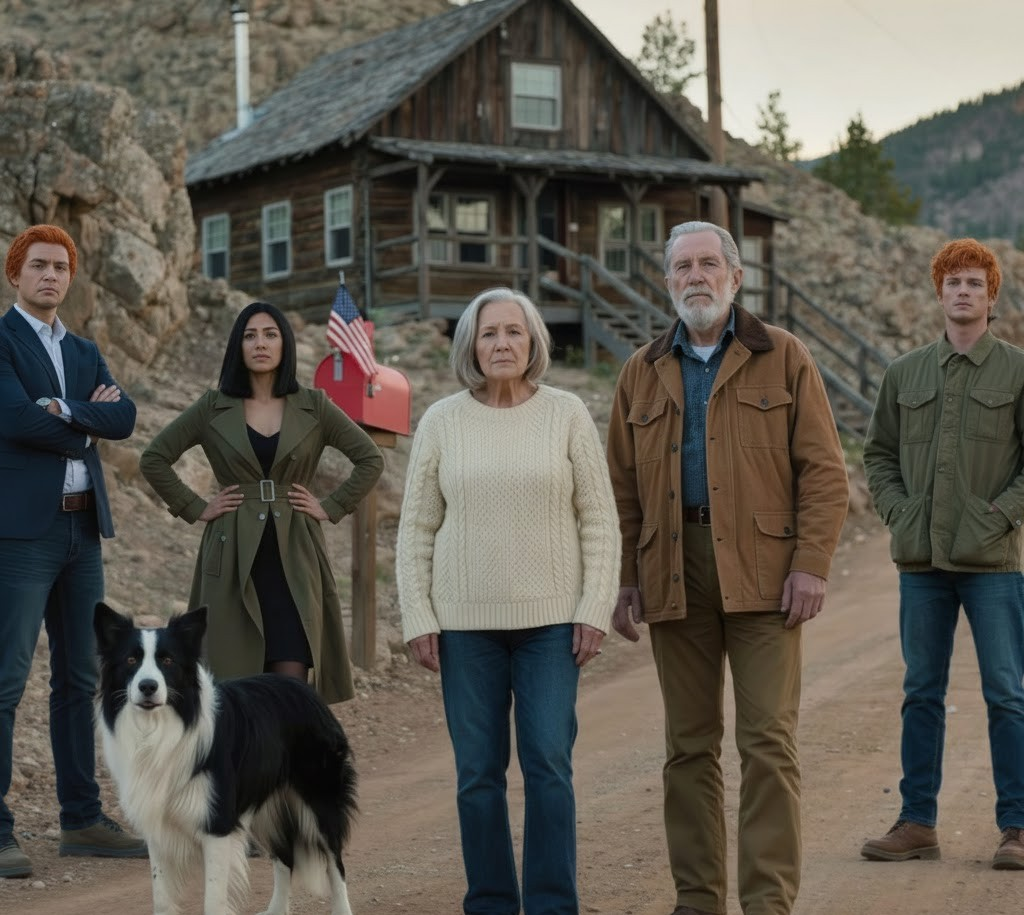
We climbed narrow roads winding closer and closer to the sky. The air grew thinner, colder. Trees replaced houses, and silence replaced traffic. Snow-tipped pines glowed in the pale afternoon light. When the cabin finally came into view — a lonely wooden structure perched on a ridge — we felt a strange mix of awe and unease. It looked old. Weathered. But solid, somehow. The door creaked as we stepped inside, the floorboards groaning under our weight. The windows were small, dusty, the air heavy with the smell of damp wood and old fireplaces.
Sarah told us she’d only be gone a short while — errands she said, something she had to fix before night. That she’d be back before dark. She handed Aunt June and Uncle Harold a pair of oxygen tanks with masks, whispered some hurried instructions, then loaded her bags and drove away. The engine’s roar faded quickly, swallowed by the thin mountain air. We stayed silent, holding the masks, staring at the closed door. The cabin suddenly felt unbearably remote.
At first, I tried to be calm. I fetched blankets, kindling, checked windows. I told Uncle Harold to sit by the window so he could watch for lights. Aunt June sat close to the hearth, wrapping her hands around a mug of tea. Shadows gathered in the corners of the room. Outside, the wind rattled the roof, muttering through cracks. The first hours passed slowly. The oxygen tanks sat on the floor like ominous promises. We watched the door. We watched the road that led nowhere. And we waited.
As darkness settled, the wind turned sharper, colder. The temperature dropped. The kindling refused to catch. The fireplace stayed cold, dormant. The cabins’ wooden walls groaned under the weight of night air. Uncle Harold coughed — a dry, rattling sound. He put on the mask, took shallow breaths. The oxygen hissed a pale reassurance. Aunt June sat close by, her fingers trembling on the handle of the mug. She looked at me with eyes wide and scared. “Why did she leave us here?” she whispered.
I didn’t know what to answer. I looked at the door. I looked at the road outside. Black. Endless. No sign of life. No headlights. No footprints. Nothing. I wanted to believe Sarah would come back. I wanted to trust. But with every passing minute, with every groan of wood and whisper of wind, trust slipped through my fingers like smoke.
Night deepened. In the quiet corners of the cabin I heard things — a creak. A distant snap of twig outside. The echo of footsteps on snow. I told myself it was the wind. The old wood contracting. My heart hammered. Aunt June held Uncle Harold’s hand tight. The masks smelled of rubber and fear. We sat in the half-light of the moon through grimy windows. The oxygen tanks hissed softly, like quiet prayers.
Time blurred. I lost track of hours. When at last small lights appeared on the horizon — car lights, maybe — my heart soared. But as they drew closer, they passed the cabin without slowing, sliding past on the mountain road. No stop. No glance. Just speeding headlights swallowed by dark trees. The cabin shook under the wind’s laughter, mocking us.
The tanks were nearly empty. Uncle Harold’s breaths grew raspy. Aunt June’s lips turned pale. I wrapped my coat around her, tried to calm her shaking hands. I looked at the windows, at the door. Nothing. The world outside seemed to have forgotten us. Inside, the cabin swallowed us in silence.
I prayed. Not for rescue. Not for help. For courage. For warmth. For daylight. I scavenged old boxes for wood, but everything crumbled under pressure — damp, rotten. I tried to start a fire again. Sparks hissed and died. The fireplace refused to wake. Outside, the wind roared, rattling the roof. I sat back on the floor, surrounded by two fragile bodies of people I loved, feeling utterly powerless.
Dawn came, pale and cold. The first pale light filtered through dusty windows. I climbed onto the porch, looked down the mountain path. Snow blanketed the trees. No footprints except ours. No sign of any traveler. No help. No salvation. The world looked empty. The sky seemed vast and unfeeling. I walked back inside, feeling the weight of betrayal pressing on my chest. Sarah was gone. The normal world was miles away. And we were stranded.
I sat by Aunt June and Uncle Harold, holding them close. I gave them the remaining oxygen masks. I whispered comfort I did not feel. I realized then — we couldn’t wait. We had to move. We couldn’t stay in a dying cabin, waiting for a miracle that might never come. I helped Uncle Harold to his feet, helped Aunt June wrap her coat tighter around her. I led them toward the door, toward the unknown. The cold wind slapped their faces, but outside was life. It was risk. It was fear. But it was life.
We walked down the mountain path, slipping on snow and rocks, clutching each other. Each step was agony. Each breath a struggle. But we moved. One by one. Slowly. Toward hope. Toward a chance. Toward being somewhere — anywhere — that cared. The cabin faded behind us, silent and bleak. The oxygen tanks left in the dusty corner, like grim relics of a betrayal.
When finally we reached a small road — a thin ribbon cutting through pine trees — a car passed. I waved. The headlights stopped. A stranger stepped out. Concerned eyes. Warm coats. Breathless questions. We collapsed onto the snow. They wrapped us in blankets. Called for help. Gave us water. Gave us kindness. Gave us hope.
The memory of the cabin — cold boards, hollow promises, empty rooms — will stay with me until I die. But so will the memory of what mattered: that even when someone abandons you, sometimes strangers — or fate itself — gives you a second chance.