The house stood silent when I first heard the words. Sunlight came softly through lace curtains, dust motes dancing in thin beams across the living room floor — our living room, once filled with laughter, warmth, and the echo of children’s footsteps. But that morning, as I sat in the faded armchair by the window, drinking my tea slowly, I realized it wasn’t a home anymore. It was a relic.
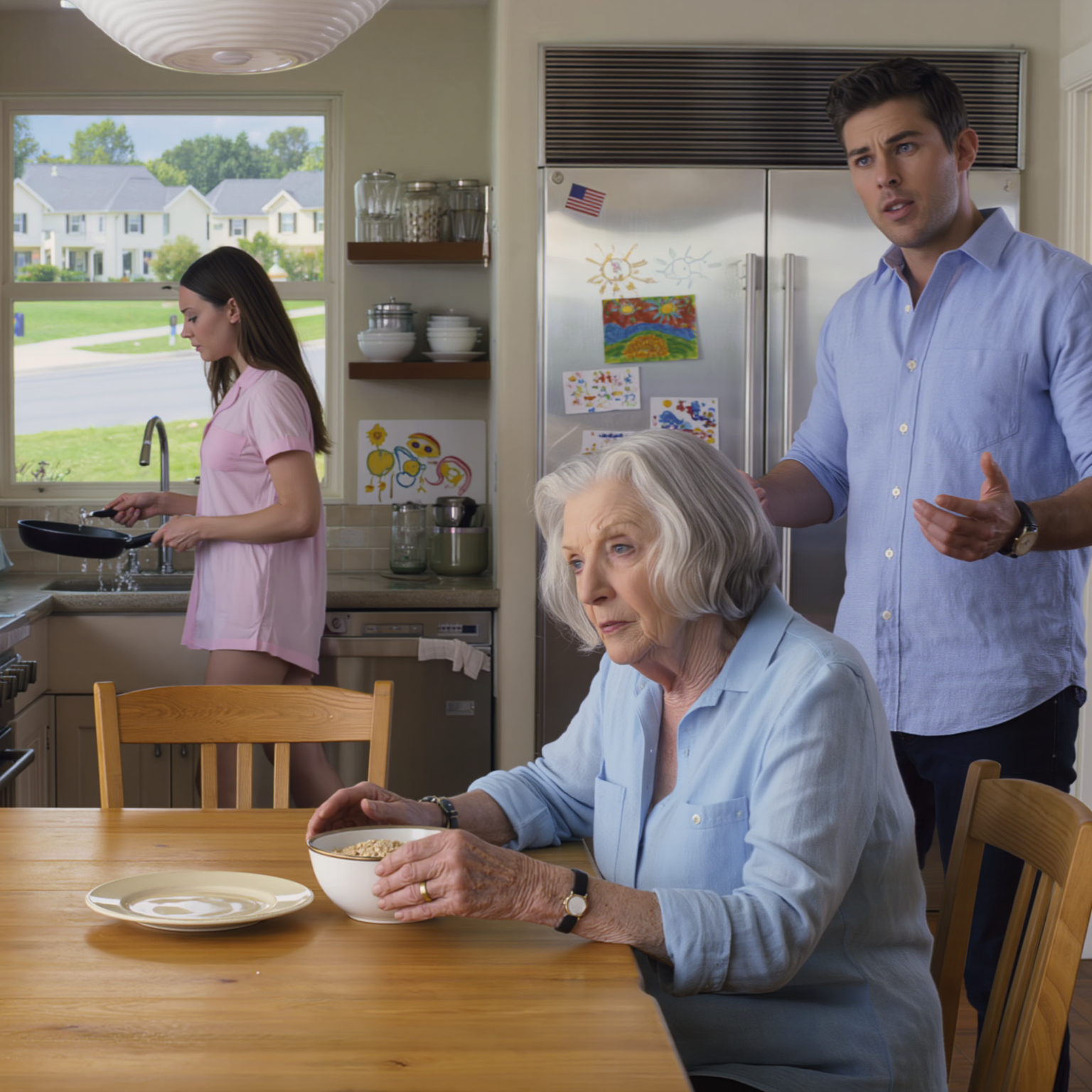
My son, David, stood in the doorway holding a suitcase. His eyes were cold, hard — empty of softness. He said simply: “Mom — it’s time. There’s no room for you here anymore.” The words hit me like a stone. I blinked, unable to believe I heard correctly. “But this is the house your father and I built,” I whispered. “This… this is our home.”
He didn’t flinch. He didn’t hesitate. “Not anymore,” he said. He didn’t even raise his voice. It was like a verdict passed in some courtroom I didn’t know existed. I watched him walk to the coat rack, pick up his jacket, and head for the door. Then he paused without turning back. “You can go on living somewhere else.” And he left. Suitcase slung over his shoulder. The door shut behind him with a soft click I still hear at night.
I stood in the empty hallway and watched light die slowly in the rooms around me. The kitchen — once filled with the scent of cookies and coffee, the sound of dishes clinking after dinner. The bedroom — where we whispered our dreams late at night, held hands, made plans. The nursery room — painted soft yellow for the children we once hoped for. All empty now. The walls felt hollow, echoes bouncing where laughter used to live.
For a long time I sat on the floor, clutching a cushion as if it could hold the memories, the years, the love. The grief swelled inside me — not just for my husband, gone so suddenly in a car accident three years before — but for the home we lost, for the family we built, for the future that became a question mark the moment David’s words left his mouth.
Friends called. They offered rooms, couches, short-term help. I shook my head each time. I couldn’t breathe in borrowed spaces. I needed something permanent. I needed a place of my own — not memories, not anger, not sadness — but a shelter. A quiet corner where I could heal and rebuild. So I packed: old photographs, small wooden furniture my husband carved decades ago, a lamp, some blankets. I left behind the rest. The empty rooms, the silent walls, the broken past.
Days later, I found a small flat — modest, cramped, but mine. A kitchen with two burners instead of a stove, a bathroom shared down the hall, a window that looked onto rooftops and chimneys instead of trees and garden flowers. I brought in my few things, unpacked slowly, arranged the lamp by the window, laid a thin rug on the floor. And I sat. Quietly. Breathing in the narrow air of new beginnings.
At first, nights were hard. The flat felt too small. The city noises felt loud and harsh. I missed the creak of the porch, the rustle of wind in the garden, the rain tapping gently on the roof. I missed the space I once claimed was mine. I missed the sense of belonging. I cried often. I mourned. I whispered to the empty walls about memories that felt too heavy.
But something else started to grow inside me: a sense of clarity. I realized home wasn’t the wooden beams or the paint on the walls. It wasn’t the rooms or the memories. Home was safety. It was the right to breathe. It was knowing that you didn’t have to fight for respect under someone else’s roof. It was waking up and not fearing rejection at the next breath. It was dignity.
Months passed. I found part-time work at a small tailor shop. I fixed clothes, hemmed sleeves, stitched seams. The job was simple, quiet. It kept my hands busy. It kept my mind busy. Some nights I took the bus home under streetlights and closed the door on a small flat that smelled of fresh fabric and soap. I lit a candle and listened to silence — not as emptiness, but as promise.
One afternoon I received a letter: from David’s father — my late husband’s firm. It was about the old house — the one David had pushed me out of. The house had been sold. The sale finalized. I never saw the buyer. I never heard from David again. No apology. No attempt to reach out. Just absence. A closed door and a signed document.
I read the letter slowly. The house was gone. Everything we built was gone. The memories, the echoes, the silent rooms. At first the loss hit me again — sharp and bitter, like a cold wind. But then I folded the paper gently, set it aside. It was just paper. Just a transaction. It couldn’t take away what no walls could hold — my dignity, my memories, my resilience.
That night, I lit the lamp by the window, arranged a few dried flowers in a vase, and sat at the small table with a cup of tea. The flat was quiet. The street outside hummed. The city moved on. But I was here. Alive. Moved on too — slowly, painfully, but moving.
I realized that losing a house doesn’t always mean losing a home. Sometimes, losing a house is what wakes you up. What forces you to rebuild not from bricks or wood, but from strength, from self-worth, from the decision not to stay where you’re not wanted. And though I lost the house we built, I found a new kind of home. One made not of walls, but of choices. Of memories that I carry inside me. Of peace I built with my own hands, slowly, patiently, with quiet steps forward.