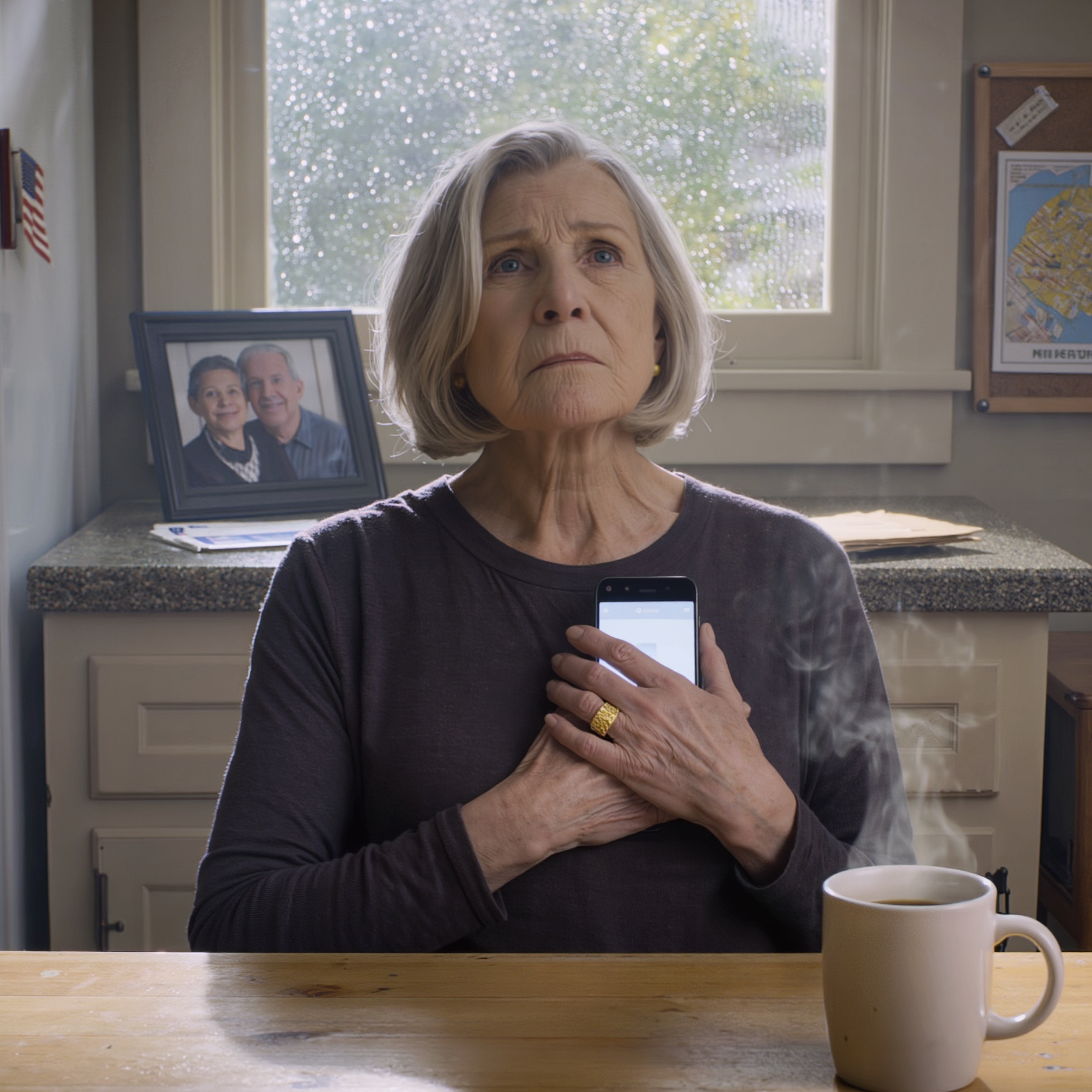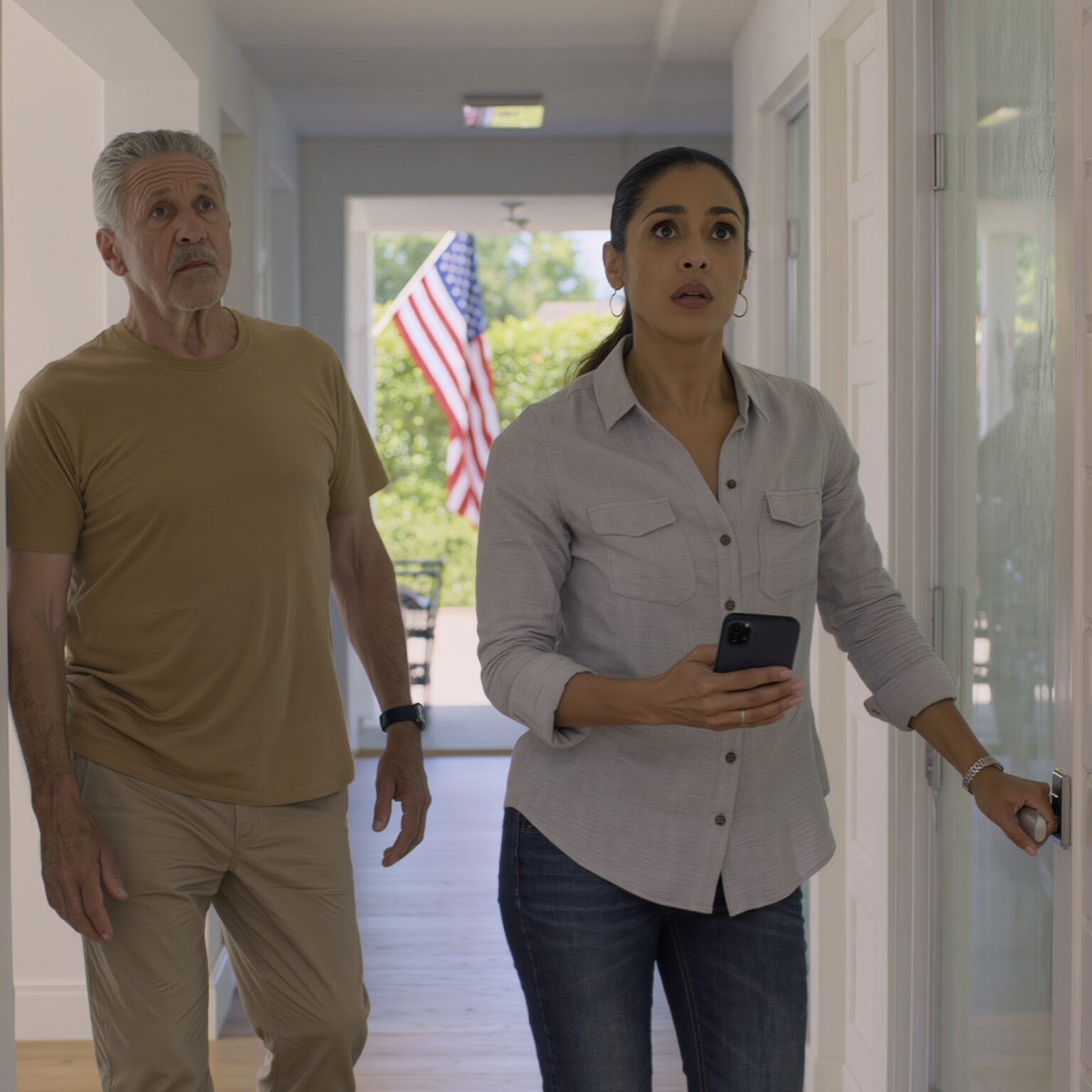
The sun had barely passed its noon peak when I came home for lunch, like I often did. I walked through the front door, expecting the usual quiet hum — perhaps the kettle warming up, the soft radio playing, or just silence. Instead I heard voices: hushed, urgent, and full of shame. I froze for a moment, heart tightening, then moved forward. The bathroom door was slightly ajar. I peeked and saw him — my husband, Daniel — standing close to our neighbor, Marianne, her back pressed against the wall, eyes wide, lips parted as though she had been caught mid-lie. The shock was so sharp I felt breathless.
For a moment I just stood there. The urge to scream, to run, to lash out, to cry — it came in waves, fierce and chaotic. But something in me clicked off. I didn’t want screaming. I didn’t want tears. I didn’t want panic. I wanted clarity. I stepped forward quietly, closed the door gently behind me, and turned off the small cabinet light. The room darkened. The voices stopped in mid-breath.
I walked to the sink, reached for the towel, and calmly dried my hands — slowly, deliberately, like a ritual. My heart still pounded, but my face was calm. I looked at them through the mirror’s reflection — Daniel, his eyes wide with guilt, Marianne, frozen. I didn’t raise my voice. I didn’t cry. I didn’t plead. I picked up my phone. My hands didn’t shake. I dialed.
“Hello, Sarah,” I said when the line connected, “It’s me. You need to come over. Now.”
I hung up. The silence returned, heavy, thick, suffocating. The only sound was the drip of water from the faucet, echoing in the small bathroom like a metronome marking the seconds. I turned toward them, looked directly at my husband, then at Marianne.
“Wait here,” I said.
I opened the front door, stepped outside, and waited. The afternoon heat felt cruel. The world felt cruel. I stood by the walkway, phone in hand, waiting for another knock. Waiting for judgment. Waiting for confrontation.
Moments later, I heard footsteps on the walkway. A woman emerged from across the street — Sarah, Marianne’s husband. Concern and confusion mixed on his face. I didn’t speak. I only stood there, motioning inside with the phone in my hand. His eyes flicked with pain. I nodded.
They walked into the house together — husband and wife. The front door closed behind them. Inside, voices rose — first soft, shaky, then raw. The kind of words spoken when trust collapses. I didn’t go inside. I stood outside in the sun, the light burning against my skin, but I felt cold, hollow. I lit a cigarette, not because I wanted to smoke, but because I needed time. Time to watch. Time to wait.
From the window, I saw Sarah’s face — tears, anger, disbelief. I saw Marianne’s face — shock, regret, perhaps fear. I saw Daniel closing his eyes, leaning back against the wall, trembling. The walls of the house — the same that once held laughter, shared dinners, familiar footsteps — held a new silence. Pain. Betrayal. Truth.
I stayed outside until dusk. The world went on — cars passed, birds landed on wires, shadows shifted. But inside, something died. I didn’t go back in. I slipped away quietly, carrying nothing but a small bag.
That night I slept in a cheap motel room, the kind with flickering neon signs outside windows, the kind that smell faintly of stale carpet and regret. I lay awake, listening to the low hum of the street, and thought about how betrayal doesn’t just break hearts — it fractures history, memories, trust. It twists familiar walls into prisons of guilt and regret.
In the days that followed, I sold what I could — the wedding gifts, the small rings, the photographs with their faces smiling into the camera. I packed up the rest, loaded the car with bags, drove far from the street where I once lived, far from the silence inside those walls. I didn’t know where I was going. I only knew I needed air. I needed space. I needed to breathe without the weight of the betrayal pressing on my chest.
At night, I stayed in motels. I walked in parks at dawn. I drank cheap coffee. I let the city’s lights wash over me. I let the noise — traffic, footsteps, conversation — remind me there were people in the world who didn’t know my story. I didn’t tell anyone. I didn’t ask for pity. I didn’t want comfort. I wanted clarity.
Months passed. I found a small apartment — modest, simple, windows looking onto a quiet courtyard. I furnished it with things I bought second-hand — a worn armchair, a small table, a few books. I turned the key and stepped inside. For a moment I stood still. I surveyed the space. It was small. It was nothing like the house I lost. It was smaller than my old home. But it was mine. It belonged only to me.
I set down the phone. I sat on the chair. I closed my eyes. I breathed. And I realized something important: betrayal can destroy a home. But only you can build one with your own dignity.
I don’t know if he — or they — asked for forgiveness. I don’t know if trust can return. Maybe one day I’ll look back and feel sorrow. Maybe I’ll feel anger. Maybe I’ll feel relief. But for now I feel the certainty that I chose myself when I walked out the door, when I called the husband, when I decided I would not stay somewhere I was betrayed.
Because sometimes the scariest step isn’t the confrontation. It’s the decision to leave.