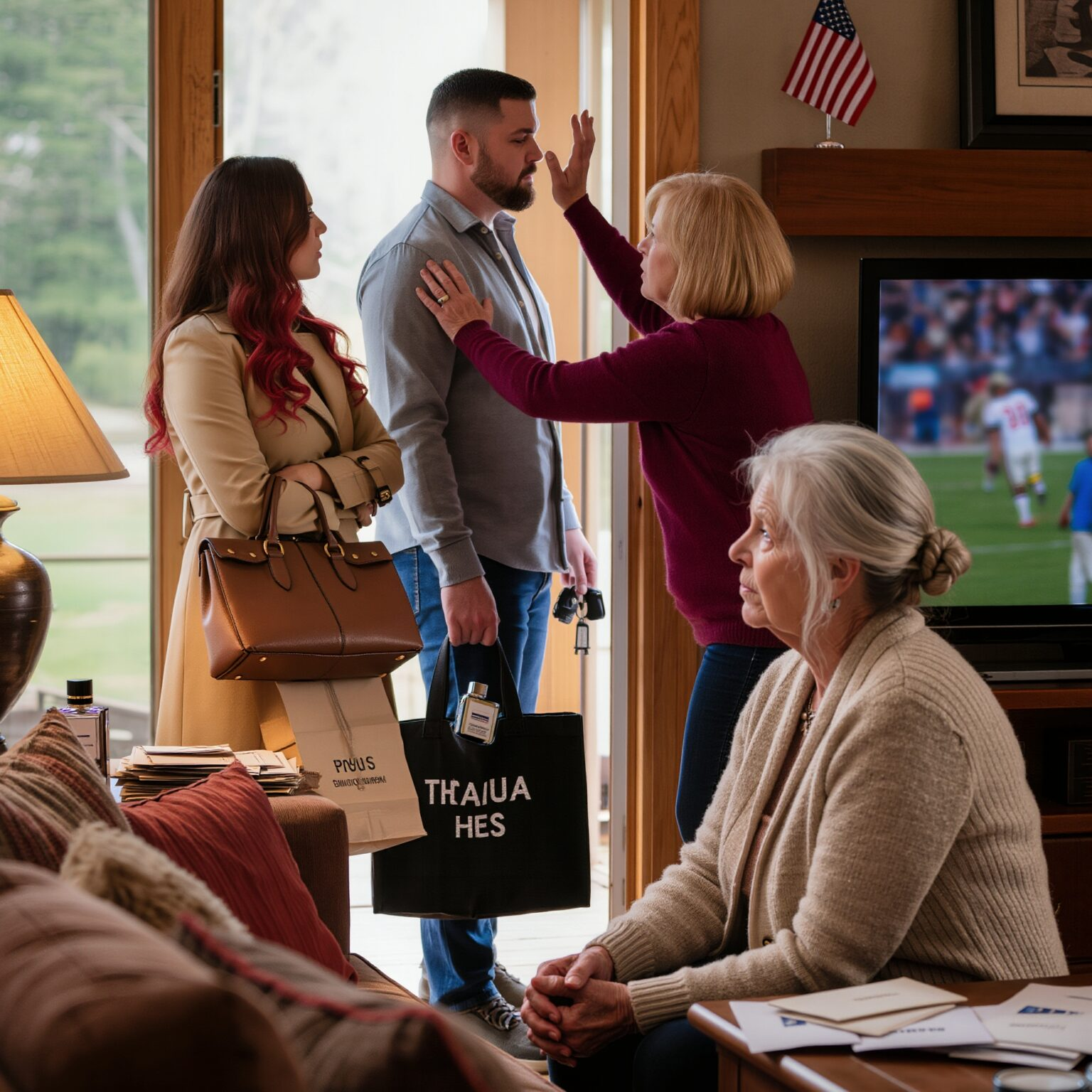
I walked into the dining room with a slow breath, the lukewarm tea still in my hand, the plate of lamb and rice balanced on my hip. The room smelled like cedar wood and spices, the table set with porcelain dishes and polished silverware. I placed the food with gentle care, smoothing the tablecloth near my daughter’s side. Candles flickered softly, casting a warm light across faces—some smiling politely, some just waiting for the forks to rise. It was meant to be a peaceful meal, a family dinner to celebrate my daughter’s new job promotion, to show unity, to laugh a little — to belong.
We greeted each other: “Salam,” “Good evening,” gentle smiles, cursory compliments. I had cooked extra for the grandchildren, bought fresh naan bread from the bakery. I had tried to make the evening about warmth, welcome, respect. I sat near my daughter, across from my son‑in‑law, and between a cousin and an aunt I had not seen in years. The youngest grandchild giggled at something about cartoons, the boy next to him murmured about school. Everything seemed ordinary — too ordinary, maybe.
Then, as plates passed and the clinking of spoons echoed softly, I heard it: a phrase whispered in Arabic. Soft. Almost casual. But the tone — cruel. Mocking. My son‑in‑law laughed, a smooth, careless laugh. A few others at the table glanced up, their eyes flicked toward me, disguised amusement, conspiratorial smirks. But they had no idea I understood. Lived in Dubai for years — spoke Arabic fluently. Understood. The words were: “هيا كانت خادمة في دبي؟” — roughly: “Was she a maid in Dubai?” The laughter bubbled up — seconds, forks paused in midair, eyes lighting up at the insult as if they shared a secret punchline. They didn’t expect reaction. They expected silence. They expected respect. But not dignity.
My hand froze on the spoon. The world around me blurred for a second: the warm light, the polished silverware, the loving daughter, the naive grandchildren — all of it dissolved, replaced by a cold clarity. I remembered dusty Dubai alleys, long days of cleaning houses, saving pennies, scrubbing floors under scorching sun, the weight of expectation and sting of foreignness. I remembered scraped knuckles, aching back, nights too short, loneliness too large — all swallowed under the pretense of survival. I remembered pride. Not the pride that demands arrogance, but the quiet, earned pride of someone who works, survives, endures.
I set down the spoon deliberately, not with anger loud or harsh, but with calm — the calm of someone who knows what they are worth. I raised my eyes slowly, looked straight at my son‑in‑law. That laughter died in his throat. I don’t think he expected me to understand. I don’t think he even expected I would react. He sat frozen, his smile faltering. Others at the table glanced away. A silence heavier than shame filled the room.
I said nothing. I didn’t shout. I didn’t curse. Not then. Not under chandeliers and family. Instead, I stood up. I placed my napkin on the table — crisp, white, untouched. I looked at my daughter, saw tears forming in her eyes, confusion, hurt, maybe guilt. I said nothing to her either. I turned slowly, walked toward the door. Every step echoed in the silence they had created, the silence they believed I would accept. I was not their silence.
Outside, the night was quiet, the kind of quiet that holds memory and decision in the same breath. I walked toward my car, keys in hand. The streetlight flickered overhead, casting long shadows. I closed the door behind me with soft finality. I didn’t look back at the house, the dinner, the insult. I left the mocking laughter to echo empty in rooms I no longer inhabited.
I drove away slowly. The city lights blurred behind rain-slick windows. I didn’t know where I was going. I didn’t know if I would come back. I only knew I refused to stay where I was despised — where my dignity was a joke, hidden behind jokes in Arabic. I refused to be the silent old woman they assumed I’d be.
That night I stayed at a small motel near the outskirts of town. Neon light, damp carpet, unfamiliar walls. I took off my jewelry, the necklace my husband gave me decades ago, and placed it gently on the nightstand. I washed away the scent of lamb and rice, of cedar and hospitality, replaced by stale air and fluorescent bulbs. I sat on the bed, knees drawn, and cried quietly — not for the insult, but for what I had believed: family, respect, love. I cried because I realized how easily those words can be traded when status, language, and assumptions are balanced on weight that isn’t yours to carry.
In the morning, I packed a small bag: a coat, a few dresses, the necklace, a photo of my daughter when she was five, smiling in a sundress under olive trees. I locked the motel door, walked to the bus station. I took the first bus south, where no one knew my story, where my history was mine and mine alone, not their punchline. The countryside blurred. Fields, hills, silent villages. I boarded a taxi at dusk, asked to be dropped at a small guest‑house by the sea, the kind with wooden floors and salt‑across‑the‑air evenings.
I rented a small room there. I walked onto the balcony first night, arms wrapped around myself. The wind carried salt and promises of rain. I watched the sea reflect the moon in long silver ribbons. I thought of value — what it means to be valued not for your name, your language, your money, but for your presence. I thought of the laughter around that dinner table, of the phrase in Arabic, of the eyes that flicked and judged. I discarded the bitterness but kept the lesson: never again would I stay where I wasn’t respected, where I was a joke.
I found work — simple, honest. I cleaned rooms in a small inn, sometimes scrubbed floors under billowing sails of linen, other times served breakfast to vacationers who never asked about my past. They smiled at me, maybe for the wrong reasons — youth, eyes, salt‑kissed hair — but I kept my head down, my hands busy, my spirit quiet but firm. I lived simply. I ate simple meals. I let the rhythm of waves and tides replace the broken rhythm of insult and expectation.
Years passed. I saved money. I painted a small wooden house by the shore — shutters pale blue, roof tin‑white. I bought a rocking chair, a table, a heavy wooden door that closed softly behind me. I planted olive saplings in the narrow garden. I watered them every dawn. I watched them grow. I watched myself heal.
Occasionally I heard news of the family — through distant calls, vague messages forwarded by mutual acquaintances. My son‑in‑law left his job. My daughter divorced. My grandchildren visited him less. The social status they once rode on collapsed slowly, quietly, under its own arrogance. I did not feel satisfaction. I felt only relief that I was no longer bound to it.
One morning, two summers later, I found a small envelope on my doorstep. No frills. No perfume. Just a name, my name, written in careful handwriting I almost recognized. Inside: an apology, short, clumsy, honest. She wrote that time had taught her that language doesn’t always show worth, that jokes in shadows hurt those who carry them into daylight, that she missed her mother — the mother she assumed was mute, submissive, silent. She asked for forgiveness, for a chance to meet over café tea, to talk. Nothing more.
I folded the letter slowly. I watched the sea glint from the balcony railing. I closed my eyes. Forgiveness is a delicate thing. It’s not given lightly. It’s not owed. It’s earned — by truth, by change, by action. I left the envelope unopened that day. I left it on the windowsill. A question unasked, an offer unclaimed. Maybe one day I’ll slide a chair for her, offer tea, and see what she brings beyond words. But for now — I sip my own coffee at dawn, water the olives in silence, and carry a dignity they tried to erase.
Because respect isn’t defined by their laughter.
Respect is defined by how you leave the table when you’ve been mocked in the language of betrayal — and how you build something honest when you step out the door.