I had spent sixteen years building myself into something no one could destroy.
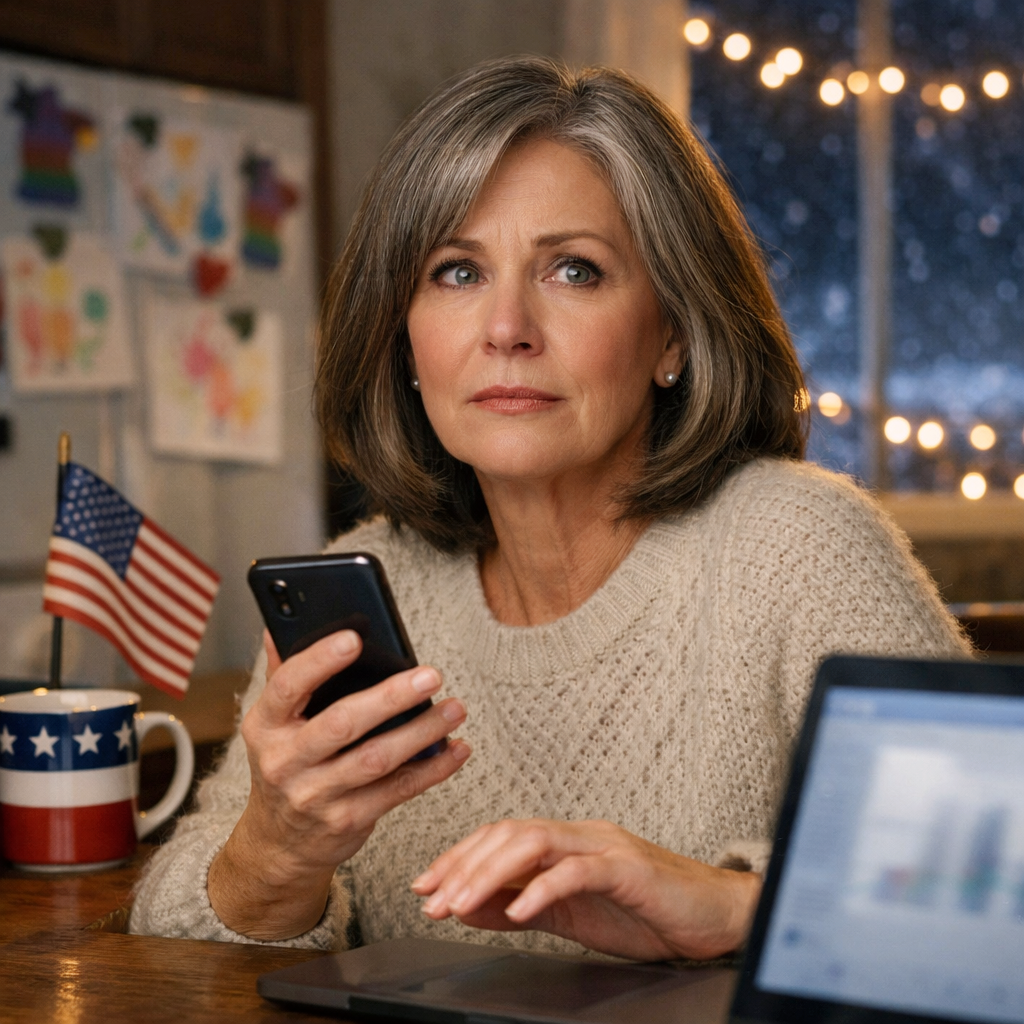
The world called me Aurelia Vance — the frost-blooded strategist of the finance world, a woman with her own skyscraper, her own jet, her own calendar carved by assistants so afraid of breathing wrong that they practiced how to enter my office before actually doing it.
I had power, wealth, a name that silenced rooms.
But none of that mattered that night.
It was supposed to be one quiet escape, one night where I drove without destination, away from the shareholders, away from the board pressuring me to marry a man I didn’t love, away from the legacy built on an image I stole from who I used to be.
The wipers beat against the windshield, slow and useless, as flakes grew thick, swallowing the cliffs around me.
I wasn’t even sure why I’d taken the old mountain road — the one with no cell signal, no streetlights, and no witnesses.
Maybe I needed darkness.
Maybe I needed silence.
Maybe the walls of my penthouse finally echoed too loudly.
Then I saw him.
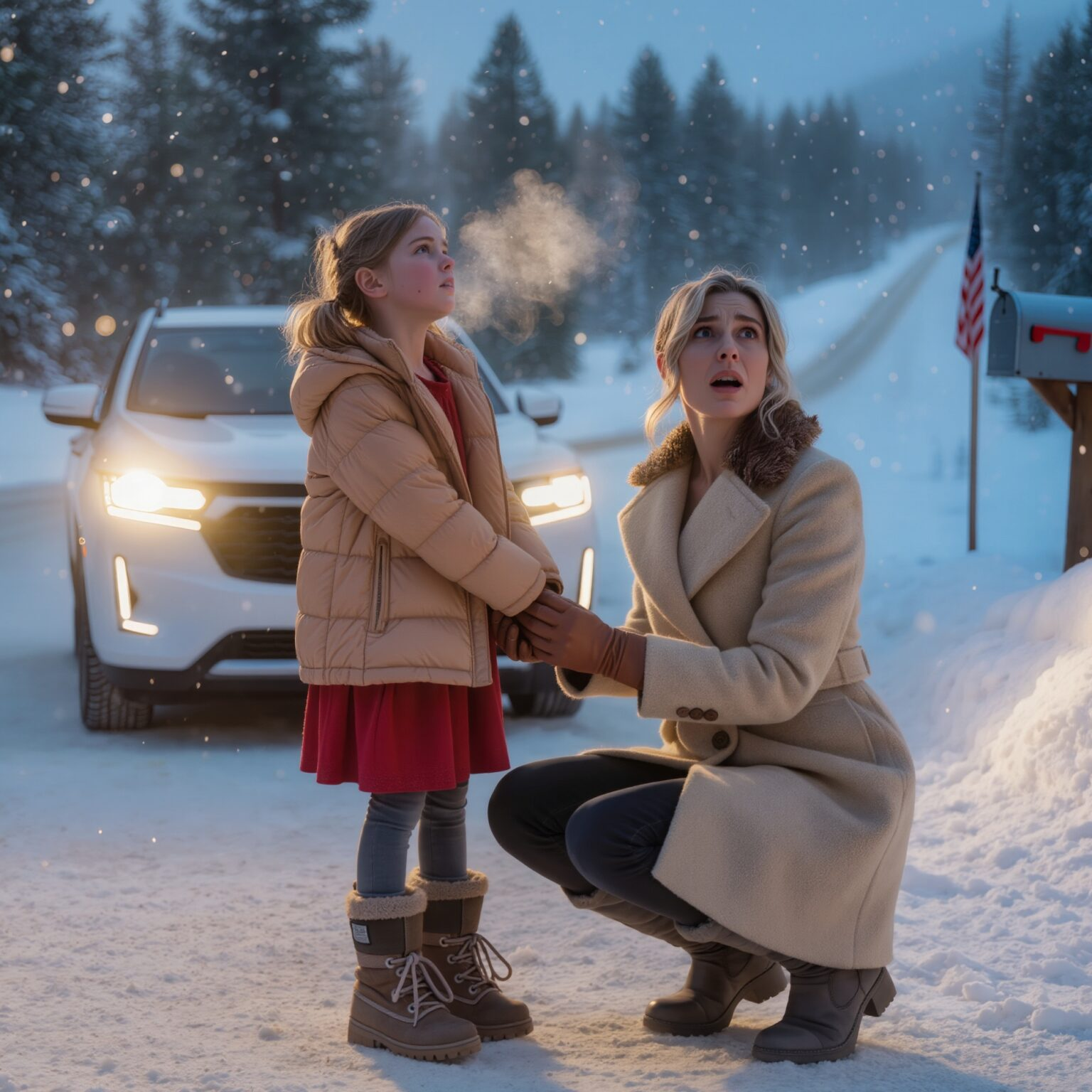
A small figure, barely more than a shadow against the snow, standing in the middle of the road with arms wrapped around himself, shivering, lips blue, cheeks raw from the wind.
I slammed the brakes. The tires skidded, the car fishtailed, and the world jerked to a stop just inches from the child.
He turned toward me so slowly that it didn’t feel real.
His eyes were wide, not frightened — but searching, studying, absorbing the sight of me.
I stepped out, coat clutched around me.
The wind sliced my face like needles.
“What are you doing out here?” I shouted over the storm.
His nose dripped, and he wiped it with his sleeve, shivering violently.
“I… I can’t find my daddy.”
His voice was small, fragile, yet steady in the way children speak when they don’t yet understand danger.
I crouched to his level, staring into those eyes — impossibly dark, impossibly familiar.
“What’s your name?”
He hesitated. The snow fell harder, the wind howled, the mountains seemed to lean closer to listen.
“Leo,” he whispered. “Leo… Vance.”
The name hit me like a car, like a lifetime, like the moment where everything I had carefully buried clawed its way back to the surface.
Vance.
My name.
My legal name.
My blood name.
The name I erased when I became Aurelia instead of the girl I used to be — Elena Vance, daughter of no one, beloved by no one, mother to no one.
Because no one was supposed to know that name.
Not anymore.
For a moment, I couldn’t breathe. The storm shrank, the car disappeared, the road vanished. All that existed was the child, the snow melting slowly on his lashes, and the truth coiling like smoke in my lungs.
“How old are you?”
“Eight.”
Eight.
A lifetime I missed. A lifetime that mathematically, biologically, devastatingly aligned.
My voice slipped out, barely a whisper.
“Where is your father?”
That was when his lips trembled — not from cold, but memory.
“We were driving. He said we were almost there. Then he stopped the car and told me to wait. He walked into the trees and… he didn’t come back.”
The snow swallowed his shoes. His breath came out jagged, fractured.
I looked past him — dense forest, black and endless.
He was abandoned.
Left.
Like I had once been left.
Like I swore I would never repeat.
But I did.
God, I did.
“Come with me,” I said, lifting him. He clung to me instinctively, wrapping freezing arms around my neck, and something inside me cracked — something I told myself had died long ago.
Inside the car, he thawed slowly. He kept staring not through the window, but at me, always back at me, like he was measuring my face against a memory.
“You look like my mom,” he said softly.
I froze.
His mom.
She was dead, I told myself. She had to be. Because if she weren’t, then she would be here.
Then he would not be here.
Then he wouldn’t be speaking to me with my old name on his tongue.
I cleared my throat. “What makes you say that?”
“My dad doesn’t let me have pictures. But I remember. Her hair was dark like yours. And her necklace looked like that one.”
He pointed — slow, certain — at the pendant resting against my collarbone.
A silver crescent.
My last belonging before I fled the life I never spoke of, before I rebranded myself into the kind of woman who forgets she once lived in a two-room apartment, who once held a newborn while sobbing into thin blankets, terrified and alone.
Leo leaned closer, studying my face with an unsettling calm.
“You’re her,” he whispered.
I gripped the steering wheel so hard my knuckles went white.
“You’re my mom.”
The car veered, tires catching ice, heart slamming against ribs so violently I thought I’d die right there on the snow-drowned mountain.
I pulled over.
Turned off the engine.
Everything went still.
I turned to face him — this child with my nose, my eyes, my old life embedded in his bones like a secret I spent eight years trying to incinerate.
“Leo,” I breathed, voice shaking for the first time in years, “who told you that?”
“My dad. On the night before we left. He drank a lot and kept saying you were some big, important person now. That you forgot us. That you didn’t want us anymore.”
His hands curled into fists.
“But I don’t think that’s true. I don’t think moms forget.”
Mothers do forget.
Not because they want to.
But because survival demands brutality.
I had been twenty-four.
No degree.
No money.
A baby I begged the world to help me raise.
A partner who became a ghost long before he walked out the door.
And then one job offer — one ruthless corporate mentor who said, “You can be great, but great women do not have attachments. Erase them.”
So I did.
And I became Aurelia.
But that night, in that car, with that child staring at me like I was the sun he had been promised, Aurelia died.
Only Elena remained.
I pulled him into my arms, the warmth of him nearly burning.
“I didn’t forget you,” I choked. “I never forgot you.”
He sank into my chest, crying — quiet tears, exhausted tears, the kind that come not from hurt but from finally being found.
We sat like that for minutes or centuries until headlights cut through the storm — a truck, red, approaching fast, swerving, sliding.
The boy lifted his head.
“That’s my dad’s truck.”
My heart kicked. The man stepped out, stumbling, voice slurred, face twisted in a cocktail of guilt and fury.
“You! Give him back! He’s mine!”
Leo shrank behind me.
The man moved closer, snow crushing under his boots.
“You think you can just take him now? After all these years?”
I rose, every inch of me no longer CEO, no longer polished steel — but mother.
“You left him in the cold,” I said, voice low. “You abandoned him.”
He laughed — not because it was funny, but because he had nothing left to defend with except broken pride.
“You abandoned him first.”
I did.
Not like this.
Not deliberately cruel.
But absence is absence, whether coated in guilt or in snow.
“I’m taking him,” I said. “This time, I don’t disappear.”
He stared at me — really stared — and I saw a man who had been drowning since the day I walked away.
“Take him then,” he whispered. “Be better than we were.”
He got back into the truck. Drove off. No fight. No last words. Just surrender.
Leo looked up at me.
“Can we go home?”
For the first time in years, I wasn’t sure what home meant. A penthouse? A tower of glass? A life crafted by fear of weakness?
No.
Home was eight years old, with frostbitten cheeks and eyes that never stopped hoping.
“Yeah,” I whispered, kissing his forehead. “Let’s go home.”
I drove through the storm — him asleep, hand gripping mine even in dreams — and somewhere between the curves of that frozen mountain and the horizon that slowly warmed with dawn, I understood:
Power isn’t empire.
Legacy isn’t skyscrapers.
Strength isn’t ice.
It is the heartbeat pressed against yours in a silent car, trusting, fragile, whole.
I thought I needed to escape the world.
But the world I ran from — the one with lullabies, little socks, night-light stars painted on peeling apartment walls — had finally found me, on a road where I was forced to stop and face her.
Elena.
Mother.
I didn’t know what tomorrow looked like, or how much healing it would demand, or whether forgiveness could ever bridge eight silent years.
But I knew this:
I would never let go again.
Not on that mountain.
Not in that storm.
Not in this lifetime.