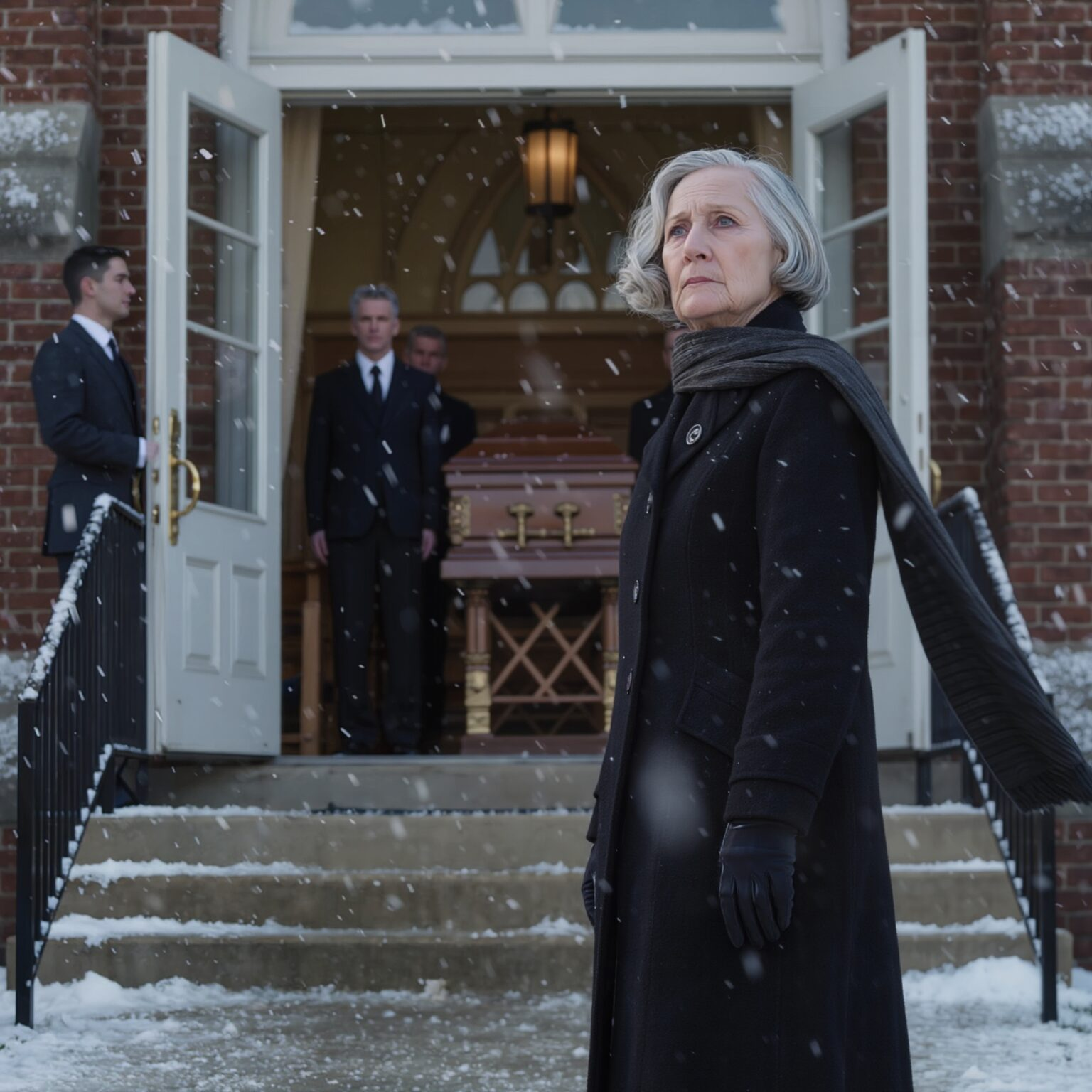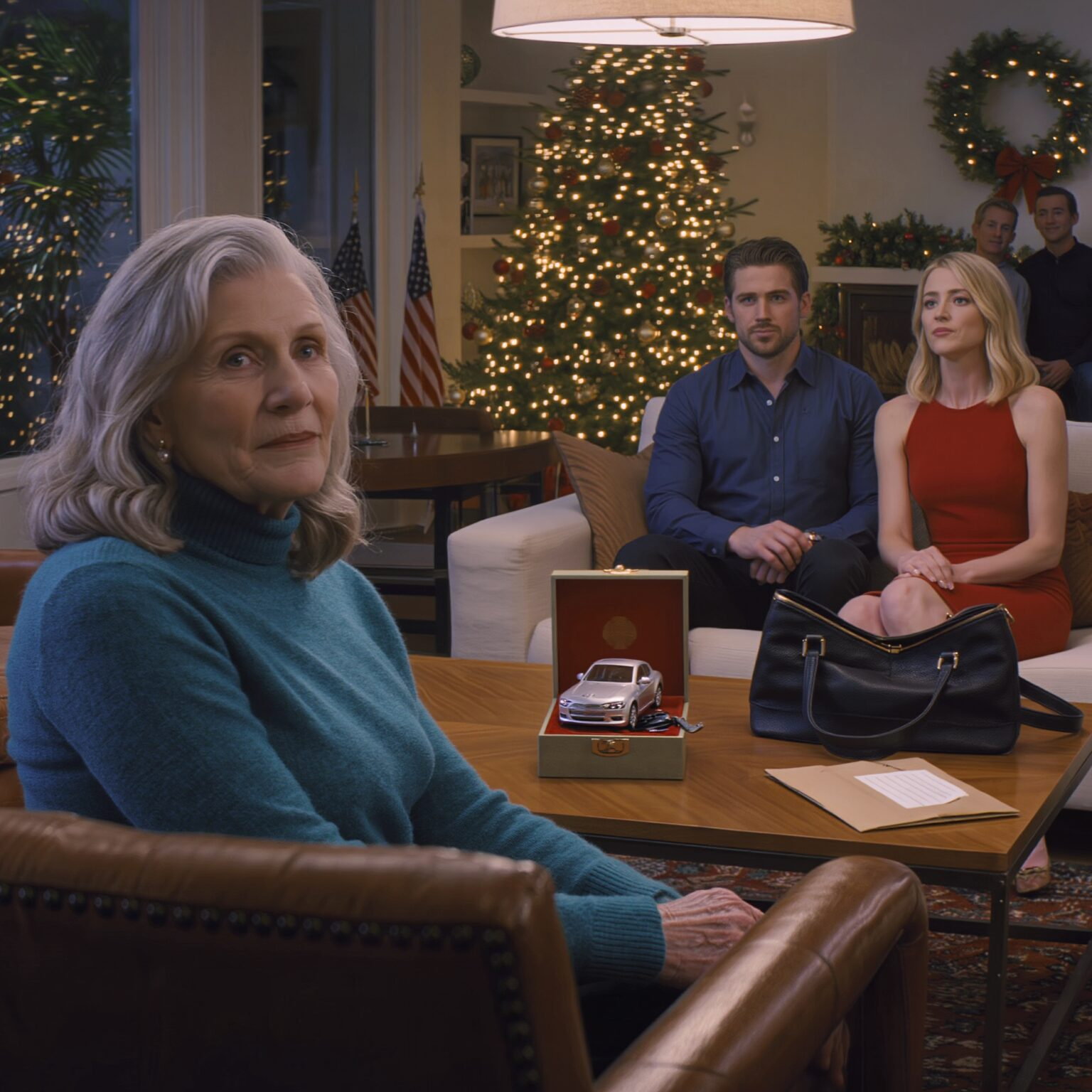
The snow fell gently outside the wide glass windows, coating the entire driveway in a white blanket so smooth it looked painted. Inside, the world smelled of cinnamon, pine, and expensive perfume. Christmas Eve — the day meant for warmth, for gratitude, for family that knows how to hold you even when gifts run cold. I stood in front of the shining Christmas tree, its lights blinking like tiny stars, holding a thin mug of hot chocolate, pretending not to feel the sting crawling up my chest, pretending I belonged in the moment, pretending that love was still reciprocal. My son Eddie laughed, loud and full, the kind of laugh I used to work overtime just to protect. He had everything now — success, cars, a wife who loved status more than the meaning of the vows she took. I watched him place his hand casually on Moren’s shoulder, watched her scroll on her phone carelessly, as though the world existed solely to entertain her, and not the other way around.
I had spent months planning this evening. Not because I needed to show off, not because I needed applause — but because I wanted to remind Eddie that even though he was grown, even though he owned more than I ever touched in my lifetime, even though he sat in rooms with people who judged you based on leather stitching and logos, he still had a mother. I had bought him a brand-new BMW — metallic silver, flawless, new-edition interior, the exact model he had dreamed about. And for Moren, a designer bag worth more than three years of my pension combined, wrapped carefully because I knew she cared more about photogenic aesthetics than gestures of love. I gave, not because they needed it, but because I wanted them to look at me the way children once look at home — with gratitude, with belonging, with undeniable attachment. I wanted the smallest “Thank you, Mom,” or “We thought of you too,” perhaps even just a handwritten card. I waited for the exchange of gifts, for the moment where time becomes memory, where I could tuck their love somewhere in the folds of my heart and survive another year with it.
Eddie cleared his throat and everyone’s attention shifted to him effortlessly, as though the room belonged to him and I was merely leasing air. He raised his glass of champagne. “To another year of success, to the house upgrade, to the car, to life!” No mention of family, no mention of sacrifice. Not even the subtle tenderness a son should feel on Christmas Eve. Moren clapped with elegantly slow palms, looking stunning under the warm lights, and I had to admit — she knew how to be beautiful even when she was hollow. I smiled, pretending not to feel the nervous sting building behind my ribs like smoke in a room with no windows.
They began opening the gifts I bought them. Eddie’s eyes widened with delight when he saw the keys, Moren gasped so dramatically that you’d think she was auditioning for a silent film award. They hugged each other, took pictures, tagged friends, thanked the universe, thanked aesthetic minimalism, thanked capitalism itself — but not me. Not once. Not a glance, not a nod, not even the casual politeness of someone raised by wolves. I waited longer, maybe they were saving it for later. Maybe they knew that acknowledgement needed mood, lighting, timing.
After a while, when the photoshoot ended and the car announcement had already reached half their social circle, Eddie finally turned to me. His expression didn’t soften, it didn’t remember me. He smiled thinly. “Mom, we actually have something for you.” My heart stopped and then burst open like fireworks. Here it was — the moment, the proof, the reminder that I still mattered. I leaned in, shoulders relaxed, my smile genuine, like a child who had waited all year for Santa.
Eddie nodded to Moren, and she pulled out a small bag from behind the sofa. Not wrapped. Not bowed. Not even fitting Christmas colors. She tossed it gently toward me, but gently not in kindness — gently in disinterest. I caught it, feeling my heart tremble, and I opened the bag with a quiet breath, expecting maybe a necklace, or a spa coupon, or even just a framed picture of us. Inside was something so aggressively careless that my brain struggled to translate it. A mug. A plain mug. White. Cheap. The kind you find at discount shelves or corporate giveaway tables. No initials, no thought, not even a note.
“Do you like it?” Moren asked, smiling like she had handed me a piece of her heart rather than a clearance item. Eddie added casually, “We didn’t have time this year, everything’s been so busy. But yeah, Merry Christmas, Mom.” Busy. Too busy to appreciate the person who stayed up for fevers, who stitched loose buttons, who worked night shifts to send him to university, who watered dreams he inherited before he even had language to describe them.
I swallowed, forcing my lips into a smile that almost cracked. “It’s lovely,” I whispered, though the word tasted like ash. They turned away immediately, already discussing vacation homes and social plans, not even waiting for the weight of my gratitude. I stood there in the glow of the Christmas lights, holding that hollow mug like a symbol of everything that had changed, of everything that had been replaced. Once, Eddie would draw me scribbled hearts on paper and say “Love you, Mommy.” Now, wealth had polished his heart until it reflected only himself.
Hours passed. They laughed loudly, posed, toasted to things that did not include me. When midnight came, I excused myself to the quiet of the kitchen. I sat at the small table where hundreds of meals had been served, where tears had been wiped with soft napkins, where birthdays and scraped knees and teenage heartbreaks had been soothed. And I finally let myself feel it. Not the disappointment. Not the emptiness. But the realization — that I was no longer part of Eddie’s world. I was a seasonal decoration, taken out for nostalgia, placed near the lights, then forgotten once the room brightened.
Suddenly, a knock echoed softly. I looked up. It wasn’t Eddie. It wasn’t Moren. It was the housekeeper, quiet, kind, aged by her own battles. She placed a small box in front of me, wrapped carefully in gold. “From me,” she said shyly, “for always treating me like a human.” I opened it — inside was a knitted scarf, handmade, imperfect, priceless. I felt warmth fill the places wealth could not reach. I hugged her, tears silent but heavy.
Christmas lights flickered beyond the kitchen door, but I no longer needed the stage of the living room. I understood then — love doesn’t always come from the ones you raised. Sometimes it comes from those who simply witnessed your humanity. I stood, took a last look toward the laughter that belonged to them now, not me, and stepped outside into the quiet snowfall. The cold air wrapped me gently, and for the first time that evening, I felt held.
I walked down the driveway slowly, scarf around my neck, mug left behind on the table where it belonged — among things thoughtless and replaceable. I no longer needed to beg for belonging, for acknowledgment. I no longer needed to compete with luxury, youth, or status. I realized that love cannot be forced, gratitude cannot be bought, and sometimes the greatest gift is finally understanding when to release what hurts.
The night was calm, peaceful, and wide. Snowflakes kissed my cheeks gently. Somewhere behind me, laughter still echoed, shallow and glittering. But ahead— ahead there was quiet, dignity, self-respect, and the beginning of a new year where I would no longer wait for what was never coming.