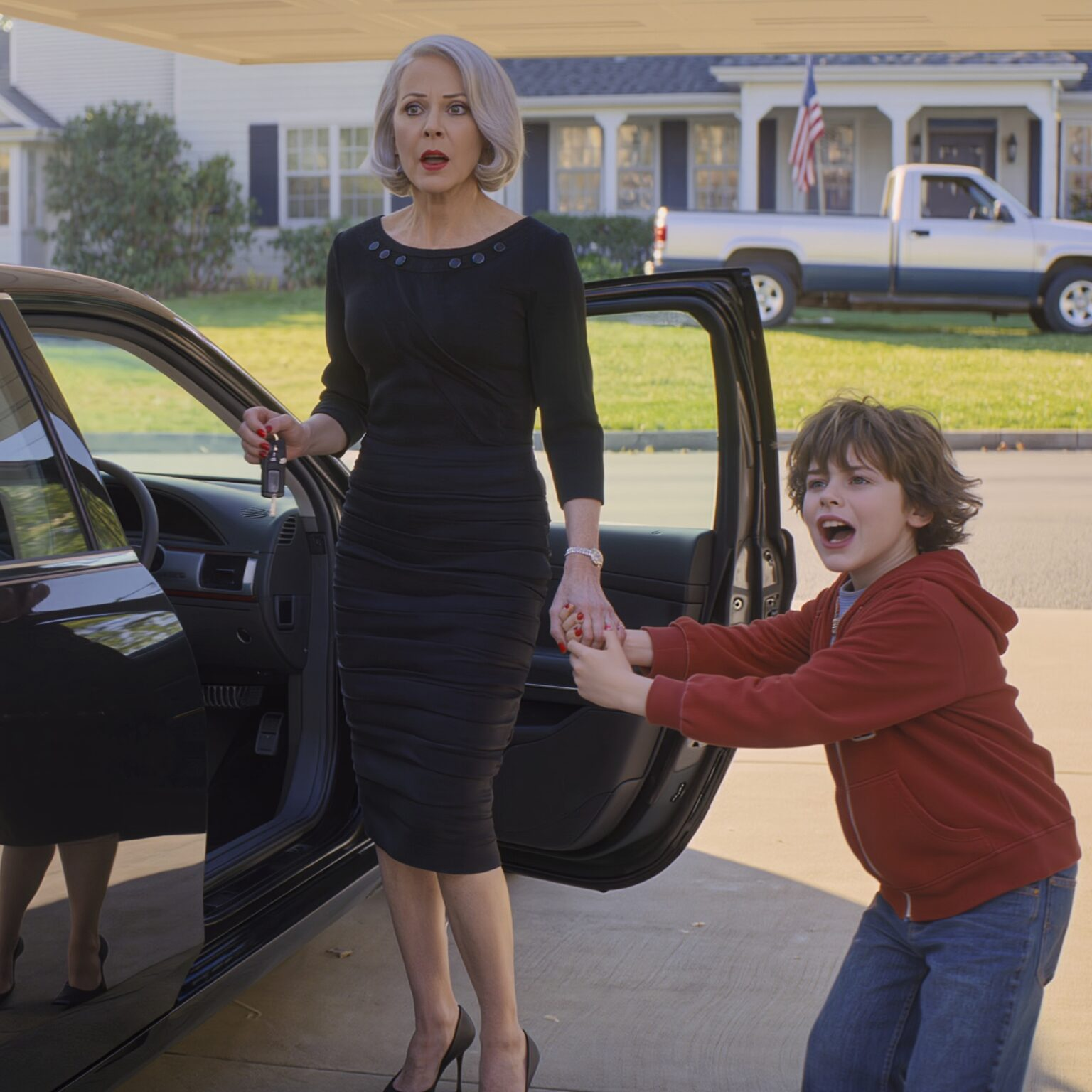
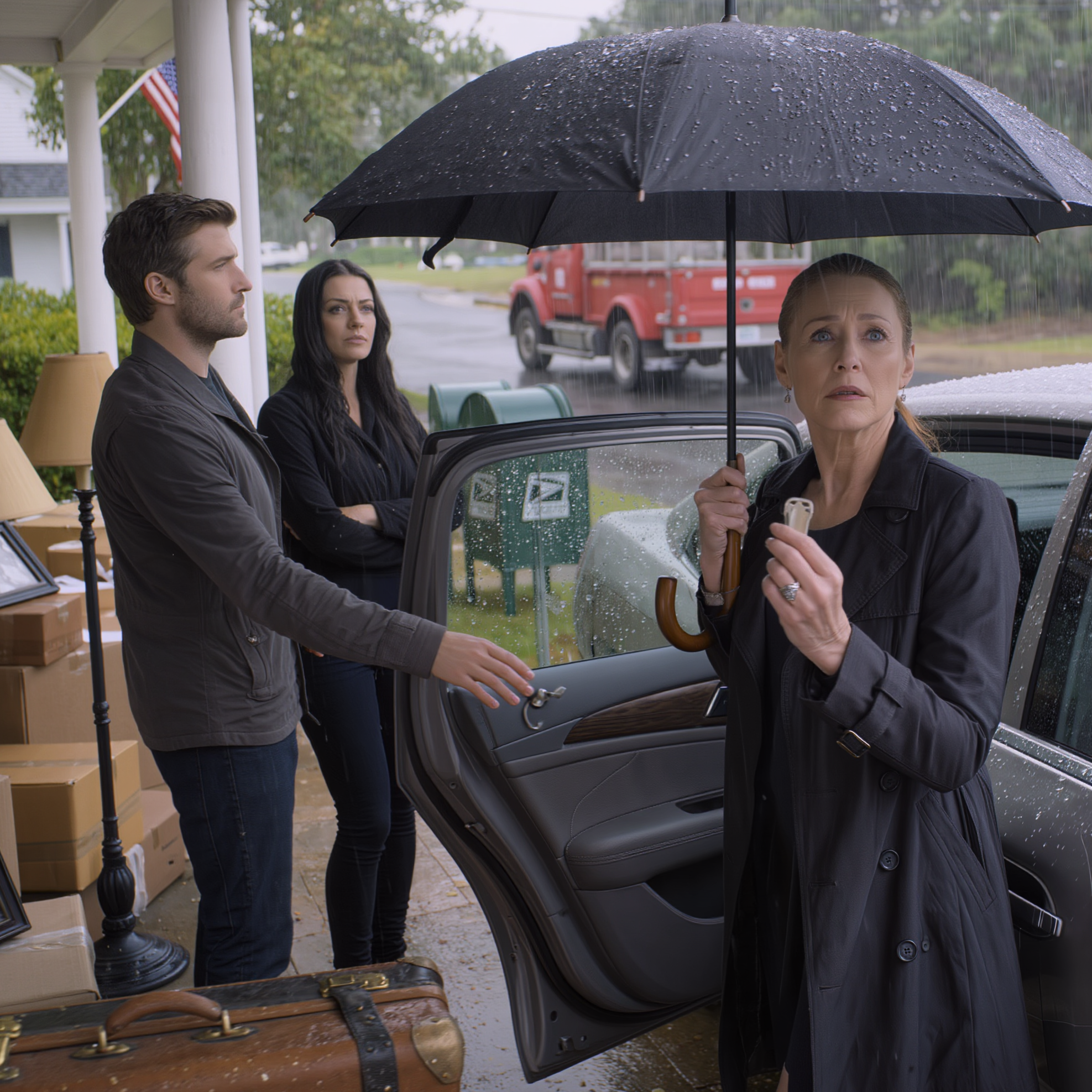
The funeral morning was painfully silent, almost like the walls of the house themselves understood death and held their breath out of respect. I had woken up before dawn, not because I slept well but because sleep simply refused to stay with someone who had spent fifty-two years beside a man she thought she knew entirely. My black dress felt heavier than fabric should, the hallway smelled faintly of his cologne that still lingered after all these months of sickness, and the air tasted like the type of grief that chews you from the inside before the world even sees the damage. My family waited outside, the priest had called twice, the funeral home asked if we needed more time, but I moved through the kitchen slower than thought itself. I reached the car keys. My hand trembled—not because of age, not because of the cold December morning, but because turning that key meant accepting that my husband’s heart would never beat again and that my life would now separate into two neat timelines: before him and without him. I walked into the garage. My grandson Tommy, just nine, was sitting on a stool, too quiet for a child his age. I thought he was just sad, confused by the concept of death, but I saw something else in him—his little fingers gripping the edge of the seat, eyes wide, chest rising as if the air wasn’t reaching him properly. “We have to go, love,” I said, trying to sound strong. Then I slid into the driver’s seat, inserted the key, and the moment the ignition clicked a centimeter, Tommy exploded with a scream so sharp it sliced the silent morning clean in half. “GRANDMA DON’T START THE CAR! PLEASE DON’T START THE CAR!” It wasn’t whining, it wasn’t childish fear—it was raw terror. I froze instantly, my hand still, the key stuck halfway. My heart sprinted into my throat. I turned to look at him, and his lips trembled not from sadness but from knowing something I apparently did not. I lowered the key and opened the car door slowly. “Tommy, sweetheart, what is it?” I asked, but he didn’t answer. Instead, tears spilled from his eyes in a way children shouldn’t know how to cry: silently, as if noise would make it worse. He backed up a step and pointed. I followed his shaking finger—and the world I thought I understood flipped in seconds. Under the car, attached in a way no accident could explain, was a small black device taped near the gas line. Square. Hard. Wired. Professional. Not childish, not accidental. Not grief. Intent. A bomb. My blood iced instantly. I didn’t scream—I couldn’t. All sound left my body except the sound of my heart punching my ribs from inside. Tommy whispered, voice breaking in jagged glass: “I saw him last night… grandpa’s lawyer… he put it there.” My husband’s lawyer. The man who handled every will, every transaction, who came to the house weekly during his illness with papers and envelopes and whispered conversations behind doors I was told not to open because “legal matters are exhausting.” The same man who told me yesterday, with a pitying smile, that my husband left everything—every dollar, the house, the land, the business shares—to our son and daughter-in-law, and left me only his “eternal love.” The same man who looked just a little too satisfied locking his briefcase after saying it. I could suddenly hear my husband’s voice, words he once spoke during a small fight years ago: “Everyone pretends to love you until money shows up and rearranges the truth.” Tommy shook harder, “He thought you’d die today. He thought you’d start the car.” My husband was wealthy. Not moderately. Not comfortably. Wealthy in the way governments shake your hand with two hands. Wealthy in the way funerals come with security and lawyers whisper more than priests. For months, during his illness, my son and daughter-in-law visited less, excuses thicker than hospital walls: overseas trip, business dinner, important clients. The only one who sat with me and held my husband’s hand until midnight was Tommy. A child saw love more clearly than adults pretending their absence was incidental. Now pieces of their behavior, their impatience, the subtle dismissal in their voices when speaking to me—all sharpened and aligned into a threat I never imagined I’d face. I called the police with fingers that barely listened to my brain. The operator’s voice stayed calm, giving instructions, telling us to step back, open the garage door slowly, breathe. Breathe. That word felt foreign. As officers arrived, sirens muted, the bomb unit confirmed what Tommy already knew in his little bones. It was intentional. professional. timed. And it was meant for me, not the car. Not a message. A removal. Clean, quiet, tragic accident on funeral day—how poetic for those who awaited inheritance like vultures with tailored suits and polished grief. Hours blurred. Questions swarmed. My son arrived—not grieving but panicked, pale not from loss but because something he expected to go smoothly had gone crooked. The lawyer arrived too, sweating behind expensive cologne, his mask cracking under the weight of police tape. My husband, in his final months, had grown paranoid—but I thought it was sickness talking, morphine illusions, fear of leaving me alone. He kept his safe locked even from me. He whispered names, warned me not to trust “those who smile too easily around money.” I thought it was pain speaking. I wish I hadn’t. The will was now under investigation. Financial transfers were exposed. My husband’s signatures on recent documents didn’t match his old ones—his hand was too weak to have signed them. Fraud. Conspiracy. Murder attempt. No wonder my daughter-in-law avoided the house. No wonder my son visited only when the lawyer did. No wonder the funeral morning felt staged, too quiet, too controlled. My grandson—just a boy—was the only one who noticed movement in the night, shadows near the car, hands where they didn’t belong. The only one who wasn’t distracted by greed. They took my husband’s life slowly through his assets while he was still breathing. They planned to take mine in one moment through ignition. And they almost succeeded. After statements, lawyers, freezing hours of legal vocabulary and human disappointment, I sat on the porch with Tommy. “Grandpa told me to protect you,” he said softly, voice tired. “He told me if something ever felt wrong… to scream.” My husband knew. In his dying mind, weakened body, fading voice—he knew someone would come for me next. Maybe that was the impossible gift he left behind: warning, instinct, the grandson who inherited not money but courage. Days later, the will was legally overturned, signatures proven false, accounts frozen, assets returned. My son and daughter-in-law were arraigned publicly, the lawyer alongside them. The cameras flashed outside the courthouse, headlines swirling around betrayal, inheritance, attempted murder. I remained quiet—not because I forgave, not because I hardened, but because grief already took too much, and I refused to let revenge take the rest. My husband was buried peacefully, finally safe from those who pretended to care. And I turned to Tommy, who held my hand like he’d been doing it his whole life. “You saved me,” I whispered. He nodded, not with pride but with relief that innocence still had a place in a world obsessed with taking. I didn’t start the car that morning. Instead, I started a new life. One without illusions, without forced gratitude, without depending on those who calculated my worth in dollars. But never alone—because one small voice screamed at the right second, and shattered every plan built against me.
“Grandma… Don’t Start the Car” — The Cry That Stopped Everything