I don’t know when the pounding started.
It was like someone was inside my skull, hammering from the inside out, each blow sharper, louder, brighter. The room spun, then disappeared entirely. The last thing I remember before collapsing was the sound of my phone buzzing on the counter and the quiet hum of the fridge. Then black. Just black.
When I opened my eyes, I was strapped to a gurney and the paramedic was shouting my name louder than any voice had ever reached me in years. “Ma’am, stay awake. Don’t close your eyes. You’re in the ambulance, okay? You collapsed in your kitchen. Neighbor called it in.”
Neighbor.
Not my daughter.
Not my son.
Not the grandchildren I had raised, fed, clothed, sheltered, loved so fiercely that I forgot to love myself.
The lights above me blurred as we entered the hospital. I clutched my phone, fingers trembling, throat dry, fear thickening the back of my tongue. I dialed first the person I believed would at least pretend to care: my son.
Three rings.
Four rings.
Ignored.
Then came a message notification—just a cold bubble of text:
“I’m at work. Can’t come. Don’t overreact.”
Overreact.
My left side numb, vision doubling, vomiting from pain that felt like a drill inside my head — and I was overreacting.
I swallowed the bitter taste of both medicine and humiliation and dialed my daughter-in-law next. She was quick to answer, but not with concern. Instead, her voice snapped like a wire pulled too tight:
“We’re busy. We have lives. You can’t expect us to drop everything every time you feel dizzy or old.”
She even chuckled after she said it.
A laugh.
A laugh while I lay on a hospital bed with wires attached to my chest.
I tried the grandchildren. The ones I helped raise. The ones I tucked into beds, who I fed warm soup when they were sick, who I stayed up all night with during their fevers while their parents went on vacations.
No answer.
No reply.
Only a read receipt.
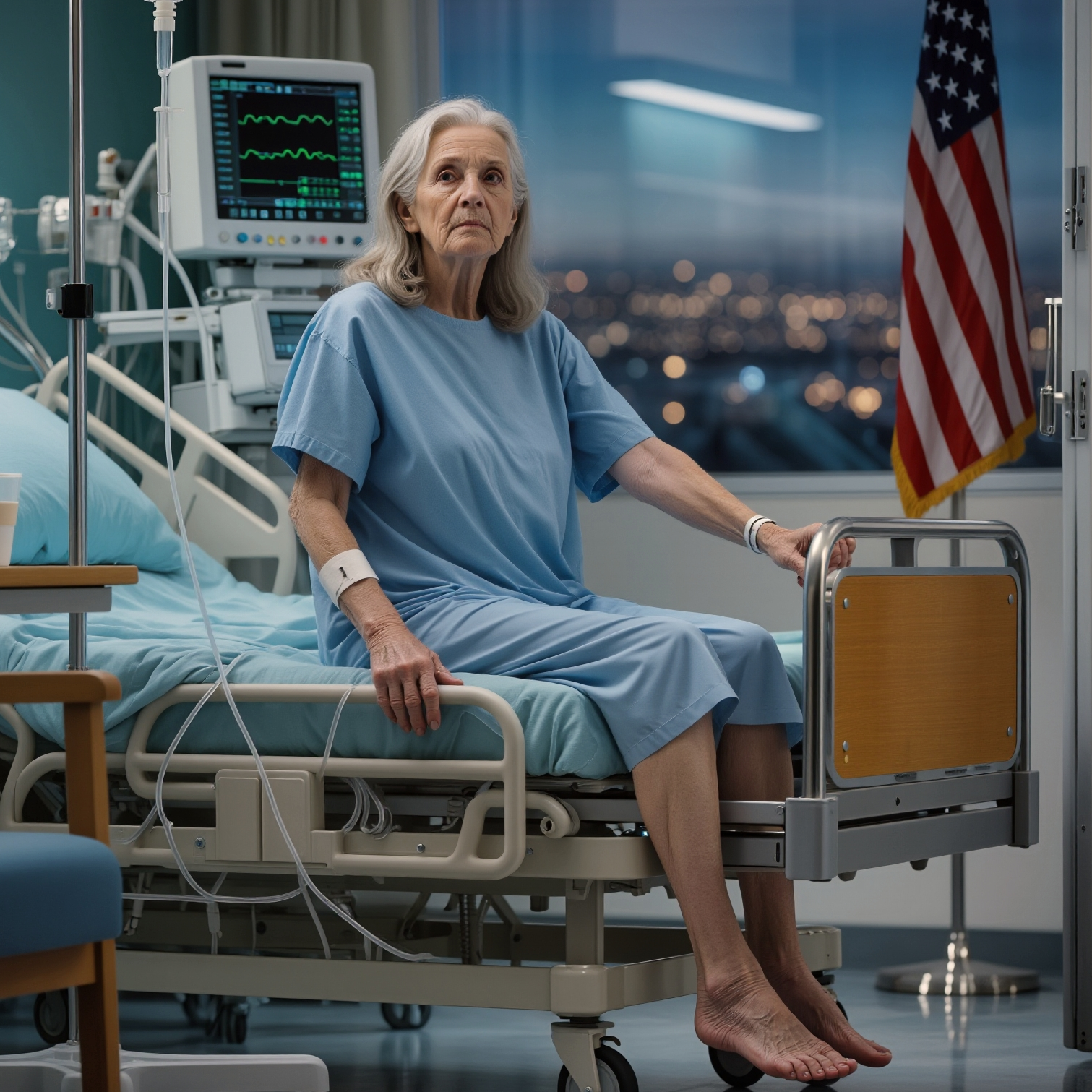
Hours passed in fluorescent silence. Nurses came and went. Machines beeped steadily, each beep reminding me that I was still alive though forgotten.
Around midnight, the migraine broke into something sharper — the doctor said quietly that if I had arrived one hour later, the clot would have taken everything. Not just memory. Not just mobility. Everything.
And yet, in that critical hour, no one walked through the double doors for me.
I texted again.
I begged — and I never beg.
“Please. I’m alone. I need someone… just one of you.”
My daughter-in-law replied this time:
“Family isn’t obligated to entertain your drama in the middle of the night.”
Entertain.
Drama.
Collapse.
Clot.
Stroke risk.
She saw all of that as inconvenience.
I lay there, silent, blinking away tears that burned more than the IV drip. I wondered when motherhood had become a contract they believed I owed them rather than love freely given.
And then, just when I stopped expecting anyone at all, when I accepted that the beeping machines were my only company through the longest night of my life —
the curtain shifted.
A face peeked through.
Not my son.
Not my grandchildren.
Not the woman who married into the family and decided she owned it.
It was Daniel — the janitor, the quiet man I always saw mopping near the cardiology wing whenever I came for routine checkups. He stepped in awkwardly, eyes soft with something rare now: genuine human concern.
“I heard them at the desk,” he murmured. “They laughed. They said you’re ‘one of those dramatic old women.’ I just thought… no one deserves that.”
I didn’t speak.
I just stared at him, stunned that a stranger was here, when my own flesh and blood remained absent by choice.
He sat beside me — not too close, not obligated, not pitying — just present. Present in the way only real care can be.
“My mother died alone in a hospital,” he whispered after a while. “I couldn’t get to her in time. I know the regret of absence. I won’t pretend family always loves right. Sometimes strangers do better.”
His words punched through me harder than the pain ever had.
The hours passed with him gently adjusting my blanket, fetching warm tea, telling quiet stories about the trains he used to fix, the radio songs he remembered from youth.
Not once did he check his phone.
Not once did he act impatient or burdened.
At dawn, when the sun finally stretched gold across the window, my phone buzzed again. My son, this time:
“Hope you’re discharged already. We’re heading to brunch. Maybe next time just call an Uber.”
An Uber.
Not: Are you alive?
Not: Do you need anything?
Not: I’m sorry I didn’t come.
Just brunch.
I set the phone down and breathed, slow and steady, letting something inside me settle… or perhaps break cleanly for the first time.
Daniel looked at me, not with pity — but understanding.
“You don’t have to keep chasing people who won’t chase you back,” he said simply.
And that was it.
Not poetry.
Not philosophical wisdom.
Just truth so bare and plain it stripped me down to something real.
I realized, lying in that hospital bed with tubes, wires, and a stranger who cared more than blood ever had, that love—real love—is not DNA, not shared last names, not legal ties. It is presence. Choice. Willingness.
My son chose absence.
My daughter-in-law chose mockery.
My grandchildren chose comfort over compassion.
And this humble man, who owed me nothing, chose kindness.
When I was discharged, I didn’t call my family. I didn’t text or update anyone. I didn’t beg for rides or apologies. I didn’t remind them how close death came.
I simply walked out, Daniel helping steady my steps, and I breathed for the first time in years without expectation.
Sometimes the people you raise grow up feeling entitled to your sacrifice. Sometimes they believe love is endless without ever needing to return it.
But sometimes, life sends someone unexpected to show you what you deserved all along.
I left that hospital not weaker but freed.
I will never again dial numbers that ring into emptiness.
I will never again beg to be valued.
They had every chance.
They chose brunch.
And I chose peace.