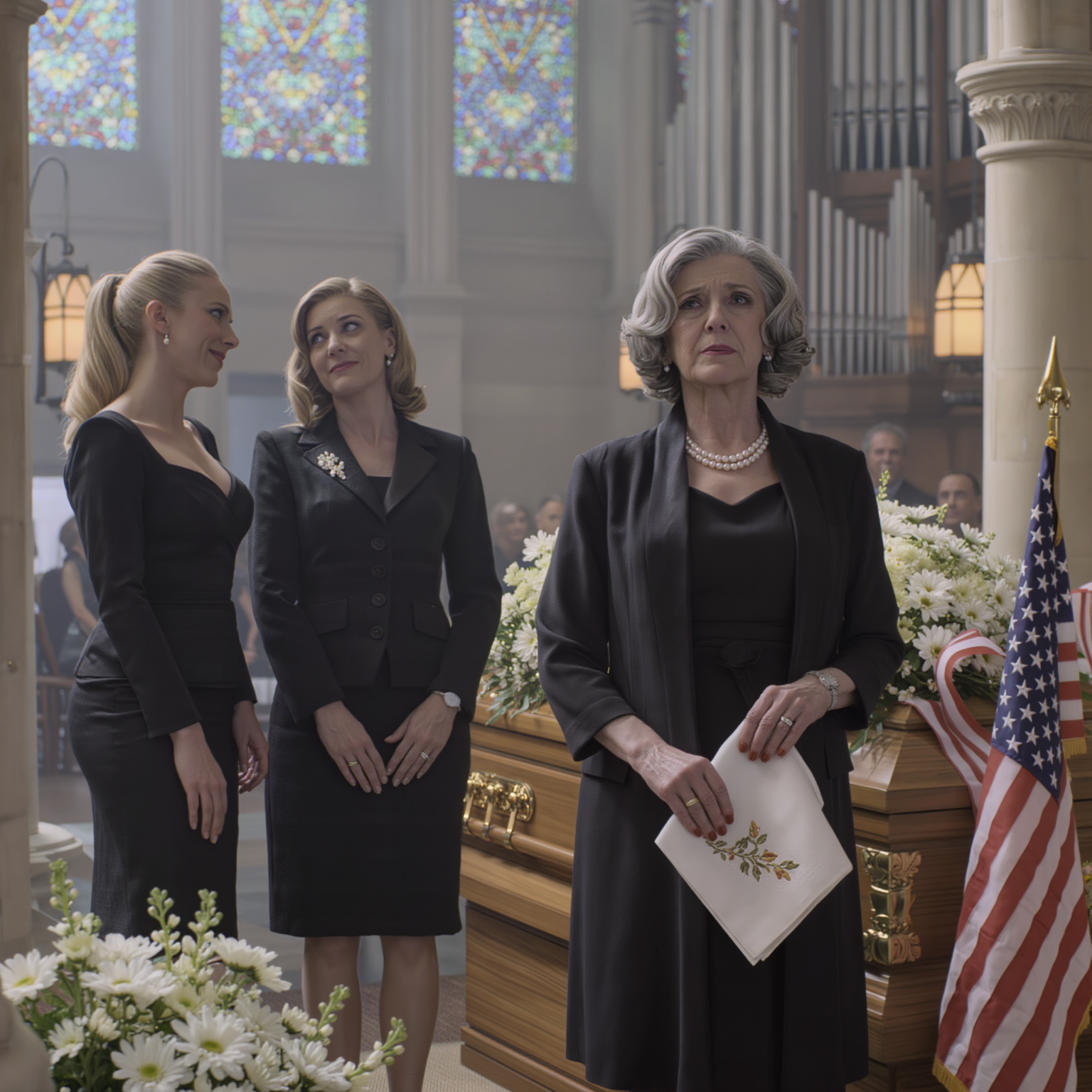
I stood in the cold marble aisle of the chapel, the weight of people’s hush and the scent of lilies pressing down on me, sharper than grief itself. My son lay in the casket—skin pale, suits pressed with kindness, his face peaceful as though unaware a life was being torn away. His hands rested gently across his chest, fingers relaxed after years of work, laughter, mistakes, growth. I remembered those hands when they were small, clutching mine in the dark, demanding bedtime stories, quiet promises that tomorrow would be better. I remembered the hands that held me through sickness, through losses, through years when survival meant more than comfort.
The family sat around me—flowers, tissues, whispered condolences. I wore black, but I felt stripped bare. The preacher’s voice was soft, gentle, but distant. Words about eternity, about comfort in heaven, about God’s plans. None reached me. All felt like echoes bouncing off walls of pain that couldn’t contain them. I held a handkerchief, pressed between trembling fingers. I tried to swallow tears that burst from me like cracked glass, but nothing escaped. My son was gone. The man I raised, the boy I watched stumble, the laughter we shared, turned silence forever.
People approached to hug me. Women whispered, “I’m so sorry.” Men nodded. Smoky eyes glistened with half-understood sorrow. My grandchildren — how small they looked in their expensive clothes, their faces paled with confusion. I tried to remember birthdays, bedtime stories, scraped knees. Now all of it felt surreal, like an old photograph drenched in sepia, impossible to touch, impossible to believe. I wanted to scream, to howl, to demand justice from the void. But grief made me mute. Helpless. Hollow.
Then she came in. His wife. Elegant. Polished. Eyes sharp. Lips red. Not a tear in sight. Her mother behind her, poised, calm. They moved past sorrow like guests stepping into a gallery. I saw the calculated way her dress flowed, the way her heels tapped quietly on the marble floor — as though she didn’t belong in mourning, but in display. I watched her approach the casket, not with reverence, but with a soft, practiced touch, as though she were positioning someone for a photograph instead of saying goodbye to a husband.
When she leaned close, I felt a chill run down my spine. She whispered something so quiet that I almost thought I imagined it. “It’s finally just us now.” The words were sharp — not spoken in pain, but in release. Not grief, but relief. Not love, but cold calculation. The chapel’s hush froze, the lilies stopped smelling like sorrow, my heart tightened until breath felt like betrayal.
I closed my eyes, tried to breathe, but the air tasted stale, like promises broken at altars. I wondered: how could grief be traded so easily for convenience? How could love be dismissed like a worn garment folded away? My son lay still, never to wake again. But she — she lived. She planned. She waited. She moved on. On that day, as muffled sobs rose around me, I felt not just the loss of a son — but the collapse of trust, morality, family, everything I believed in.
They moved away after the service. Photos were taken. Hugs exchanged. Sympathy paid. But the whispers, the glances, the cold relief on her face — they were unseen by most. I watched, and in the watching, something inside me broke quietly, irrevocably. Love, it seems, becomes bargaining when memories wear thin and convenience surfaces. I left the chapel with no one to guide me, no arm to hold. Just the heavy weight of a life undone, a name that once meant comfort now meaning emptiness.
Days passed. People called, asked if I needed help. I let the calls go unanswered. What can condolences soothe when betrayal hides behind grief’s robe? I drank tea in silence, staring at photographs of birthdays and holidays now past, images of happiness tainted by the memory of that whisper. I remembered his laugh. His voice. He would never laugh again. And she… she would not mourn. She would move forward. And maybe she already had.
I didn’t know how to rebuild a broken heart that wasn’t broken by death, but by a living betrayal. When sleep came, nightmares visited — his face fleeting in dreams, her whisper echoing, laughter distant. Grief wears many masks. Some cry. Some mourn. Some walk away smiling. She chose to walk away. I chose to survive.
I closed the doors of that house. Packed boxes. Kept the photographs I could bear. I moved to a small apartment near the edge of town — quiet, modest, away from pity, away from reminders. I planted flowers on the balcony. Petunias, lilies, hardy things that grow even when sunlight is weak. Every time I watered them, I felt like watering new memories. Memories of survival. Memories of strength. Memories of the woman I refused to let die with grief.
I didn’t wait for apologies. I didn’t call for justice. I didn’t beg for love. I simply lived. Mornings came. Coffee tasted bitter but honest. Nights came. Sleep came eventually, without whispers. Life continued, not as the fairy tales people write about sorrow and redemption, but as something quieter, slower, real.
And sometimes I think back to that chapel, to the whisper I heard, to the flowers, to the coffin, to the betrayal after the vow. I realize now that some goodbyes aren’t about death. They’re about seeing the truth through illusions of love. They’re about understanding that sometimes the worst heartbreak doesn’t come from losing someone you love — but from realizing someone you thought loved you, didn’t.
I’m older now. Softer perhaps. Wiser. I learned that sorrow doesn’t define you. It shapes you. It doesn’t destroy you — unless you let it. I chose not to.
So I breathe every morning. I see the sun hit the balcony glass. I water the petunias. I read slowly. I remember deeply.
And I live.
Because when they whispered betrayal at my son’s funeral, they didn’t kill me.
They freed me.