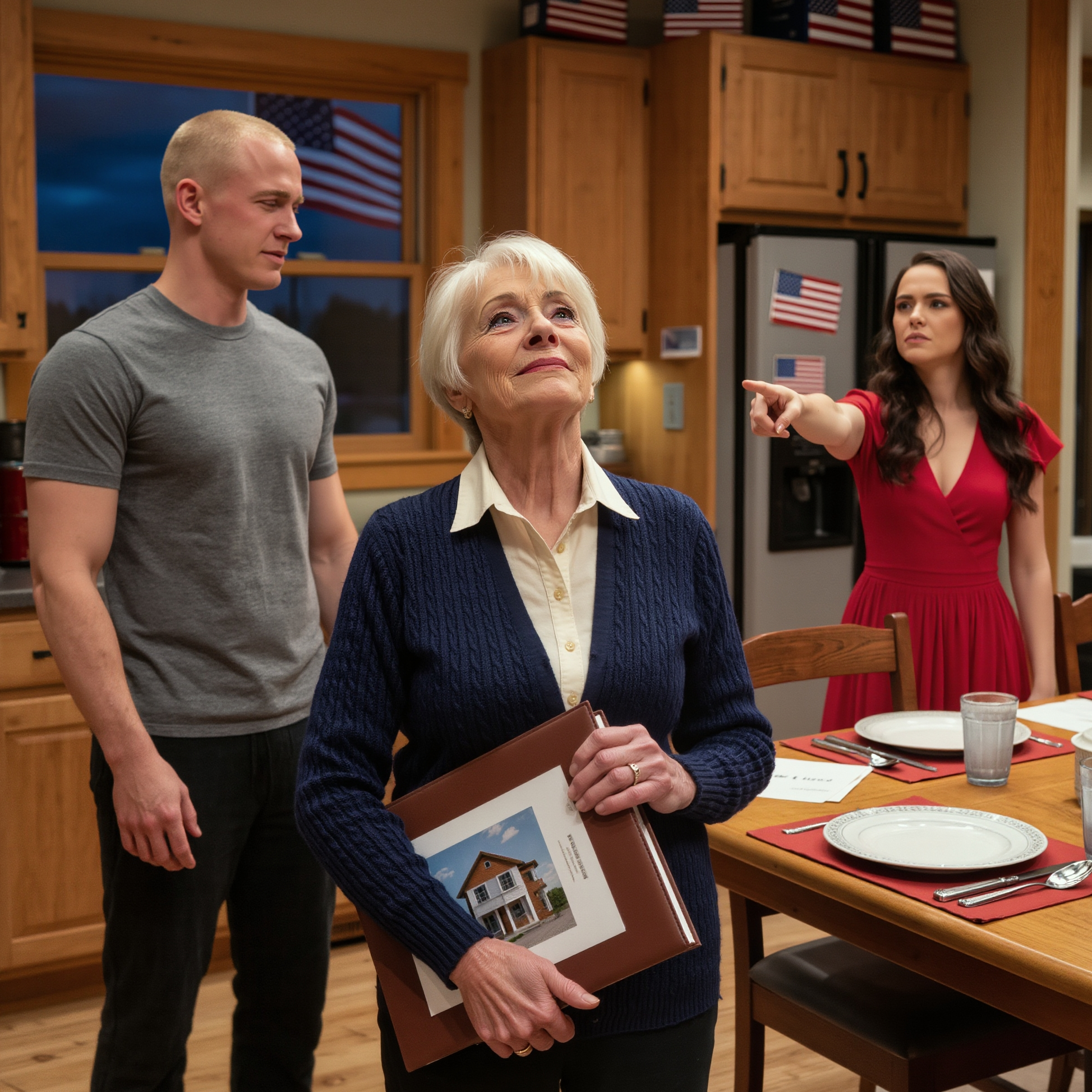
I never expected to spend that much time staring at my reflection in a mirror over a simple dinner invitation.
But that night wasn’t supposed to be simple.
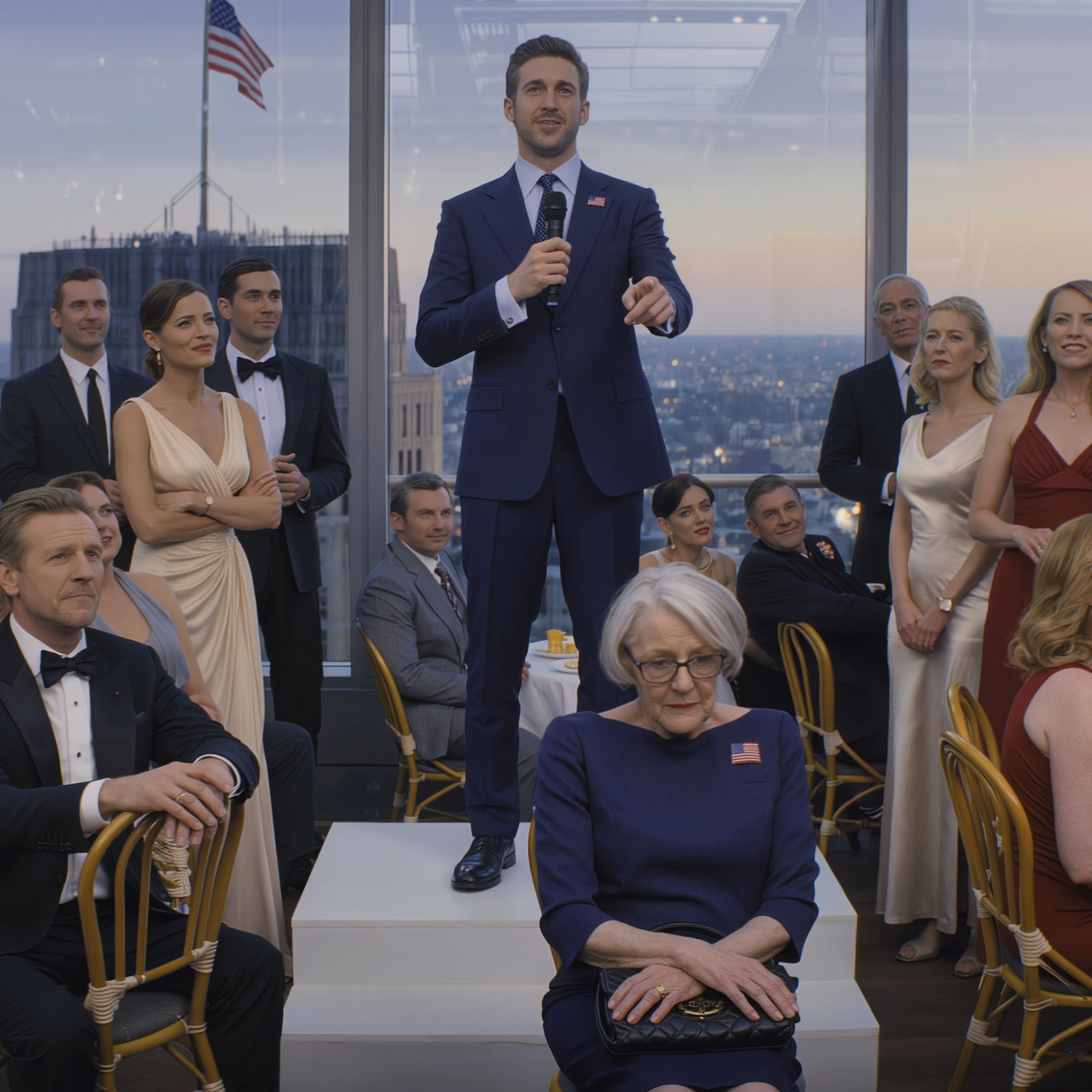
It was a rooftop celebration in Boston, overlooking the harbor, full of million-dollar smiles and glasses that were never poured below the rim.
My daughter told me not to worry about my outfit, not to overthink it, not to fuss.
“Jason won’t even notice you, Mom,” she said, laughing, smoothing her sleek hair, adjusting her diamond earrings, rehearsing her perfect image of the perfect executive wife.
Still, I ironed my best navy dress.
Pressed the collar five times.
Pinned my hair twice.
Perfumed lightly, the way polite society appreciates subtlety.
I didn’t want to embarrass her. Not again. Not ever.
And yet, deep down, I knew I would always look like a woman who spent most of her life working double shifts, saving coupons, buying clearance toothpaste for 99 cents, stretching dinners into leftovers because paychecks were always short and dignity shouldn’t have to be.
You don’t erase that with a dress.
The building hosting the party reached the sky like architecture meant to intimidate.
Marble lobby, gold railings, concierge who stared at me a second too long before deciding I was on “the guest list after all.”
I rode an elevator that smelled like imported leather and money.
When the doors opened, the rooftop was lit like a coronation — chandeliers suspended above open air, polished wood floors, heaters disguised as sculptures, champagne so crisp the bubbles looked like tiny diamonds escaping.
And there he was.
Jason.
Tall, polished, self-satisfied.
His smile was the type men wear when they believe success is a birthright, not a responsibility.
My daughter kissed me on the cheek.
Warm, quick, distracted.
“Just relax,” she whispered, adjusting her dress again before floating back to his side.
I took a seat near a decorative olive tree and observed.
I never minded being invisible.
Invisible people hear everything.
Executives laughed too loudly.
Gold watches flashed.
Shoes with soles that would never touch subway grit tap-tapped across imported teak flooring.
A man I once pushed in a stroller now shook hands like he owned the world.
Then the microphone appeared.
Jason tapped it, slow, rhythmic, like he wanted everyone’s breath to align with his timing.
“Ladies and gentlemen,” he began, voice booming over the Boston skyline, “thank you all for celebrating my promotion to Senior Executive Director.”
People applauded the way people applaud when they’re clapping for themselves — their future raise, their networking, their bragging rights.
I clapped too.
Not loudly, not proudly.
Just politely.
Jason continued.
He always continued.
“And tonight, I’d like to acknowledge some family in the room.”
His eyes scanned for effect.
Then landed — directly, deliberately — on me.
“This woman,” he said, pointing the microphone like a spotlight, “needs no introduction…”
Laughter already began.
Not because I was funny, but because they sensed blood in the water.
“…she never misses an event when there’s free food!”
The laughter erupted like popped champagne.
Even the violins playing overhead seemed to choke on their strings.
He wasn’t done.
“She probably smelled the truffle risotto from across the city!”
Another roar.
Someone clinked glasses and shouted, “Cheers to appetizers!”
My cheeks burned.
Not from shame — from betrayal.
My daughter covered her mouth, giggling lightly, trying to look like she belonged.
She wasn’t raised to be cruel…
but cruelty is contagious at high altitudes.
I forced a smile, though my lungs tightened until breathing felt like swallowing glass.
You learn to smile when life bruises you.
You learn to remain upright when you want to collapse.
You learn to swallow humiliation whole because motherhood trains you to digest everything — disappointment, disrespect, abandonment — silently.
Jason took a bow as if the joke were art and he were the artist.
And that moment — that awful, echoing moment — would have ended differently, had fate not decided to intervene with precision reserved for theater finales.
A stir at the elevator.
Heads turned.
Conversations died mid-boast, wine glasses paused mid-air, postures straightened.
“He’s here,” someone whispered.
“The chairman.”
Not a chairman.
The chairman.
Harrison Cole — legend, architect of the corporation, billionaire with a handshake that could birth careers or bury them.
Jason’s arrogance melted, slowly, visibly, into dread.
Harrison didn’t head toward Jason first.
Not toward the podium.
Not toward the stage of Jason’s ego.
He approached me.
Me.
He extended his hand, warm and steady, as if greeting a queen, not a mocked mother.
“Mrs. Hale,” he said softly, “I’m honored you came.”
The rooftop froze.
Jason’s smirk died.
Harrison took the microphone gently, though his eyes were flint.
He spoke not to me.
Not to Jason.
But to every soul who laughed at someone who owned nothing but integrity.
“We live in strange times,” he began, voice calm, crisp, precise.
“Where titles rise faster than character. Where promotion replaces humility. Where respect is mistaken for accessory, offered only to those with equal wealth, equal influence, equal shoes.”
Eyes dropped.
Chests tightened.
Jason swallowed.
“True success,” he continued, “is measured by how we treat those who cannot advance us.”
People shifted, uncomfortable in suits suddenly too tight.
“My mother cleaned office floors for thirty-two years. People like her built my foundation. When someone disrespects a mother, a worker, a woman of sacrifice — they disrespect the staircase they stand on.”
He turned slowly.
Squarely.
Toward Jason.
“And ladders built on mockery collapse faster than they rise.”
Silence became oxygen.
Jason tried to speak, but no sound came.
Harrison wasn’t harsh.
He didn’t need volume.
His truth was enough.
He bowed his head toward me again.
“Mrs. Hale, I hope you will always feel welcome at my company’s events. Not because of food. Because of worth.”
Not a clap.
Not a whisper.
Just stillness.
Then he walked away, leaving Jason to shrink in the shadow of his own behavior.
I sat for a while longer.
Nobody laughed now.
Nobody whispered buffet jokes.
Servers approached with a gentleness reserved for royalty.
That night, I didn’t eat a single bite.
Not because I was offended.
Because I was full.
Full of something rare — public vindication without retaliation.
Two days later, my daughter arrived at my door, mascara smudged, eyes swollen with panic.
“Mom… they… demoted him. They said he displayed… ‘ethical immaturity.’ He blames you.”
I poured tea.
Calm.
Warm.
Simple.
“He punished himself,” I said.
“I simply stood in the light when truth walked in.”
She cried, not for him, but for the mirror she now saw clearly.
And I knew, in that moment, that life has its own accounting system.
You cannot bankrupt someone of dignity without overdrafting your own soul.
Jason never apologized.
Men like him rarely do.
But apologies were never my currency.
I wanted only to be treated as a human being.
As a mother who once packed his lunches, lent them money when both were jobless, forgave insults that ate at her bones.
Respect should not be conditional.
Not on rooftops.
Not in ballrooms.
Not in boardrooms.
Not in dining rooms.
True respect is the only champagne that never loses its bubbles.
I walked away that night unstained.
Untouched.
Unbroken.
He tried to humiliate me publicly, but the universe loves symmetry:
He used a microphone to pull me down,
but karma used a microphone to lift me higher than I ever stood.