After a long, unforgettable week of deadlines, meetings, and back-to-back hours in the city, I was more than ready to return to my quiet country home — the house I had saved for, worked for, and built piece by piece with my own hands over decades. That house wasn’t just a place; it was woven with memories: the summer days I watched my children learn to ride bikes in the yard, the late night talks with my husband on the porch swing, the countless evenings with friends gathered round the fireplace. I pulled into the gravel driveway around dusk, expecting the welcome silence of creaking pine trees and soft chirps of crickets. Instead, what met me was something I never imagined.
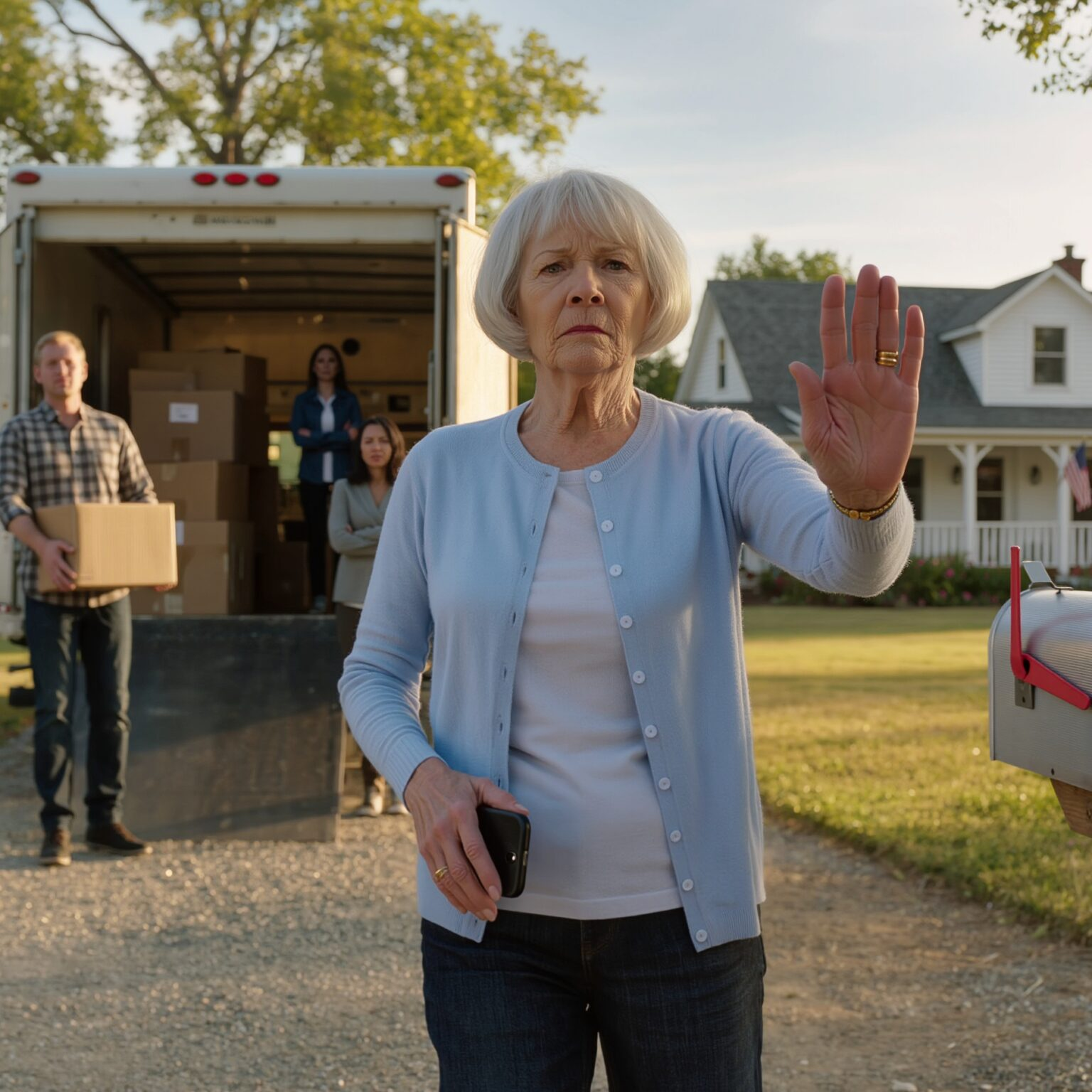
My heart dropped into my chest like a stone. There, in the driveway, under a sky the color of fading ash, stood a large moving truck. Its engine idled low and steady, ready to drive off at a moment’s notice. And in the fading light, I saw my furniture — my cherished armchairs, my oak dining set, the bookshelf lined with worn novels — all being moved, piece by piece, toward that truck by two people I trusted most in the world: my son, Matthew, and my daughter-in-law, Laura.
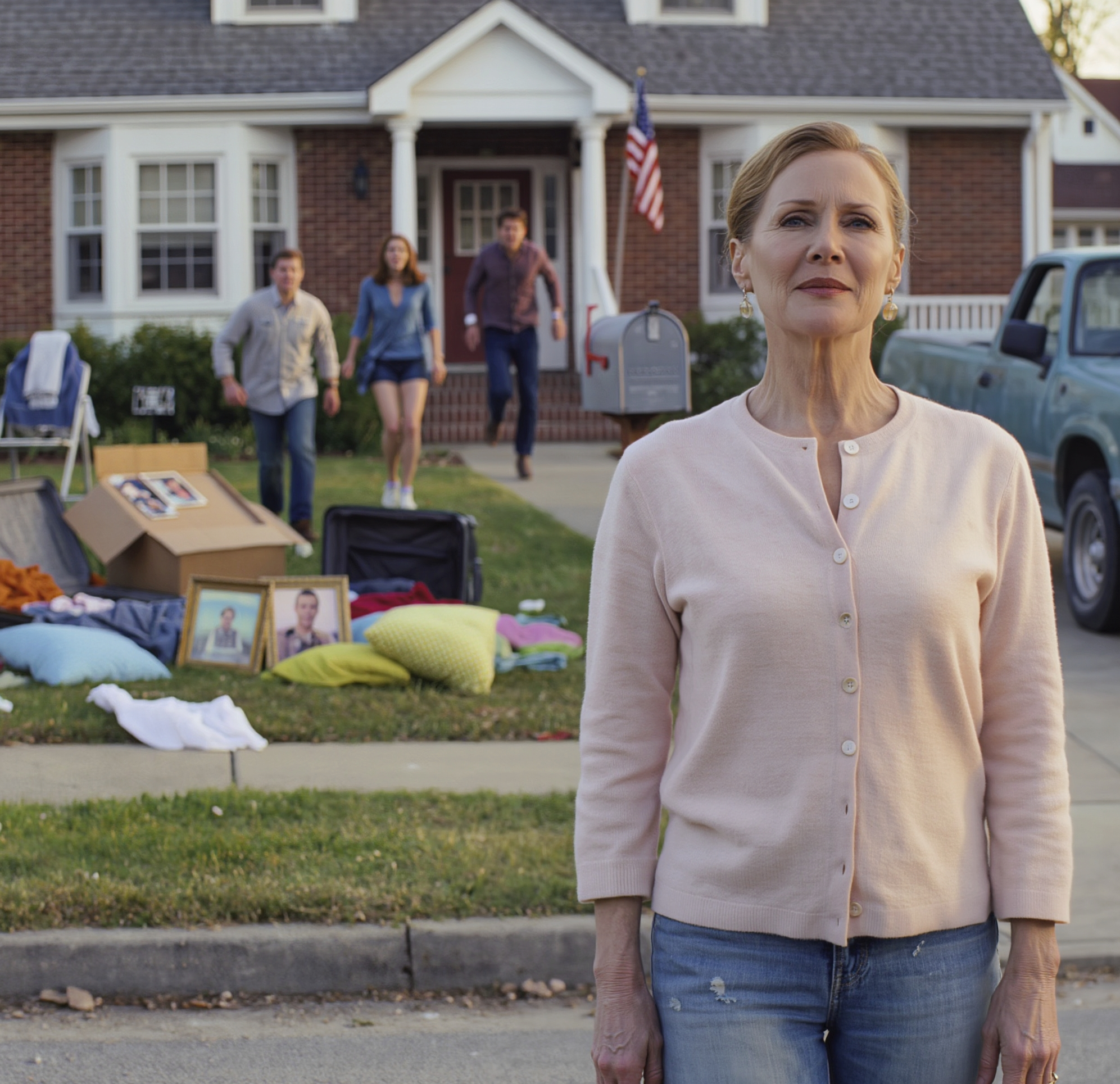
I stepped out of the car slowly, hands trembling just a bit, my suitcase still in the back seat with the weekend’s clothes. I watched in stunned silence as they lifted my belongings with methodical precision — not gently, not affectionately, but with an efficiency that spoke more of obligation than care. It was the way Laura placed a framed photograph face-down on the grass, as though avoiding looking at the image inside, that broke something inside me.
Quietly, as though trying not to interrupt a routine chore, my son looked up when I approached. He didn’t greet me. He didn’t smile. His expression was distant, practiced — like a page recited from a script.
“Hey, Mom,” he said, voice not unwelcoming, just… neutral. “We’re just moving some things.”
It was the understatement of the decade, delivered like a grocery list item.
I swallowed the tremor in my throat and simply asked, “Moving what?” My voice was calm. Not loud, not angry… just steady. The kind of calm that sounds soft but carries an internal certainty.
He gestured toward the truck. “The furniture. We’re clearing space in the house.”
“For what?” I asked.
For a moment, neither of them answered. They just looked at each other — a quick exchange of glances that told me all I needed to know: this had been planned without me. They assumed I would come home and understand.
Laura wiped her hands on her jeans, then stepped forward with a smile that didn’t reach her eyes. “We thought it’d be better if we adjusted the layout of the house. Made it more modern. Spacious. You know — updated for today.”
I blinked. My furniture — the pieces my late husband and I painstakingly chose, the armchairs where my children grew up reading on rainy afternoons, the heavy oak dining table that held countless family meals — all were being stripped away under the guise of “modern updates.”
I didn’t react with panic. I didn’t cry. I just stood there with that silent, quiet strength that comes from knowing who you are — not because of what you own, but because of the life you’ve lived.
I walked around the truck and gently touched the edge of my oak dining chair — the one I’d eaten every family dinner at for years. My fingers brushed the wood like a whisper. And then I looked at them — both of them — and said something that, even in my head, surprised me with its calm clarity: “I built this home with my hands and my heart. And I want to understand why you think you have the right to take it apart without speaking to me.”
Matthew’s jaw tightened ever so slightly. Laura’s smile faltered — just for a moment — before she masked it with a practiced composure. She opened her mouth, and this is what came out: “We talked about it before. I thought you knew.”
“You thought wrong,” I answered plainly.
She tried again. “We just want something fresh. Big open spaces. Less… old furniture.”
Any other day, that might’ve sounded like a personal taste preference. But this wasn’t about taste. This was about disregarding someone’s years of life, love, and history, as though it were mere clutter.
I didn’t shout. I didn’t make a scene in front of the hired movers. I didn’t beg. I simply stood with the stillness of someone who recognized that respect was not being offered — it was assumed.
So I did something unexpected. I sat down — right there, on the edge of the bench seat of that oak dining chair that was halfway loaded — and watched them work. Not as surrender, not as submission, but as observation. I didn’t interfere. I didn’t interrupt. I simply sat there, breathing steadily, with an awareness sharper than any resentment.
“Why do you want to modernize it?” I asked quietly after a moment.
My son hesitated — just enough to reveal something real beneath the surface. “Mom,” he said, “we thought it’d be… better for selling later.”
There it was: the truth laid bare not in intention, but in motive.
I looked at him — not with disgust, not with scorn, but with something far more grounded: clarity. The house they were stripping wasn’t just an old building in their eyes. It was a commodity. A means to an end. A financial future. Not a home.
I stood up from the bench, brushing snow from the hem of my coat. “This house isn’t for sale,” I said simply. “It’s mine. My home. And I won’t let you treat it like a storage unit for your conveniences.”
Laura’s face tightened then. Not with anger — but with the sudden shock of confronting a boundary they never anticipated.
My son didn’t argue. He didn’t defend. He didn’t demand. There was a long, heavy pause — like breath held too long under water.
Finally, I said this: “If you want to redesign something, let’s talk about it together as a family. Not by assumption, not by removal. Together. Because respect doesn’t mean quietly changing someone’s life behind their back.”
What happened next wasn’t instant harmony. It wasn’t tears and apologies. But there was — finally — conversation. Not heated. Not bitter. But honest.
We walked around the house together — not as conquerors of space, but as negotiators of history. We talked about which pieces were truly sentimental, which could be updated, which could be restored, which could be donated with love. And I realized, in that moment, something profound:
This house was not just about furniture.
It was about recognition.
It was about voice.
It was about being seen and respected.
That night, we ended up around the dining table — the same one my children once danced around as children — with tea and conversation. We didn’t finish every disagreement. We didn’t solve every issue. But there was a shift — a quiet one, like sunlight slipping between clouds.
And when I lay down in my own bed that night, I felt something I hadn’t felt in a long time — not frustration, not resignation, but grounded calmness.
Because I didn’t let someone else define my worth or erase my history. I stood with dignity, clarity, and honesty. And that matters more than a piece of furniture ever could.