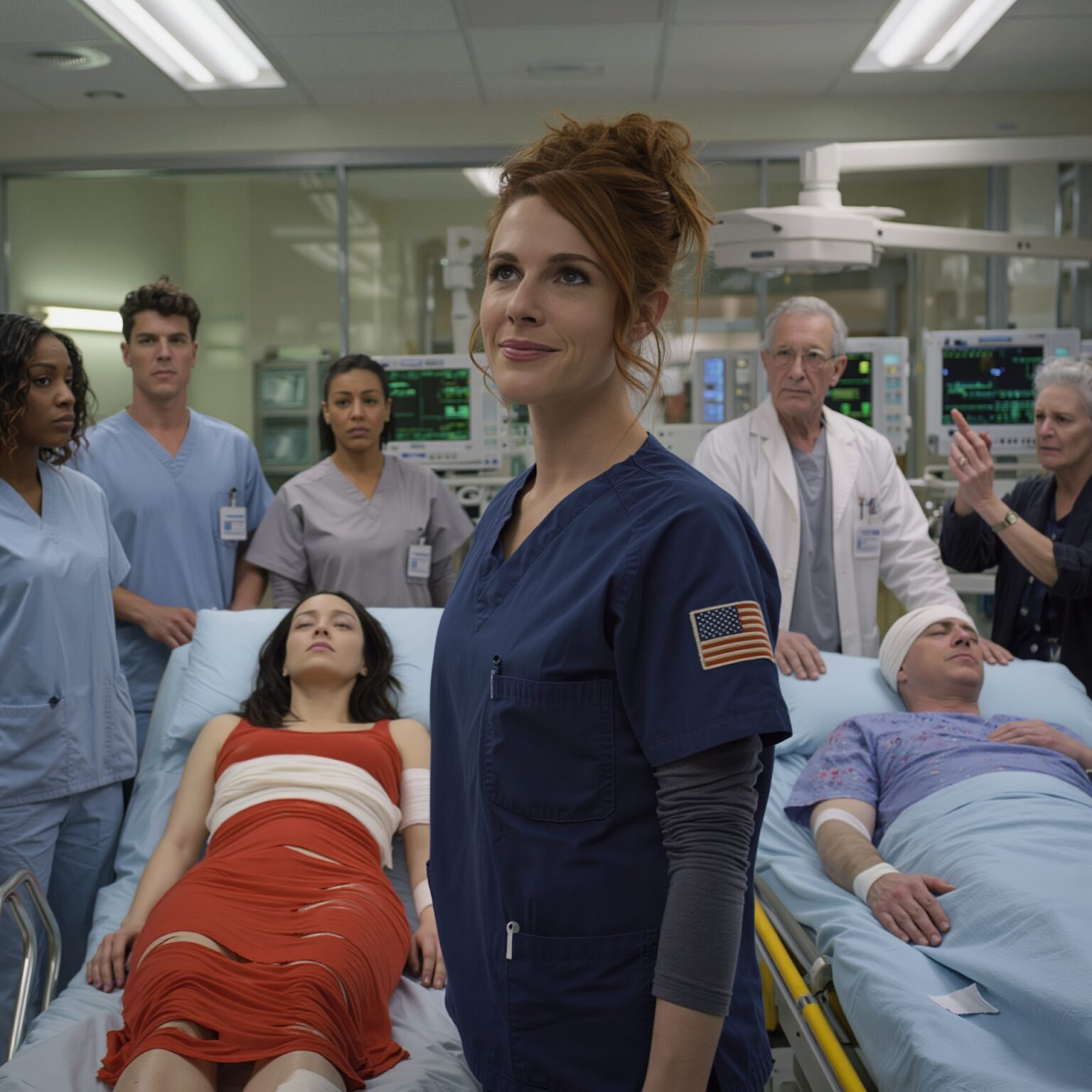
During my night shift at the hospital, when the fluorescent lights hummed softly and the corridors felt suspended in that strange after-midnight stillness, two gurneys were rushed into the emergency department at once, wheels rattling sharply against the floor, voices calling out vitals with practiced urgency. I had been charting notes at the nurses’ station, half-aware, half-tired, running on coffee and muscle memory, when something about the chaos caught my attention. It wasn’t the sirens or the shouting — those were familiar sounds. It was the way one of the paramedics hesitated before handing over the wristbands, as if bracing for impact. When I glanced down, my hands went cold. The names printed there weren’t strangers. They weren’t distant relatives or coincidences. They were my husband — and my sister-in-law.
I didn’t cry.
I didn’t scream.
I didn’t ask why.
Years of training kicked in before emotion could even try to surface. I directed the team, assigned rooms, stabilized my voice the way I had stabilized countless others before. Inside, something detached cleanly, like a switch flipping from personal to professional. I followed protocol, not instinct, even as pieces of memory tried to rise — late nights he claimed were work emergencies, holidays she conveniently missed, the subtle tension I had always brushed aside because trust felt easier than suspicion. The ER moved fast, and I moved faster, because when lives are on the line, there’s no space for betrayal — only action.
They had been in a car accident. Minor, thankfully. No life-threatening injuries. Bruises, a fractured wrist, a concussion scare. Enough damage to justify panic, not enough to justify the story I knew would come next. When I stepped into the curtained bay where my husband lay, his eyes widened — not in fear, not in relief — but in the unmistakable shock of someone caught. His mouth opened, then closed again. He looked at me like a man realizing the ground beneath him had disappeared. I adjusted his IV calmly, checked his vitals, and spoke to him in the same measured tone I used with any patient. “Try to stay still,” I said. “You’re lucky.”
I didn’t ask why he was with her. I didn’t need to. The truth sat between us, heavy and undeniable, louder than any confession. Down the hall, my sister-in-law avoided eye contact entirely, her face pale beneath the hospital lights, fingers gripping the edge of the bed as if holding on might stop reality from closing in. I didn’t go to her. Not then. Not yet.
By the end of my shift, the adrenaline faded, and clarity settled in its place — sharp, unwavering, almost peaceful. I finished my rounds, handed off reports, and clocked out as if the night had been ordinary. As if my life hadn’t just split cleanly down the middle. When my husband was discharged, he tried to speak. I raised a hand, stopping him without anger. “Not here,” I said quietly. “Not now.”
At home, I didn’t unpack his excuses or entertain explanations. I sat at the kitchen table, the same place where we’d shared meals and plans and quiet mornings, and I made a decision with the same precision I used at work. I called a lawyer. I booked a therapy appointment — for myself, not for us. I packed a bag for him and placed it by the door before he even finished showering. When he finally tried to talk, voice shaking, I looked at him with the calm certainty of someone who had already chosen her future. “I don’t need details,” I told him. “I needed honesty. You made your choice long before tonight.”
The days that followed were strangely quiet. No screaming matches. No dramatic confrontations. Just distance — clean, intentional, final. Family members tried to mediate, to soften edges, to explain away betrayal as a mistake. I listened politely and declined. Because mistakes are accidents. This was a pattern. And I had learned, standing under hospital lights with lives in my hands, that patterns don’t change unless someone breaks them.
I returned to my night shifts with a steadiness that surprised even me. Caring for strangers felt easier than ever — not because I was numb, but because I was grounded. I had faced the worst kind of emergency, one no training prepares you for, and I had survived it with my dignity intact. Healing, I realized, doesn’t always look like tears or forgiveness. Sometimes it looks like calm boundaries, quiet strength, and the courage to walk away without needing closure wrapped in apologies.
Because that night, when two gurneys rolled into the ER and the names on the wristbands stopped my breath, I didn’t fall apart.
I stood up.
I chose myself.
And I never looked back.