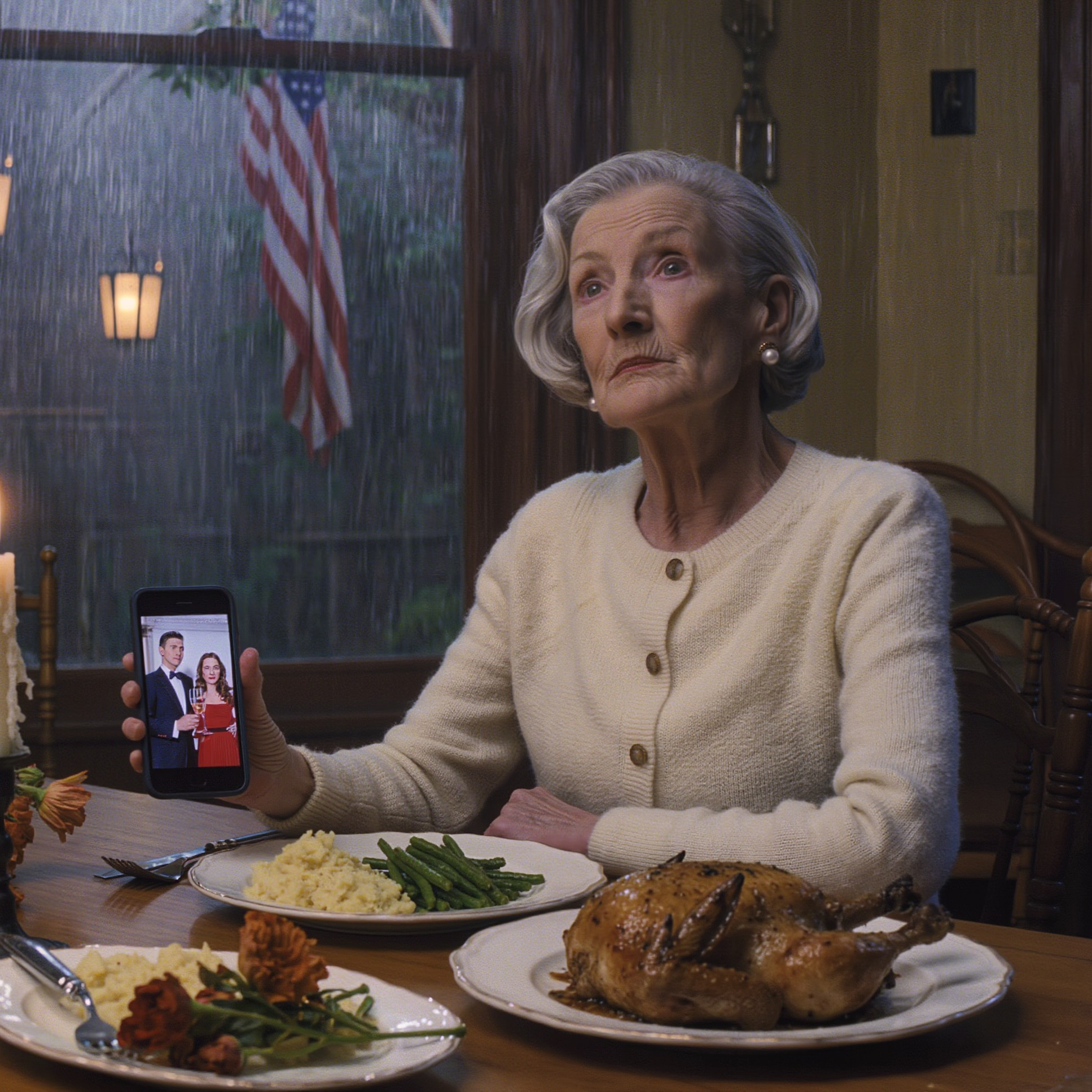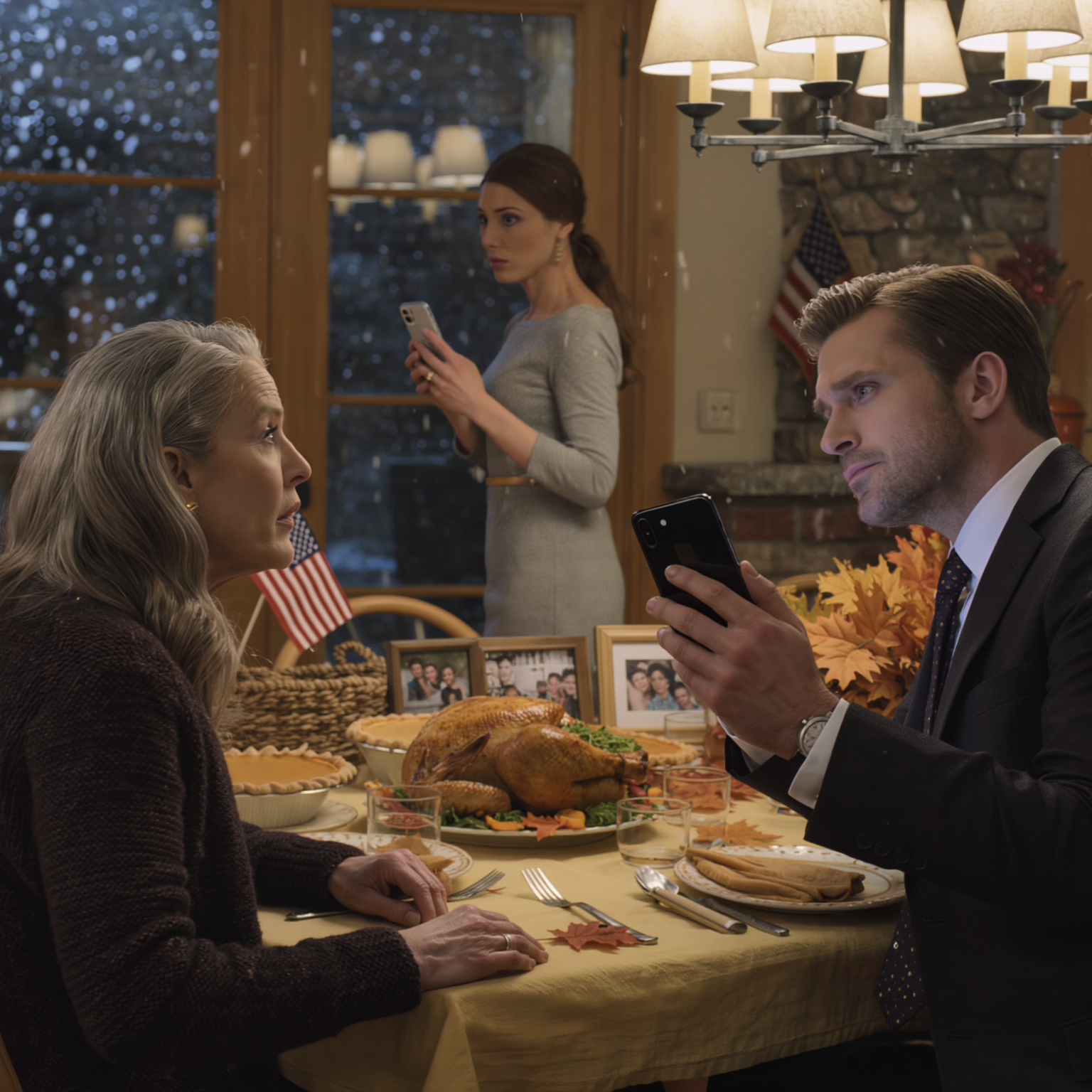
On Thanksgiving Day, the aroma of roasted turkey and pumpkin pie was supposed to be the only thing filling the house with warmth, but instead I felt a chill I hadn’t expected. My son — not just any son, but a man who had built a successful life, made smart investments, and been called “self-made” more times than he cared to admit — was standing in the doorway wearing a crisp shirt, a polite smile, and a question that felt like a sudden drop in temperature. As he walked over, his voice reflected the casual confidence of someone accustomed to assumption: “Mom, did you like the lake house I gave you?” I froze — not out of shock that he might buy me something extravagant, but because I had absolutely no idea what he was talking about. A house? A lake house? Something he “gave” me? I swallowed the sudden lump in my throat and said without thought, “What house? I’ve never received anything like that.” The silence that followed wasn’t the awkward pause of confusion — it was the jolt that connects one moment to the next, like the air in a room holding its breath.
My son’s face shifted — not to embarrassment, but to a flicker of surprise that betrayed something deeper. He blinked once, as though a page in his mental script had unexpectedly torn out, and then he smiled with that half-smile people use when something unexpected has arrived but they haven’t quite processed it yet. “Oh,” he said lightly, like he was talking about the weather, “I talked with your financial advisor last month and we transferred the deed. I thought you knew.” Even as the words landed in the air, they felt foreign, like someone had written them on a page I had never opened. My financial advisor? Lake house deed? None of it registered in my memory. And the room — once filled with laughter, clinks of china, and the gentle buzz of holiday anticipation — suddenly felt hollow around us.
I could sense the unsteady quiet, like a booked smile waiting to crack, and I searched his face for a clue that perhaps this was some kind of misunderstanding, a miscommunication, something less dramatic than what it felt like. But his eyes were steady, as though he believed I had known. My daughter-in-law shifted slightly beside him, offering a polite smile that didn’t reach her eyes, like she was waiting for the punchline to a joke she wasn’t sure was funny. In that instant the room felt smaller — the hearth no longer warm, the laughter a distant echo rather than an embrace.
I didn’t lash out. I didn’t accuse. I just stood where I was, swallowed the rising tension, and chose my next words with a calm that surprised even me: “I truly don’t remember this. Are you sure it was me you meant?” My voice was steady, not cold, but measured — the tone someone uses when they need space to think without defensiveness coloring the moment. My son hesitated, like a pianist unsure of the next chord, and reiterated details I had never heard before, names and figures and property addresses that sounded real but felt vividly unfamiliar. The confident ease with which he spoke made me wonder: had he assumed generosity equaled consent? Had he given without asking — and then expected gratitude without explanation?
Dinner, which had been laid out moments earlier with steaming sides and freshly carved turkey, became something I walked toward with a kind of emptiness I hadn’t known before. Conversations among cousins — once warm and easy — felt distant. My hands felt oddly heavy in my lap, as though the weight of being misunderstood sat there with me instead of comfort. Thanksgiving was supposed to be a celebration of gratitude and family bonds, not a reveal of assumptions unexamined.
I sat down and tried to focus on the turkey — the rosemary-scented bread, the sweet texture of yams — the ordinary pleasures that should have grounded me. But words kept swirling in a circle around my head: lake house, deed, transfer, advisor. Not one of those had ever crossed my mind in the context of my life. I thought about security, about independence, about dignity — how each of those things matters far more deeply than a house ever could. I realized in that moment that my son had equated an asset with appreciation — as though giving property automatically translated to emotional connection, and that assumption left me hollow rather than honored.
My grandson — the little boy who once curled up in my lap with animated stories about dinosaurs and rockets — watched all of this with the wide, honest eyes only a child can have. At one point in the quiet lull of the meal, he leaned over, wrapped his tiny arm around my shoulder, and whispered, “Gran, are you okay?” His voice was innocent but sincere, as though he recognized the subtle shift in the air even before understanding it. His look wasn’t pity. It was concern — pure, unfiltered concern that didn’t require explanation or pretense.
I smiled at him gently, the kind of smile that a grandmother gives when she wants a child to hold onto hope even if grown-ups sometimes get tangled in their own assumptions. And in that small exchange — the warmth of his arm, the softness in his eyes — I felt something clearer and truer than any house deed ever promised: belonging isn’t built on deeds or gifts, but on presence, understanding, and mutual respect.
The rest of the meal passed with small, careful conversation. My son made a few attempts to explain the lake house story again, but this time with deeper detail, as if he believed repeating it would make it familiar. I listened, nodded, and when the moment was right, I spoke with a calm clarity that wasn’t angry, but honest: “I appreciate that you intended generosity — but giving a house to someone who didn’t agree to it before it happened doesn’t feel like a gift. It feels like an assumption about what I want and what I know.”
My daughter-in-law, who had been quiet until then, reached across the table and said softly, “We thought you’d love it.” Her tone wasn’t defensive. It was tentative, as though this — the possibility that they had misread me — was a revelation to them as well.
I looked at them both, not with the disappointment I felt, but with a gentle clarity: “Luxury doesn’t create understanding. Conversation does. And consent matters more than surprise.” The room didn’t erupt. There were no dramatic apologies or immediate corrections. What happened instead was something more subtle: a shift in the way we spoke afterward, an unspoken awareness that assumptions — even generous ones — can land on the wrong soul if they’re not rooted in shared understanding.
After dinner, as dishes were cleared and relatives drifted into cozy corners with coffee and dessert, my grandson took my hand and led me to the window where the late afternoon sunlight slanted through the trees. He didn’t say anything profound. He just leaned against me, and in that quiet space I realized something unmistakable: home isn’t a roof, a lake view, or even a deed in your name. Home is the feeling of being seen, heard, and chosen with intention — not assumption.
And that Thanksgiving, more than any material promise of property or family legacy, I rediscovered what it truly feels like to belong — not because someone gave me something grand, but because someone cared enough to sit beside me with honesty, concern, and shared presence.
That — far more than any lake house — was the gift worth grateful living.