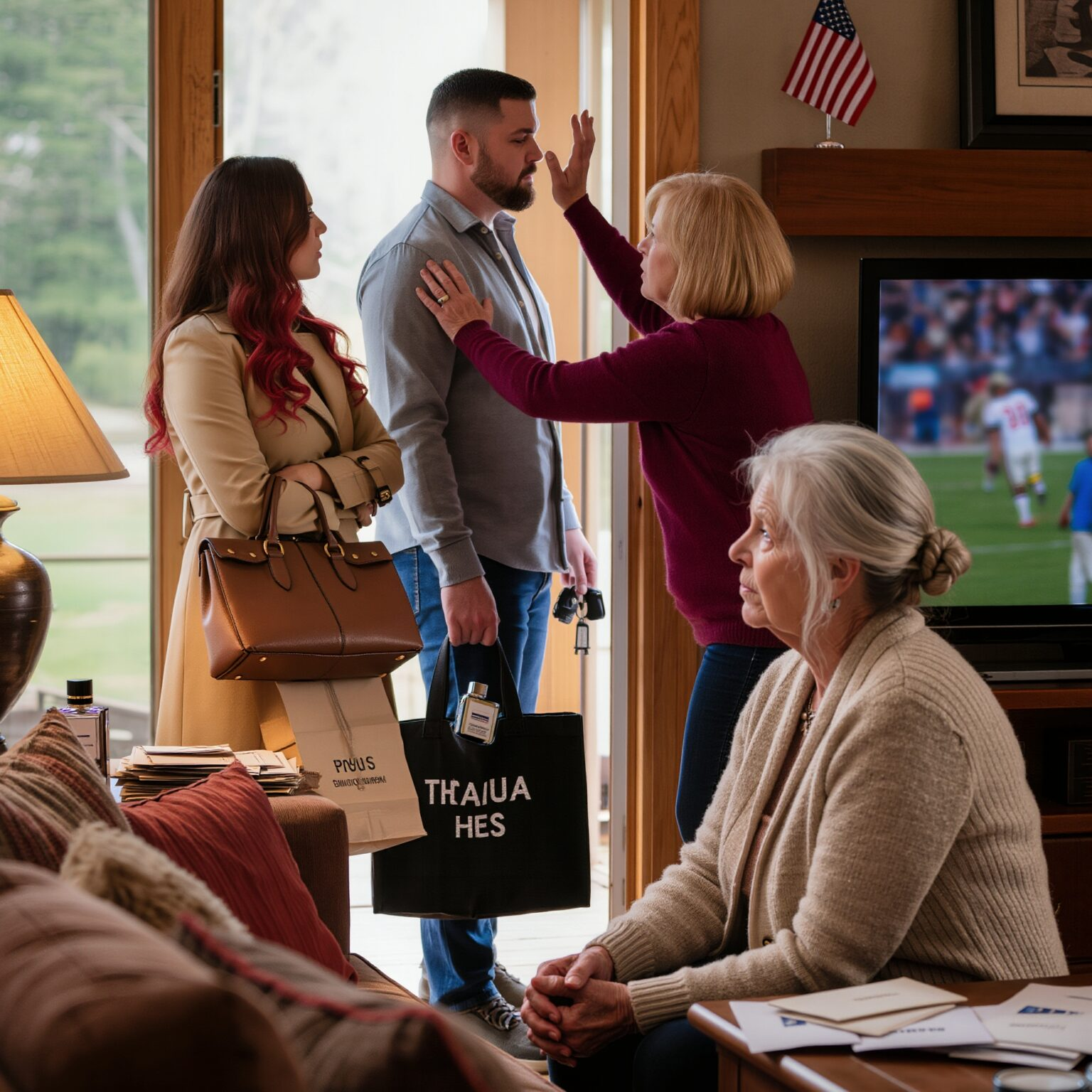
My sister arrived just after sunset, her suitcase rolling over the cracked pavement, her smile wide and tired in that familiar way that comes from long flights and longer separations. We hugged in the doorway longer than necessary, the kind of embrace that silently tries to make up for years apart. She didn’t come empty-handed. She never did. Carefully, almost ceremoniously, she laid the gifts on the table: a Swiss watch wrapped in soft cloth, French perfumes sealed in elegant boxes, and an Italian leather handbag that still smelled faintly of newness and travel. “These are for you,” she said simply, like it was the most natural thing in the world to bring beauty back for someone you loved.
For a moment, I just stood there, overwhelmed by the thoughtfulness of it all. I hadn’t asked for anything. I hadn’t hinted. She remembered my taste, my habits, my small joys. The watch wasn’t flashy, just timeless. The perfumes were the ones I used to admire behind glass counters but never bought. The handbag was practical, sturdy, the kind meant to last for years. It felt like being seen, truly seen, in a way I hadn’t felt in a long time.
Then my phone rang.
It was my son.
I answered casually, still smiling, still in that gentle warmth my sister had brought with her. I mentioned, almost offhandedly, that she had arrived and brought a few things back for me. There was a pause on the other end — not surprise, not happiness for me — but calculation. His tone shifted quickly, sharpened by familiarity and entitlement. He started asking questions, not about her, not about the trip, but about the gifts. What brand was the watch? How expensive was the bag? Were the perfumes sealed? His curiosity didn’t feel innocent. It felt like inventory.
Before I could finish a sentence, he began assigning ownership as if the items were already his to distribute. The watch would “suit him better,” he said, because he had meetings. The handbag would be perfect for his wife. The perfumes could be “shared,” because after all, they were just sitting there. He spoke quickly, confidently, as though generosity toward me was merely a temporary stop before the things reached their proper destination.
I didn’t interrupt him. I didn’t argue. I held the phone to my ear and let him talk himself into revealing something I already knew but had long avoided naming. He didn’t see me as a person with her own boundaries, tastes, or right to receive without surrendering. He saw me as a passageway — a place things passed through on their way to him.
Across the room, my sister watched my face change. She didn’t hear his words, but she read the shift in my posture, the stillness that crept into my shoulders. When I finally hung up, she asked quietly, “Is everything okay?” I nodded, because explaining entitlement feels heavier than silence sometimes, and I didn’t want her first night back to be weighed down by it.
Later, when the house grew quiet and the gifts sat where she’d placed them, untouched, I thought about how often love gets mistaken for access. How often kindness is treated like a resource to be claimed rather than a gesture to be respected. My sister had crossed oceans thinking of me, choosing each item with care, not imagining that anyone else would feel entitled to rewrite her intention.
The next morning, my son texted again, more direct this time, asking when he could “pick things up.” That was the moment something settled inside me — not anger, not sadness, but resolve. I replied calmly, telling him the gifts were mine, that they had been given with love and meant for me alone. There was no apology in the message, no justification. Just fact.
He didn’t respond right away.
I wore the watch that day, its weight steady on my wrist. I used one of the perfumes before going out, light and unfamiliar, a reminder that I was allowed new things, even now. I carried the handbag with me, not because it was expensive, but because it was mine, chosen for me by someone who still knew how to give without taking.
When my son finally replied, his message was short and cold. I didn’t answer it. I didn’t need to. Boundaries don’t require debate once they’re stated. They just require consistency.
That evening, my sister and I sat together, talking about her travels, about places I might never see but could imagine through her stories. The gifts were no longer just objects. They were symbols — not of luxury, but of being valued without conditions.
And in that quiet realization, I understood something that took me years to learn: love that demands repayment isn’t love at all, and generosity that erases the recipient is just another form of control.