I had spent weeks thinking about Christmas this year — not just the menu or the decorations, but what I would give my son, something meaningful, something that said love, history, and appreciation. I remembered a delicate necklace my own mother had once worn, a piece of heirloom jewelry with a small but luminous gemstone. Before she passed, she had told me to have it refinished, to wear it when I felt most myself. I treasured it, but when I saw that my son was going through a rough patch — feeling overlooked, unappreciated, worn thin by life and work — I thought perhaps that necklace, with all its quiet beauty and emotional weight, would be more meaningful in his hands than mine. So I took it to the jeweler. We cleaned it, polished it, reset the delicate chain. It was ready just days before Christmas.
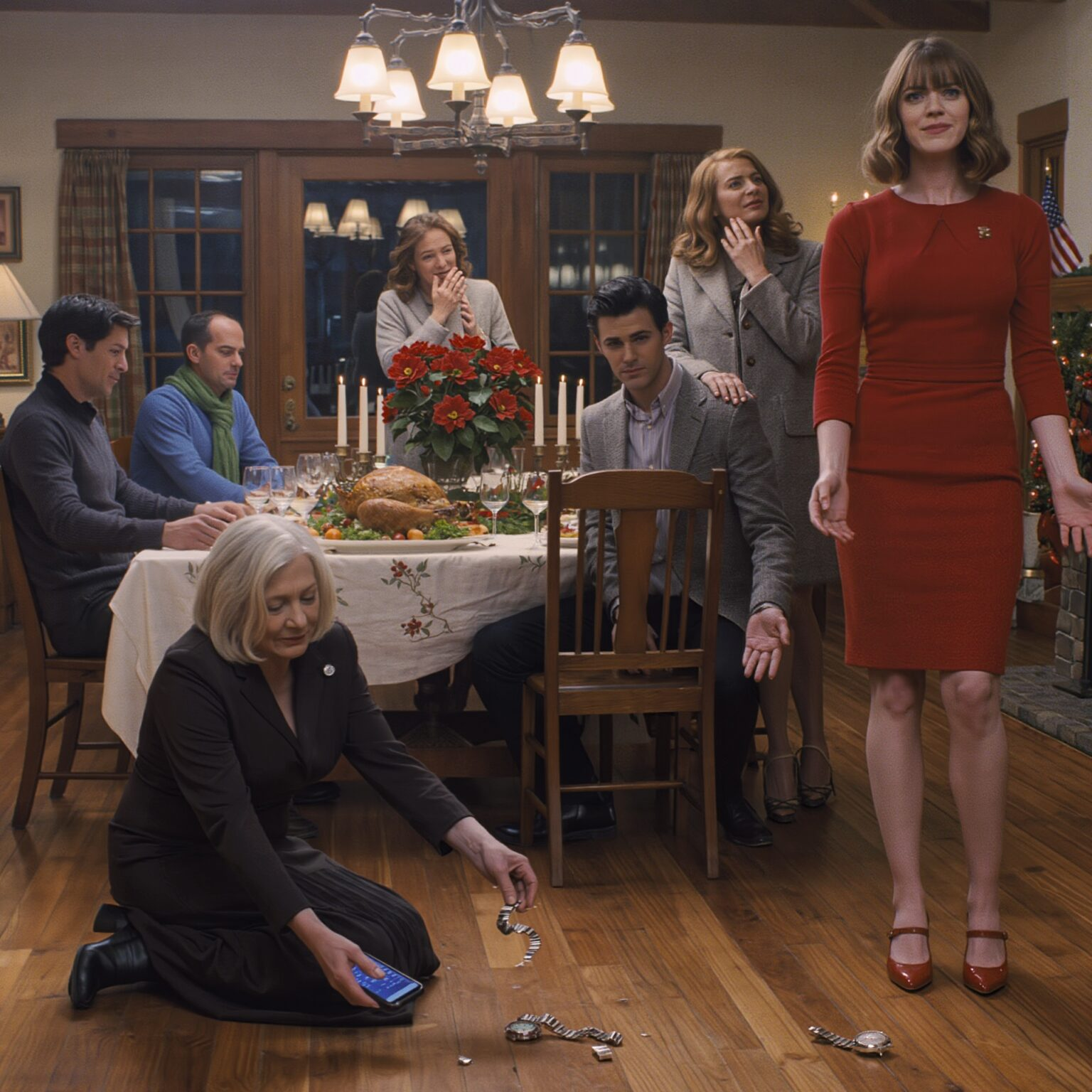
On Christmas Eve, the house was warm with laughter and familiar aromas — roasted turkey, spiced cider, and the kind of comfort that only decades of shared meals can cultivate. The living room was decked with twinkling lights, ornaments collected over the years, and the fireplace casting a golden glow. I carried the carefully wrapped box to the table, placed it in front of my son, and watched him peel back the paper with eager curiosity. But before he could lift the lid, my daughter-in-law leaned across and snatched the box from his hands. I remember the sharpness of the moment — the way her smile didn’t quite reach her eyes, the too-bright angle of her posture, like someone prepped for an audience rather than a family gathering.
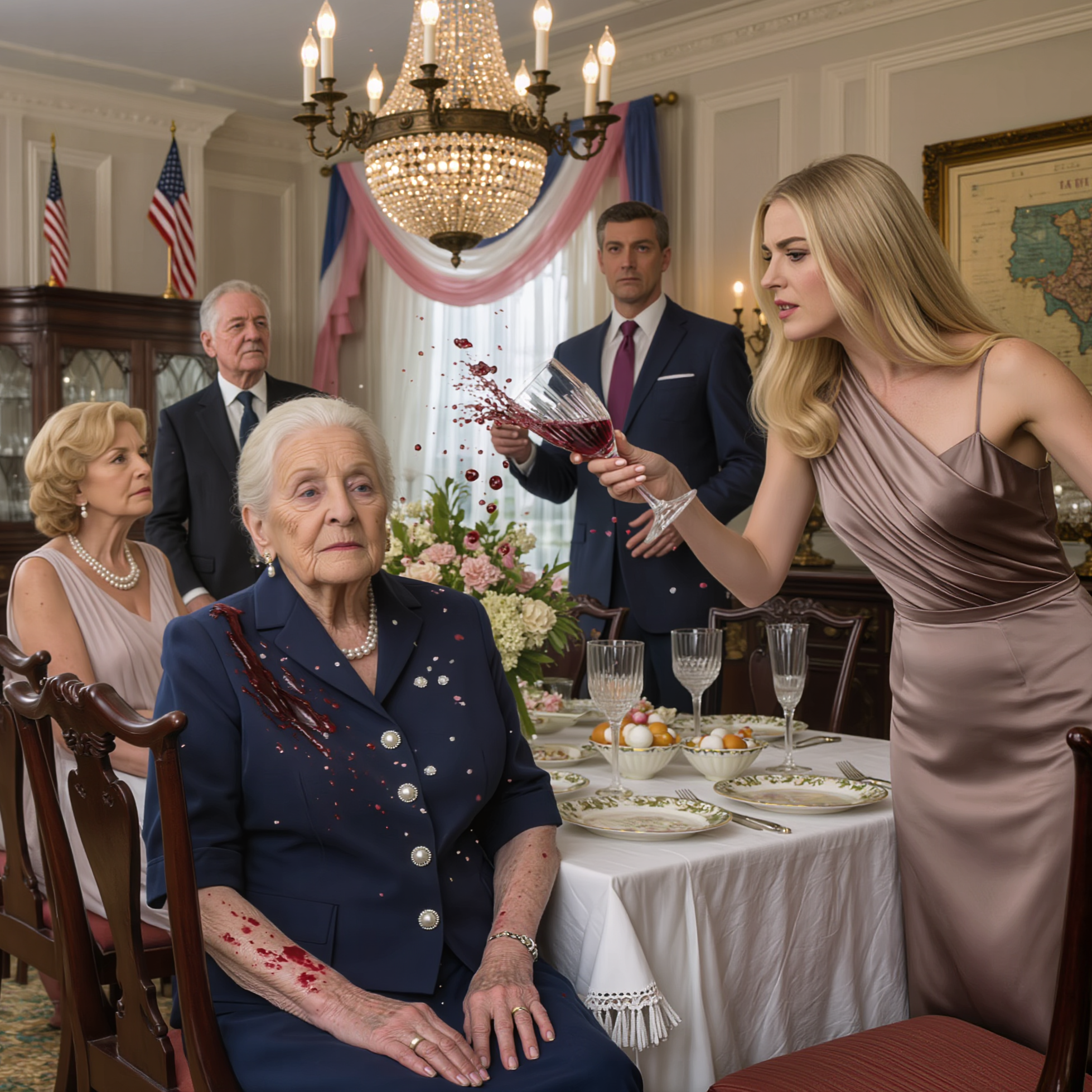
She looked at the box, then at me, then back at the paper with a sneer I didn’t expect, and said loudly enough that all eyes turned toward us: “This cheap jewelry? Really? Is this supposed to impress anyone?” Then, with a deliberate flick of her wrist, she let the box slide from her hand — not dropped as one would casually mishandle something, but let it drop as though she intended to signal its worthlessness. The box hit the floor with a hollow thump that felt as though it echoed directly against the center of my chest.
Everything froze.
Not with shock, not with polite discomfort, but with that sudden, jarring silence that happens when someone crosses a line no one thought could be crossed in that room. My son blinked, as though he could hardly believe what he had just witnessed. Cousins shifted in their seats. Even the younger ones, who didn’t fully understand the gravity of adult disdain, felt the shift in the air and glanced between us like something heavy had just fallen.
I didn’t gasp.
I didn’t cry.
I didn’t respond with anger.
I simply reached down and picked up the box.
Not with trembling hands.
Not with bitterness.
Not like someone defeated.
I picked it up calmly, looked my daughter-in-law in the eyes, and allowed a quiet moment to settle between us — the kind of moment that reveals more than any raised voice ever could.
Then, gently, I opened the box again and said — not to her, not to the room, but to my son — “This was your grandmother’s. She wore it on every occasion that felt important to her. I want you to have it because I think you are worthy of carrying with you things that are meaningful, not showy.” My voice didn’t shake. It didn’t plead. It just stated the truth.
My daughter-in-law didn’t like that. Her face flickered with something like irritation, perhaps disappointment that her attempt to embarrass me had not landed as intended. She looked away, and for a moment I saw the discomfort that comes when a performance meant to elevate oneself instead reflects insecurity.
My son, after a moment of silence that felt like a breath held too long, reached out and lifted the necklace from the box — not moving it away from me in rejection, but taking it with a slow, deliberate care that said this matters to me. He didn’t rise to scold his wife. He didn’t demand explanations. He simply accepted the gift for the meaning it held — family history, emotional weight, and his grandmother’s quiet legacy.
The room exhaled.
People resumed eating.
Laughter returned — softer, more sincere.
Later, after dinner and when a few guests had drifted away with warm goodnights and merry wishes, my daughter-in-law approached me privately. I wasn’t angry. I wasn’t defensive. I was curious, which is not the same thing as hoping for apology. She looked uneasy, as though she had rehearsed her next words for days before realizing reconciliation isn’t performed — it’s felt.
She said quietly, “I didn’t mean to…” and then paused. Not I’m sorry, not I understand now, but something like I didn’t expect things to land that way.
I replied simply, calm and steady: “Gifts aren’t about price tags. They’re about connection.” I didn’t push her toward guilt. I didn’t lay blame. I only offered an observation — a bridge, not a hurdle.
Christmas night didn’t transform into a perfect family story. There were no grand apologies or declarations of change. But what did happen was subtle: an unspoken understanding of what respect looks like, especially under pressure.
A gift — even one that feels small by worldly standards — carries meaning when given with intention, remembered with warmth, and received with dignity.
Cheap?
Not in sentiment.
Not in connection.
Not in love.
And that — more than any glittering trinket or proud display — is what makes a moment truly valuable.