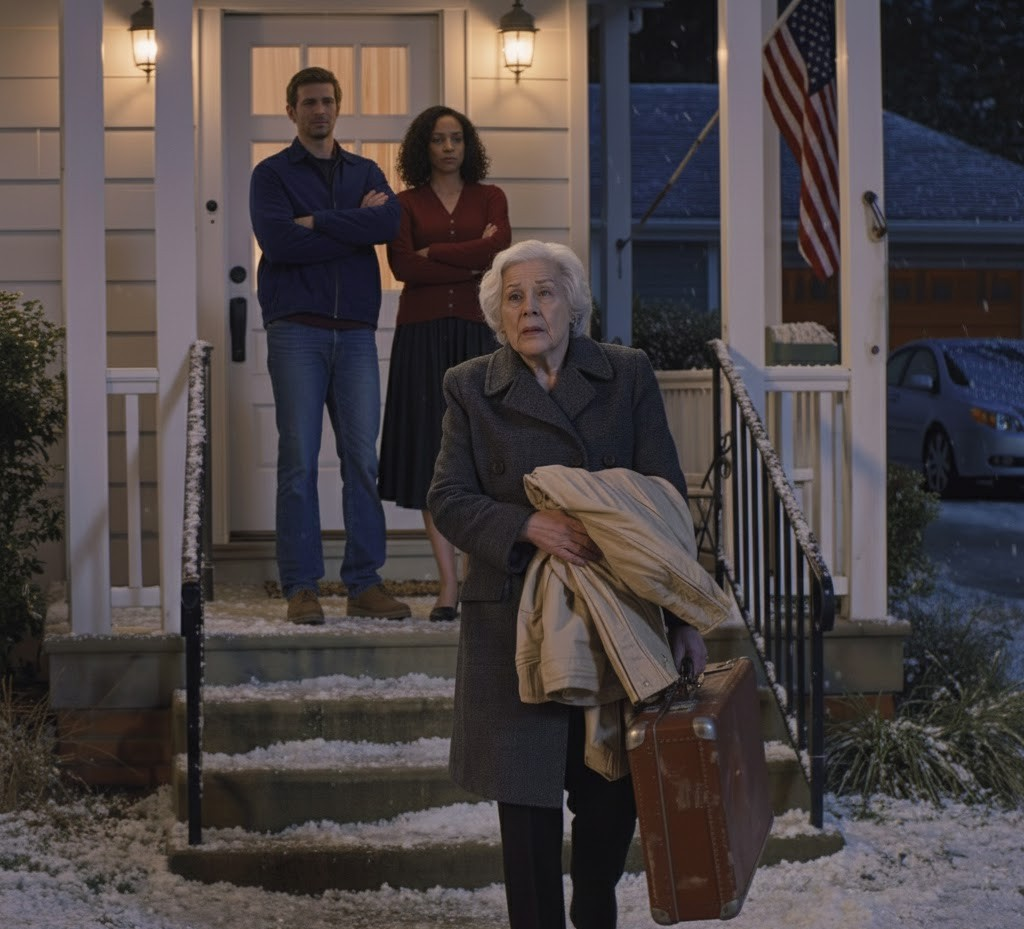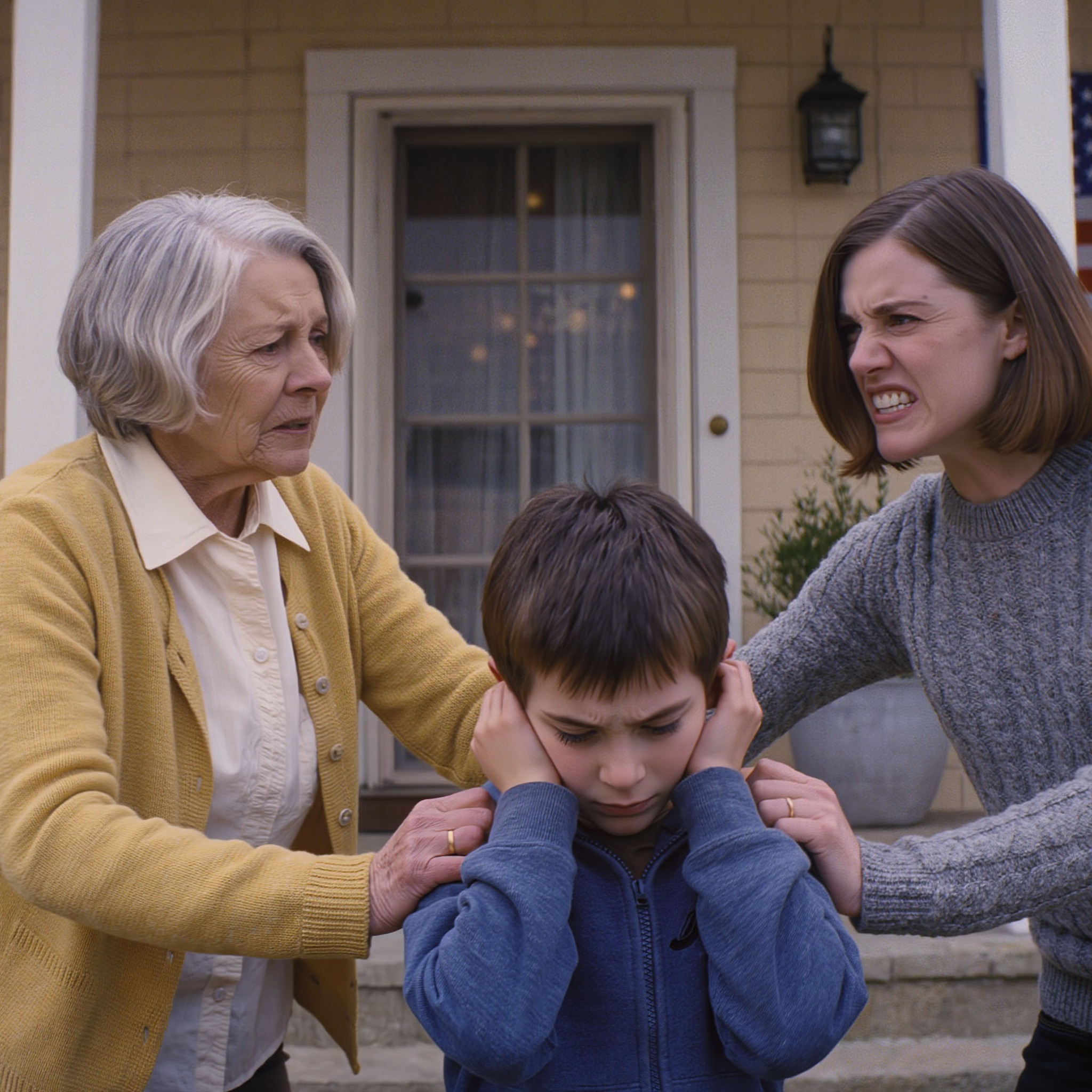
I watched him step out of that courtroom with the kind of smug grin only someone who believes he’s completely won could wear — a slow, confirming smile that carried a painful layer of triumph. My son couldn’t stop talking about it, either; he didn’t just step away from the bench with relief — he mocked me right in front of that judge, chuckling about how I, his own mother, had ever entertained hope of fairness, dignity, or justice in that hearing. To him it was a game won, a scrap of youthful ego tickled in public. I stood there in the gallery like a still photograph — calm, silent, watched by eyes that didn’t understand yet what was about to unfold. But I had learned many years ago that moments appearing settled can still shift without warning, and that truth sometimes walks into a room after everyone else thinks the scene has already concluded.
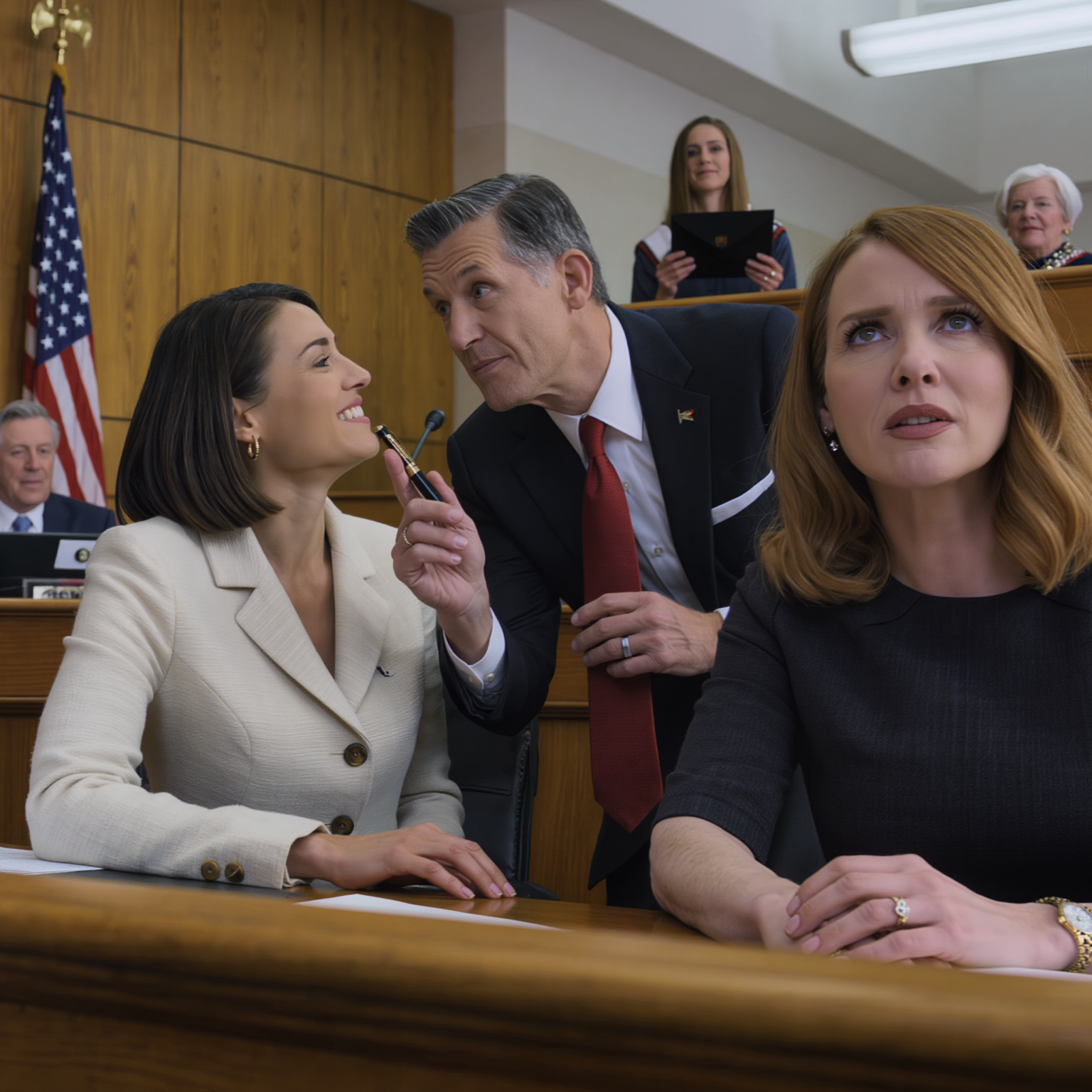
Just as the judge was gathering his papers and the bailiffs began to close files, the courtroom clerk approached with a small, plain envelope — nothing ornate, just a sealed packet with no visible markings except for my name handwritten across the front. The judge paused mid-turn when the clerk placed it on the bench between us, confusion rippling outward like a quiet breeze. He, my son, and half the room looked at me at once — not with hostility but with curiosity, that faint uncertainty that arises when something unexpected interrupts a conclusion everyone already believed they understood.
I didn’t open it right away. I didn’t look at my son or react with triumph. I simply held the silence — that quiet waiting space that any person who has lived long enough knows leads to truth more powerful than drama. When I finally broke the seal, I found a single sheet of paper and a small card beneath it. The first line I read dissolved the smug grin right off my son’s face faster than anyone could deliver a retort: “To the rightful heir of the Longford estate.”
I looked up, startled, and scanned the courtroom with new eyes — the judge, the bailiffs, the clerk, my son’s face flattening into confusion. The piece of paper in my hand wasn’t a letter of consolation or pity. It was a document. A legal declaration. A binding confirmation that a previous trust — established in secrecy decades ago — had named me as the primary beneficiary. The Longford estate was one of those quiet, undiscussed family legacies from my youth — something hinted at in ancestral photographs and dusty ledgers but never spoken of in direct terms. It existed in family rumor rather than clarity, in parent-to-parent whispers rather than open conversation.
The card underneath read simply: “In testament to truth, integrity, and lineage — rightful inheritance belongs where it was always due.”
My son stared at the paper, paper at him, and then back at me — the realization dawning that this was why the clerk had called my name, why this envelope had been kept sealed until after the hearing’s formal closure, and most importantly, why the dynamics of power he had assumed were his suddenly shifted in a heartbeat.
He sputtered something about timing or coincidence, but his bravado had dissolved into something softer, unsteady, as though the ground beneath his assumptions had just been quietly pulled from below him. His wife — the one he had proudly introduced earlier as someone “with connections” — turned pale at the realization that her ostensibly private family history was now unmistakably intertwined with mine. She had never mentioned this part of her lineage — not to me, not to anyone — and in that moment even her composed poise faltered as she glanced toward her husband, seeing in his expression not triumph but shock, embarrassment, and a dawning comprehension of how deeply he had misjudged the situation.
The judge looked at me with a reserved curiosity rather than impatience — the moment was no longer about adjudicating matters of petty grievance and family conflict. It was about equity, truth, and rightful inheritance. The bailiffs quietly stepped back, and the courtroom shifted from confrontation to reconsideration, as though everyone present realized they were no longer witnessing a procedural end but the start of an unexpected opening.
I folded the document slowly, not with relish, not with emotional triumph, but with that deeper clarity that comes when truth is finally revealed — the kind that sits in your chest with a steady warmth instead of erupting in fireworks. My son’s ego, once brimming with disdain, now faced the silent weight of a truth he had never expected: that inherited wealth, legacy, and family history are not always what they appear on the surface. And when they do arrive, they don’t validate arrogance — they simply reveal it.
I didn’t rub this revelation in. I didn’t make a dramatic speech. I looked at my son, then at his wife, and said quietly — with a dignity that doesn’t need applause, only acknowledgement — “This was never about winning arguments. It’s about knowing where truth has always stood.” There was no triumph in my voice, no bitterness, just a calm acceptance of what was true.
The room didn’t erupt in cheers. It didn’t erupt in shock or spectacle. But there was a moment — a breath — where everyone present understood that fortunes aren’t won in court hearings alone, and that privileges assumed can be dismantled simply by facing what was never denied, only forgotten.
Later, as we walked out of that courtroom into the bright sunlight, my son did not apologize in a theatrical way. He didn’t need to. Something deeper took shape in his silence — the beginning of humility, perhaps, or at least the first trace of understanding that people and their stories have dimensions deeper than surface assumptions.
And I, with a calm step and the envelope tucked gently into my purse, realized that inheritance is not merely about assets. It’s about where truth lies, and who finally takes the time to look for it.