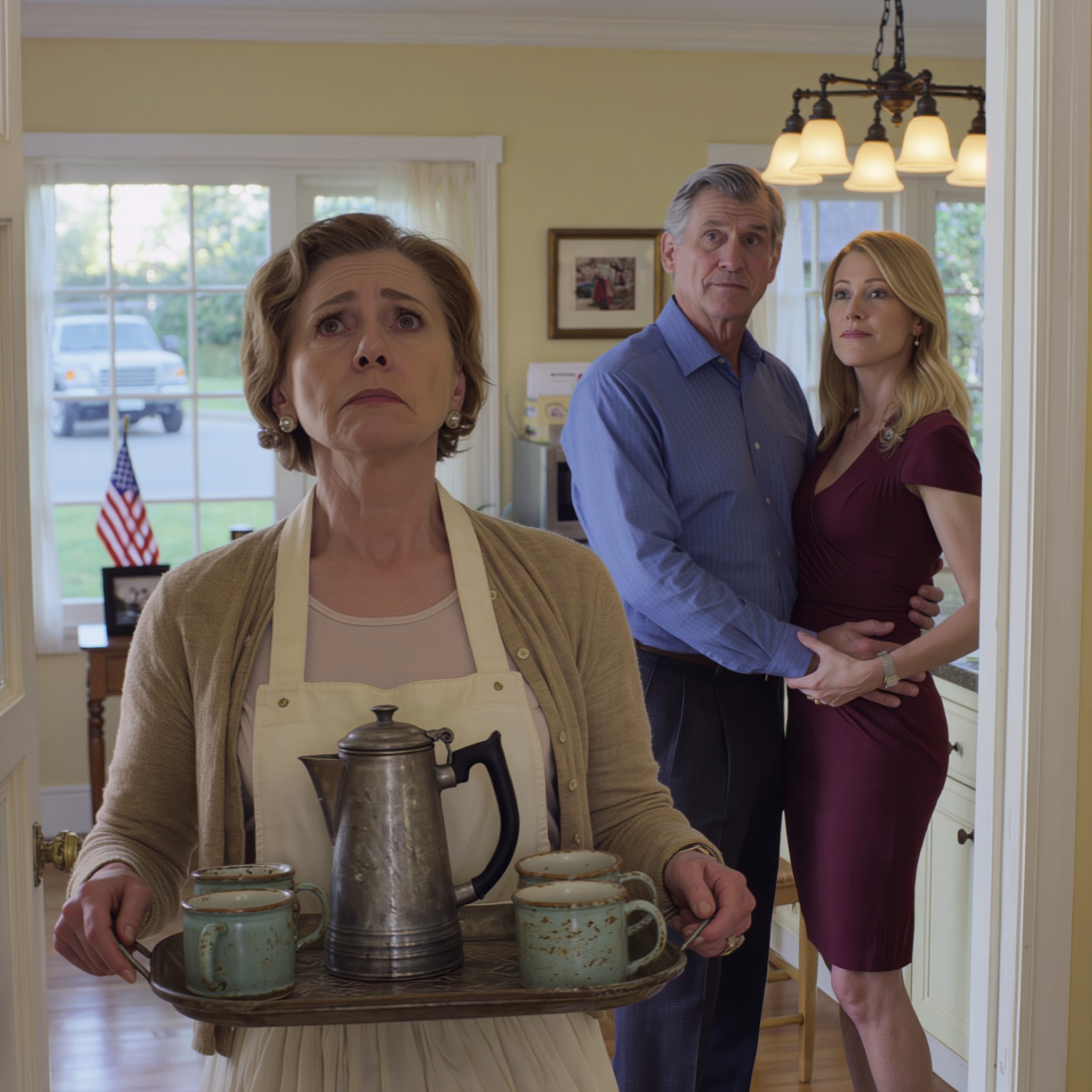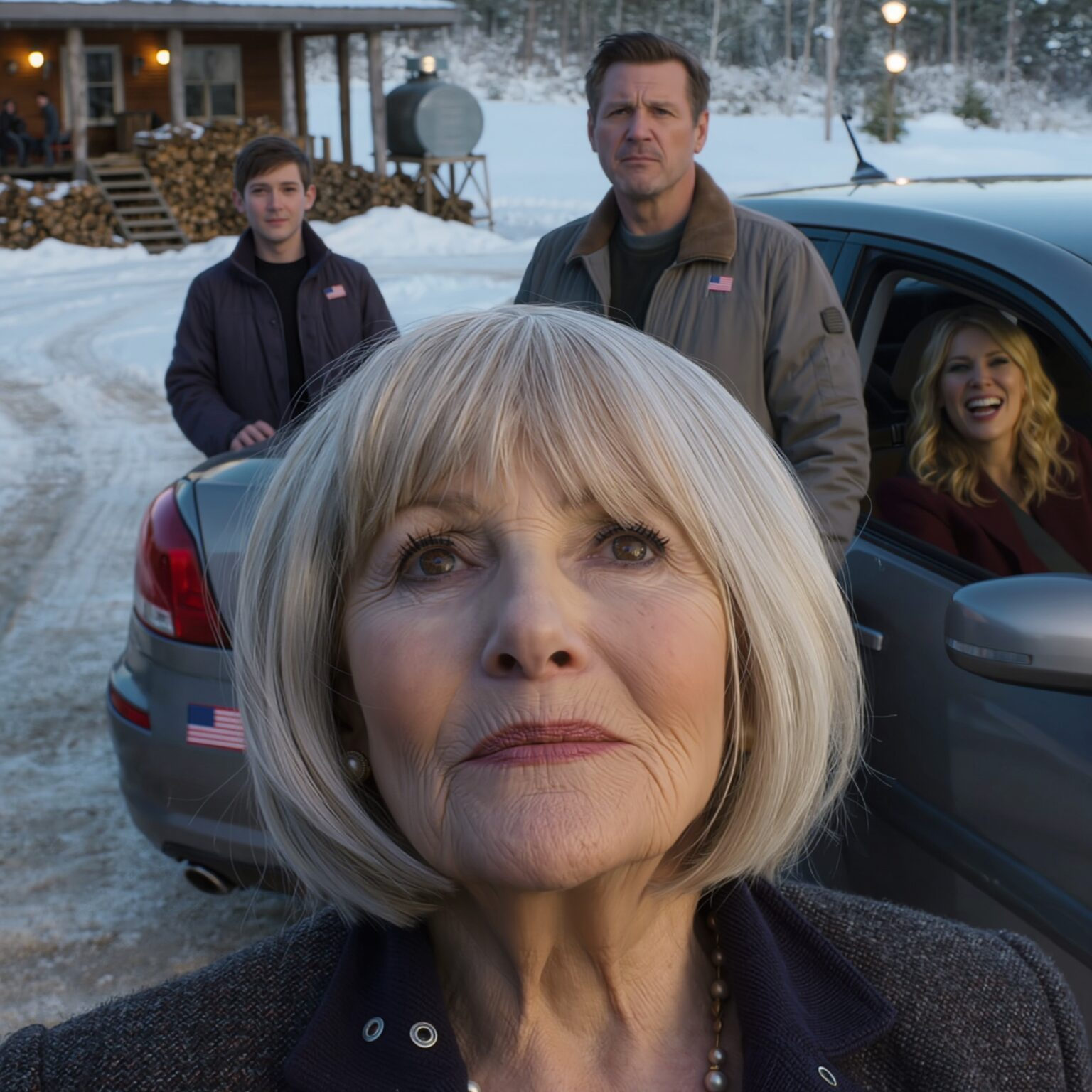
When my son said the words — those cold, astonishing lines that made me picture ice cracking underfoot — he didn’t shout, he didn’t sneer with theatrical cruelty, he didn’t even raise his voice. He stood in my kitchen doorway with that odd mix of casual entitlement and half-smug confidence that used to make me proud, and he said with absolute certainty: “There’s firewood stacked for two weeks and enough food for that long, too. I’m going to the Maldives with my wife… and I’m taking all of your savings.”
He lowered his gaze like it was a practical announcement, not a declaration that tore open something tender and unprotected in me. The words didn’t hang in the air like threats do. They settled there — like snow on a roof edge, quiet at first, then impossibly heavy.
I didn’t collapse.
I didn’t scream.
I didn’t cry right then.
I just stood still.
Because shock isn’t loud. It isn’t dramatic. It’s precise. It’s the moment when the world doesn’t add up anymore.
The house — my home, my decades-old refuge — felt too big suddenly, every familiar shadow under the lampshade too empty, every echo too polite. Firewood for two weeks. Food for two weeks. Those practical details didn’t soothe me. They felt like reminders that someone expected me to survive, not live. I realized then that he wasn’t just speaking about cold months and pantry stockpiles — he was speaking about abandonment with a planning guide.
My son didn’t look at me when he said it. He looked at the space beside me, as though I was already a piece of furniture he had grown bored of — familiar, reliable, but ultimately expendable.
I didn’t ask why he thought this was acceptable. I didn’t argue about fairness or love or loyalty. I stood in that doorway like someone who had seen a part of herself slip from her own story and into someone else’s narrative without explanation.
Then, very quietly — slower than the moment had arrived — I felt something else rise up inside me: clarity.
I left the kitchen.
I closed the door behind me.
I walked down the hall.
Not toward anger.
Not toward collapse.
Toward truth.
I walked into the living room — a room filled with memories of birthdays, school recitals, whispered worries in sleepless nights — and I looked around. I saw photographs, yes — faces smiling, moments of warmth frozen in time — but then I noticed something else: the pattern of my life embedded in the everyday things. The well-worn couch where we had movie nights. The bookshelf full of books I had loved but never finished. The plants that had flourished under my care. None of them belonged to my son. None of them needed his permission or support to continue thriving. They were anchored to me, not to him.
I didn’t say “goodbye.” I didn’t see the point. What I saw instead was something more important: I saw the beginning of who I had become before I defined myself by his needs, his expectations, his presence in my life.
While he packed his bags for the Maldives — sun, beach, endless warmth — I packed my quiet resolve.
Inside me, there was no bitterness. There was no self-pity. There was simply understanding — a kind you don’t feel all at once, but one that settles into your bones like sunlight warming cold stones:
I am not disposable.
I am not invisible.
I am not defined by someone else’s convenience.
I moved methodically, calm and collected. I gathered what I needed — documents, savings, things that felt like investment in my future, not remnants of my past. I didn’t stash firewood for survival. I stored belief in myself like kindling for long nights ahead.
I opened my bank account on my laptop and didn’t see “loss.” I saw ownership. Not of money, but of agency. My savings weren’t just numbers. They were the physical evidence of a lifetime of work, discipline, and integrity. And no one — not even someone born of my own blood — had the right to treat them like windfall for personal vacation fantasies.
I transferred funds carefully, smartly, like someone reclaiming the chapter of her life that had been quietly redirected by assumption. I didn’t feel rage. I felt awareness — awareness that love doesn’t ask for abandonment disguised as practicality, and that compassion doesn’t come at the cost of someone else’s dignity.
Later that evening, when the house was quiet and the firewood stood untouched in its neat little stack, I sat at the kitchen table with a cup of tea and looked out the window at the first star shimmering in the twilight. It didn’t feel cold. Not really. It felt still — like a promise, not a threat.
My son’s departure wasn’t the end of my story. It was the point at which I stopped defining myself by someone else’s perception of me. Family isn’t the group of people who tell you where you belong. Family is the presence that adds to your life without subtracting from your worth.
And in that clarity — in that quiet moment of knowing my own value without needing validation — I realized something vital:
You don’t survive abandonment.
You outgrow it.
Not with bitterness.
Not with resentment.
But with the simple, undeniable truth that your life belongs to you.
And I realized — looking at the firewood and the food and the empty silence — that I possessed something greater than warmth or sustenance.
I possessed myself.
And that is the greatest home anyone could ever build.