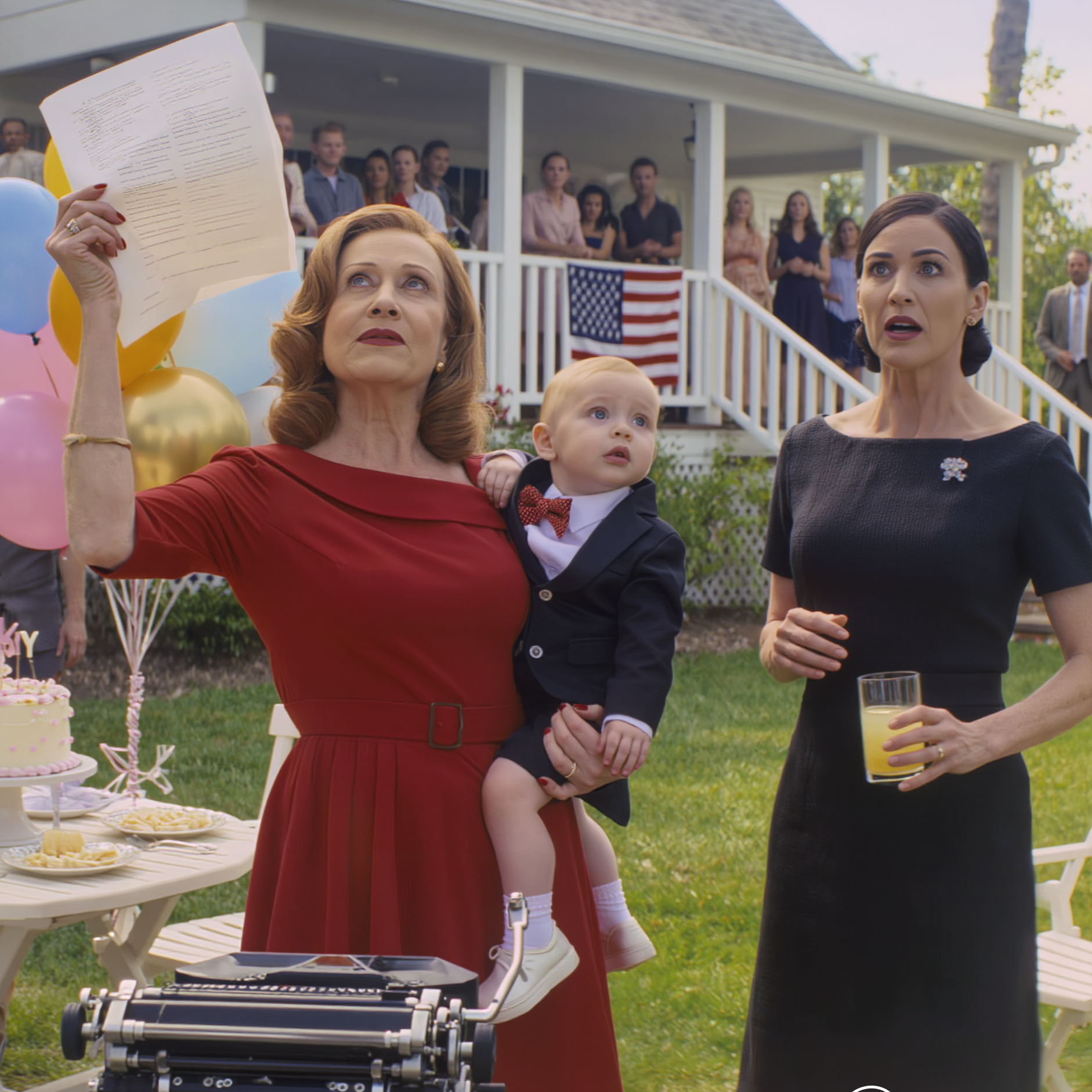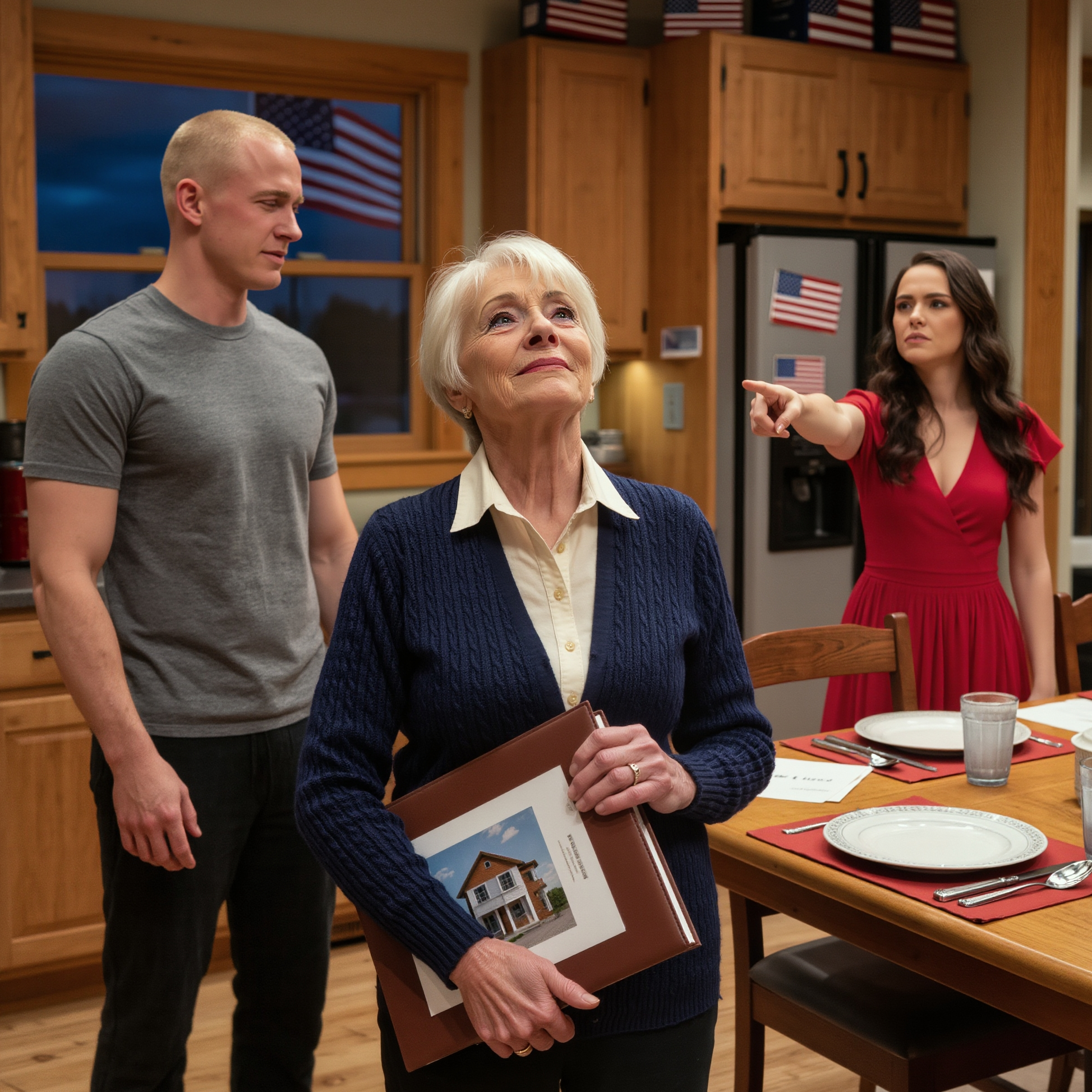
I didn’t expect Thanksgiving to unravel like a scene from a movie I would never have written for myself — but there I was, standing in my daughter-in-law’s grand entryway, feeling the cold snap of her words settle into the air like frost: “You smell like onions again. Don’t come back.” Those words weren’t gentle, they weren’t careful, and they weren’t framed as a moment of cruelty so much as a declaration of dismissal — the kind of statement someone makes when they’ve decided someone no longer belongs in their defined “ideal” picture of life. I remember exactly what I was wearing — a cozy sweater my late husband had given me, soft and warm, and a faint wisp of onion on me because I had cooked all morning, just trying to contribute something hearty and wholesome to the holiday feast. I wasn’t trying to impose. I just wanted to belong in an ordinary, human kind of way. But belonging wasn’t the version of family my daughter-in-law had in mind. She didn’t yell. She didn’t dramatize. She simply declared her boundary with a precision that felt like an incision, done cleanly enough but leaving a bare ache all the same. My son — silent, uninvolved — stood a little behind her, eyes averted, like someone who wants to step in but doesn’t quite understand how to do it without disrupting his own comfort.
I could have argued. I could have cried. I could have begged for understanding. I didn’t do any of those things. I simply turned, walked out the front door, and breathed — not with defeat, not with fury, but with an odd sense of clarity I hadn’t felt in years. Family isn’t always the house you grew up in, the holidays you once celebrated, or the name you carry in common. Sometimes, family is discovered in the spaces between rejection and self-acceptance.
I walked down the quiet sidewalk like someone stepping out of a dream that suddenly feels real. Instead of returning to the familiar — to the echo of discomfort and strained smiles — I made a decision so simple it shocked even me: I walked to the train station that was only a few blocks away, bought a one-way ticket for the next departure, and boarded with nothing but a small bag and a widening sense of possibility I hadn’t known I possessed. I didn’t have a destination in mind at first. The ticket I bought simply said anywhere that isn’t a place I was just told I didn’t belong.
On the train, as the landscape shifted from suburban lawns to forests and fields, I watched towns blur together like watercolors in motion — each one a vignette of ordinary lives, people I would never meet but whose passing scenes felt more human, more welcoming, than the hollow ritual of forced holiday cheer I left behind. I felt the strange, quiet humming of something I hadn’t felt in a long while: freedom without apology.
I got off at the next town that had a station that felt interesting — not bustling, not empty, but something in between, like the calm heart of a place that didn’t pretend to be more than it was. I wandered through the streets, inhaled the unfamiliar air, and found a small café where the barista smiled at me like someone who didn’t carry judgment in her eyes. There was no knowledge of how I had just been dismissed from a holiday dinner. There was only warmth and brewed coffee and the casual human kindness of someone saying, “What can I get for you?” In that unassuming moment, I realized something profound: kindness that is given without condition is more nourishing than any feast offered with strings attached.
As days passed, I found myself lingering in that town longer than I expected. I met people who asked me to recount why I had arrived with such a calm presence in my eyes — not the tremulous unveiling of someone broken, but the composed reflection of someone who had walked away from something built not on mutual respect but on performance and exclusion. I told my story — not for sympathy, not for validation, but because sometimes when you speak your truth, it cements an inner transformation that nothing else can.
I met an elderly woman named Helen who owned a small bookstore by the river. She didn’t offer platitudes. She offered stories — books filled with narratives of people who had left familiar places and found meaning not through approval but through expansion of the self. She gave me a worn paperback with a note tucked inside: “Belonging comes from the heart that chooses compassion.” I read it slowly, the way someone savors a long-forgotten melody rising in familiar rhythms.
I met a young artist named Mateo who painted murals on city walls. He taught me how to see beauty in small and unexpected details — how shadows and light together make form, how rough edges on a wall become texture when seen with curiosity rather than judgment.
I walked through rain, walked in sunshine, attended open-air concerts and poetry readings, and at night I stood under unfamiliar stars and felt the breadth of a life I hadn’t realized I was meant to live.
Meanwhile, the messages from my son went unanswered — not out of spite, but because I needed to create a boundary around my emerging self that wasn’t tied to the assumption I owed someone presence or apology simply because we were family. Family is not only a connection of blood. Family is also a reflection of how people treat each other.
Weeks later, when I finally returned to the town where I once celebrated holidays, I brought back a changed woman — not hardened, not bitter, but clarified. My son did not meet me at the door with excuses or apologies. My daughter-in-law did not melt into tears or remorse. Instead, there was a quiet exchange — not a confrontation, but a recognition that some things in life are lessons rather than grievances.
I didn’t demand reconciliation. I didn’t demand acknowledgment of hurt. I simply said, calmly: “I walked away to find my own peace. I am here now because I choose to be fully myself.” That was not a denial of history. It was a declaration of present worth.
In the end, what I discovered wasn’t just that I could survive rejection — it was that I could thrive beyond it. I found connection not rooted in conditions, but in compassion. I found belonging not in someone’s approval, but in the quiet dignity of my own steps forward.
Sometimes the train you catch — unplanned, unexpected — doesn’t just take you to a place.
It takes you to someone you needed to be:
someone who loves without the fear of exclusion,
someone who knows that dignity doesn’t smell like anything except truth,
and someone who understands that home is not always where you’re accepted —
but where you’re seen.