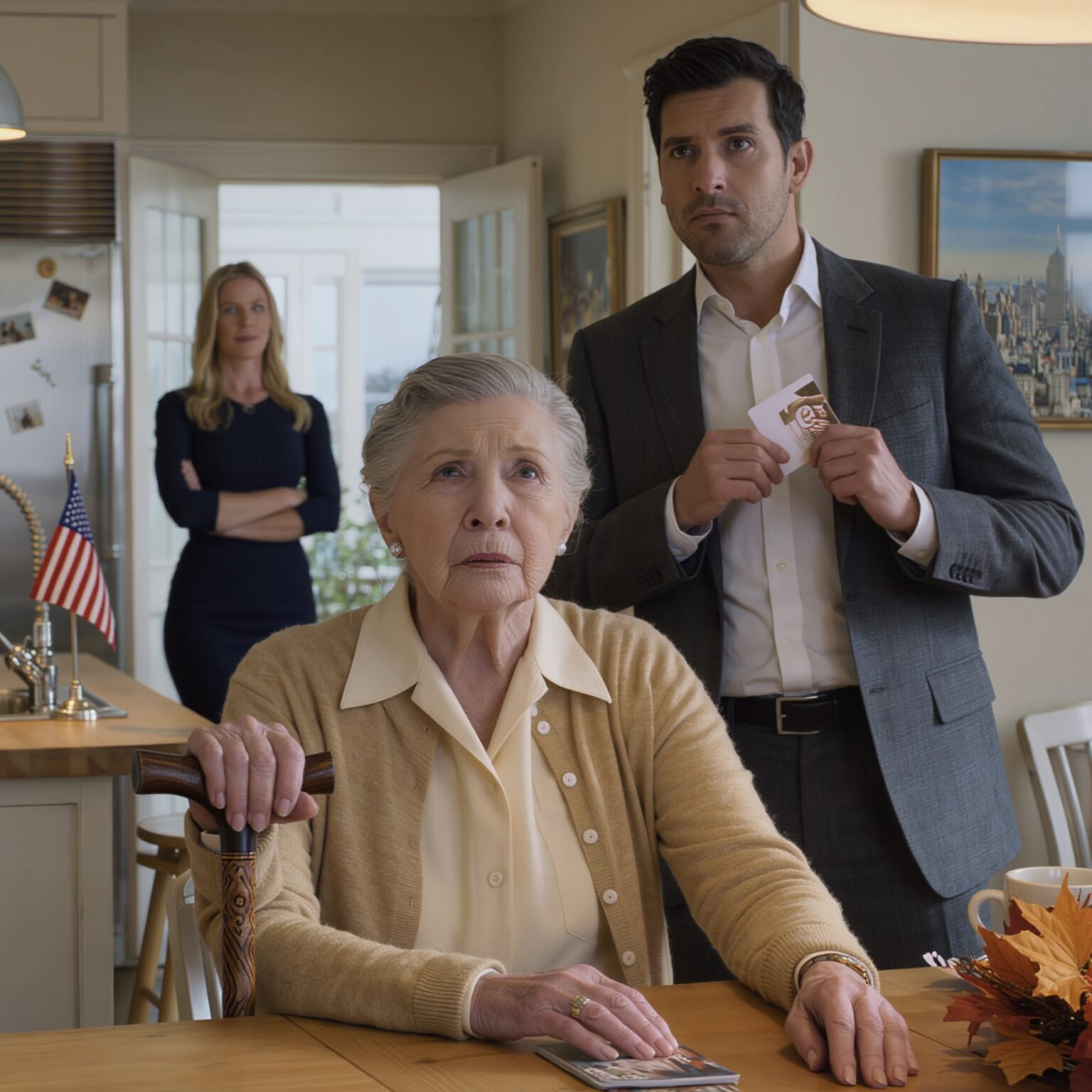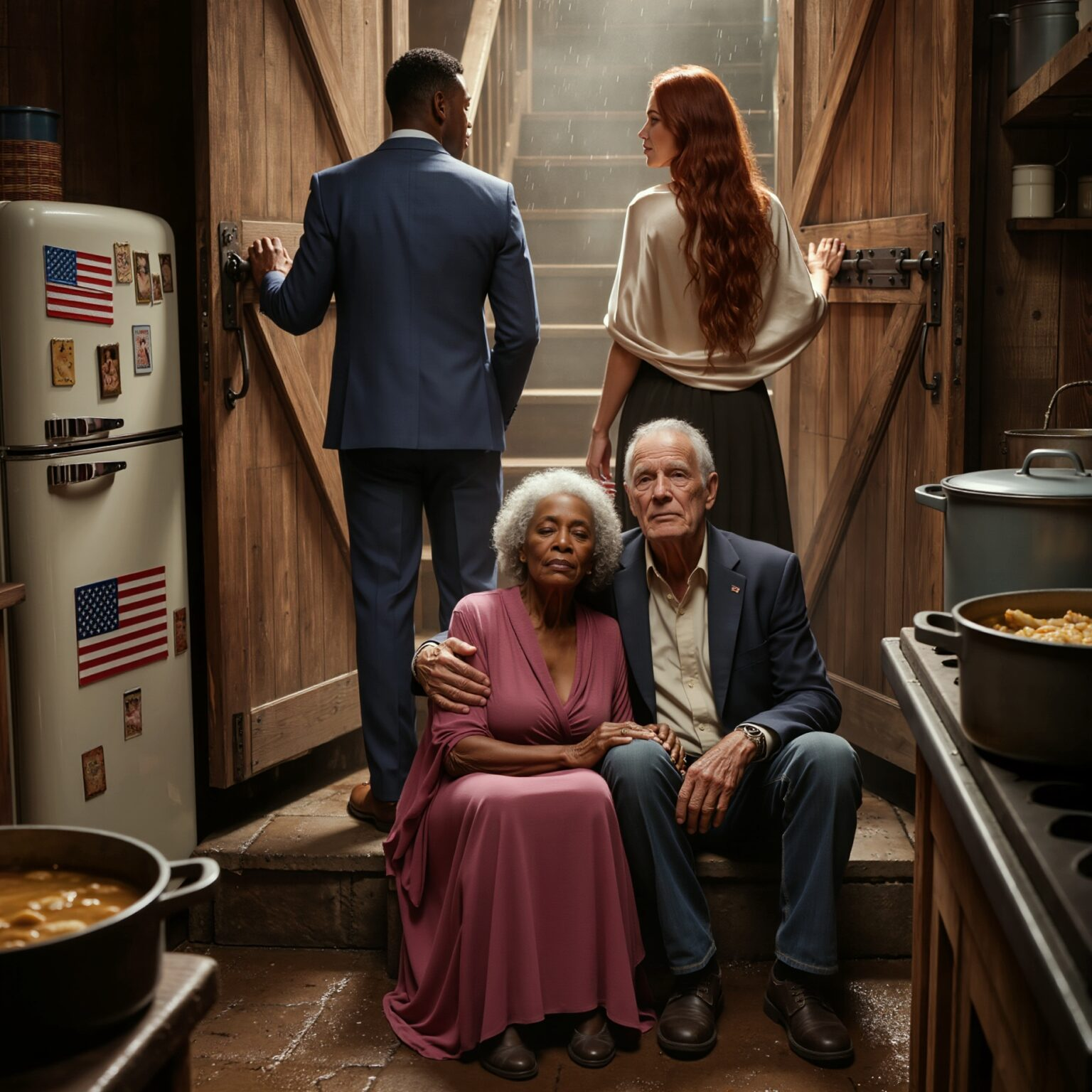
My son stomped down the worn wooden steps to the old basement he’d been eyeing for years — the same basement where he had played as a child, where Christmas ornaments were stored in dusty boxes, and where cobwebs made their own quiet history. He slammed the door behind him and bolted it with a new heavy-duty lock, then stood up on the creaky bottom step and declared, loud enough that the walls seemed to echo his certainty: “This is mine now. I’m claiming it.” His words landed in the high-ceilinged space like a declaration of ownership rather than a request for understanding, and in that instant I felt something tense and brittle settle in my chest — like living room glassware vibrating slightly before shattering. We were standing in the Georgia family home my husband and I had bought soon after we married, a house that had absorbed decades of laughter, arguments, late-night conversations, and silent resilience. But to my son, it seemed, that history was just background noise behind his assumption of entitlement.
I didn’t yell.
I didn’t beg for reason.
I just watched him stand there like someone who believed that possession equaled legacy.
And then — as if fate wanted to remind us of the weight of history rather than claim — my hand brushed against one of the basement’s old brick walls, a wall patched and worn by time, and something loose — as though decades of mortar had loosened not by decay but by design — shifted under my finger. I paused, almost unconsciously, and pulled that single brick free only to reveal a small, narrow cavity behind it — something hidden, paper-thin, and folded with meticulous care. It was out of place here, like a whispered secret tucked against the bones of the house.
I pulled out the envelope — yellowed, thick, stamped with handwriting I hadn’t seen in years — and my breath felt strange, as though the room itself was holding its breath with me. It was my husband’s handwriting. His familiar script, loops and careful curves that once filled greeting cards and grocery lists, now carried something weighty and unread until this moment.
I glanced at my son, who was still standing above me in that self-assured stance, unaware of the envelope in my hand and the truth it was about to release. I didn’t speak. I just unfolded the paper with slow, reverent caution, like someone about to read a confessional letter meant for one pair of eyes alone. What spilled out was a set of documents — old legal papers, a handwritten note, and a blueprint of something I had never seen before but whose significance hit me like a silent storm:
• A declaration my husband had drafted nearly four decades ago,
• A legal claim to a parcel of land in town no one but he and I had ever discussed,
• A trust agreement naming me and my children collectively as beneficiaries,
• And a paragraph in his own hand that read, in part: “History is not always what it seems. I build not just walls in this house, but legacies for the future.”
My son’s voice drifted down the stairs then — sharp and assertive, saying something like “Are you coming up or what?” — but I didn’t immediately answer. Not because I was confused, but because the cool basement air suddenly felt like a revelation: the house we lived in, the stories we thought we knew, the history of our family — none of it was as simple as assumption or entitlement.
I stood up, brick in hand, and called his name — not with accusation, but with steadiness. My son turned at the top of the stairs, brow furrowed, eyes impatient for a simple answer to what he thought was a simple claim of space.
I didn’t throw the documents at him. I didn’t roar with righteous fury. I just opened the envelope and let him see, in silent unfolding, something neither of us had known before: my husband had not forgotten any of us. He had prepared, planned, and secured something of value not as a silent gift of convenience, but as a deliberate legacy of intention — not to favor one child over another, but to hold them all in equal measure beyond his presence in the world.
My son’s confident posture flickered, like a photograph viewed from a different angle and revealing shadows previously unseen. The smug certainty that had marked his claim to the basement dissolved into something softer — confusion, humility, and a dawning realization that inheritance is not merely about space or possession, but about meaning, history, and intention.
I took a slow breath and said — not with judgment, not with accusation, but with gathering clarity — “What you claimed was a basement. What he created was a legacy.” That distinction — not between material value and emotional significance, but between claim and custodianship — shifted the tone in the room in a way neither of us expected.
My son didn’t argue. He didn’t flee. He didn’t try to reclaim his original stance. He simply looked at the documents, then at me, then up the stairs at the house that had been our life’s backdrop for decades, and said, quietly, “I didn’t know.”
And that — not denial, not defense, but a simple admittance of unawareness — was the first step toward understanding that legacy is not seized with force, but honored with recognition.
We walked out of the basement together — him slightly behind me at first, then beside me as we talked through what we had found, what it meant, and how it changed the narrative of inheritance in our family. No shouting. No division. Just conversation. Slow, honest, and emerging from a moment of discovery rather than conflict.
Later, when we gathered as a family to review the documents and honor the intention my husband had silently held for nearly forty years, something deeper than reconciliation took place. Not a theatrical forgiveness. Not a dramatic unveiling. But a mutual recognition that history is not owned — it’s revealed, layer by layer, and that true legacy is not about what you claim first, but what you understand last.
My husband never built just a house.
He built a story — one we thought we knew…
until the brick was pulled, the paper unfolded,
and the truth — quiet, deliberate, loving — was revealed.
And that mattered far more
than who got the basement door first.