I woke that morning to the kind of fog Seattle is famous for — thick, silent, and softening the edges of everything it touches. From my bedroom window, the world outside looked like a watercolor landscape, grays and silvers bleeding into one another as though the sky itself was undecided about where dawn ended and the day began. Inside my Victorian home on Queen Anne Hill, the wood floors creaked with the familiar cadence of age and warmth; the rooms held decades of memory, laughter, loss, quiet Sunday mornings, and heavy autumn evenings spent with blankets and hot tea. I had lived in that house longer than most neighbors could remember — first with my husband, whose laughter still seemed to echo around the high ceilings, and then alone after he passed. I never imagined a morning of fog and memory would be the backdrop for one of the most extraordinary moments of my later life.
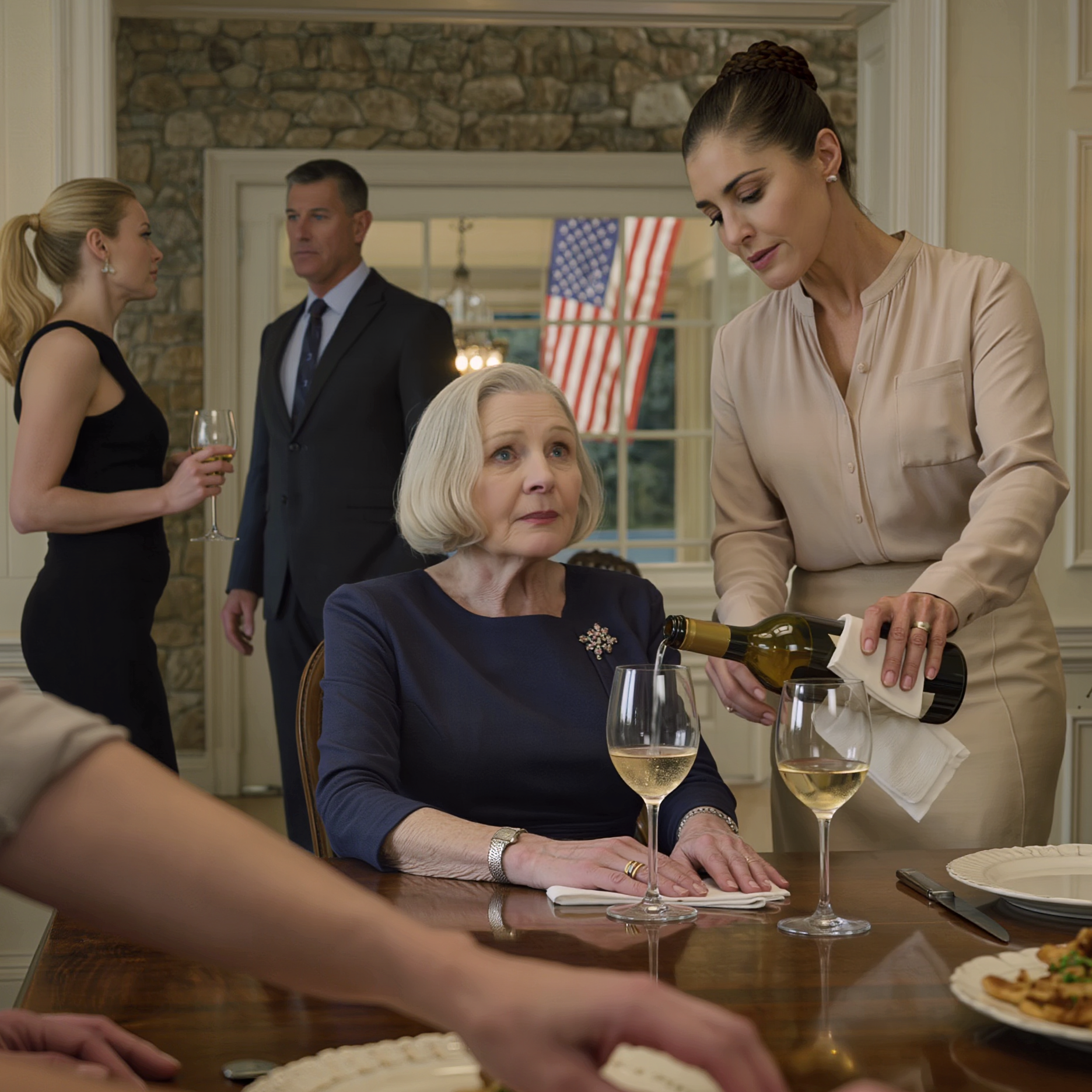
My son — whom I had raised with love and patience, carved out of years of effort and quiet devotion — knocked softly on my kitchen door just as I was making my first cup of coffee. He looked older than the last time I had seen him — a little more serious, a little more measured — but still unmistakably him. There was a tentative kindness in his eyes, the kind people use when they want to open a conversation gently, as though hoping their words will land on soft ground. He said, “Mom… can we talk in the kitchen?” and his voice carried a warm intention that felt plausible, even welcome. After some awkward, pleasant small talk, he guided me to the old oak table in the corner of the kitchen — where I had once tended jam pots with his grandmother by my side — and slid a manila envelope toward me.
I didn’t think twice about it. I assumed this was the start of reconciliation about something long unspoken — perhaps a conversation about the estate, the house, the lingering tension that had grown between us over weeks and months of unreturned calls and missed holidays. I smiled at him, the kind of smile that had greeted him at every birthday breakfast since he was a child, and reached for the envelope.
Inside was a document I had never seen before: an irrevocable power of attorney bearing my name in bold top print and my son’s name as the agent authorized to act on my behalf in all financial and legal matters. My finger hovered above it, curiosity open and unguarded, until I noticed the fine print — language thick with legalese granting him sweeping control over assets, accounts, property, medical decisions, and everything in between. “Mom,” he said gently, “this will make things easier if anything happens. You know… future planning. You don’t have to worry about anything.”
His tone was calm. His eyes were kind. But as I stared at the words on that page, a bone-deep chill slid through me — not born of fear, not exactly, but of sudden realization: this wasn’t peace he wanted. This was control disguised as help. I could feel it in the subtle tilt of his voice, the too-smooth assurance that this was best. I could feel it in the foggy silence outside the kitchen windows, in the way the morning light refused to cut through the glass with clarity.
I paused — and suddenly everything about the moment felt off — as though the ivy on the porch outside had grown a little too wild, as though the echo of my husband’s absence suddenly weighed heavier than it had moments earlier. I looked up at my son — not with accusation, not with anger, but with a raw, unanticipated clarity — and I asked, gently but with measured precision, “Why now?”
His hesitation was slight — like a ripple running through water that hasn’t quite settled — and then he said, almost reflexively, “You already know… stuff happens as we get older.” Those words landed like a draft in a place where certainty once stood. I felt it immediately: the difference between protective concern and planned takeover. There’s a subtle delineation in the heart that only reveals itself when someone else assumes authority before consent.
I didn’t erupt.
I didn’t yell.
I didn’t recoil.
I simply said, “I can think about this.”
And that was when the atmosphere in the room — once warm, familiar, promising — became dense with implications I hadn’t expected.
My son looked less confident then — not embarrassed, not ashamed — but caught in a moment of explanation without clarity, as though he believed his motive was pure until faced with the question of need, not convenience.
“I just thought… you know… it makes things smoother,” he tried again.
But there was a subtle disconnect in that sentence — a missing piece, like a smile that didn’t reach the eyes, like laughter echoing in a hall with no one else present. I swallowed, not with fear, but with the steady awareness that something was shifting not only between us, but inside me. I felt the weight of the document in my hands — its fine print not just a legal contract but a symbol of assumed agency placed before dialogue.
I set the envelope down gently — not dismissive, not dramatic — just with a composed clarity that comes from someone who has lived long enough to know when a gesture is help and when it is assumption.
“Thank you,” I said. “But I need to understand one thing: why you think this is better than talking about what you want and what I want.”
There was a longer pause then — the kind that reveals more than words ever could. My son’s gaze dropped to the grain of the oak table — the same table where he learned to finger-paint and later to balance his first paycheck — and I saw, not guilt, but a moment of reckoning.
“I guess,” he said slowly, “I just thought it would show you I care.”
And that — that fundamental misunderstanding — told me everything I needed to know: he did not understand how love and control can be mistakenly interwoven, how a gesture meant to be caring can feel like erasure if it bypasses consent and conversation.
I didn’t refuse outright.
I didn’t sign anything.
Instead, I said gently but firmly, “We will talk about this. We will talk about what you want, and we will talk about what I want — before anything gets signed. Not as adversaries, but as family who respect one another.”
He nodded — not defeated, not resistant — but as though someone had finally spoken in a way that invited him into conversation rather than assumption.
We did not resolve everything that morning.
We did not reach harmony in that foggy kitchen.
But the document remained on the table — unsigned, not out of rejection, but out of awareness — because peace cannot be built through empty gestures or assumptions disguised as intention.
Later, as I walked through the corridors of that old Victorian home — walls brushed with history and light softened by fog — I understood something profound about dignity in later life:
Agency is not a burden.
Independence is not a threat.
Love is not measured by paperwork,
but by mutual respect, clarity, and conversation.
My son wanted peace.
I wanted understanding.
And the bridge between the two — not erased by fear, not blurred by assumption — began with the simple act of asking why rather than accepting what was offered.
In that moment, I realized peace is not something one person gives to another.
It’s something you build together.
And that realization — quiet, steady, rooted in honest communication —
was far more powerful than any signature on any document ever could be.