I polished the old navy dress that morning because the invitation — sent by my husband David himself — had said “business formal” and included a note about important guests from a Tokyo-based partner. The kind of note that makes your stomach flutter with both pride and nerves, because it seems like you’re included on purpose. I remember how the morning light slanted through my bedroom window, how the dust motes danced in that soft glow, and how I thought — for a brief spinning moment — that this dinner would be one of those nights where marriage felt like partnership. I thought I was stepping into the room as someone valued, respected, unforgettable. Instead, I walked in with a smile that felt like practice — the kind you rehearse because you want to look agreeable, competent, supportive, and exactly the kind of person the world expects a business spouse to be: polished, quiet, witty on cue, elegant, complimentary, harmless.
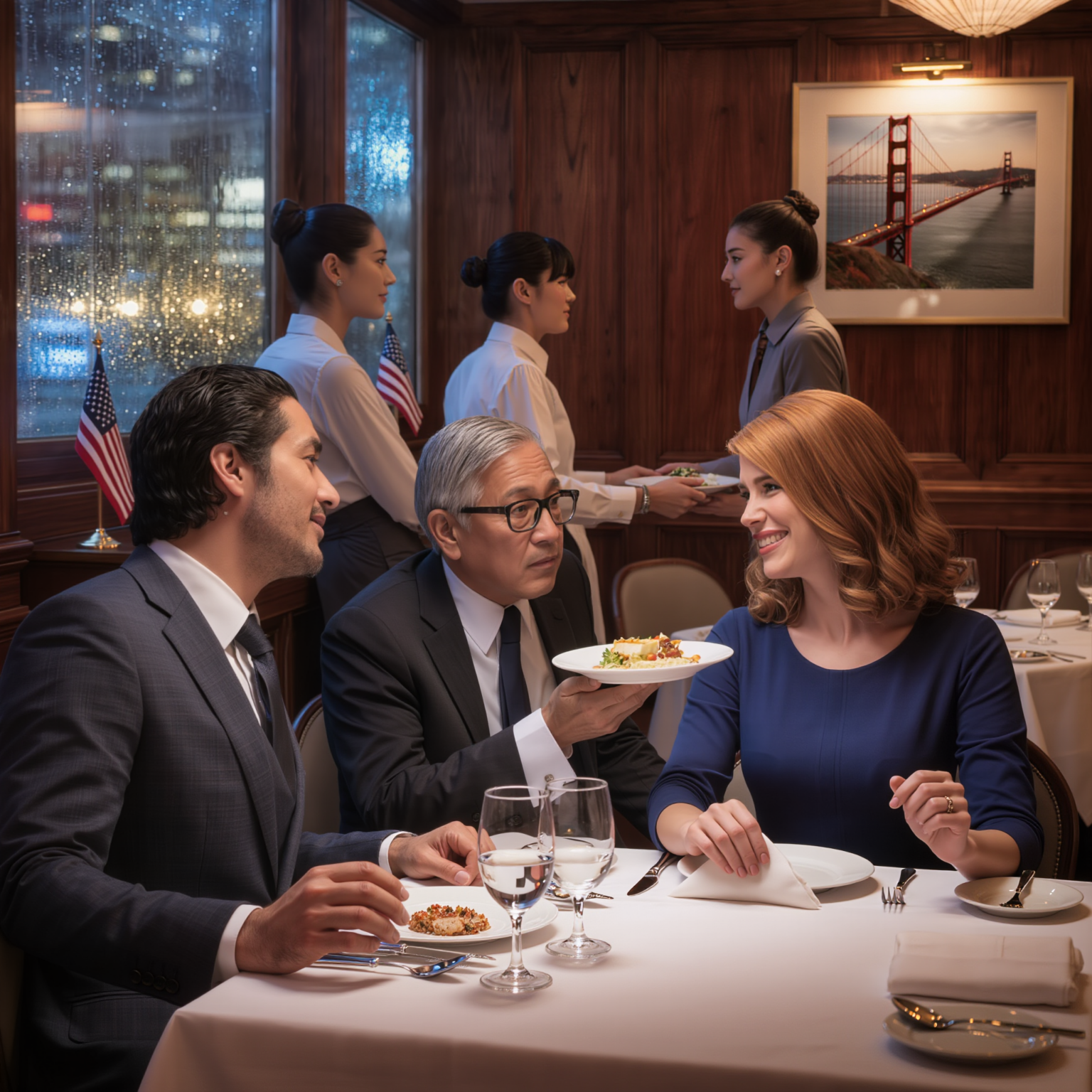
We arrived at the venue — an understated but elegant Japanese fusion restaurant with low lanterns, dark wood, sashimi served like art — and I stood by David’s side, offered cordial greetings, and shook hands with the visiting partner who nodded with that courteous restraint that felt respectful but distant. David introduced me not by my name, not as someone with experience and accomplishments of her own, but as “my lovely wife who keeps me grounded.” Nearly everyone at the table murmured polite agreement, as though that was my role here tonight — to be charming background, warm ornament, living affirmation that the successful business titan standing between us was indeed well supported.
I smiled — the practiced diplomatic smile — all along with that quiet hum of self-doubt flickering under the surface: Am I just here to look pretty? Do I matter beyond the social harmony I’m supposed to provide? I helped pour sake, laughed at the right moments, complimented the artistry of the plated fish and rich broths, and answered “yes” and “no” in sentences that sounded poised and gracious. I thought I was fulfilling my role well. I thought I was being good company. I thought — naively — that maybe David would, at some point during the evening, glance at me with pride not simply for appearance but for who I am.
Then came the moment.
A lull in the conversation, a pause after a delicate sip of wine, and David’s visiting partner looked at me — genuinely looked at me — and, before David could redirect the attention, said with a thoughtful smile: “Tell us — how do you feel about our culture’s approach to patience and respect in long-term business relationships?”
It wasn’t small talk.
It wasn’t decoration.
It was an invitation to speak.
My husband blinked — a very brief, almost imperceptible micro-expression that told me he hadn’t expected the question to land on me. But there I was — not background, not ornament, not “lovely wife who keeps him grounded” — but someone being asked to reflect, to contribute, to be heard. I didn’t collapse into self-doubt. I simply breathed — once, slowly — and answered with something steadier than I expected: “I’ve always admired how long-term thinking and respect for tradition inform deep relationships in Japanese culture. In my own experience building community and personal trust, I’ve found that patience isn’t passive — it’s deliberate engagement with someone’s story, not just their present performance.”
The room was silent for a moment that felt like canvas just before color arrives. Not cold silence. Not awkwardness. But attention. My husband looked at me — really looked — with a mixture of surprise and something softer, like real pride that hadn’t needed to be declared through my appearance but through my voice, perspective, lived experience.
David’s partner nodded slowly, genuinely, and said, “That is a thoughtful observation. Very aligned with how we approach work here — and I’m glad you shared it.” That wasn’t flattery. That was respect.
And in that instant — in the quiet, unexceptional, unplanned recognition — something shifted inside me.
My husband didn’t apologize for his earlier introduction.
He didn’t have to.
His eyes said what no scripted line ever could:
“I see you — not as accessory, but as intelligence and depth.”
No one at the table laughed.
No one made a joke.
No one dismissed me or redirected the conversation.
Instead, they listened.
That was the moment the dinner stopped feeling like a performance and started feeling like connection. Not because anyone had dramatic insight about me, but because I was no longer just “on display” — I was present, and that changed how everyone participated in the room.
Later that night, when dessert plates had been cleared and polite goodbyes were being arranged, David leaned over and said quietly, without embarrassment, without flattery, without a joke: “You sounded amazing.” Not “You look amazing.” Not “Thanks for hosting.” Not anything about harmony. Just truth.
And I realized something:
The moment we stop performing roles and instead show up as ourselves,
others begin to listen as we are, not as they assume we are.
I didn’t need to be the harmless accessory.
I needed to be heard.
It wasn’t the navy dress that made a difference.
It wasn’t the polite smile.
It wasn’t the poised manners the world expects women to wear like jewelry.
It was the moment I spoke with authenticity,
and others responded with respect.
As we walked out into the foggy night of that Seattle evening — the lanterns outside glowing softly like little beacons — I didn’t feel invisible. I felt seen.
Not perfectly.
Not with fanfare.
Not with applause.
Just seen.
And that — more than any flattering introduction ever could be —
is what matters at any table worth sitting at.
Not presence without voice.
But voice with presence.
And on that foggy night,
I finally understood that.