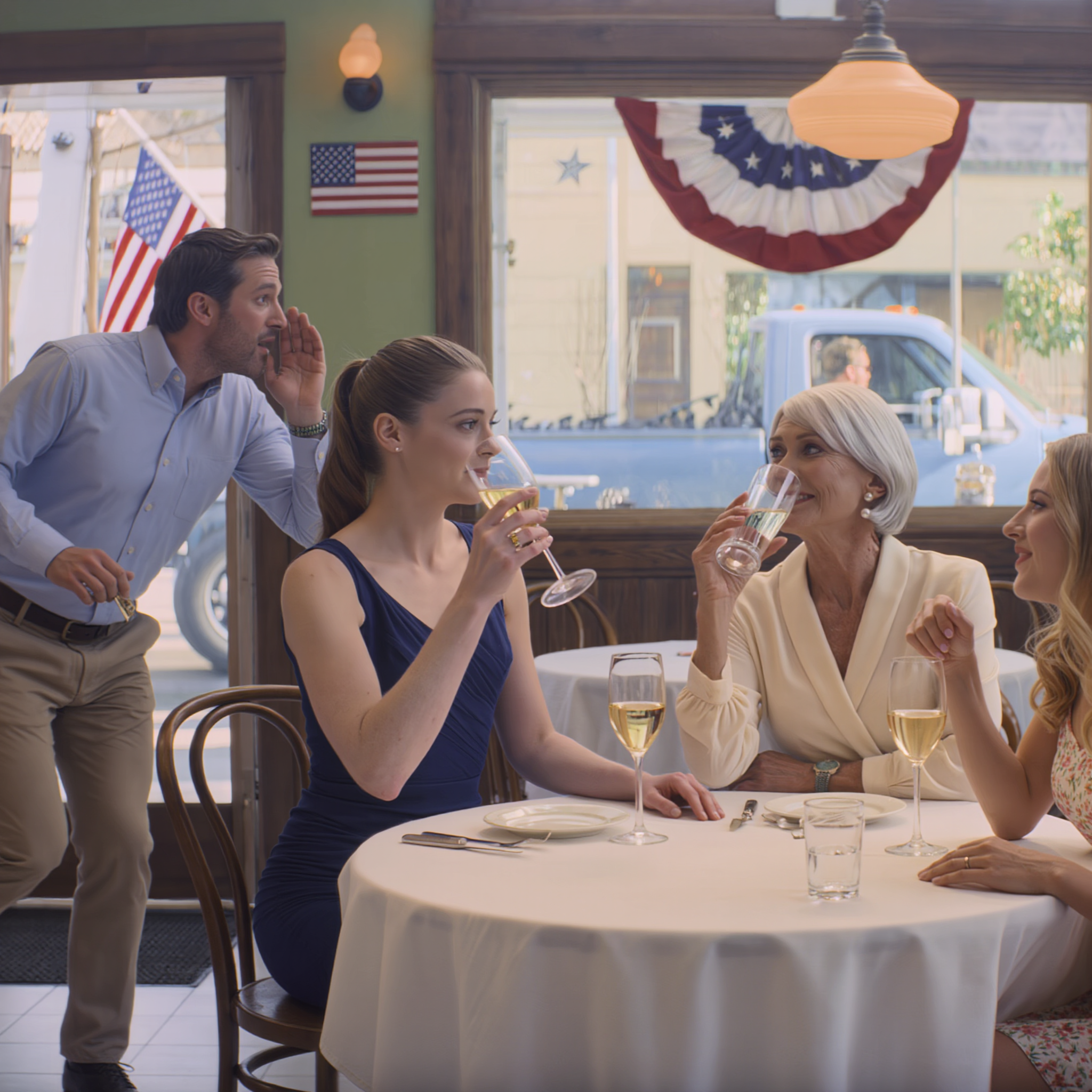
I remember the light that day — soft, warm, like a promise — streaming through the restaurant windows as I sat surrounded by people whose presence I had once thought certain. It was my 70th birthday, a milestone I had always imagined celebrated with laughter that came from shared histories and the kind of love that feels dependable. I sat at the head of the table — a simple roast chicken lunch, wine glasses caught the sun just right, and I was surrounded by familiar faces: my daughter, her husband, and my son, who smiled as though life had always been a gentle story. I didn’t know then that the real story was about to unfold not in what was said to me, but in a whisper I wasn’t allowed to miss.
They were leaning in close — too close for casual conversation — and suddenly I heard my daughter say in a hushed tone I wasn’t meant to catch: “Keep Mom talking while you go to her place and change the locks.” My fork hit my plate with a tiny clatter, the words echoing louder than any music in the restaurant. For a moment I simply stared — not because I was stunned, but because the human mind sometimes doesn’t immediately process betrayal; it archives it, as though saying it out loud would disrupt the ordinary flow of lunch, laughter, and memory. I watched her husband rise from the table with a smile that didn’t touch his eyes and disappear out the back door of the restaurant as though stepping into a new scene in a play he had rehearsed long before I sat down.
I didn’t interrupt anyone. I didn’t shout. I didn’t knock over my wine glass or storm out in fury. I simply continued eating — not for calm or composure, but because in that stillness something profound began to happen inside me: I saw their intention clearly, not as a surprise, but as validation of a truth I had been avoiding.
We finished lunch. I smiled at my son’s attempts to tell a funny story about a coworker’s dog, I nodded politely when my daughter asked if I wanted dessert, and I excused myself to the restroom — not a tear, not a confrontation, just footsteps that knew where they were going. When I stepped outside, I quietly called a locksmith whose number I had saved months ago — not because I expected betrayal on my 70th birthday, but because I have always believed that independence is worth preserving even when situations don’t require it.
A half hour later, my daughter’s husband texted:
“Hey Dad’s food was great! You okay?”
I replied:
“Fine. Just enjoying my day.”
The locksmith arrived with quiet professionalism and changed the locks on my home — not in fear, not in anger, but in self-respect. My daughter’s husband called again to say he was “running late,” which I understood not as an excuse but as an explanation of absence. I didn’t need to argue. I simply knew where my power lived: not in their approval, not in their access, but in who I am and what I choose to protect.
Later that evening, when I walked into my now-secured home — the same home where I raised my children, hosted Sunday dinners, and supported every triumph and setback they ever had — I understood something deep and enduring: Home is not simply where someone lives; it’s where someone belongs, and membership is not earned by blood alone — it’s honored by respect. I didn’t call my daughter that night. I didn’t ask about intentions or explain actions. I didn’t write a long emotional message or post passive-aggressive lines on social media. Instead, I opened a bottle of wine — not to drown sorrow, but to mark presence. I poured a glass and toasted quietly to myself, to age, to clarity, to the unspoken strength inside every person who has loved deeply and learned the cost of unmet expectations.
My children didn’t need my wealth.
They needed my perceived vulnerability.
And when they mistook kindness for weakness,
they revealed far more about themselves
than they ever realized about me.
The next day, I wrote to each of them — not in accusation, but in clarity:
“I accept birthdays are meant for celebration.
I also choose dignity over drama.
I am loved by those who choose respect.
Doors that close for me are not walls —
they are boundaries.”
I didn’t ask for forgiveness.
I didn’t ask for explanations.
I only asked for one thing:
that they see me not as someone to be managed,
but as someone to be respected.
Because at 70 — especially on a birthday —
one doesn’t need access to a home.
One needs people who honor presence without expectation.
And that — more than any locked door —
is what true self-worth feels like.
If you want, I can also write:
🌿 A continuation of the story (what happens next)
🌿 A “letter” the narrator sends to her children
🌿 A version told from the perspective of her son or daughter-in-law
Just tell me which direction you’d like to explore next.