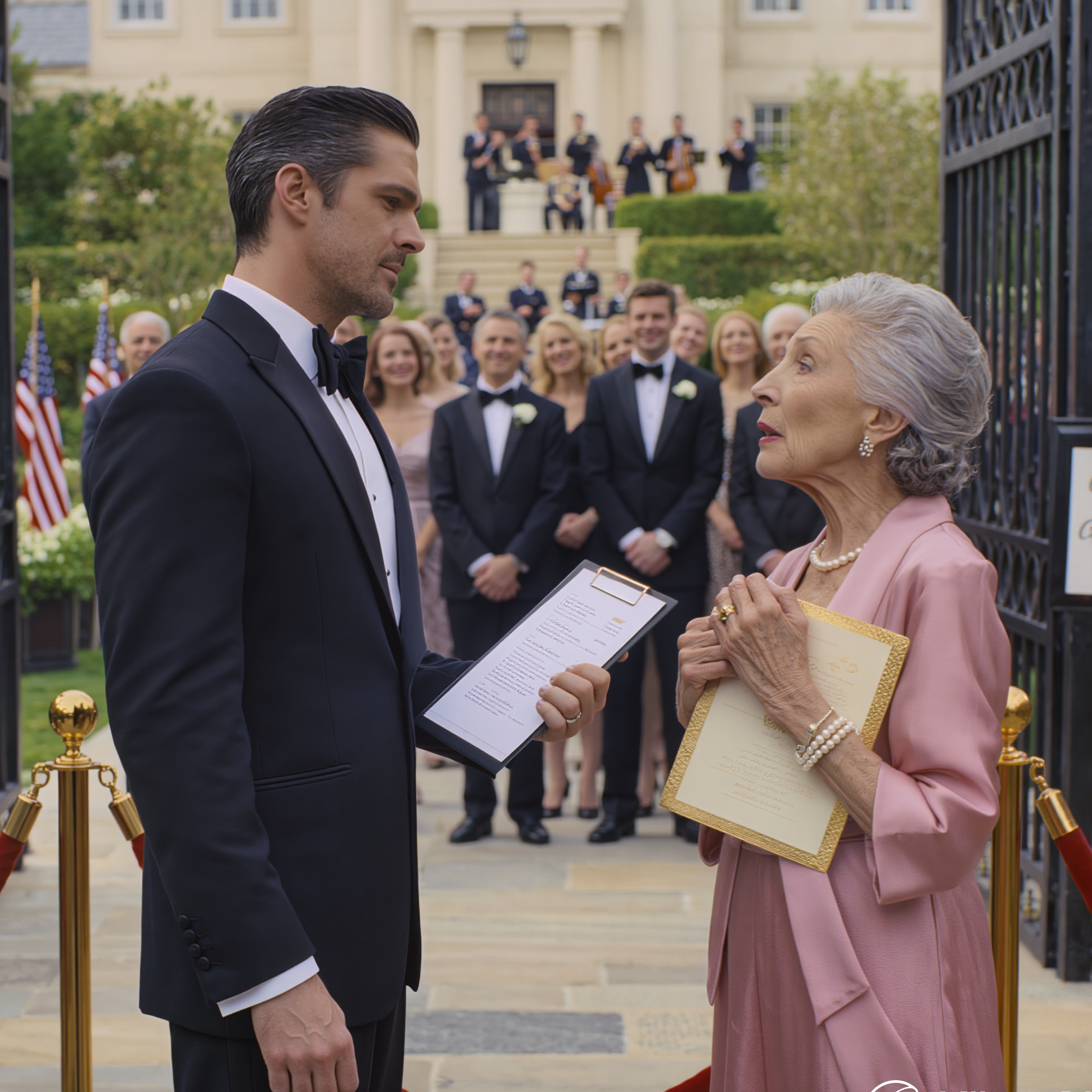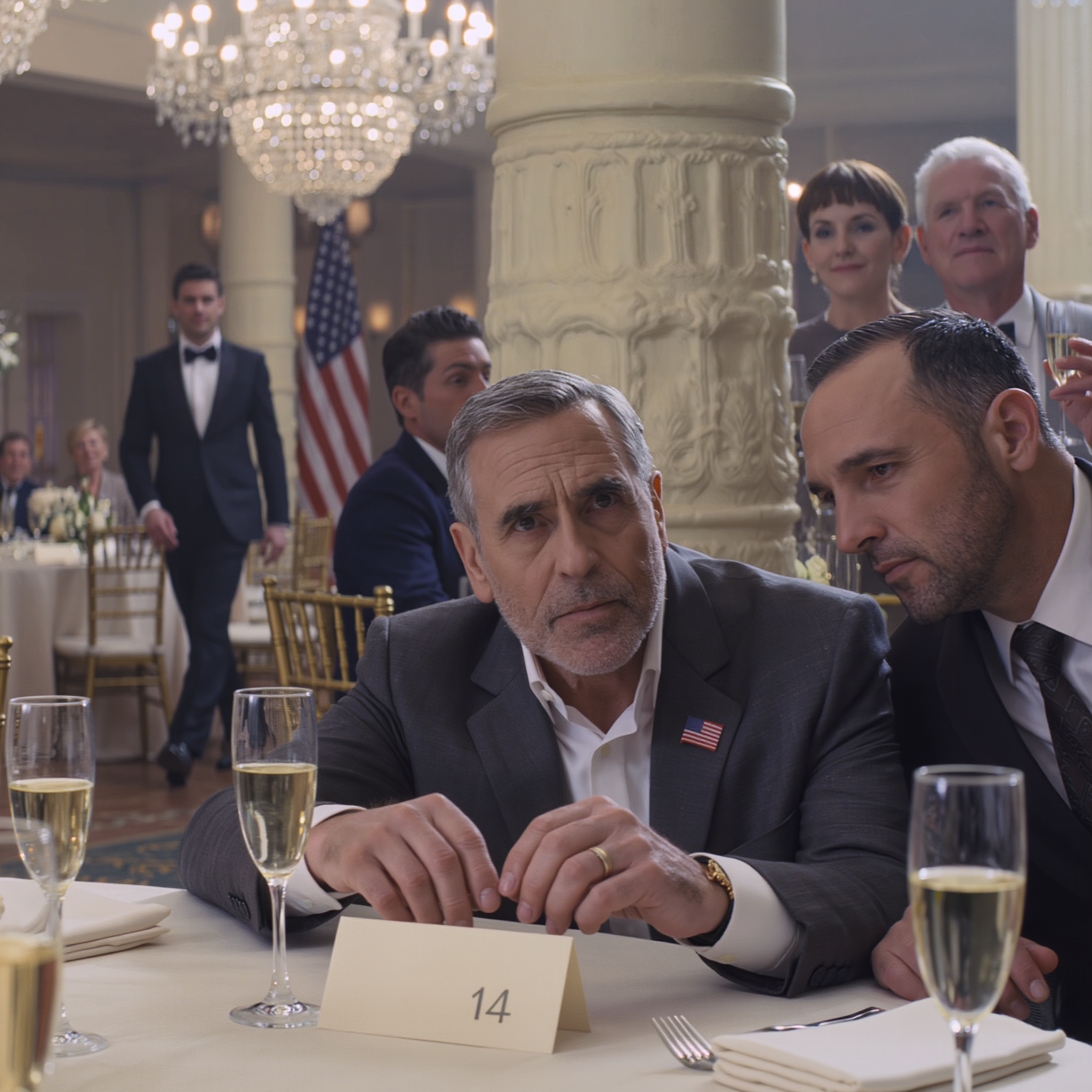
I never thought a single piece of paper could feel like a physical blow, but there I was in the grand ballroom of the most exquisite hotel in the city, surrounded by crystal chandeliers, towering floral arrangements, and a sea of guests dressed in satin and silk, and somehow the one thing I noticed first — the thing that punched the breath out of me — was the place card at the head table that read “Uneducated, Fake Father.” It wasn’t just a cruel joke, not just a moment of bitter embarrassment; it felt like my son, the boy I had raised alone for 28 long, tireless years, had taken all of those years and crumpled them up into that single string of words, as though everything I had ever done for him, every scraped knee I kissed, every lunch I packed, every night I stayed awake with worry, could be erased by a mocking insult on a piece of glossy cardstock.
I remember how the morning light had felt that day — warm and optimistic as I buttoned my suit jacket, polished my shoes, and looked at the reflection of a man who had lived life simply, honestly, in a modest home, teaching his son kindness, integrity, and hard work. I remember how I had walked out the front door with a little extra pep in my step, thinking, Today is celebration. Not humiliation. Not judgment. Not a public branding of me as someone unworthy of respect. Ninety-nine percent of the world wouldn’t think twice about the words uneducated or fake on a place card, but when those words come from the lips of someone you’ve loved most — someone you’ve poured your life into — they splinter the heart in a way nothing else can. I had always known my son’s bride came from wealth, from privilege, from a world where sophistication and status were earned early and worn proudly like jewelry. I had tried to be open-hearted about it. I had practiced graciousness. I had told myself that love crosses class and experience and background. I believed, with a tenderness older life grants, that love could reach across differences if the foundations were strong — and for most of his life, I believed our foundation was strong.
Then I saw that place card. I stared at it, frozen in place like someone who had walked into a room that was suddenly not quite real anymore. There were guests chatting around me, champagne flutes tinkling like tiny bells at every table, and yet my ears only heard the sting of that printed insult. Uneducated, fake father. I had never claimed to have a college degree. I had never even finished what passed for higher education in my youth because life demanded I work to support us. But I had raised a son with values. I had taught him how to tie his shoes, how to stand up for others, how to wipe tears and comfort others. I had been the one to cheer at school plays, to sit through science fairs, to hold him on bad nights and cheer on good ones. I had never once called him anything other than my heart’s delight. And here — on this most ostentatious day of his life — I was reduced to a label that felt like a laugh at my expense, as though my entire existence was a cheap punchline in someone else’s joke.
I didn’t move. My breathing became shallow. I didn’t feel the rustle of silk gowns, the murmur of polite conversation, or the snap of photographers capturing moments behind me. All I felt was the sting of that place card — like a slap to the face, a branding iron to the soul. I read the words again and again, like a record stuck on a painful note, each repetition hammering deep into a place I didn’t know was still tender: uneducated… fake father. I glanced up at my son — the groom — standing near the head table, laughing with his new in-laws, his brand-new partner in life glowing beside him, and he didn’t look at me. Not once. Not even a glance that said See? That’s my father. Not even the smallest flicker of acknowledgment that I was there, the person who had carried him through childhood, who had loved him through every disappointment and triumph. No. Nothing. An absence so sharp it felt like another blow.
I thought about saying something. A million words rushed to my head like a tide: How could you do this? Why would you do this? Am I so invisible to you now? But my voice didn’t come. My throat felt dry and strange, as though words had been kidnapped by surprise and were being held somewhere difficult to retrieve. Instead I felt my seat grow rigid beneath me, and in that rigidness I felt something else — the quiet collapse of every assumption I had ever made about unconditional love. I thought family was unconditional. I thought blood meant loyalty. I thought the values I taught would be the values he carried with him. I was wrong.
The ballroom was warm with celebration, the orchestra was tuning up for the first dance, servers were offering glasses of rosé that smelled like summer rain, and here I was, rooted in place by that cruel printed label, feeling all the warmth drain out of me. I remember how the silence felt when I stood up, slowly and deliberately, as though I was moving through water. I walked not toward the table, not toward the accusations disguised as humor, but toward the exit — not with tears, not with rage, but with a clarity that stunned me with its precision: This is not my place. The ballroom doors were heavy, gilded, studded with design, like something from a royal hall, and as I passed through them into the cool foyer beyond, the artificial laughter and clinking glassware melted behind me like fog retreating before the morning sun.
Once I was outside, the breeze felt fresh and honest. I breathed deeply, feeling a strange combination of heartbreak and understanding settle into me. I realized then that this wasn’t just about an insult on a piece of paper. It was about the accumulation of countless small moments where I had placed others’ comfort above my own dignity. I thought I was being generous, but generosity without boundaries can become self-erasure. And here — in the most public, hushed-tone moment of my son’s life — I saw clearly that my son, and his choices, and his new life no longer aligned with the person I had spent decades raising. That place card was not just a signal of disrespect; it was the culmination of a lifetime of assumptions about my place, my role, and how others perceived me when convenience or image took priority over gratitude and love.
I walked along the hotel’s stone pathway, past fountains that shimmered in afternoon light, past well-dressed guests who paused in mid-conversation and watched me, a lone figure moving with quiet dignity, unaccompanied. I felt a sharp, odd relief in that solitude — not freedom from sadness, not freedom from loss, but freedom from expectation. I hadn’t needed to be insulted to realize that some relationships are conditional, but I did need to feel the full weight of that condition before I understood my own strength in refusing to accept it.
In the weeks that followed, I did not avoid family completely — I received some awkward apologies, some half-hearted attempts at explanation, and a few stern reminders that I had “overreacted.” None of them addressed the deeper hurt, because no one asked about it. No one said, How did that feel for you? No one suggested that a father might matter more than an image. And I realized then that this story — mine — was far bigger than one wedding place card. It was about dignity, respect, and self-worth. It was about the moment I stopped letting others define me, and started defining myself.
I started small, with quiet acts of self-care: walks in the park where people truly saw me as a person, not a punchline; dinners with friends who spoke honestly and loved generously; afternoons spent reading books that fed my mind instead of numbing my heart. I learned to repay myself with kindness for every time I had given love freely without receiving it back. I discovered that wounds do not heal in grand gestures but in the steady rhythm of daily life — the way morning light catches on dew, the way a warm cup feels between your palms, the slow bloom of flowers in your garden that have nothing to do with weddings or insults and everything to do with life unfolding regardless.
And yes — I eventually talked to my son again. Not immediately. Not with confrontation, but with honesty. We sat at a café, and I told him not about the hurt place card, not about the embarrassment, but about how it felt to be invisible in favor of an image. He listened, not with defensiveness, but with a kind of tentative awareness that he had not fully seen me before. He didn’t apologize in a sweeping, dramatic way — not everyone knows how to say what they genuinely mean in those moments — but he acknowledged that he had not considered my feelings. And that, in its own raw, human way, was something.
I don’t attend every family gathering anymore. I choose how I appear, when I appear, and with whom I share my time. I no longer give until I’m empty. I no longer define my value by others’ acceptance. I learned that love does not demand humiliation as proof of devotion. I learned that generosity begins with self-respect, and dignity is not a gift others give you — it is something you piece together from the fragments of your own worth.
That wedding reception — ostentatious, grand, lavishly appointed — will forever remain one of the most pivotal moments in my life, not because it was beautiful, but because it was clarifying. In that ballroom, surrounded by every luxury, I was faced with the bluntest truth about myself, my family, and what it means to be truly seen.
And now, years later, when I sit in my garden — older, wiser, still learning how to love without losing myself — I understand this deeply:
Respect is not earned by convenience.
Affection is not measured by proximity.
And dignity
is the quiet foundation upon which a meaningful life is built.
I lost a place at a head table that day,
but I found my own seat in the world.
Not defined by any insult,
not erased by any assumption,
but shaped by every choice I made afterward
to see my worth clearly —
and to refuse to let someone else’s lack of vision
erase it again.