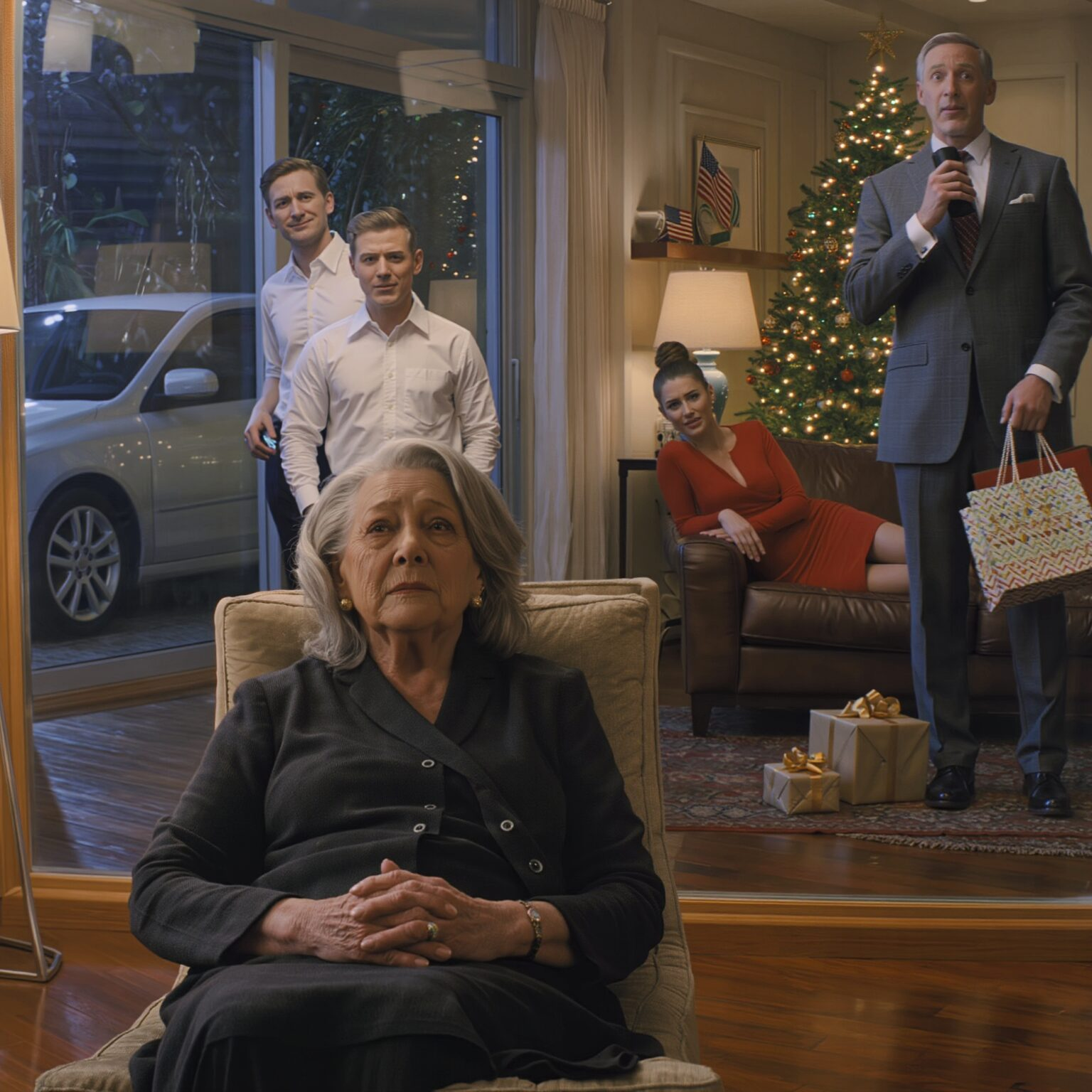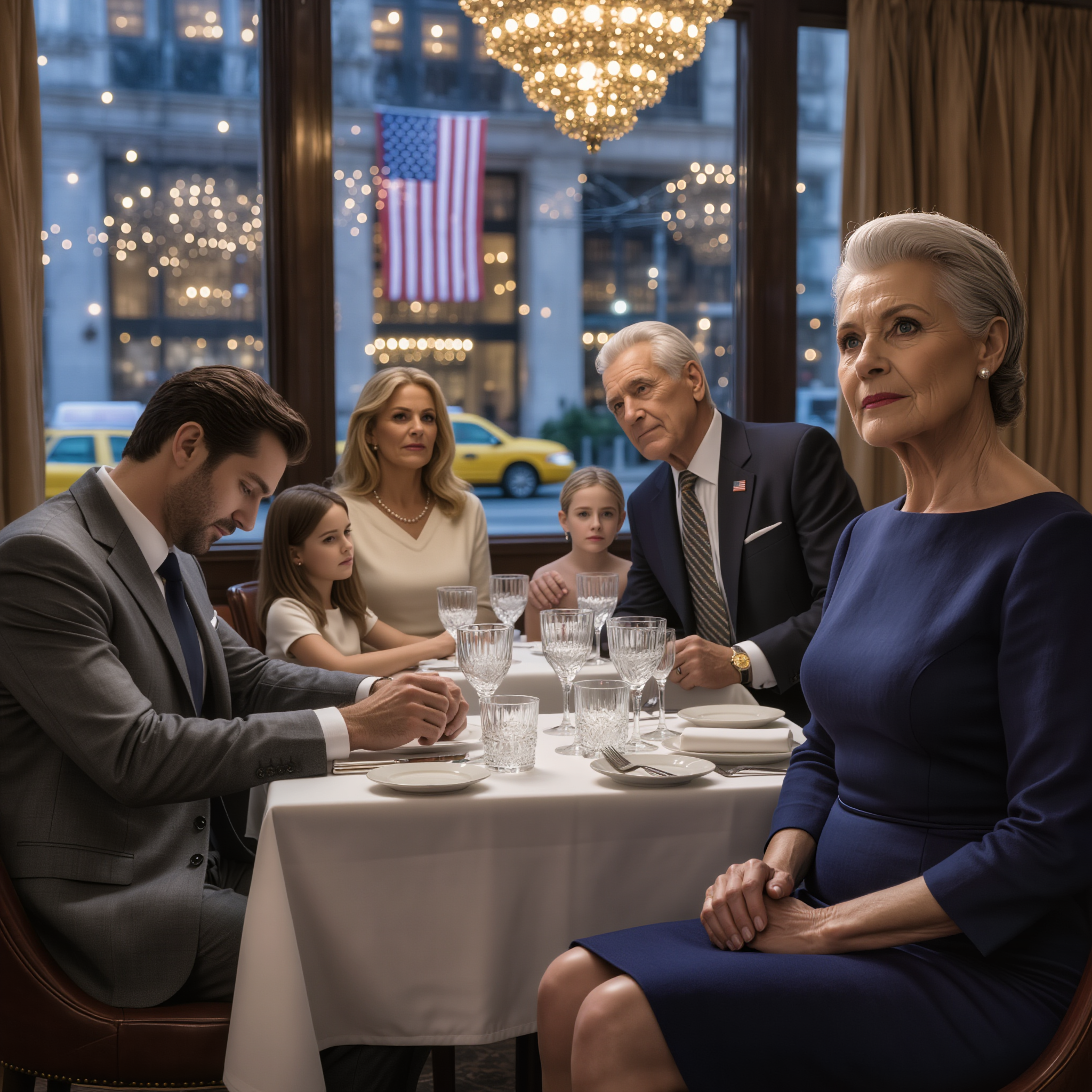
I remember the afternoon of that engagement party in detail — the way the sunlight filtered through the garden pergola like soft gold threads weaving through the collective joy of family and friends, the way laughter meandered between tables draped with white linens, and the sound of champagne flutes chiming at every new anecdote and congratulations. It was meant to be a celebration — a joyous beginning of two lives intertwined, a moment to honor my son and the woman he had chosen to spend his life with. I had spent weeks preparing for that party, choosing a suit that felt respectful and hopeful, rehearsing the toast I planned to give, imagining the laughter and warm embraces that come at such gatherings. I had always believed weddings were for bridges — not just between two people, but between families, between generations, between hearts that had not fully learned how to listen to each other. I believed this because I had spent so much of my life believing in love itself: its power to redeem, to heal, to transcend every shortcoming and every mistake. I hadn’t expected that on this day — a day designed for connection — I would witness one of the most painful ruptures of my entire life, delivered not by circumstance or accident, but by a sentence spoken with brutal clarity by the bride’s father — a sentence that labeled my son as a broke, desperate loser unworthy of his daughter. I didn’t hear it all at once. First I heard a murmur — shifting voices, polite laughter that didn’t quite reach the eyes — and then I saw my son’s face, and everything slowed down, as though time itself realized something had gone terribly wrong and hesitated at the moment it occurred. The words were measured, almost casual in their delivery, but their sting was precise, like a cold blade: “You’re a broke, desperate loser who isn’t worthy of my daughter.” I saw my son’s body tighten in the way people’s bodies tighten when they encounter a truth they never thought they’d have to face in public, and then I saw his bride’s father glance around as though he expected applause. I saw the guests — some perplexed, some uneasy, some averting their eyes — and still he continued, almost as though he was reciting from a script he had practiced before the party even began. There was no dramatic buildup; no tension that signaled an argument was coming. There was only that sentence, spoken with the calm assurance of someone who believed he was making a point rather than inflicting a wound. We left in silence. Not dramatic silence. Not whispered confrontation. Just the quiet that settles when harmony shifts abruptly into fracture. My son didn’t argue. He didn’t rant. He simply turned and walked away, shoulders squared but eyes carrying something like deep disappointment — not just in the words spoken, but in the place where someone he trusted had assumed the right to judge his worth. We walked through the guests like everyone had been swallowed by the same sudden heaviness. There were no condolences, no expressions of shock, no awkward attempts at salvaging the moment — just the gentle rustle of guests averting their attention, pretending this wasn’t happening under a sky that moments earlier had felt warm and welcoming. I watched my son, and in his quiet posture I saw not defeat, not pain as others might expect, but something deeper: a quiet, wounded dignity — the kind that comes not from grand proclamations but from the slow accumulation of trials that teach a person how to stand still even when the world around them tries to diminish them.
When we reached the car, the air felt heavier. Not colder, not sharp — just dense. There was no triumphant speech, no attempt at immediate reconciliation, no rage or begging. Sometimes the loudest expressions of hurt are not spoken at all; they are held silently in the curve of someone’s spine, in the slow exhale that comes after something sacred has been violated. I sat in the passenger seat while he drove, his hands tight on the wheel, his eyes focused straight ahead, not on the road, not on anything visible, but seemingly on the interior landscape of his own thoughts — a place where love and disappointment and enduring dignity were now in a quiet collision. His fiancée, who had been radiant only moments earlier, was subdued too — not with distress or immediate self-doubt, but with that unsteady calm people have when they are caught between loyalty and familial expectation, when they realize that the people they love most can be wounded not by circumstance but by the words others choose to define them with.
In the days that followed, the engagement party became something of a hidden wound between us — not spoken of at every meal, not debated with friends, not shared on social media as gossip — but it lingered like a quiet echo in our conversations and in the way we looked at one another, as though we had collectively witnessed something reverberate within our sense of identity that could not be forgotten because its impact was too deep.
My son didn’t tell me how much it hurt him right away. He didn’t say, “It wounded me to the bone.” He didn’t ask for pity. He didn’t ask for solutions. He simply lived in that self-contained dignity of his, the kind that says: I know who I am even when someone else mistakenly chooses to tell me who I am not. And over time, that quiet self-recognition — that internal reaffirmation of worth — became more powerful than any insult leveled in public.
I wish I could say the relationship between him and his bride’s family healed quickly. It didn’t. In fact, it didn’t heal at all for a long while. The reception that was meant to signify two families becoming one became instead a marker of separation. Invitations to subsequent gatherings were delivered with uncomfortable hesitation; polite acknowledgments were offered with strained smiles; holiday greetings were reduced to envelopes addressed without warmth in handwriting that felt distant and unfamiliar. In place of unity there was polite avoidance — as if living in that same town but no longer greeting one another in public was the most dignified compromise they could find.
There were moments in that quiet dissolution that felt almost surreal — Thanksgiving dinners without shared laughter, holiday cards that arrived with immaculate «to» and «from» lines but no personal message, casual encounters in grocery store aisles where the eye contact was deliberately brief, as though proximity was something to be avoided rather than cherished because the space between us had become its own sort of emotional chasm.
And yet, through all that quiet distance, I saw something remarkable in my son: he did not shrink. He did not let the absence of warm affirmation from others define his worth. He did not validate a cruel sentence by internalizing it. Instead, he carried himself with that steady dignity that comes from someone who has learned the difference between what people say you are and who you actually know yourself to be. And in that way, he continued to love the woman he had chosen to marry — not because her family had embraced him, but because he saw in her a partner in life who loved him not for his bank account, or his pedigree, or his status, but for who he was when no one was watching.
Over time I realized that the insult, as painful as it was, revealed something deeper about the world we live in — that dignity cannot be conferred by others, and that self-worth cannot be taken away by someone else’s careless words. The bride’s father believed that wealth and status were the ultimate measures of worth. My son and I believed something very different: that love, integrity, character, resilience, and empathy are the truer measures of a person’s value — qualities that cannot be counted in bank accounts or trophy accomplishments.
In the quiet spaces between that day and the years that followed, I watched my son become a man defined not by a stranger’s judgment but by his own choices, his own kindness, his own capacity to love despite having been dismissed by someone who thought he was entitled to judge him. I watched him build a life with his wife — not perfect, not untouched by challenge, not unscarred by the past — but resilient in its own way, rooted in mutual affection and a commitment to stand by one another through joys and trials alike.
And what is most remarkable to me now — what I reflect on most often — is this: the sting of that day did not define my son, nor did it define me. It marked us, yes — it became one of those moments we carry with us, the way one carries an old photograph that reminds you both of what you felt and of what you overcame. But it did not bind us to a narrative of defeat. Instead, it taught us deeper lessons about the nature of respect, the limits of judgment, and the profound difference between being loved by others and being known by others.
I learned that families can be flawed, that not all celebrations unfold the way kindness intends, that some people never see the beauty in another’s heart because they are too busy gazing at reflections of themselves. But I also learned that how we define ourselves matters far more than how others attempt to define us. A cruel sentence spoken on a bright afternoon can echo, but it does not have to become the foundation of a life. A moment of humiliation can be transformed into a quiet resolve to carry oneself with compassion even when others are unkind.
In the years since that engagement party, I have grown into a version of myself that is neither defined by that moment of disrespect nor diminished by it. I have elderly friendships that greet me kindly, morning walks that feed my heart, memories of my husband that still bring gentle warmth, laughter shared with grandchildren who adore me not for my bank account but for my presence. I have stood by my son’s side at other family milestones, not as someone clinging to approval but as someone rooted in self-respect and mutual affection.
And sometimes, when I think back to that afternoon — to the sunlight and the laughter and the sudden sting of a careless insult — I feel a quiet gratitude that life did not stop at that. I feel grateful that dignity did not require retaliation, that love did not demand reconciliation with those who refused to see it, and that the story of my son’s life — and my own — continued with deeper compassion, clearer understanding, and a more profound sense of inner definition than any external judgment could ever impose.
So if you stand in a grand ballroom and hear words that feel like a blow, remember this:
The impact of an insult is not in its delivery,
but in how you choose to carry its lesson forward.
And in choosing love with discernment — not in abandoning kindness,
but in refusing to let another’s narrow judgment
be the final measure of your worth —
you create not just a life worth living,
but a legacy worth honoring.