The Loneliest Farewell
The cemetery was draped in a grey, oppressive mist that seemed to mirror the hollow coldness in my chest. I stood by the graveside, my hand resting on the polished mahogany of the casket that held Thomas, my husband of forty-two years. We had built a life out of nothing—starting with a small farm in rural Ohio and turning it into a successful construction empire. But as I looked around the small circle of mourners, I realized with a sharp pang that my children, David and Elena, were missing. I had assumed they were simply too overwhelmed by grief to stand by the hole in the earth. I thought they were at the wake, preparing the house for the guests. I believed, in my naivety, that they were honoring their father in their own way. I said my final goodbye to the only man who had ever truly loved me, whispered a promise to see him again, and climbed into the back of the black sedan for the twenty-minute drive back to the house we had called home since 1985. I was exhausted, emotionally depleted, and desperate for the comfort of my own bed. I didn’t realize that the home I had spent four decades tending was no longer mine to enter.
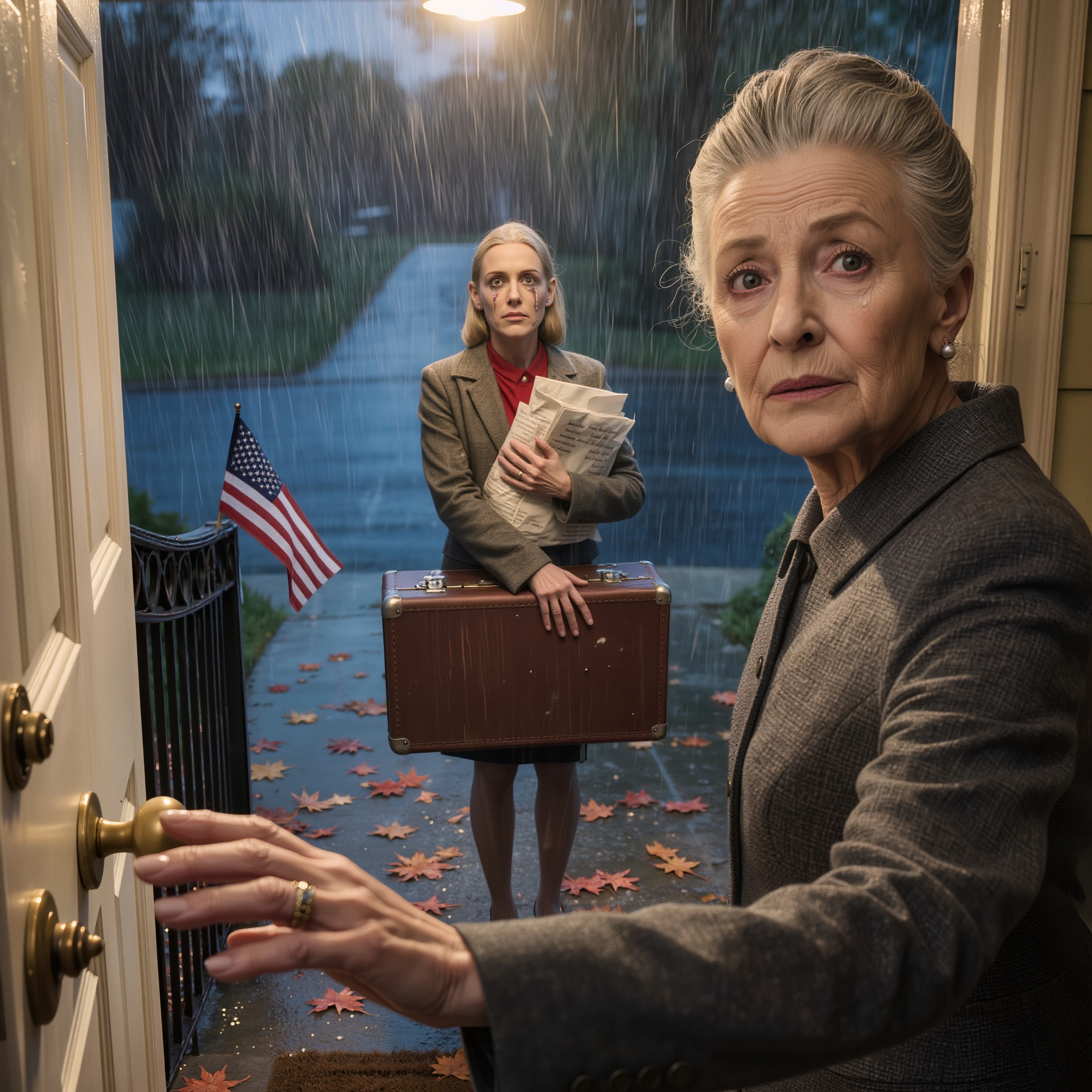
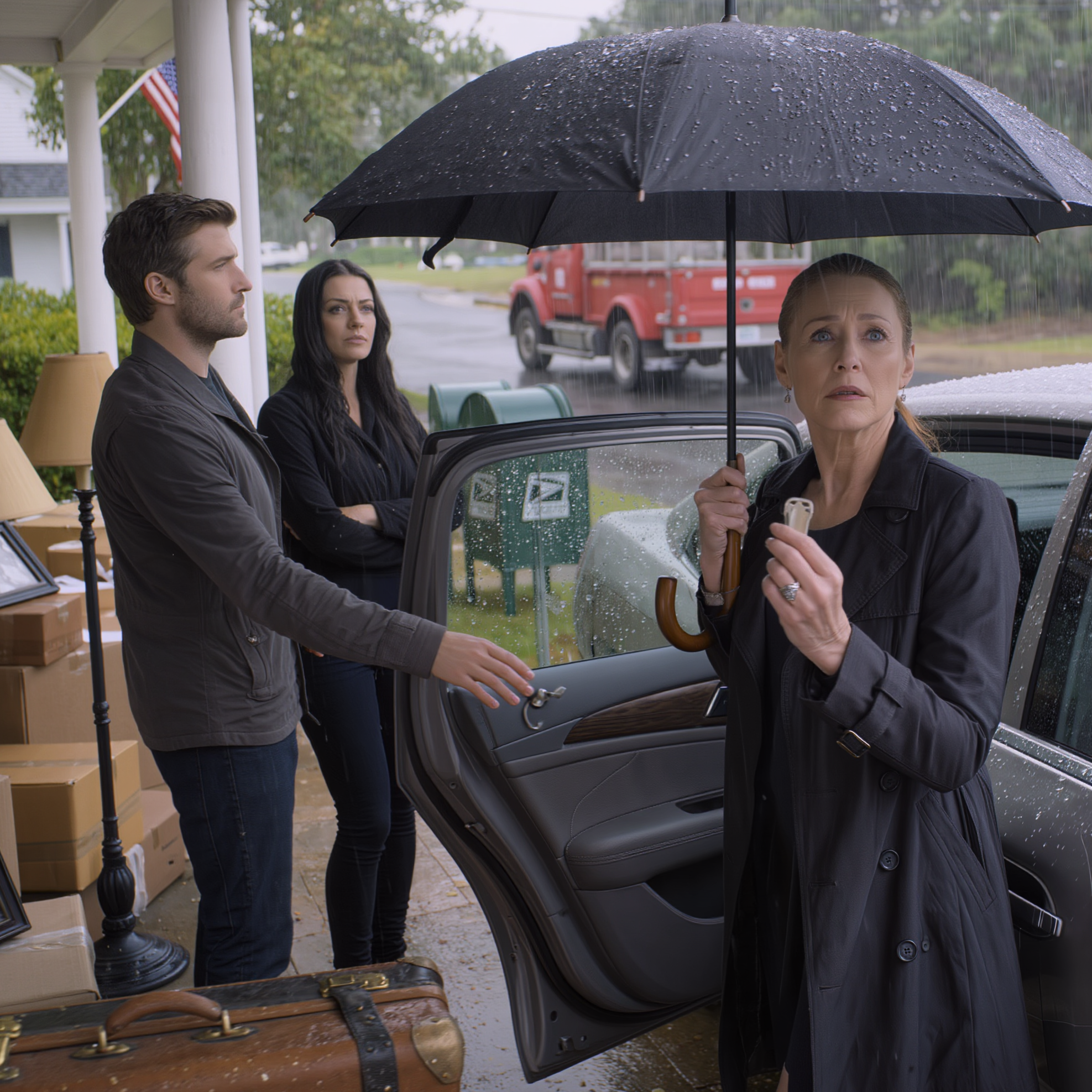
When the car pulled into the long, gravel driveway, I didn’t see the welcoming lights of the porch or the cars of grieving friends. Instead, I saw a scene that looked like a violent eviction. My heart hammered against my ribs as I saw David standing on the front porch, a cordless drill in his hand, while Elena was tossing cardboard boxes onto the lawn. As I stepped out of the car, my sensible funeral shoes sinking into the damp grass, I saw the contents of my life scattered like trash. My suitcases were there, half-zipped and leaking clothes. My wedding albums were stacked precariously near a puddle. Even Thomas’s favorite brass reading lamp—the one he used every night for thirty years—was sitting on top of a heap of linens. I felt a surge of confusion so deep it felt like vertigo. “David? Elena? What is this? What are you doing?” I cried out, my voice cracking in the cold air. David didn’t even look up from the door handle he was replacing. “The house is in the family trust, Mom,” he said, his voice flat and devoid of any warmth. “And since Dad is gone, we’ve decided to move the assets. You’re too old to maintain this place alone, and frankly, it’s worth too much to let you sit in it. We’ve already signed the papers to list it. Your things are on the porch. There’s a hotel room booked in your name near the airport. Don’t make this difficult.”
The Eviction of a Lifetime
I stood there, a seventy-year-old widow in a black veil, watching my own flesh and blood treat me like a squatter. Elena walked toward me, not to offer a hug, but to hand me a manila envelope. “We’ve changed the locks, Mom. Don’t bother trying the key. We did a walk-through and took anything of real value—the jewelry, the silverware, the small safe. It’s all part of the estate now. You should be grateful we’re giving you the car.” I looked at my daughter, the girl I had stayed up with through every fever and every heartbreak, and I didn’t recognize her. She looked at me with a cold, calculating greed that made my skin crawl. They had waited until I was at the cemetery—until I was at my most vulnerable and alone—to perform this surgical strike. They had calculated that I would be too broken to fight back, that I would simply slink away to that airport hotel and disappear into the shadows of old age. They forgot one very important thing: Thomas didn’t build a construction empire by being soft, and he certainly didn’t marry a woman who couldn’t hold her own.
I didn’t scream. I didn’t beg. I realized in that moment that the children I loved were gone, replaced by vultures who had been waiting for their father’s heart to stop so they could pick his bones clean. I walked over to the pile on the porch, picked up Thomas’s reading lamp, and looked David directly in the eye. “You think you’ve won because you have a drill and a new lock,” I said, my voice dropping to a low, dangerous register. “But you’ve forgotten who actually signed the trust documents. You’ve forgotten that your father and I were partners in everything.” I turned and walked back to the sedan, leaving my memories on the grass. I told the driver to take me not to the hotel, but to the offices of Miller & Associates—the law firm that had handled our business for thirty years. If my children wanted to play a game of assets and locks, I was going to show them exactly how an empire is dismantled.
The Legal Counter-Strike
Mr. Miller was still at his desk when I arrived, looking shocked to see me in my funeral attire. I sat down and told him exactly what had happened. I saw the anger flare in his eyes—he had known Thomas since they were both in their twenties. “Martha,” he said, pulling a thick blue folder from his cabinet, “they’ve made a catastrophic mistake. They assumed the 2015 trust was the final version. They didn’t realize that three months ago, while Thomas was in the hospital, we executed a ‘Survivor’s Absolute Control’ amendment. He was worried they might try something like this. He saw the way they were looking at the house while he was sick.” He opened the file to reveal a document signed by Thomas and notarized, which stated that in the event of his death, I had the sole power to dissolve the trust, sell any property at my discretion, and—most importantly—remove any beneficiary who demonstrated “unfilial conduct or financial hostility.”
I felt a grim sense of satisfaction as I realized that Thomas had protected me even from his own children. He had left me the “Nuclear Option,” and David and Elena had just handed me the detonator. “I want to exercise the removal clause,” I told Mr. Miller. “I want them stripped of every cent of their inheritance. I want the house put back in my name immediately. And I want a restraining order filed against both of them. If they want to treat me like a delivery on a porch, they can find out what it’s like to be truly ‘un-delivered’ from their father’s legacy.” We worked through the night, filing emergency injunctions and sending notices to the bank. By sunrise, the vultures were about to find out that the carcass they were hovering over was very much alive and armed with a legal arsenal they couldn’t hope to match.
The Morning of Reckoning
The next morning, David and Elena were back at the house, likely meeting with a real estate agent to list the property they didn’t own. I arrived with the sheriff and a team of movers. When David saw me, he started to shout, but the sheriff stepped forward and handed him the court order. “Mr. Harrison,” the sheriff said, “you are currently trespassing on private property. Your mother has legal title to this home and has revoked your status as a guest. You have ten minutes to gather your tools and leave before you are taken into custody.” Elena began to scream, her face turning a blotchy red as she realized her “inheritance” was vanishing before her eyes. “You can’t do this! That money is ours! Dad wanted us to have it!”
I stepped toward her, the funeral veil gone, replaced by the steel-eyed resolve of a woman who had spent forty years managing a business. “Your father wanted you to be decent human beings, Elena. He wanted you to respect the woman who gave you life. You chose the house over your mother, and now you have neither. The trust has been dissolved. Your college funds, your trust accounts, the ‘advance’ on the inheritance you’ve been living on—it’s all being clawed back. You wanted me to go to a hotel? I think you’ll find that a studio apartment is more your speed now.” I watched as they were escorted off the property, their faces masks of disbelief and rage. They had tried to lock me out of my past, but they ended up locking themselves out of their future.
The New Foundation
I spent the next week moving my belongings back into the house, but I didn’t stay long. The house felt too large, not because of the space, but because of the betrayal that had soaked into the walls. I sold the property a month later for its full market value—not the fire-sale price my children had planned. I took that money and moved to a beautiful coastal town, where I opened a small foundation in Thomas’s name to help elderly victims of domestic and financial abuse. I haven’t spoken to David or Elena since that morning on the porch. They send emails occasionally, filled with fake apologies and pleas for “one more chance,” but I know they aren’t mourning their father or their relationship with me; they are mourning the bank account they lost. I sit on my new porch now, Thomas’s reading lamp glowing softly beside me, and I realize that the best way to honor a husband’s memory isn’t just to mourn him—it’s to protect the life you built together from those who don’t deserve it.