The Secret Life of a “Penniless” Mother
For the last five years, I have lived a double life in the heart of a quiet Ohio suburb. To my son, Michael, and his ambitious wife, Sarah, I am Eleanor—a sixty-seven-year-old widow who lives in a modest rent-controlled apartment and relies on a meager social security check and a small monthly pension from my days as a school secretary. I wear sensible shoes from discount stores, drive a ten-year-old sedan that rattles when it idles, and I am the person they call when they need a free babysitter or someone to watch their dogs while they vacation in the Maldives. They see me as a relic of a simpler, poorer time. They look at me with a mixture of pity and barely concealed annoyance, treating me like a piece of furniture that has stayed in the room far too long. What they don’t know—what I have deliberately kept from them— is that I am also “E.L. Sterling,” a high-level corporate consultant for educational software firms. My “pension” is actually a drop in the bucket compared to the $40,000 I earn annually in passive consulting fees alone, on top of a seven-figure investment portfolio my late husband and I built in total secrecy.
I didn’t keep the money a secret out of malice; I did it out of a deep, maternal desire to see my son become a man on his own merits. Michael grew up with a silver spoon that he didn’t realize was plated. I wanted him to value hard work, to understand the weight of a dollar, and to build a life that wasn’t dependent on a looming inheritance. When he married Sarah, a woman who measured the value of a human soul by the brand of their handbag, my decision to remain “poor” became a fortress. I watched as they climbed the social ladder, buying a house they couldn’t afford and leasing cars that cost more than my first home. I sat at their dinner table while they complained about the “cost of living” and the “burden” of caring for elderly parents, all while I sat on enough wealth to buy their entire street. I waited for a sign that they loved the woman, not the potential windfall. Instead, I found out that in their world, if you don’t have a balance sheet, you don’t have a place at the table.
The tension reached its breaking point when Michael’s firm hit a rough patch and Sarah’s father stopped subsidizing their lifestyle. Suddenly, the “burden” of having me around became an active resentment. I was living in a small guest suite in their home at the time, helping with my granddaughter after a surgery I’d had. I paid for my own groceries and kept out of their way, but to Sarah, I was a reminder of the “mediocrity” she feared. She wanted to turn the guest suite into a “wellness room” and home office to boost her fledgling influencer career. She didn’t see a mother-in-law; she saw square footage that wasn’t generating a return on investment.
The Declaration of the New Queen
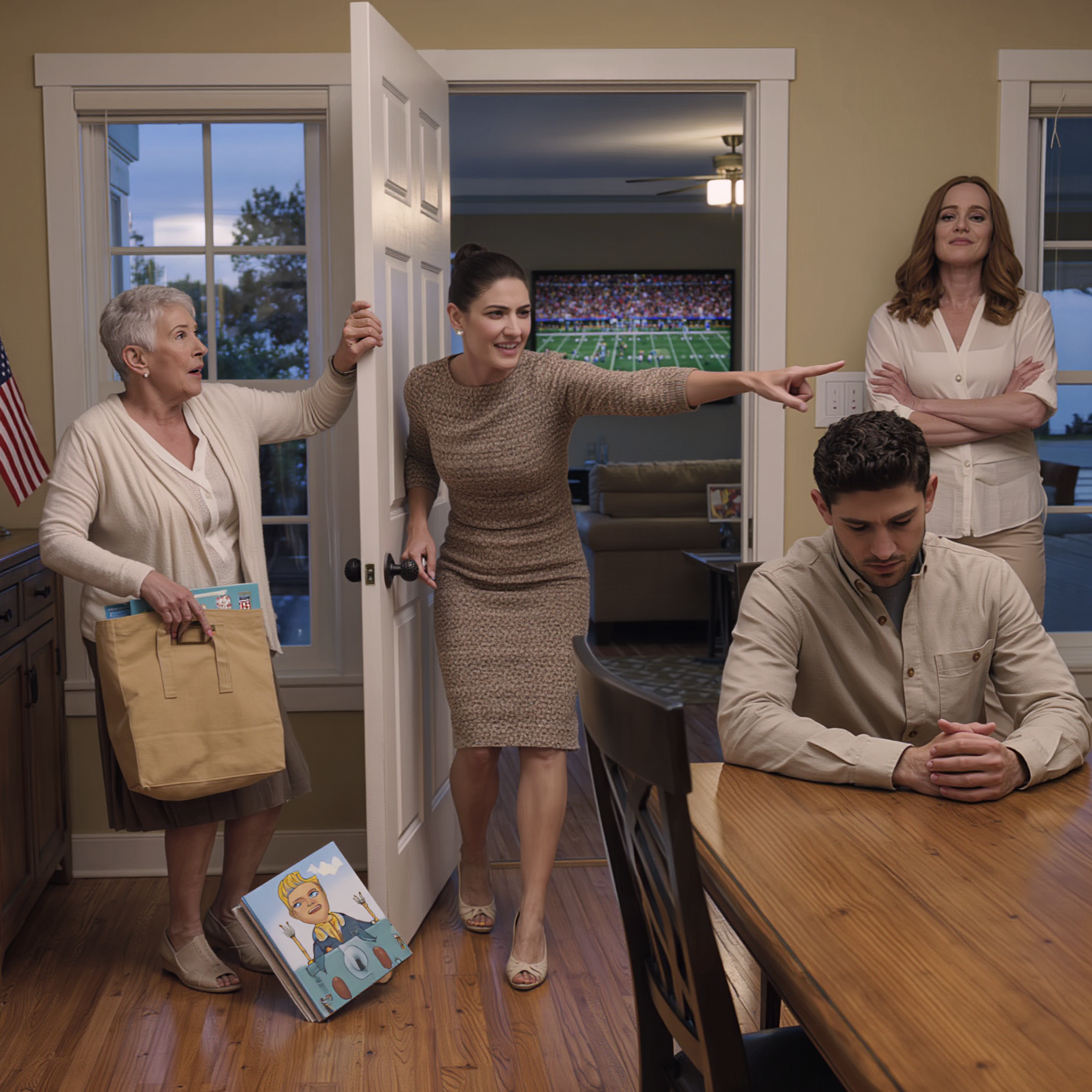
The confrontation happened on a Sunday morning over organic avocado toast. Michael was staring at a pile of bills, and Sarah was filming a video about “minimalism” while surrounded by thousands of dollars in designer clutter. I had walked into the kitchen to ask if they wanted me to take my granddaughter to the park. Sarah didn’t even look up from her ring light. “Actually, Eleanor,” she said, her voice dripping with a rehearsed, cold politeness, “we’ve been looking at the budget. This house is a premium asset, and having you in the suite just doesn’t make sense anymore. We need that space for my brand. And honestly, Michael is stressed enough without having to worry about an aging parent who contributes nothing to the household.”
I looked at Michael, waiting for him to defend the woman who had spent twenty years ensuring he had every advantage. He wouldn’t meet my eyes. He just poked at his toast. “Mom, Sarah’s right. We need to focus on our future. Why do we need a poor old woman like you taking up space? You have your pension. You can find a small place in the city, or maybe one of those state-funded senior centers. You’ll be with your own kind there. We need to move forward, and you’re… well, you’re a anchor.” The word “anchor” hit me harder than a physical blow. I wasn’t a mother; I was a weight holding back their ascent into the gilded world they craved. I realized then that my experiment in character-building had failed. I hadn’t raised a man; I had raised a mirror of Sarah’s greed.
“I see,” I said, my voice remarkably calm despite the storm in my chest. “You feel that my lack of financial status makes me a burden on your ‘brand’ and your ‘future’.” Sarah finally looked at me, a smug smile on her face. “Exactly. It’s just math, Eleanor. Successful people surround themselves with success. You’re a poor old woman. Go somewhere else. Find people who live at your level.” I didn’t argue. I didn’t tell them about the $40,000 consulting check that had cleared the day before or the brokerage account that could pay off their mortgage ten times over. I simply nodded, went to the guest suite, and packed my single suitcase. I walked out the front door without a backward glance, leaving behind a family that had traded their soul for a wellness room.
The Invisible Architect’s Revenge
I didn’t move into a state-funded center. I checked into the Penthouse at the city’s finest hotel and called my broker. “It’s time to move the assets,” I told him. For years, I had been the anonymous donor to Michael’s “entrepreneurial ventures” through a shell company. I had been the one who secretly bought out his business debt and kept his firm afloat during the lean months, all while he thought he was a “self-made” genius. I instructed my legal team to cease all support immediately. I called in the private loans he didn’t realize were held by his own mother. If he wanted to live at the “level of success,” he was about to find out how thin the air truly was at the top when you don’t have a foundation.
I spent the next week enjoying the life I had earned. I bought a stunning penthouse of my own, overlooking the lake, and updated my wardrobe from the boutiques Sarah could only dream of entering. I didn’t do it to be flashy; I did it to prepare for the final act. I knew that without my silent subsidies, Michael’s world would begin to crumble within thirty days. He had built a life on a house of cards, and I had been the only thing keeping the wind from blowing it down. I waited for the inevitable phone call, curious to see if he would reach out out of love or out of the same cold math Sarah loved so much.
The Cold Math of Reality
The call came three weeks later. Michael sounded like a man who was drowning. “Mom? I… I don’t know what happened. My firm’s line of credit was pulled. Our primary investor vanished. Sarah’s car was repossessed this morning. We’re going to lose the house, Mom. We need help. I know you don’t have much, but do you have any savings? Anything from the pension?”
I sat in my new living room, the sunlight reflecting off the marble floors. “Michael,” I said, my voice devoid of the maternal warmth he had discarded, “I thought you and Sarah were successful. I thought you only surrounded yourselves with ‘important’ people. Why are you calling a poor old woman? I’m living at my level, just like you suggested.” I heard Sarah’s voice in the background, frantic and high-pitched. “Ask her about the secret accounts! My father said there was a rumor she was the one behind the Sterling firm!”
“The secret is out then,” I said. “Yes, I make forty thousand a year in consulting, and yes, I own the firm that’s been keeping your lights on for five years. But Michael, you told me I was an anchor. You told me you didn’t need a poor old woman. So I decided to become a wealthy one instead. I’ve liquidated my interests in your life. I’ve moved on to my own brand, and unfortunately, you aren’t part of the target demographic.” I hung up as he began to beg. I didn’t feel joy in his ruin, but I felt a profound sense of justice. He had to learn that the “poor old woman” was the only thing that made him a “rich young man.”
The View from the Top
I live in the penthouse now, and my consulting business has never been better. Michael and Sarah lost the house and the cars, and they are currently living in the very type of “modest apartment” they once tried to force me into. I haven’t cut them off entirely—I set up a strictly controlled trust for my granddaughter’s education—but for Michael and Sarah, the bank is closed. They are learning to live on their own merits, and from what I hear, it’s a very difficult curriculum. I sit on my balcony and realize that wealth isn’t about what’s in your bank account; it’s about who stays by your side when they think the account is empty. I may have been a “poor old woman” to them, but I am the richest person I know, because I finally know exactly who I can trust.