The Silent Welcome of a Holiday Betrayal
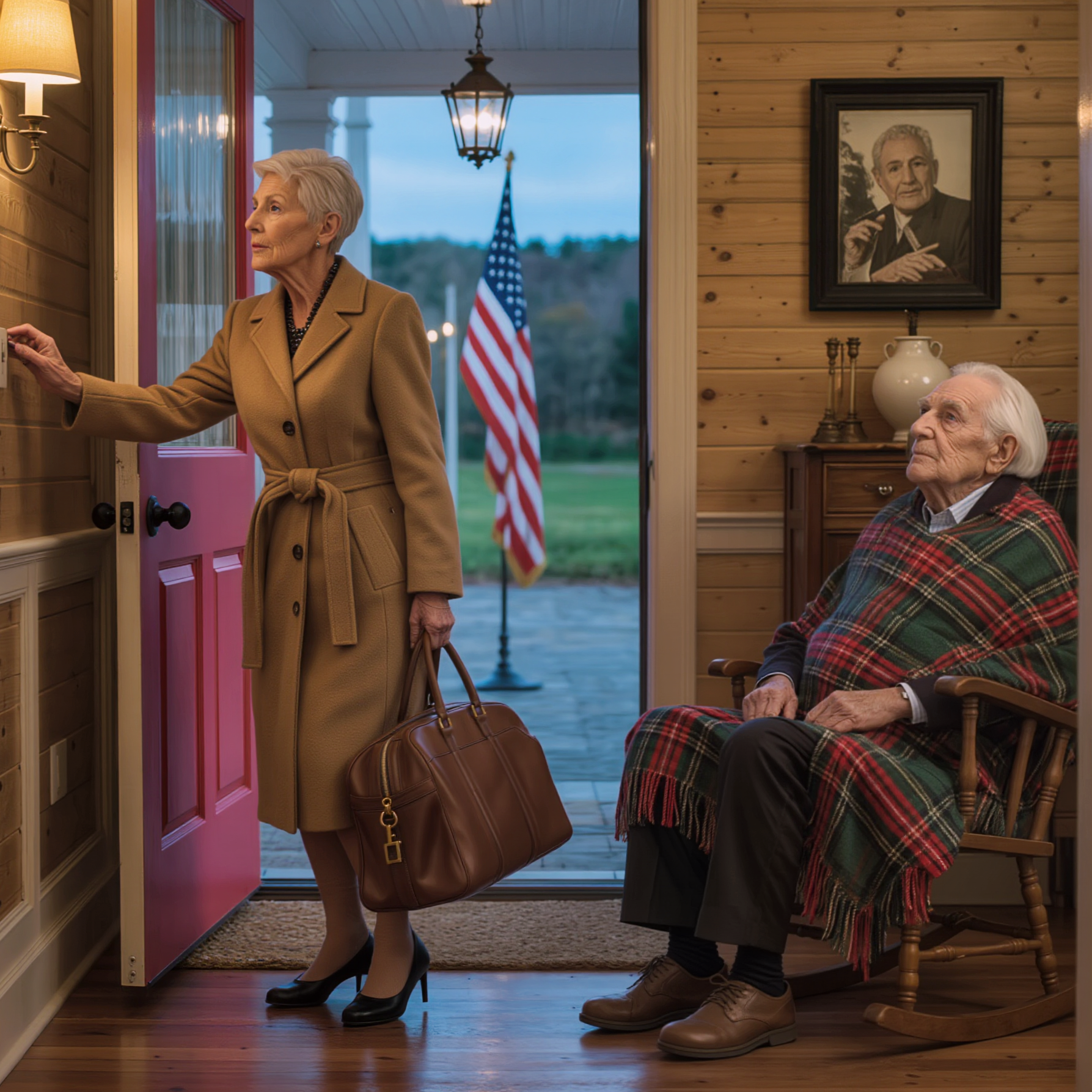
Thanksgiving has always been the heartbeat of my year. As a widow living in a house that feels far too large for one person, I spend weeks preparing: polishing the silver, roasting the chestnuts, and slow-cooking the cranberry sauce just the way my son, Greg, likes it. This year was supposed to be special. My daughter-in-law, Sarah, had insisted they host the dinner at my house so I wouldn’t have to travel. I spent the morning at the local church bake sale, arriving home at 2:00 P.M. with three fresh pumpkin pies and a heart full of anticipation. But when I pulled into my driveway, the house was eerily dark. There were no cars in the lane, no sound of children playing, and no smell of roasting turkey. The front door was unlocked, and as I stepped into the foyer, the silence was so heavy it felt like a physical weight.
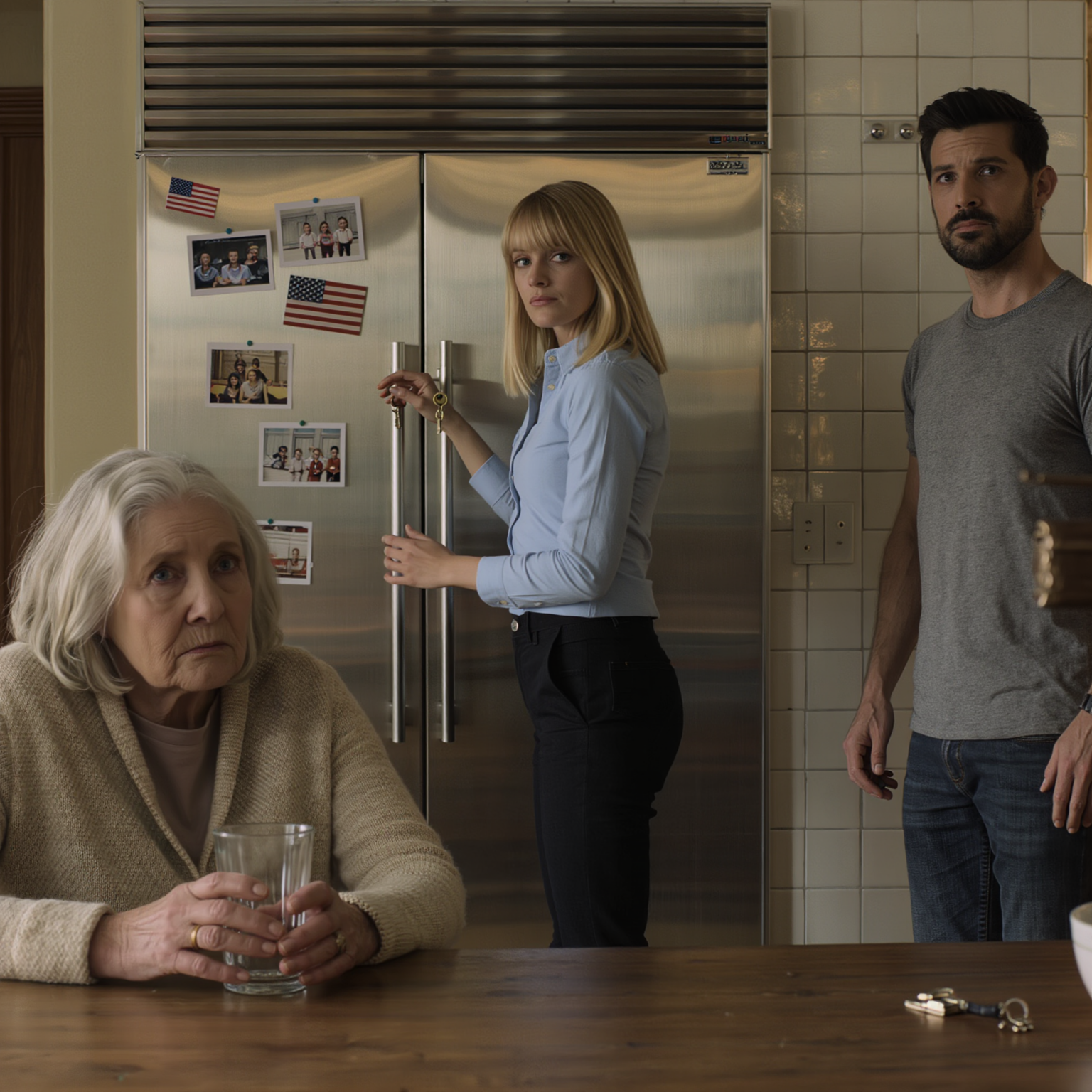
I walked into the living room and gasped. Sitting in the corner, illuminated only by a sliver of gray November light, was Arthur. Arthur was Sarah’s stepfather, a quiet man in his late eighties with advancing dementia who had been living with them for two years. He was sitting in his rocking chair, clutching a small, worn teddy bear, staring blankly at the cold fireplace. He looked small, confused, and utterly alone. On the dining room table—where my fine linen cloth should have been spread—sat a single, crumpled piece of notebook paper. I picked it up, my hands trembling as I read Sarah’s elegant script: “Mom, we realized we all desperately needed a break. The kids have been so stressed, and Greg found a last-minute deal on a seven-day Caribbean cruise. We knew you’d be home anyway, so we left Arthur here. His meds are in the kitchen. Please take care of him. We’ll be back next Sunday! Happy Thanksgiving!”
The audacity of it was breathtaking. They hadn’t just “left” Arthur; they had dumped a man with high-needs medical requirements on my doorstep without a word of warning, ruining my holiday and effectively turning me into an unpaid, involuntary nurse. They had taken a “family” cruise and decided that the grandfather who raised Sarah wasn’t part of the family anymore. I looked at Arthur, who finally noticed me and gave a weak, toothless smile. “Is it dinner time, Clara?” he asked, calling me by his late wife’s name. In that moment, the hurt I felt for myself vanished, replaced by a cold, incandescent rage on his behalf. Sarah and Greg thought they could sail away from their responsibilities and leave me to pick up the pieces. They didn’t realize that after forty years in corporate logistics, I knew exactly how to track a ship.
The Logistics of a Counter-Strike
I didn’t call them. I knew they’d already be at the Port of Miami, their phones likely off or ignored as they sipped mai tais in the sun. I went to the kitchen, but I didn’t touch the turkey. Instead, I packed Arthur’s specialized medication, his favorite blankets, and three changes of clothes into my sturdy rolling suitcase. I called my brother, a retired police officer, who arrived within twenty minutes to help me get Arthur into the car. “What are you doing, Bev?” he asked, looking at the packed bags. “I’m giving Arthur the Thanksgiving he was promised,” I told him. “And I’m delivering a package that Sarah ‘forgot’ to board.”
I drove three hours to the pier, my mind a sharp instrument of calculation. I knew the ship, the Azure Empress, wasn’t scheduled to depart until 7:00 P.M. Thanks to a “Gold Level” membership I’d kept from my traveling days, I was able to talk my way past the initial security gates under the guise of delivering “essential medical equipment” for a passenger in Suite 402—my son’s cabin. When I reached the terminal, the bustling crowd of happy vacationers felt like a fever dream compared to the grim reality of the man sitting in the wheelchair beside me. I saw them. Greg, Sarah, and my two grandchildren were standing near the boarding ramp, laughing and taking selfies with a man in a plush dolphin suit. They looked like the picture of a perfect, carefree family.
The Confrontation at the Pier
I waited until they were in the middle of the boarding line, surrounded by hundreds of other passengers, before I made my move. I pushed Arthur’s wheelchair directly into their path. The moment Sarah saw me, the color drained from her face so fast I thought she might faint. Greg’s smile turned into a mask of pure horror. “Mom? What… what are you doing here?” he stammered, his eyes darting to the curious onlookers who had stopped to watch the scene.
“I’m delivering your ‘forgotten’ luggage, Greg,” I said, my voice projecting with the authority of a woman who had spent decades commanding boardrooms. I held up the note Sarah had left on my table. “I found your letter. It seems you forgot that ‘family’ includes the man who paid for your college and the mother who gave you life. You wanted a cruise for the ‘whole family’? Well, here is your grandfather. He’s all yours.”
Sarah hissed under her breath, her eyes darting around in embarrassment. “You can’t do this here, Beverly! We’re boarding! Arthur can’t go on a cruise, he needs constant supervision! That’s why we left him with you!” I leaned in close, my voice a whisper of cold steel. “No, Sarah. You left him because you are cowards. You wanted the fun without the work. But I am not your servant, and my home is not a dumping ground for the people you find inconvenient. Either you take him on this ship and pay for a dedicated onboard nurse, or I call the Port Authority right now and report a case of elder abandonment. I have the note. I have the witnesses. And I have your cabin number.”
The Crumbling of the Vacation Illusion
The next thirty minutes were a chaotic display of the “stress” they claimed to be escaping. Greg frantically tried to argue that there was no room, while Sarah wept about her “ruined” holiday. But I stood my ground, my hand firmly on the handle of Arthur’s wheelchair. The cruise line staff, sensing a massive liability and a potential PR disaster, stepped in. They informed Greg that they did indeed have an infirmary and private care options, but they would cost an additional $5,000 for the week. Greg looked at me, begging with his eyes for me to just take Arthur home and “be reasonable.”
“The price of your ‘break’ just went up, Greg,” I said. “Pay the fee and take care of your father-in-law, or stay on the pier and deal with the police. The choice is yours. But Arthur is not going back to my house today. I have a 20-pound turkey to cook, and I’m inviting the neighbors over to eat it.” Reluctantly, with the eyes of the entire boarding queue on them, Greg pulled out his credit card. The “carefree” vibe of their vacation was dead, replaced by the heavy reality of the responsibility they had tried to discard.
The Peace of a True Thanksgiving
I watched from the pier as they were escorted onto the ship—not toward the lido deck, but toward the purser’s office to finalize the medical arrangements. Arthur looked happy; he liked the bright lights and the smell of the salt air. He waved at me as the ramp began to lift, and for the first time that day, I felt a sense of peace. I drove home through the quiet Florida night, the stars bright over the highway.
When I got back to my house, I didn’t feel lonely. I felt powerful. I called my friends and neighbors, and by 10:00 A.M. the next morning, my kitchen was full of laughter and the smell of a proper Thanksgiving. My son and daughter-in-law spent their “relaxing” cruise managing Arthur’s care and explaining to the kids why Grandma had shown up at the pier like an avenging angel. I learned that you can’t sail away from your heart, and you certainly can’t sail away from a mother who knows how to read the fine print.