The Silent Patient in the Guest Room
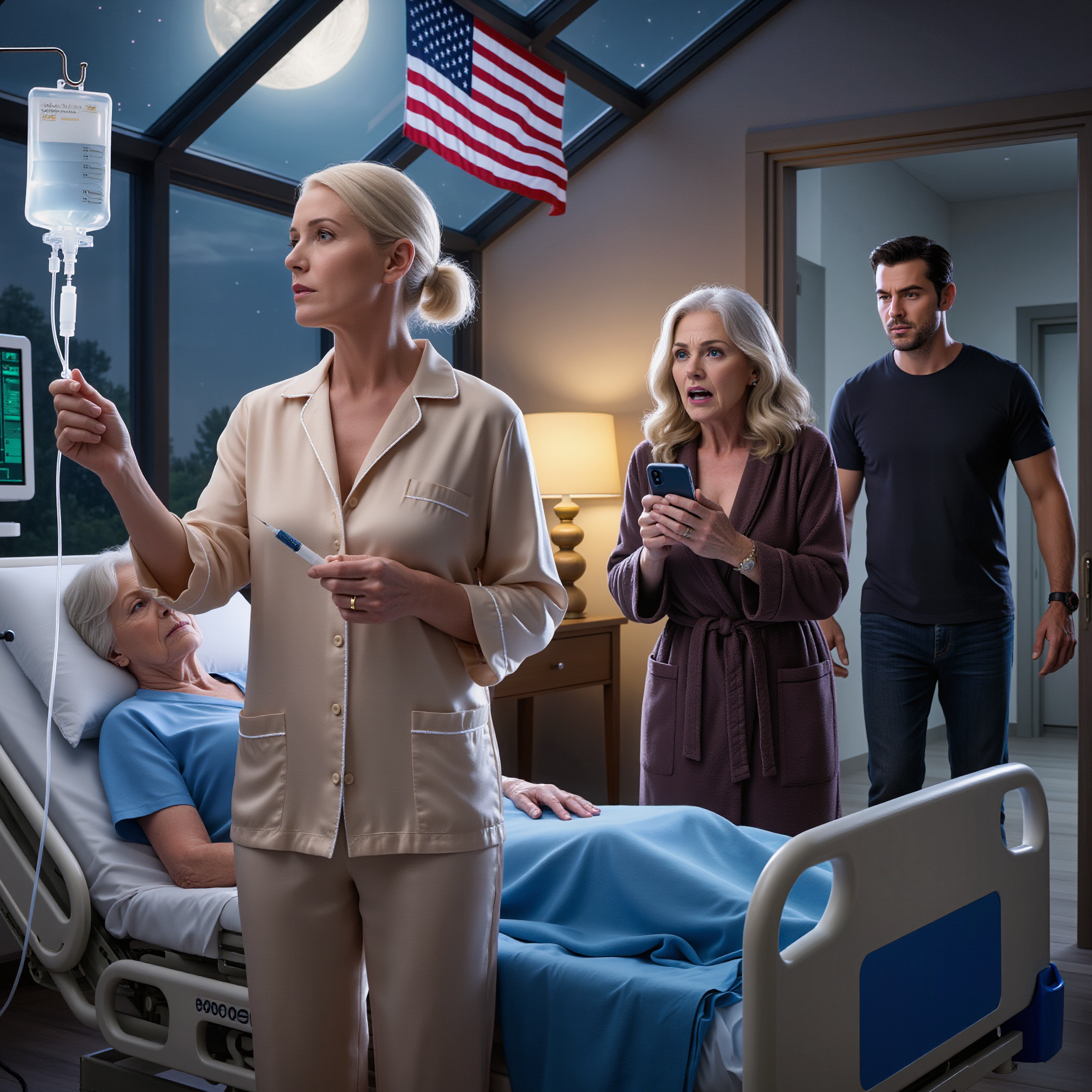
For six months, my son’s house had felt like a funeral parlor. My daughter-in-law, Alicia, had moved her mother, Martha, into the downstairs guest suite after a horrific car accident that supposedly left the woman in a persistent vegetative state. I had moved in “temporarily” to help out, as Alicia and my son, David, were overwhelmed by the medical bills and the emotional toll. Day after day, I watched them tenderly brush Martha’s hair, play soft music for her, and weep over her limp hands. They portrayed themselves as the ultimate martyrs, sacrificing their youth and their savings for a woman who couldn’t even blink. When they announced they were taking a “sanity break” trip to the Maldives—funded by a “generous donation” from a local charity—I didn’t blame them. I told them I’d handle the feeding tubes and the sponge baths. I told them Martha would be safe with me.
The moment the front door clicked shut and I heard their SUV pull out of the driveway, the silence in the house changed. I walked into the guest suite to check Martha’s vitals. As I reached for her wrist, her hand suddenly clamped around mine with a strength that made me gasp. Her eyes, which had been vacant for half a year, snapped open with a terrifying clarity. She didn’t look like a woman coming out of a coma; she looked like a prisoner who had finally found the key. She pulled me close, her voice a dry, rasping rattle that sent ice through my veins. “Check the basement, Elena,” she whispered, her eyes darting toward the hallway. “They didn’t save me. They didn’t nurse me. They hid me. Look behind the freezer. The documents… the real ones are there.” Before I could ask a single question, she closed her eyes and resumed her mask of stillness as a car passed by outside.
The Secrets Behind the Freezer
My heart was pounding so hard I could hear it in my ears. I had lived in this house for months and never had a reason to go into the deep basement storage area. I grabbed a flashlight and navigated the narrow, dark stairs. The basement was cold and smelled of damp concrete. In the far corner sat an industrial-sized chest freezer that Alicia insisted was full of “emergency food supplies.” I pushed with all my might, the heavy unit screeching across the floor. Behind it was a loose wall panel. I pried it open and found a waterproof metal box.
Inside wasn’t just “paperwork.” It was a meticulously organized folder of insurance fraud. I found the real medical reports from the night of the accident. Martha hadn’t been in a coma; she had suffered a mild concussion and broken ribs. But David and Alicia had been the ones driving the car—drunk. They had convinced a corrupt medical examiner to falsify the reports to claim a massive $2 million “catastrophic injury” settlement. They were keeping Martha heavily sedated with unprescribed cocktails of drugs to simulate a coma, effectively keeping her a silent prisoner while they drained the settlement money into offshore accounts. The Maldives trip wasn’t a “sanity break”; it was the final step before they “unplugged” her for good to claim the remaining life insurance.
The Architect of a Silent Rescue
I realized then that I wasn’t just a caregiver; I was their unwitting alibi. If Martha “passed away” while I was watching her, they would be thousands of miles away, beyond suspicion. I spent the next four hours working with a cold, sharp fury. I didn’t call the local police—I knew David had friends on the force. I called a federal insurance investigator I had met during my years as a court reporter. I sent high-resolution photos of every document in that metal box. Then, I called a private medical transport team.
By 8:00 PM, I had Martha out of that house and in a secure, private clinic where they immediately began flushing the sedatives out of her system. As she regained her strength, she told me the full horror: they had been threatening her for months, telling her that if she ever “woke up,” they would make sure she ended up in a state-run facility where no one would ever find her. She had been faking the depth of her coma for weeks, waiting for a moment when both of them were gone and someone she could trust was left behind.
The Return from “Paradise”
David and Alicia returned four days later, tanned and laughing, carrying shopping bags from high-end boutiques. They walked into the house, their faces already shifting into their practiced “mournful” expressions. I was sitting in the living room, a cup of tea in my hand, watching the news. “Hey Mom! How’s Martha doing?” David asked, his voice full of fake concern. “Oh, she’s gone, David,” I said calmly. Alicia let out a staged wail, clutching her chest. “Oh no! When? Why didn’t you call us?”
“She isn’t dead, Alicia,” I said, standing up as three federal agents stepped out from the kitchen. “She’s at the federal building giving her deposition. And the ’emergency food’ in your basement was fascinating. The agents especially liked the metal box.” The transformation on their faces was a masterclass in terror. The shopping bags hit the floor with a dull thud as the reality of a twenty-year prison sentence for fraud, kidnapping, and attempted murder began to settle in. They hadn’t just betrayed their mother; they had invited a witness into the heart of their crime.
The Peace of the Restored Life
Martha made a full recovery. She moved into a beautiful assisted living community—one she paid for with the reclaimed settlement money that the government helped her recover from David and Alicia’s seized accounts. My son is currently serving fifteen years, and Alicia is in a separate facility for her role in the scheme. I still visit Martha every week. We don’t talk about the “coma” anymore. We talk about the future. I learned that sometimes, the people you think are martyrs are actually monsters, and the best way to care for someone isn’t to hold their hand in the dark—it’s to turn on the light.