The Terminal of Betrayal
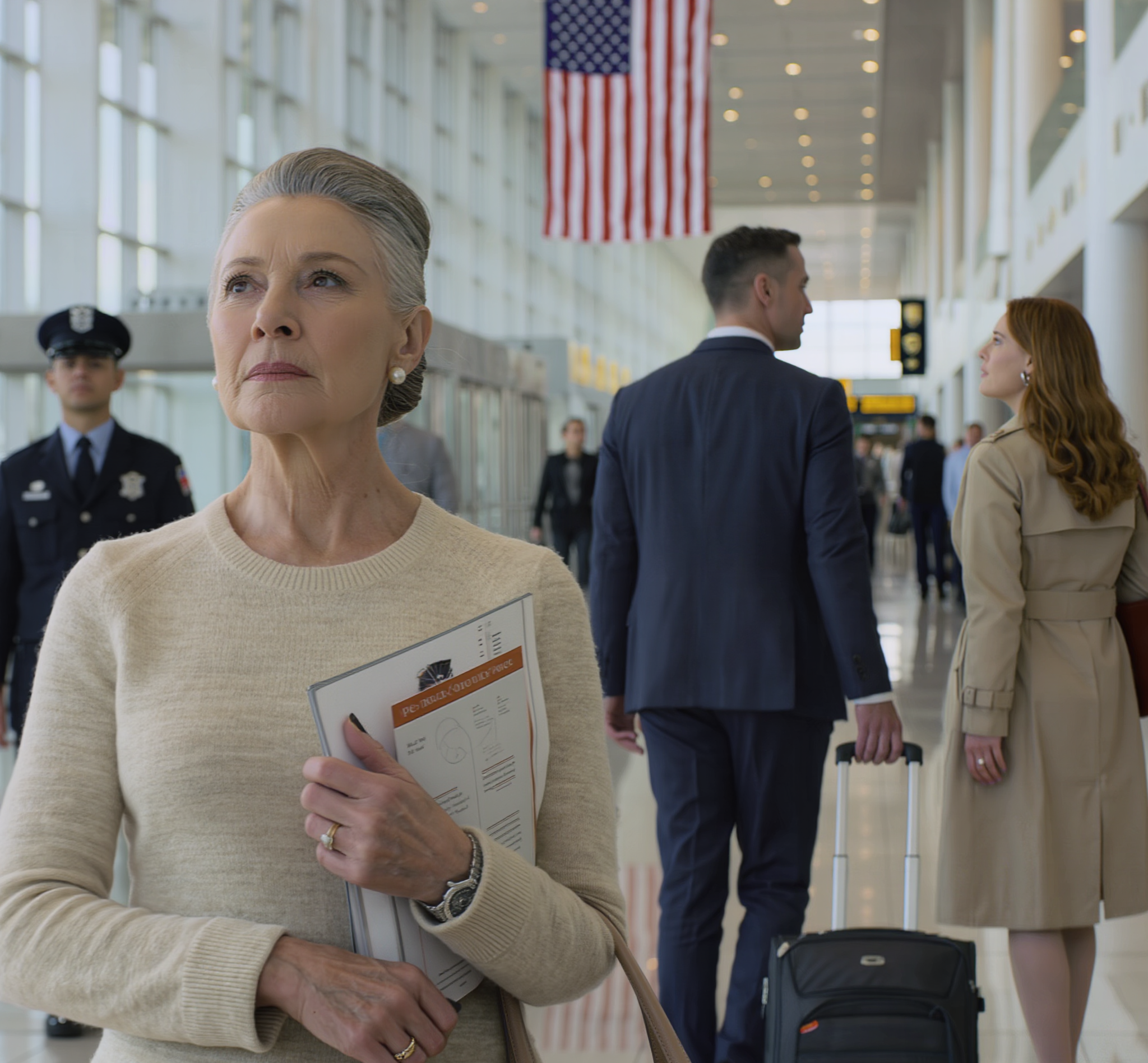
Nashville International Airport is usually a place of music and neon lights, but as I stood near the baggage claim, it felt like a cold, gray tomb. My son, Kevin, and his wife, Samantha, had invited me on what they called a “Family Bonding Trip” to the Great Smoky Mountains. I had spent the last three days paying for their luxury hotel suites, their five-course dinners, and their shopping sprees along Broadway. I thought we were finally mending the fences that had been broken since my husband passed away. But as we checked in for our flight home, Kevin handed me a single, printed boarding pass and pulled my suitcase back toward his side of the curb.
“Change of plans, Mom,” he said, his voice as flat as a midwestern prairie. Samantha wouldn’t even look at me; she was busy scrolling through her phone, probably looking at the real estate listings for the house I still lived in. “We’ve decided it’s time for you to start your ‘independent’ phase. This ticket doesn’t go back to our city. It goes to a small town three states away where your sister lives. We’ve already cleared out your guest room.” I looked at him in disbelief. “Kevin, where is my luggage? My purse? My medication is in that bag!” He let out a sharp, impatient sigh. “We’ll ship it when we get around to it. If you need money, sell that fancy smartphone we bought you for Christmas. Take a bus the rest of the way. We’re done being your personal assistants.”
The Performance of the Discarded
They walked away without a backward glance, blending into the crowd of travelers. I stood there, a sixty-five-year-old woman in a light sweater, with no money, no ID, and no luggage. To the casual observer, I was a victim. To Kevin and Samantha, I was an inconvenience they had finally successfully “disposed” of. They assumed I would be too embarrassed, too fragile, or too technologically illiterate to fight back. They thought that by taking my physical belongings, they had taken my power.
But they made one fatal mistake. They told me to “sell my phone.” They forgot that I was the one who had set up the family’s digital estate after my husband died. I sat down on a cold metal bench near the Southwest terminal and opened the very device they told me to pawn for bus fare. My hands weren’t shaking anymore; they were moving with the precision of a master surgeon. I didn’t call the police, and I didn’t call my sister. I opened the encrypted vault app that controlled the “Power of Attorney” overrides for our family trust—a trust that held the title to the house they were currently living in and the business accounts Kevin used to fund his “lifestyle.”
The Digital Counter-Strike
As I waited for my “one-way” flight to a town I had no intention of visiting, I began the process of a total financial blackout. Kevin and Samantha had spent the last year slowly convincing me to put their names on the “operational” accounts for the family business. They thought they were the owners; they didn’t realize they were merely “authorized users” whose access could be revoked with a single biometric scan of my thumb.
I sat in the Nashville airport and systematically changed every password, every security question, and every two-factor authentication code. I triggered an immediate “Emergency Freeze” on the corporate credit cards Samantha was currently using to buy airport mimosas and designer sunglasses. By the time their flight was boarding, their world was already starting to crumble. I then sent a single, clear PDF to the local Sheriff’s office back home: an eviction notice for “Unauthorized Occupants” of my primary residence, backed by the digital deed they thought they had convinced me to sign over.
The Reckoning in the Air
I watched their plane take off from the terminal window, knowing exactly what was about to happen. About forty-five minutes into their flight, the in-flight Wi-Fi would be the only thing they had left. I sent one final text to Kevin. It wasn’t a plea for help or a cry of pain. It was a screenshot of the “Account Closed” notifications for every single card in his wallet.
“I’ve decided to follow your advice, Kevin,” I wrote. “I’m starting my ‘independent’ phase. But since I paid for the phone, the house, the cars, and the very air you’re currently breathing on that plane, I’ve decided to keep them for myself. Don’t worry about my luggage; I’ve already contacted the airline to have it pulled and held for me. Enjoy the bus ride from the airport when you land—I’m sure you can sell your watches for a ticket.”
The Peace of the Nashville Night
I didn’t take that one-way flight. I used the “Concierge Service” tied to my high-limit private bank account to have a car pick me up from Nashville International. I stayed in a five-star hotel in downtown Nashville, ordered the most expensive room service on the menu, and slept like a woman who had just shed a hundred pounds of dead weight.
Kevin and Samantha landed to find their credit cards dead, their car towed from the airport lot due to “reported theft,” and a sheriff’s deputy waiting at my front door to ensure they didn’t take so much as a toaster from my house. I learned that day that being a “nice mother” is a gift, but being a “smart woman” is a survival skill. They thought they left me with nothing in Tennessee; instead, they gave me the freedom to realize I never needed them at all.