The Silent Vanity in the Corner
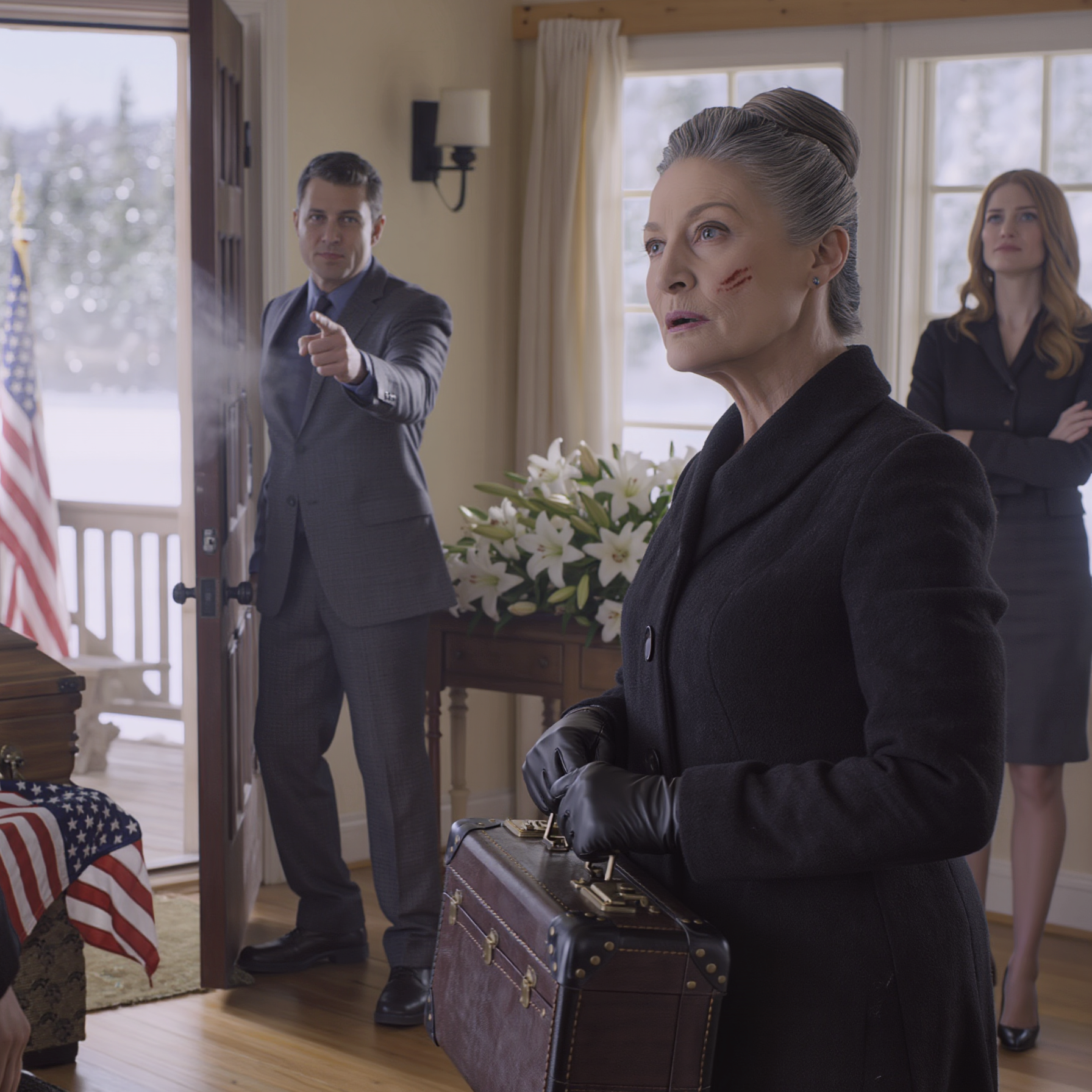
When my grandmother, Eleanor, passed away at the age of ninety-four, she left behind a house filled with shadows and silence. She was a woman of mystery, known for her sharp wit and her absolute refusal to speak my father’s name for the last thirty years of her life. My father, Julian, always claimed she was “difficult” and “senile,” but I felt there was more to the story. While settling her estate, I inherited her antique mahogany vanity—a beautiful, heavy piece of furniture that smelled of lavender and old secrets. One afternoon, while polishing the wood, I noticed that the bottom of the center drawer felt uneven. I pressed a small, inconspicuous knot in the wood, and a false bottom popped up, revealing a tarnished silver key wrapped in a piece of yellowed lace.
I spent hours trying that key on every lock in the house—the front door, the china cabinet, even the old trunks in the basement. Nothing fit. It wasn’t until I went up to the attic to store some boxes that I noticed a small, recessed door hidden behind a heavy velvet curtain. The key slid into the lock with a click that sounded like a heartbeat. As the door swung open, the air grew cold and thick with dust. It wasn’t just a storage space; it was a meticulously preserved room, frozen in the year 1994. On the desk lay a stack of documents and a handwritten letter addressed to me, dated just months before her death.
The Architect of a Forgotten Life
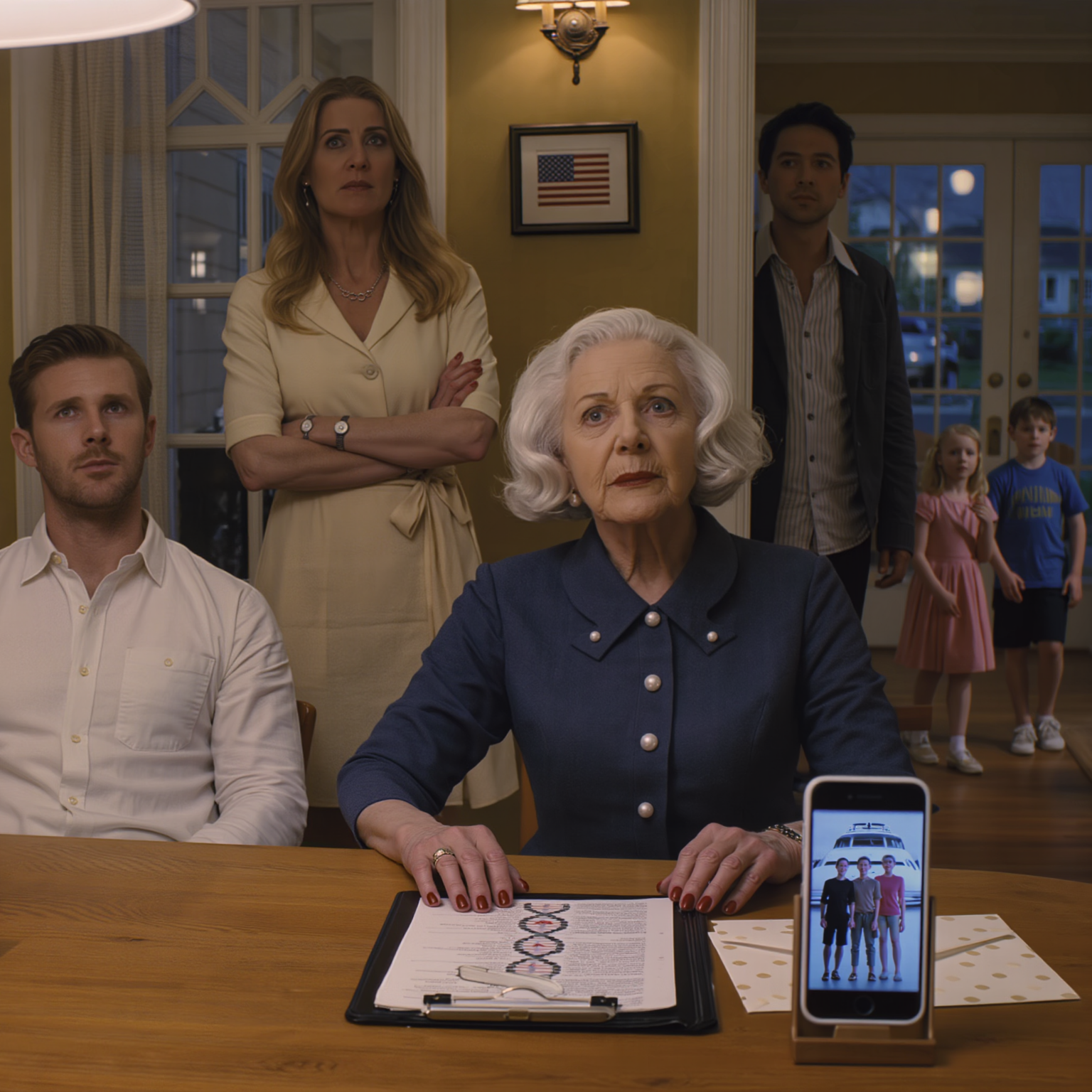
The room was filled with evidence of a life my father had tried to erase. There were architectural blueprints, awards for community service, and a series of ledgers that detailed a massive family fortune I never knew existed. My grandmother hadn’t been “difficult”; she had been the silent CEO of a textile empire that my father had claimed went bankrupt decades ago. As I read the letter, my hands began to shake. Eleanor hadn’t cut my father off because of a “disagreement.” She had exiled him because he had attempted to forge her death certificate while she was still alive to gain control of the estate.
The documents in the room proved that the “modest” life we lived while I was growing up was a lie designed by my father to keep me from asking questions about my grandmother. He had stolen millions from the company’s pension fund and blamed the “bankruptcy” on Eleanor’s mismanagement. He had spent thirty years painting her as a villain to ensure I would never go to her for the truth. He didn’t want a relationship with her; he wanted her silence, and he thought he had achieved it by isolating her in that old house.
The Evidence in the Dust
The most shocking discovery was a small, locked safe in the corner of the attic room. Using a code found in the margins of her Bible, I opened it to find a collection of original deeds and a series of recorded tapes. In the tapes, my father’s voice was unmistakable—cold, calculating, and threatening. He was caught on record demanding that she sign over the remaining properties or he would have her committed to a state-run facility where “no one would ever find her.”
Eleanor hadn’t been hiding out of fear; she had been gathering evidence. She knew that if she went to the police then, my father would use his influence to crush her. She waited, year after year, documenting every move he made, every cent he laundered, and every lie he told me. She had left the silver key for me, knowing that only someone who truly cared for her would take the time to find it. She had turned the attic into a vault of justice, waiting for the one person who could finally open it.
The Reckoning of the Silver Key
I didn’t confront my father at the dinner table. I invited him to the house under the guise of “signing the final estate papers.” When he arrived, looking smug and ready to finally claim the “worthless” house, I led him up to the attic. The moment he saw the open door and the velvet curtain pulled back, his face turned a shade of gray I will never forget. I played the tapes for him in the very room where he had once made his threats.
“The house isn’t yours, Dad,” I said, my voice echoing in the small space. “And neither is the estate. Grandmother left everything to a trust that I control, and she left a full report for the authorities regarding the pension fund theft. You spent thirty years trying to make her disappear, but she’s the one who’s finally going to make you answer for what you did.” The look of pure, crystalline terror in his eyes was the only inheritance I needed. He realized that the woman he called “senile” had outplayed him from the grave.
The Peace of the Restored Legacy
My father is currently facing a series of federal charges for fraud and embezzlement. The “modest” life he built for us has collapsed under the weight of the truth. I have used the family fortune to restore the textile mills and provide the pensions that were stolen from the workers decades ago.
I still sit at my grandmother’s vanity every morning. I keep the silver key in a small glass box on the top shelf—a reminder that the truth can be hidden, but it can never be locked away forever. My grandmother didn’t leave me money; she left me her strength and the courage to look behind the curtains. The attic is no longer a room of secrets; it’s a room of light, and for the first time in thirty years, the Miller name finally stands for something honest.