The Audit of Blood
For thirty years, I was the “black sheep” of the family, mostly because I chose a life of teaching and art over the high-stakes corporate world my father and sister, Beatrice, inhabited. When our father passed away, leaving behind a $10 million estate and a massive real estate portfolio, Beatrice’s mask of sibling affection evaporated. She had always hinted that I didn’t “look” like a member of the family, suggesting that my mother—who passed when I was young—might have had an indiscretion. At the first meeting with the estate lawyer, Beatrice dropped the bombshell. She refused to allow the probate to proceed unless I submitted to a DNA test. “I won’t have a stranger stealing half of Dad’s hard-earned legacy,” she sneered. I was heartbroken, but I agreed. I knew who I was, and I wanted to honor my father’s memory without a cloud of doubt hanging over my head.
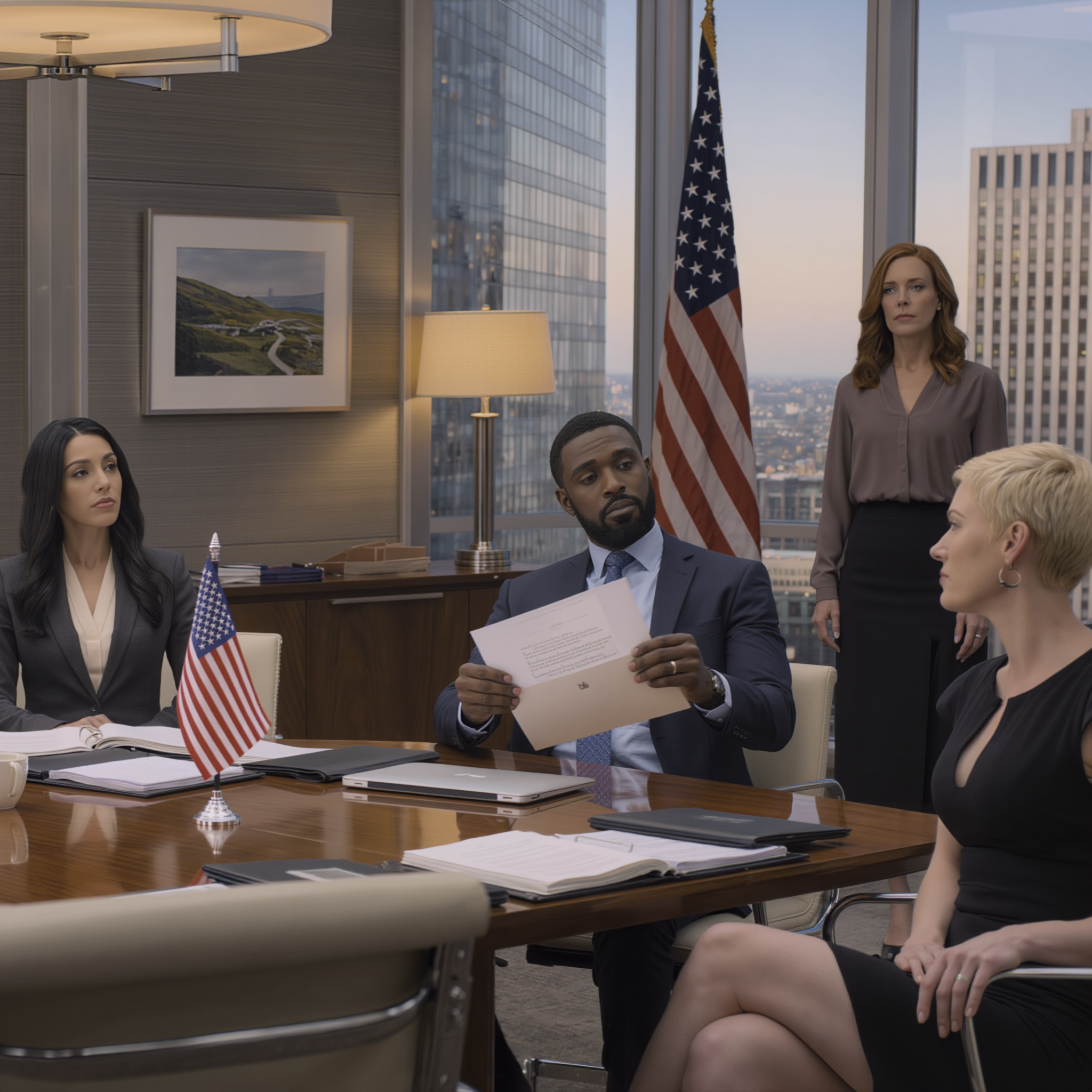
The two-week wait for the results was a psychological war. Beatrice spent the time making “preliminary” plans for the estate, picking out which properties she would sell and which she would keep. She treated me like a trespasser in my own childhood home. When the day finally arrived to open the results in the lawyer’s office, Beatrice was practically vibrating with anticipation. She had her pen ready to sign the papers that would officially name her the sole heir. The lawyer, Mr. Henderson, a man who had been my father’s confidant for decades, pulled the heavy manila envelope from his desk. He opened it slowly, his eyes scanning the technical jargon and the biological markers. But he didn’t look at me with pity. He looked at Beatrice with a profound, terrifying confusion.
The Architect of a Biological Backfire
Mr. Henderson cleared his throat, the sound echoing in the sterile, mahogany-paneled room. He didn’t hand the paper to Beatrice. Instead, he took off his glasses and asked her a single question that made the air in the room turn to ice: “Beatrice, when was the last time you actually spoke to your mother about your own birth records?”
Beatrice scoffed, her voice high and defensive. “What does that have to do with anything? The test is about him not being a match to Dad.” Mr. Henderson sighed and slid the paper across the desk, not toward me, but toward her. “The test used a reference sample from your father’s stored medical records to establish the baseline. It shows that he is, beyond any doubt, the biological father of the person sitting to your right. However, it also shows that you, Beatrice, share zero genetic markers with the man you called your father. You are the one who isn’t a match.”
The Silence of the Disinherited
The scream that left Beatrice’s throat was one of pure, unadulterated shock. The world she had built on a foundation of “superior” blood had collapsed in a single sentence. It turns out our mother had a secret that she had taken to her grave, one that my father had likely known but chosen to ignore because he loved Beatrice as his own. He had left a will that split the estate equally between his “children,” never caring about the biology. But by forcing a DNA test and challenging the legal definition of “child” based on genetic proof, Beatrice had triggered a clause in the state’s inheritance law regarding “unrelated claimants.”
By her own hand, she had proven she was not a biological heir. And because she had challenged the will’s validity on the basis of blood, she had inadvertently disqualified herself from the very protections my father had put in place to ensure she was taken care of. She had spent months trying to prove I was a “stranger,” only to find out she was the one with no biological claim to the name she used as a weapon.
The Reckoning of the Truth
Beatrice tried to fight it. she spent another year and hundreds of thousands of dollars trying to “contest the contest” she herself had started. But the law is a cold, precise instrument. My father’s will was specific about his “biological heirs” in a section Beatrice had thought would protect her. I watched as she was forced to move out of the mansion, watching as the luxury cars and the country club memberships she valued so much were stripped away.
I didn’t leave her with nothing. Despite her cruelty, I remembered the sister I used to play with in the garden. I set up a modest trust for her—enough for a comfortable life, but nowhere near the millions she had tried to steal. I realized that the “black sheep” was the only one who truly belonged to the flock after all.
The Peace of the Real Legacy
I’ve used the estate to build an art foundation in my father’s name, ensuring that his legacy is about more than just numbers on a ledger. I learned that family isn’t just about the DNA in your veins; it’s about the respect you show to the people who raised you. Beatrice wanted a test to prove I was nothing; instead, she got a truth that proved she had everything and threw it away for greed. I’m finally at peace, and my father’s memory is finally clear—not because of a test result, but because the truth finally has a seat at the table.