The Ultimatum of the Paper Heart
My bookstore, “The Dusty Shelf,” was more than just a business; it was the heartbeat of my late husband’s memory and my own sanctuary. I had spent forty years curateing a collection of stories that offered a home to the lonely. But to my son, Julian, it was nothing more than a pile of “worthless paper” sitting on a prime piece of real estate. Five years ago, Julian walked into the shop, not with a book in hand, but with a contract. He was obsessed with a tech startup that promised to “disrupt” the logistics industry, and he needed five hundred thousand dollars to stay afloat. “Sell the shop, Mom,” he had demanded, his eyes wide with a cold, frantic greed. “It’s a relic. You’re being selfish by clinging to the past when I’m trying to build the future.”
When I refused, telling him that the bookstore was my only security and my soul’s work, Julian didn’t just walk out; he burned the bridge behind him. “Fine,” he spat. “If you care more about these dead trees than your own son, then don’t expect to ever see me again. You’re dead to me.” He blocked my number, changed his address, and vanished into the high-stakes world of venture capital. I spent five years in a quiet, grieving silence, wondering where I had failed as a mother, while the bookstore remained my only companion in the growing cold.
The Architect of a Random Encounter
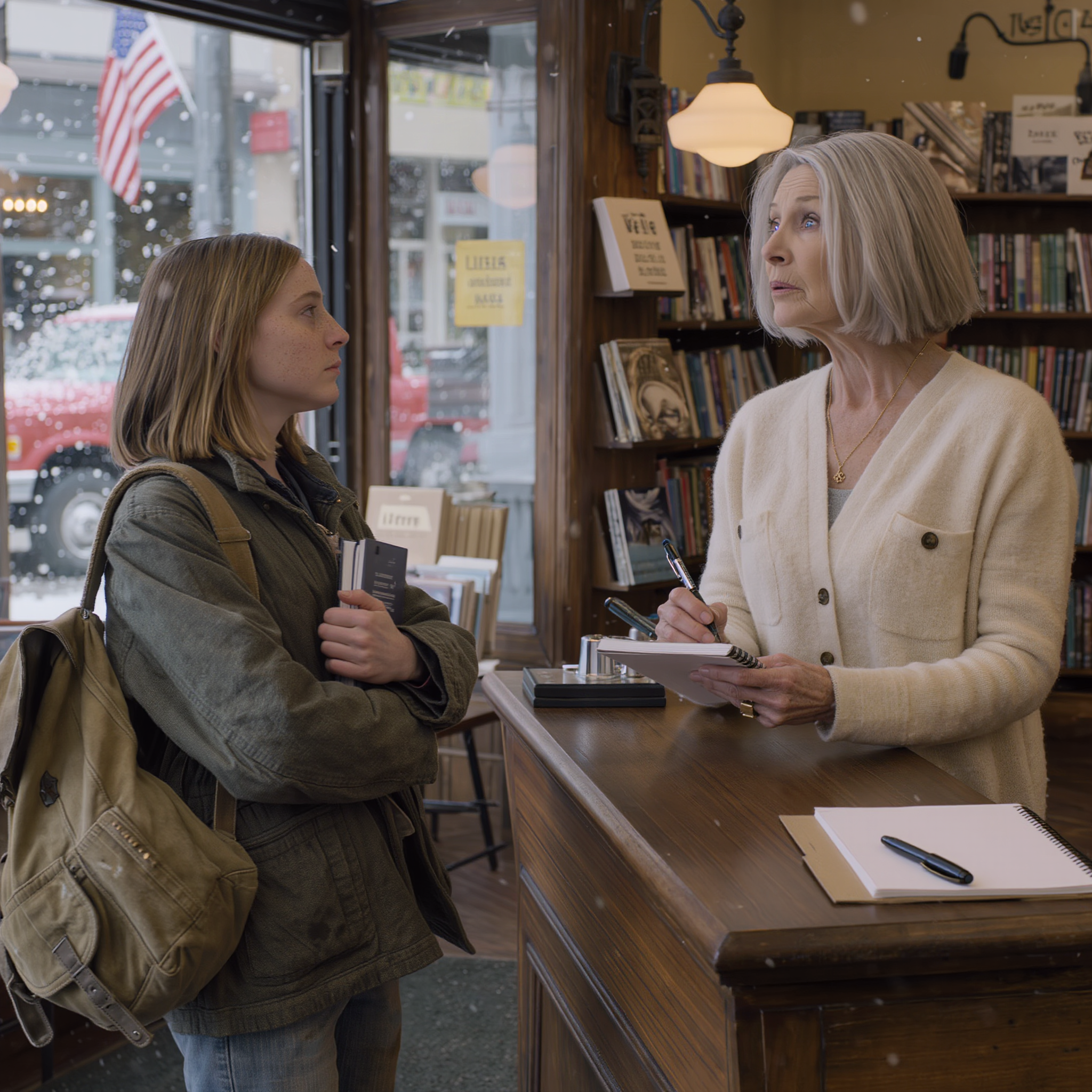
The winter of 2025 was particularly brutal. One Tuesday evening, just as I was preparing to lock the doors, a young girl, perhaps nineteen, stumbled into the warmth of the shop. She was shivering, her thin coat held together by a safety pin, and her boots were worn through to the soles. She didn’t look for a book; she looked for the “Help Wanted” sign I had posted in the window that morning. “I’ll do anything,” she whispered, her voice trembling. “I can clean, I can stock, I can stay late. I just need a place to be for a few hours a day.”
As I led her to the back to give her a cup of hot tea, the overhead light caught her profile. My breath hitched. She had the same high cheekbones as my late husband and the same deep, honey-colored eyes that Julian had inherited. A sense of dawning, terrifying recognition washed over me. I sat across from her at the small break table, my hands shaking as I pushed the tea toward her. “What’s your name, dear?” I asked softly. “Lily,” she replied. I took a deep breath, the air in the room suddenly feeling very thin. “Lily… who is your father?” She looked down at her tea, her expression hardening into a mask of old pain. “Julian Thorne. But he’s not my father anymore. He left my mom and me when his company went under three years ago. He said we were ‘dead weight’ on his comeback.”
The Reckoning of the Abandoned
I felt a roar of fury and grief in my chest that nearly knocked me over. Julian hadn’t just cut me off; he had walked away from a child—my granddaughter—to chase a dream that had ultimately failed. Lily told me the story: how Julian had moved them across the country, how he had gambled their savings on his failing startup, and how he had vanished the night the bank foreclosed on their apartment. Her mother had passed away from the stress and illness a year later, leaving Lily with nothing but the memory of a father who valued “disruption” over devotion. She didn’t know who I was. She had only come to the shop because she remembered her father once mentioning a “stupid bookstore” in this town.
I didn’t tell her who I was right away. I hired her on the spot, gave her an advance on her wages, and found her a safe room to rent above the bakery next door. For three months, I watched her bloom. She had a natural instinct for the books, a way of recommending stories that healed people, just like I did. She was the best thing that had ever happened to “The Dusty Shelf.” But the reckoning arrived when Julian finally reappeared. He walked into the shop looking haggard and desperate, having heard through the grapevine that the property value of the block had tripled. He came to beg for the “inheritance” he thought I owed him.
The Silence of the True Inheritance
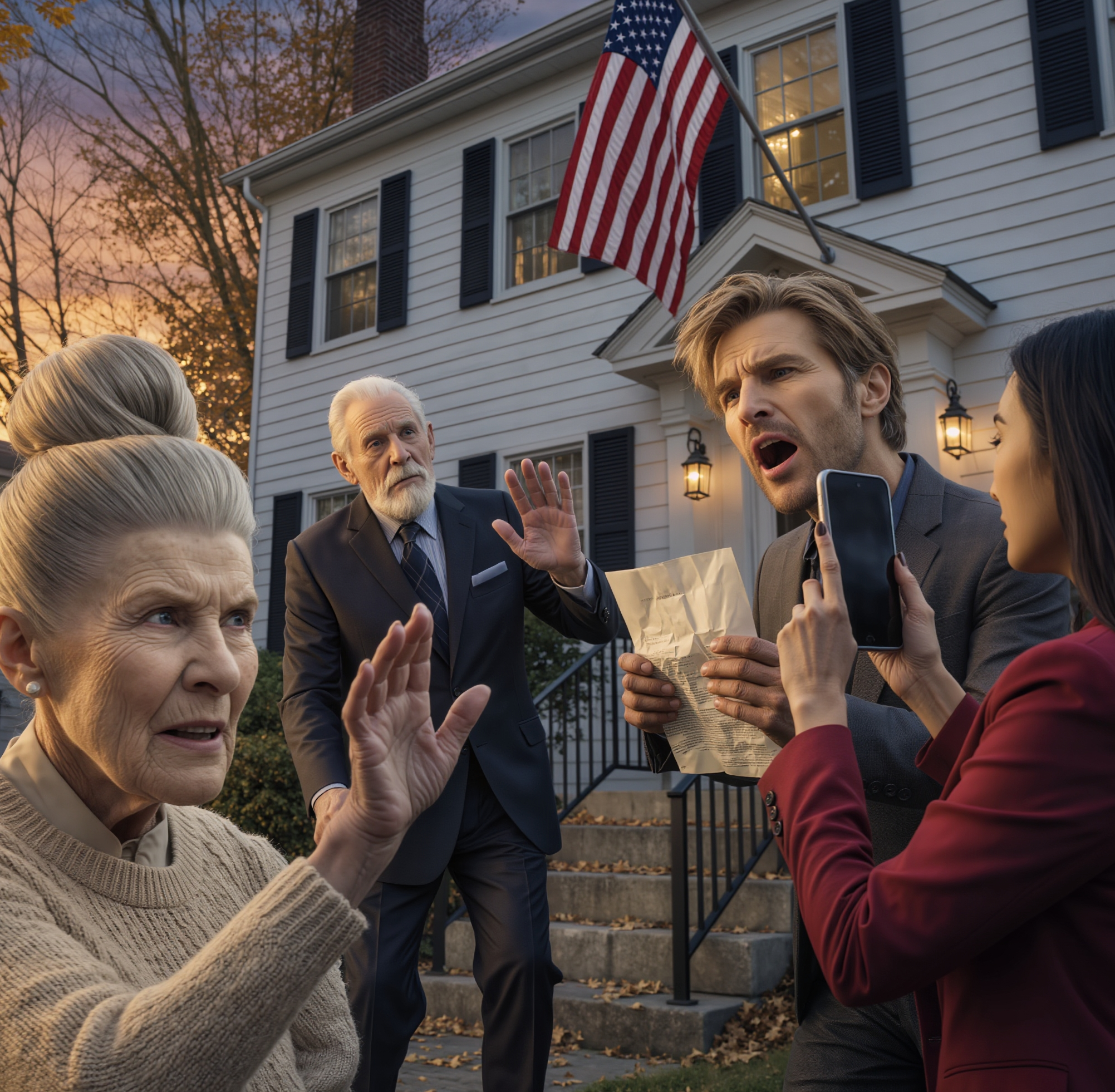
Julian stood in the center of the shop, his eyes scanning the shelves with the same disdain he’d shown years ago. “Look, Mom, I’m sorry about how things ended,” he started, his voice slick with fake contrition. “I’m in a bit of a hole, and I realized you were right about the shop. It’s a gold mine. If we sell now—” He stopped mid-sentence as Lily walked out from the stacks, holding a ladder. The color drained from Julian’s face. “Lily?” he whispered, his voice cracking.
Lily didn’t cry. She didn’t scream. She simply walked over to me and put her hand on my shoulder. I looked Julian in the eye, and for the first time in five years, I didn’t feel any guilt. “She told me everything, Julian,” I said, my voice echoing in the quiet shop. “You called this place a relic, but it’s the only thing that gave your daughter a home when you threw her away. You want your inheritance? Well, here it is.” I handed him a legal document I had finalized that morning. It wasn’t a check. It was a formal transfer of the bookstore and the building into a trust for Lily, with me as the lifelong manager. “You are no longer a part of this story, Julian. You wanted to disrupt things? Well, consider yourself officially disrupted.”
The Peace of a New Chapter
Julian left the shop that day and never came back. I heard he moved again, still chasing a “big break” that will likely never come for a man with a hollow heart. Lily and I are now the official duo of “The Dusty Shelf.” She calls me “Grandma” now, and the sound of it is more beautiful than any prose ever written.
I learned that the things we think are “relics” are often the only things strong enough to hold a family together. My bookstore wasn’t just paper and ink; it was a beacon that brought my granddaughter home. I’m seventy-two years old, and my story isn’t ending—it’s just being co-authored by the bravest girl I’ve ever known. The shop is full, the tea is hot, and for the first time, the “dead trees” are bearing fruit I never expected to taste.