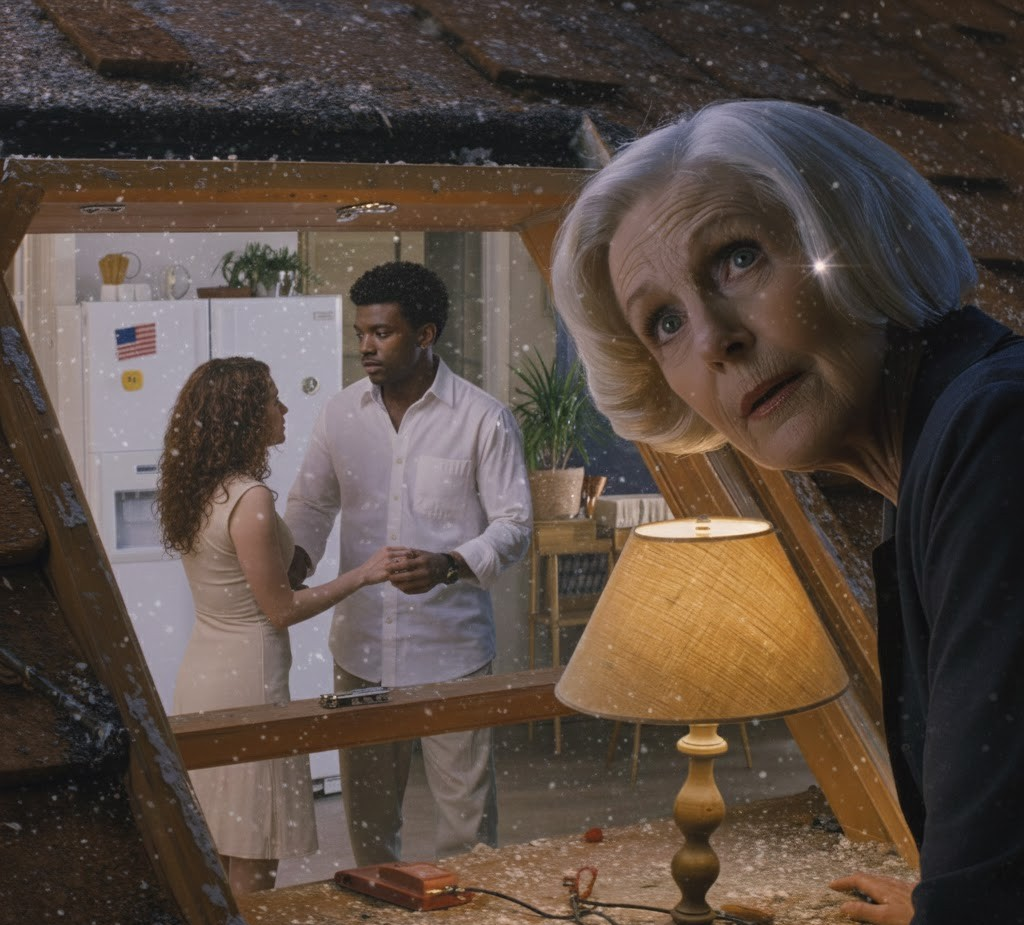
The Silence of the Departure
When my daughter, Vanessa, dropped off five-year-old Leo at my house in 2015, she said she was going to the grocery store. She never came back. Leo sat on the porch for hours, clutching his noise-canceling headphones and a worn-out tablet, waiting for a car that wouldn’t return for over a decade. Vanessa had always struggled with the reality of Leo’s autism; she wanted a “perfect” child, and she couldn’t handle the meltdowns, the sensory needs, or the beautiful, complex silence of his world. She sent a text three days later saying, “I can’t do this anymore. He’s your problem now,” and then she changed her number. I was fifty-five years old, my retirement savings were modest, and suddenly, I was a mother again to a child who saw the world in patterns and code that I barely understood.
For eleven years, it was just the two of us. I worked double shifts to pay for his specialized therapies and the high-speed servers he begged for instead of toys. Leo didn’t speak much, but he communicated through the software he built. While other kids were playing sports, Leo was teaching himself Python and C++. I saw his genius not as a paycheck, but as his voice. We lived in a tiny two-bedroom house, eating generic-brand cereal so he could have the latest processors. I never filed for formal child support because I didn’t want Vanessa to have a reason to find us. I assumed she was gone for good, and in the quiet of our home, Leo flourished into a brilliant, kind sixteen-year-old who viewed the world as a series of solvable equations.
The Architect of a Digital Empire
In the spring of 2026, Leo’s “solvable equation” became a cybersecurity algorithm that revolutionized data encryption. He called it “Aegis.” Within months, a major tech conglomerate offered him $3.2 million for the intellectual property rights. Because he was only sixteen, the contract required a legal guardian’s signature. We were featured in a local tech journal, a small human-interest piece about the “Grandmother and the Prodigy.” That was the mistake. Two weeks later, a sleek black sedan pulled into our gravel driveway. Vanessa stepped out, flanked by a man in an expensive suit holding a briefcase. She wasn’t there to hug the son she hadn’t seen in eleven years. She was there for the “Aegis” payout.
“He’s a minor, Mom,” Vanessa said, her voice devoid of any maternal warmth as she stood in my small living room. “And legally, I am still his mother. I never signed away my parental rights. That software is a product of my son, which means the management of that $3.2 million belongs to me. My lawyer here has the paperwork to transfer guardianship back to me immediately.” The lawyer nodded, sliding a set of terrifyingly official documents across my worn kitchen table. They saw an old woman in a faded apron and a teenage boy who wouldn’t look them in the eye. They assumed they could bully us into a settlement. They assumed I had been a “passive” caretaker for eleven years.
The Reckoning of the Scratched Notebook
I didn’t panic. I didn’t even raise my voice. I walked to the hallway closet and pulled out a scratched, spiral-bound notebook from 2015—the one I had used to log every single day of Leo’s life since the day she left. But inside that notebook wasn’t just a diary; it was a notarized “Affidavit of Abandonment” and a “Termination of Parental Rights” decree from 2017. “You see, Vanessa,” I said, handing the notebook to her lawyer. “When you disappeared, I didn’t just wait for you to come back. I went to court. I filed for emergency custody, and when you failed to respond to the public notices for two years, the judge granted me ‘De Facto’ parental status and terminated your rights due to total abandonment.”
The lawyer’s face went pale as he flipped through the pages, finding the court-stamped documents I had kept hidden for nearly a decade. “This isn’t just a custody agreement,” the lawyer whispered to Vanessa. “She has full legal adoption status. You have no standing here.” Vanessa’s “motherly” facade shattered into a fit of rage. She started screaming that it wasn’t fair, that she had been “finding herself,” and that I had stolen her son. Leo, who had been sitting quietly in the corner, finally looked up. He tapped a few keys on his laptop and a voice-to-text program spoke for him: “You didn’t want the boy with the headphones. You only want the boy with the millions. The math doesn’t add up, Vanessa. Please leave our house.”
The Silence of the Final Dismissal
They left the driveway much faster than they had arrived. Vanessa tried to file an appeal, but her history of zero contact and zero financial support made her case a laughingstock in the family court system. She had traded a lifetime of love for eleven years of freedom, and she couldn’t buy her way back in now that it was profitable. The $3.2 million was placed into a protected trust for Leo, managed by a reputable firm that ensures he has everything he needs for his future education and his continued work in the tech world.
I didn’t take a cent of the money for myself. I still work my part-time job, and we still live in our modest home because Leo likes the familiarity of his room. We used a small portion of the funds to build him a state-of-the-art server room in the basement, and he’s currently working on a new project to help non-verbal children communicate through AI. He’s happy, he’s secure, and he knows that his value isn’t tied to a bank account, but to the grandmother who never stopped believing in the patterns he saw.
The Peace of the Pattern
I learned that you can’t abandon the struggle and expect to share in the success. Motherhood isn’t a title you reclaim when it becomes convenient; it’s a debt you pay in time, patience, and late-night meltdowns. Leo is a millionaire now, but to me, he’s still the five-year-old in the noise-canceling headphones who just needed someone to stay.
Vanessa is gone again, likely chasing another “perfect” life somewhere else. But here in our quiet home, the patterns are perfect exactly as they are. Leo is sixteen, he is brilliant, and he is loved. And as for the $3.2 million? It’s just a byproduct of a boy who was given the space to be himself. The math of our life is simple: loyalty plus time equals a legacy that no lawyer can ever touch.