The Call That Broke the World
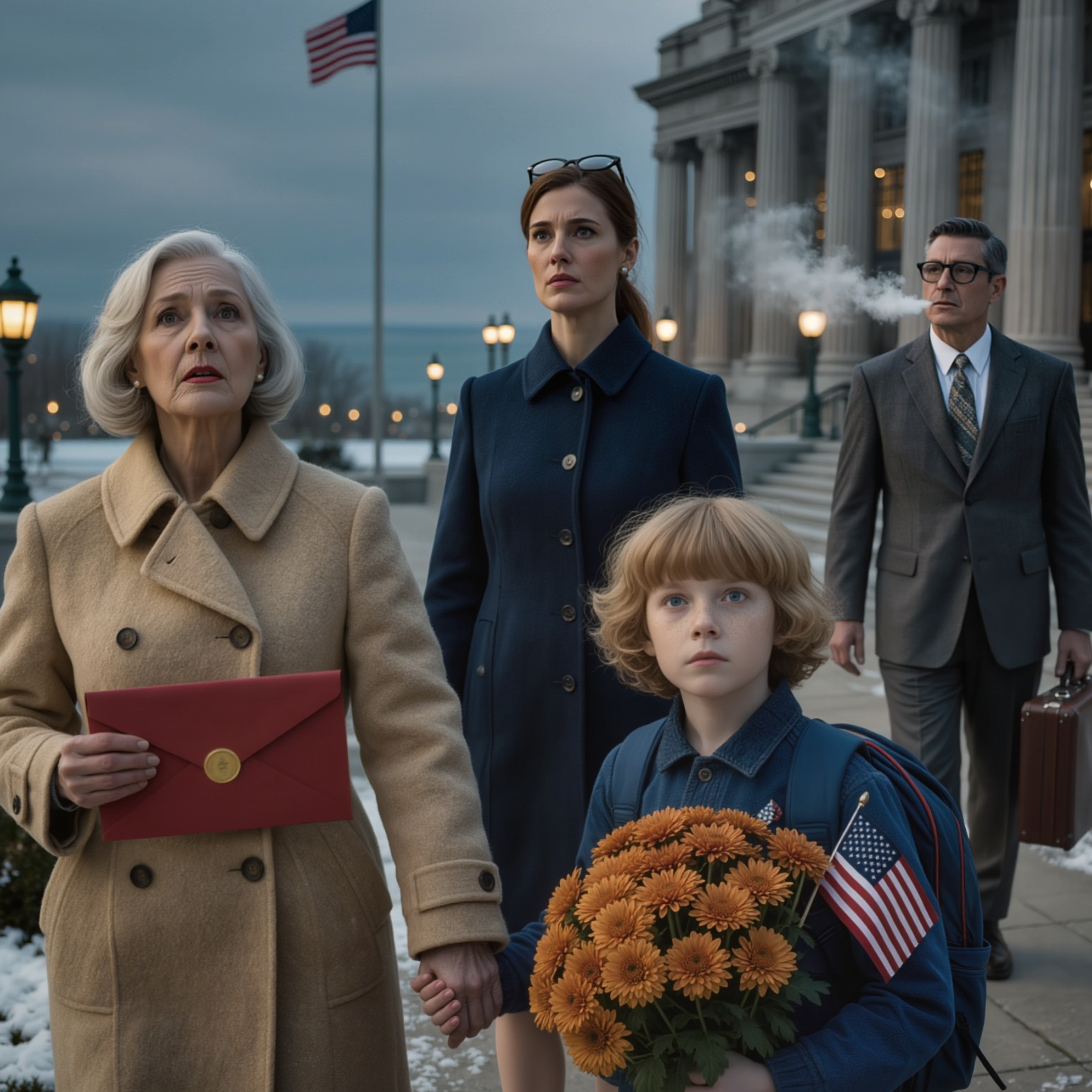
The phone didn’t just ring; it screamed into the silence of my bedroom at 2:17 A.M. I knew before I even picked it up that the world I had known was over. The voice on the other end was clinical, a nurse from Mercy Hospital in Cleveland, telling me there had been an accident. My son, Leo—my brilliant, quiet, “ordinary” boy who worked as a data analyst for a logistics firm—was gone. He had been found in a car that wasn’t his, on a road he had no reason to be on. The nurse mentioned a personal effect he had clutched to his chest until the very end: a heavy, sealed manila envelope with my name scrawled across the front in a handwriting that was jagged with urgency.
When I arrived at the hospital, the silence of the morgue was deafening. They handed me his things—a cracked phone, a wallet with a few twenties, and the envelope. On the back, in faint pencil, he had written: “Dad, protect the ordinary parts. Don’t let them see the rest.” I thought he was talking about his apartment, his collection of vintage watches, or perhaps the humble life he’d built after his mother passed. I expected to find a will or a heartfelt letter. Instead, I found a set of keys to a high-security storage unit in downtown Cleveland and a deed to a small, “ordinary” farmhouse in rural Ohio that he had never mentioned.
The Architect of a Ghost Narrative
I drove to the farmhouse under the cover of a grey, weeping sky. It looked exactly like the kind of place a data analyst would go to disappear—shabby siding, a rusted mailbox, and an overgrown lawn. But when I used the key from the envelope, the “ordinary” facade shattered. The interior was a fortress of high-tech surveillance and encrypted servers. My son hadn’t been analyzing shipping routes for a logistics company; he had been a “ghost analyst” for a whistleblowing collective, tracking the movement of illicit funds between some of the most powerful political figures in the country.
The “ordinary parts” he wanted me to protect weren’t his possessions; they were the people on the list tucked into the bottom of the envelope. It was a list of twenty families—ordinary people who had been targeted by a predatory lending conspiracy. Leo had been building a case to bring the whole system down, using the farmhouse as his base of operations. He had lived a life of deliberate boredom to ensure that no one would ever suspect him of being the man who held the keys to their destruction. I realized then that my son hadn’t died in an accident; he had been hunted.
The Reckoning of the Hidden Truth
The envelope contained a final digital drive. When I plugged it into the main server at the farmhouse, Leo’s face appeared on the screen. It was a pre-recorded message, his eyes tired but resolute. “If you’re seeing this, Dad, the ordinary life worked as long as it could. They’re coming for the data. You have to move the ‘Ordinary List’ to the backup server in the storage unit. It’s the only way to save those families.” As the video ended, a proximity alarm began to wail. A black SUV had just turned into the long, gravel driveway.
I didn’t have Leo’s technical skills, but I had the instincts of a man who had spent thirty years in the steel mills—I knew how to hold my ground. I grabbed the drive and the “ordinary parts” list and exited through a storm cellar he had reinforced with steel. I watched from the woods as the men in suits breached the farmhouse, only to find the servers already wiped by the fail-safe Leo had installed. They thought they were chasing a ghost, but they didn’t realize that the ghost had a father who was willing to finish the job.
The Silence of the Final Transmission
I spent the next forty-eight hours in a blur of tactical movement, reaching the storage unit and uploading the data to a secure international server Leo had pre-configured. By sunrise, the “Ordinary Parts” weren’t just a list in an envelope; they were the lead story on every major news network. The conspiracy was exposed, the families were protected, and the men who had run my son off the road were being named in federal indictments.
I stood in the storage unit, surrounded by the boxes of his “ordinary” childhood—his baseball mitt, his high school yearbooks, his mother’s old camera. These were the parts he truly wanted me to protect—not the data, but the memory of the boy he was before the world forced him to become a warrior. He had died to keep the world ordinary for people who didn’t even know his name.
The Peace of the Ordinary Man
I learned that a hero doesn’t always wear a uniform; sometimes, he wears a wrinkled shirt and works in a cubicle, quietly saving the world one byte at a time. I am back in my house now, the phone is quiet, and the “ordinary” life I lead feels heavier than it ever did before.
Leo is gone, but the twenty families on his list are safe. I keep his watch on my wrist, not as a piece of a collection, but as a reminder that every second counts when you’re standing in the gap for others. My son was never ordinary. He was the extraordinary man who taught me that the most important things in life are the ones we keep hidden to keep others safe. The envelope is empty, the secret is out, and for the first time since that 2:17 A.M. call, I can finally breathe.