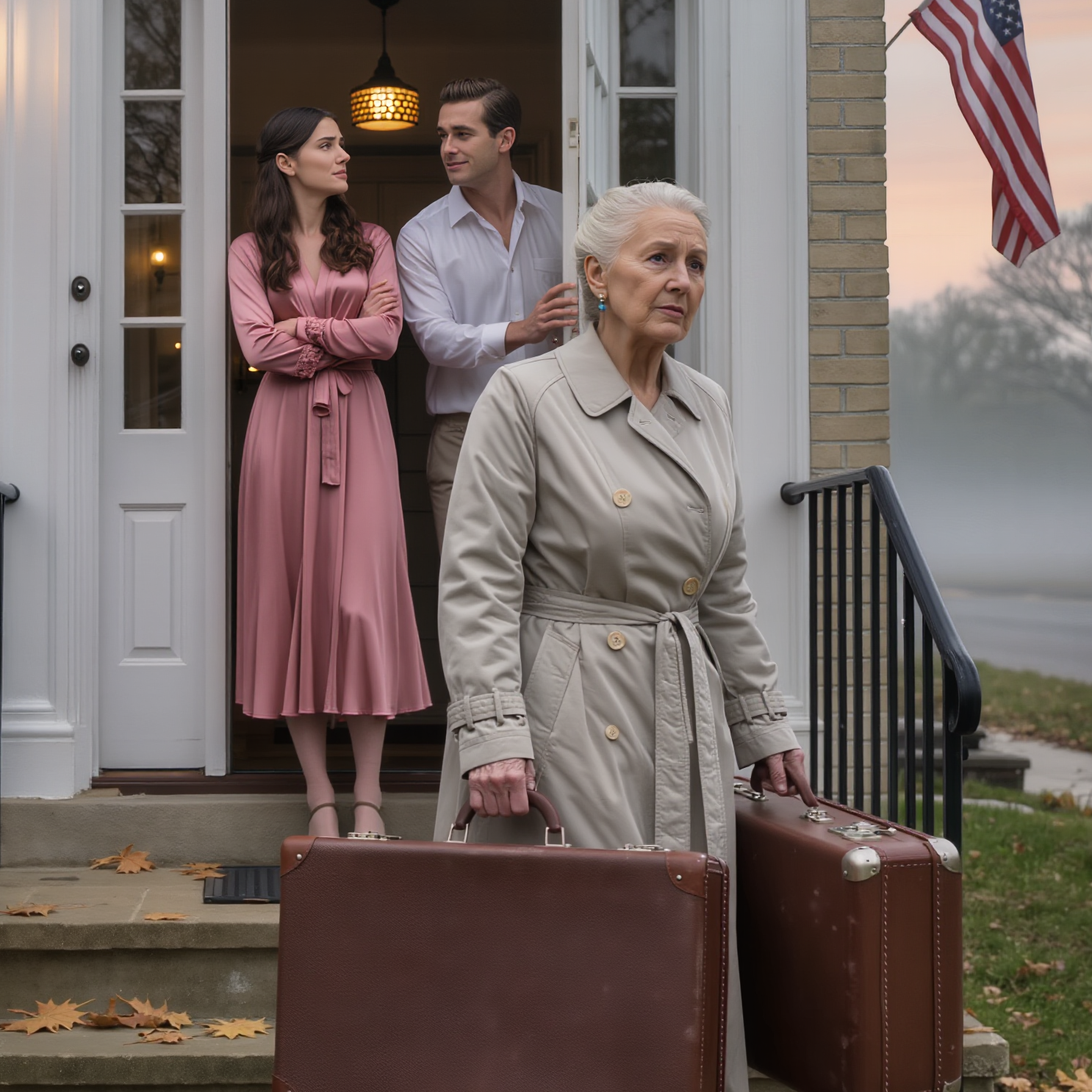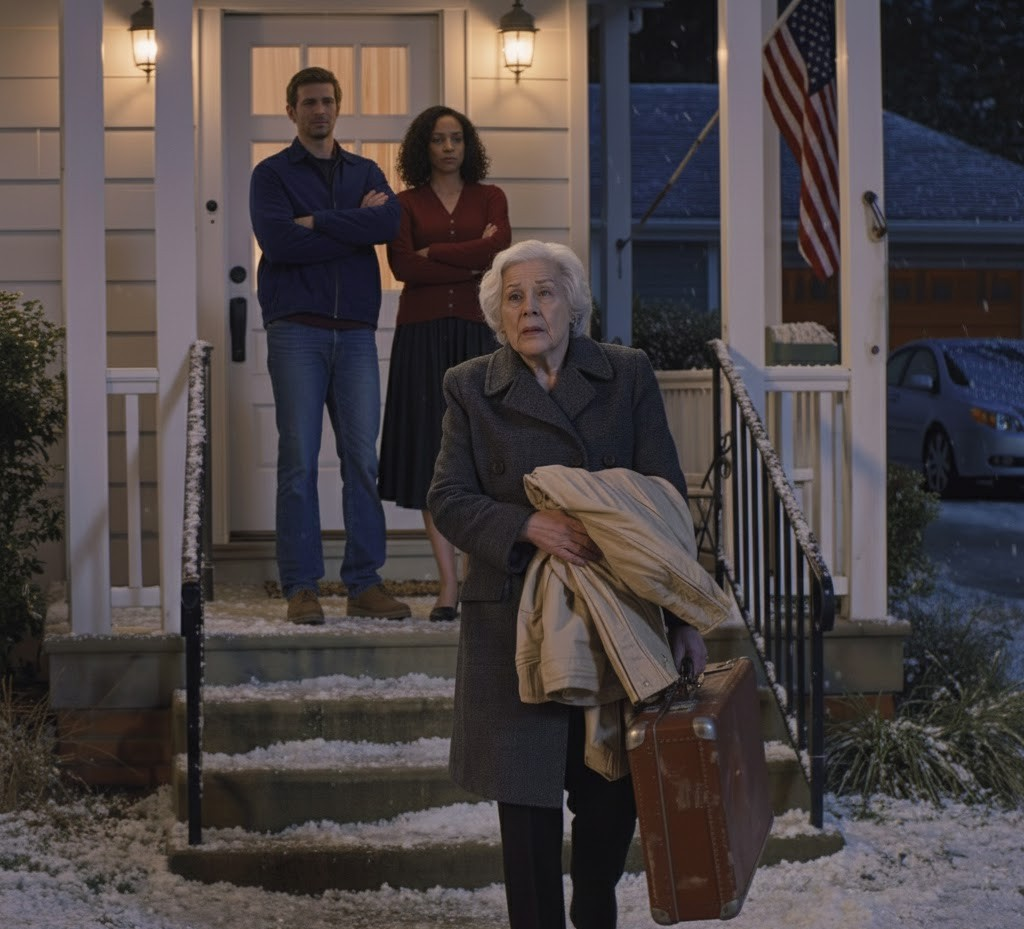
I packed my bag in a hurry, the cold night air cutting through the thin coat I wore, making each breath feel sharp and urgent. My son’s words had come like a blow: “Get out. I don’t want you here.” I didn’t protest. I didn’t shout. I simply picked up what little I owned, wrapped my shawl tighter around me, and stepped out into the darkness. The world outside was silent and indifferent — the streetlights casting long, pale shadows on the sidewalk while a bitter wind blew dust and cold through my hair. I walked away without luggage wheels clicking, without tears falling, without hope. I walked because I had nothing left but the will to survive.
Hours later — while I crouched on a bench at a distant bus stop, trembling from cold and shock — I heard laughter, music, car doors slamming faintly. In the distance, I recognized the voices, the cheer. They were coming from the house I once called home. I closed my eyes, imagining the warmth inside: lights on, food on the table, people chatting, children running, candles flickering — a celebration. A party. My absence hidden, erased, ignored. And in that moment I felt two things: the sting of betrayal — and a slow, hard flame of clarity.
I got up. I brushed the dust from my coat. I did not turn back. I did not beg. I did not knock on their door again. Instead, I walked to the nearest shelter — simple, cold beds, thin blankets, but walls that didn’t judge and a roof that didn’t expect love in exchange for tolerance. That night, I sat alone on a narrow mattress, the lights dim, the walls silent, and I let all the pain settle in my bones. I cried — not for family lost, but for respect stripped, for dignity sold cheap.
But in that sorrow I found a seed of decision. I woke with the ache still heavy, but something else alive inside — resolve. I would rebuild. Not for them. Not for memories. But for myself.
The next morning I began walking the streets, looking for day jobs. My hands shook from cold and from weariness. Many doors closed when I showed up — “too old,” “not qualified,” “don’t need help.” I smiled politely, nodded, and kept walking. Each “no” was a drop of water carving rock: slow, painful, but patient. At the end of the second day, an old grocer — a man with kind eyes and a crooked back — offered me a small position: sweeping floors after closing, mopping aisles, carrying stock. The pay was little, but honest. I took it with bowed head and steady heart.
Weeks turned into months. I worked mornings, evenings, sometimes through nights. I scrubbed floors until my knees murmured protest. I carried boxes heavier than my hope. I washed dust from shelves, wrapped products, cleaned glass doors, swept floors until they gleamed. The grocer paid me. I counted coins. I bought simple groceries. I rented a small room in a quiet part of town — cheap, modest, but my own. I stacked the few possessions I had: an old photo of my son as a child, a tattered shawl, a small bible, a little carved wooden box that once held jewelry now lost. Nothing luxurious. But mine.
As I worked, I saw other faces — people who walked past without seeing me, people who sneered, people who ignored. But I also saw sympathy, quiet kindness, small smiles, doors held open, bags carried, understanding nods. Little gestures I didn’t ask for. Little kindnesses I didn’t expect. And I learned — respect is small. It doesn’t shout. It doesn’t need a party to show itself.
One crisp morning, as winter yielded to spring, I took the little wooden box and opened it. Inside was a savings book — old bank deposits from years ago when I worked part-time; a few bills my husband had slipped into my purse years before; a note: “For your future, my dear.” The amount was modest — enough to last a few months if I was careful. But it was mine. It was not tied to approval, not attached to humiliation. It was cash. It was dignity.
I didn’t use it immediately. Instead, I continued working, saving another few months, learning to walk straight, sleep easy, breathe without fear. I fixed the small room: fresh paint, clean sheets, a small potted plant on the windowsill. I bought a second-hand radio so evenings wouldn’t feel silent and empty. I learned that nights alone don’t have to echo with memories. They can whisper with possibility.
Months later, my son-in-law tried calling. The number flashed on my battered phone. I looked at it. My heart fluttered — not from longing, but from memory. I ignored it. I deleted it. I refused the urge to explain, to apologize, to beg. Because this new life — slow, humble, hard-earned — was not built on messages or promises. It was built on scars, sweat, quiet mornings, honest work.
One evening I stood on the small balcony, watching city lights flicker, listening to distant traffic, the faint hum of lives that didn’t know me. I held a cup of tea in cold fingers, sipped slowly, letting warmth spread through me. The sky was soft and dark. I closed my eyes. I thought of what I had lost — home, comfort, family — but also of what I gained: strength, self-respect, freedom. I realized that home isn’t always a place filled with people. Sometimes home is solitude built on integrity, on truth, on what you refuse to compromise.
I never asked for pity. I never begged for compassion. I didn’t plaster my wounds for sympathy. I carried them quietly, like badges of survival. And with each sunrise that greeted me through the dusty curtains of my small room, I felt more alive. More whole. More mine.
If tomorrow offered me nothing but another day of work and silence — I would take it. Because I learned that even in exile, even in rejection, a soul can rebuild. Even in cold nights, a heart can heal. Even when love is denied, dignity remains.
And as long as I breathe, I know this: I am not defined by their rejection. I am defined by the courage to walk away — and the strength to build again.