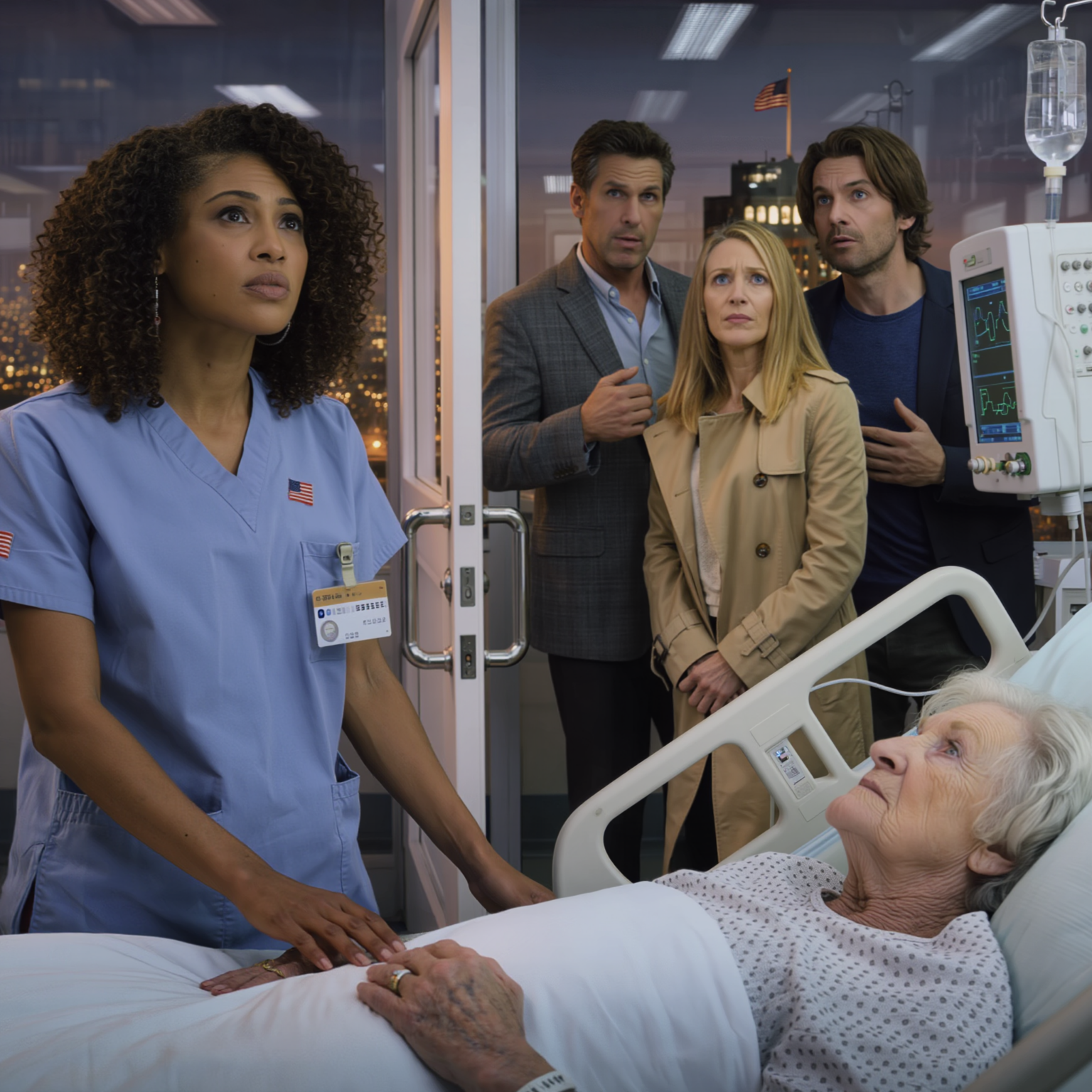
I stepped out of the taxi half-blind, my body throbbing, ribs wrapped tight, veins aching beneath the gauze. The journey from the hospital to my son’s house was quiet — I held my breath at every bump on the road, every jerk of motion. Pain shot through me like cold fire, but I held on. They said I would need rest, care, time; that after the surgery, nothing would be easy. I believed them. I believed in recovery. I believed in my son.
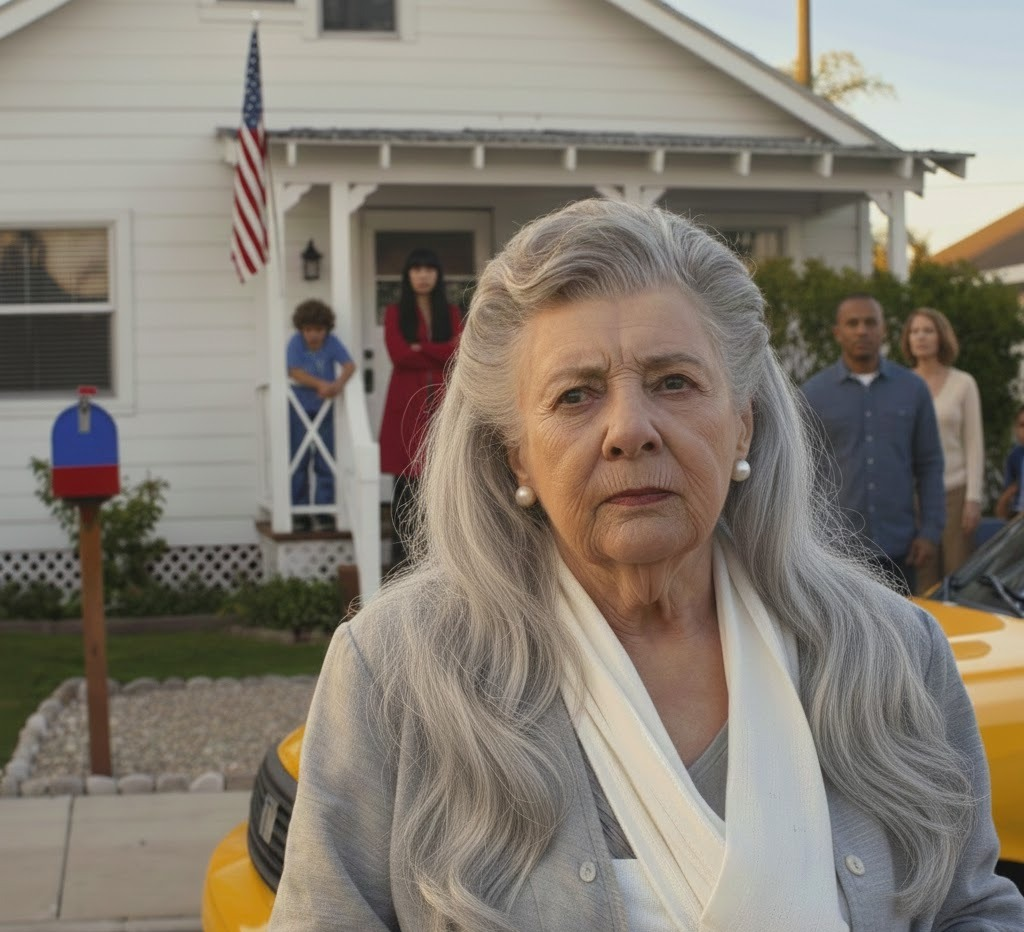
When the driver stopped and I saw the familiar walkway, I closed my eyes and steadied myself. I rang the bell, every vibration through my body felt sharp. The door opened slowly, and I saw the familiar faces I expected — concern, maybe relief. Instead I saw a woman’s eyes flicker with impatience, her lips pressed thin. She didn’t reach for me. She didn’t offer help. She glanced at my suitcase beside the taxi door, nodded toward the curb, and spat words that stung more than pain: “This house is not a nursing home — and I am not your nurse.” She didn’t ask if I lived with them. She didn’t ask if I had nowhere else to go. She didn’t care. She only saw inconvenience.
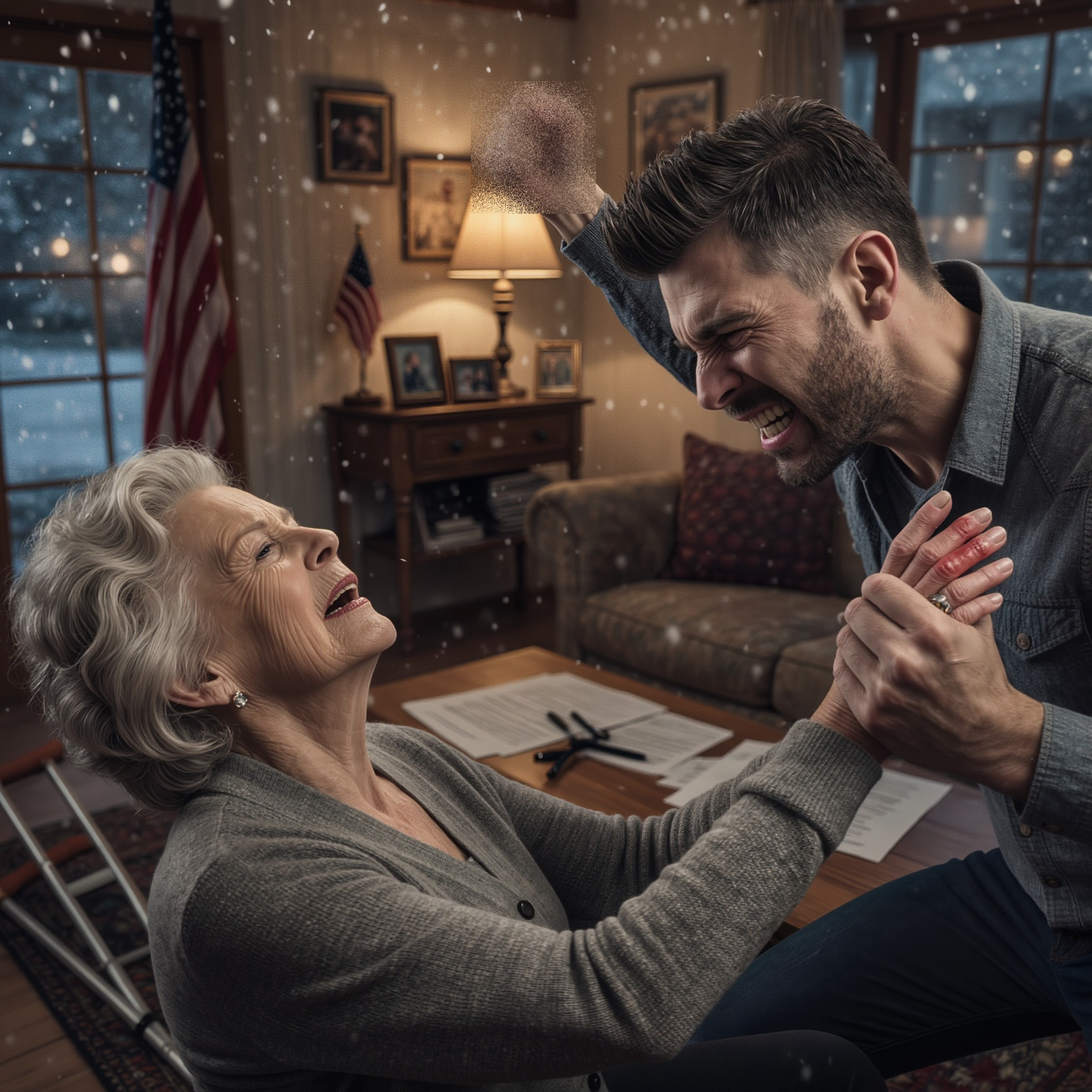
My suitcase dropped from the car and hit the driveway with a dull thud. I stood frozen, blood coursing weakly through aching limbs. The bandages felt suffocating, the air thick. My children — my son — stood behind her. Their faces were pale. I expected anger, or regret, or softness. I expected them to say something. But they did not. They looked away. The silence stretched, loud and heavy. I realized then: this was not a temporary lapse. This was their choice. Their acceptance of cruelty.
I did not weep. I did not beg. I did not plead. I simply turned away. Slowly. Each step felt like the last anchor was cut from me, leaving me drifting. I walked past the gate, past the car, past the house that once held laughter and dreams, leaving them behind — not because I expected apology, but because I deserved better than contempt masquerading as concern.
I found a small room nearby — modest, narrow, but still a refuge. I dragged my suitcase inside, laid it beside the narrow bed, and collapsed onto the mattress, bandages tight against my chest. Pain mixed with shame, with betrayal, with a cold loneliness that felt deeper than any physical wound. I closed my eyes, shut out the world, and let tears fall — not for what I lost, but for what I realized: some people aren’t capable of love or empathy. Some people see dependency as a burden. And some people treat their own blood worse than strangers treat strangers.
The weeks that followed were slow — torturously slow — but also strangely clarifying. I learned to walk with careful steps, using a cane the first days, then leaning on walls, then trusting my legs again. I washed dishes in a small sink, cooked simple meals, wrapped myself in blankets at night, let the smell of damp plaster and cleaning detergent become normal. I called a nurse friend, asked for medicines, took pills, drank tea. I cried sometimes. But mostly, I breathed. I watched dust motes swirl in the sunlight filtering through the thin curtains. I felt everything — pain, regret, anger — but also a strange flicker of calm, of resolve.
One morning, I opened a small notebook I had kept hidden for years. I wrote a few words: I am alive. I deserve kindness. I deserve dignity. I reread them, closed the book, set it on the windowsill. I planted a small pot with basil near the window — its leaves bright green against the dim walls. Each morning I watered it, watched it grow slowly, stubbornly. The plant didn’t ask for much — just water, sunlight, patience. And with each leaf that unfurled, I felt a piece of myself return.
Months passed. My wound healed. My ribs no longer ached. The bandages came off. The scars remained — pale lines across soft skin — reminders of pain, but also of survival. I found a small job — cleaning houses at first, then helping an elderly woman visit to cook and tidy, then as assistant at a small local shop. Nothing grand. Nothing luxurious. But honest. And mine. Every paycheck was mine. Every step forward was mine. Every morning I woke, it was my choice to rise or stay down.
I never contacted my son or his wife. I didn’t send messages. I didn’t ask for help. I didn’t expect apologies. Because I realized something: sometimes family isn’t the people who carry your name. Sometimes family is the people who carry your dignity. Family is respect. Family is kindness. Family is chosen.
One evening, I sat on my small balcony watching the sun fade behind distant buildings, the sky turning soft shades of pink and orange. I held a cup of tea in my hands, inhaled slowly, and felt — for the first time in a long while — peace. Not because pain was gone. Not because I was whole. But because I was enough. I had survived. I had rebuilt. I had refused to be someone’s burden.
I realized finally that love is not a contract. It’s not an obligation. It’s a choice — a choice to stay, to help, to care. And if that choice is refused, then what remains is survival. And survival can be gentle. Survival can be dignified. Survival can be freedom.
And I — I chose freedom.