The Coal Dust and the Marble Floor
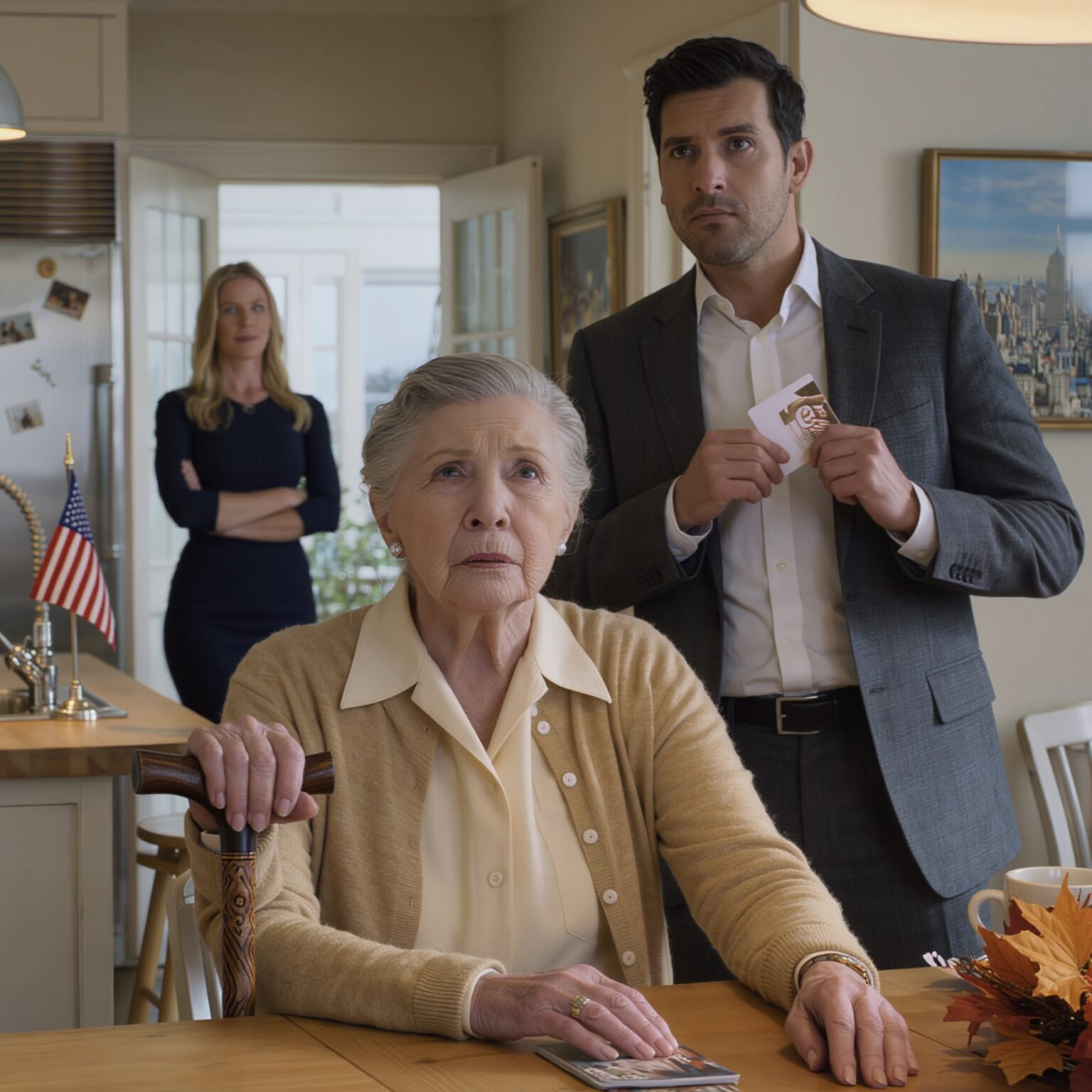
I come from a place where the air tastes like grit and the mountains hold your secrets tight. For forty years, I lived in a small company house in a West Virginia coal town, washing the black soot out of my husband Silas’s coveralls until my knuckles were raw and bleeding. When Silas died in the mines, I used the meager settlement to make sure our only son, Elias, never had to step foot in a dark hole. I worked three jobs—cleaning offices, waitressing at the diner, and sewing quilts—to send him to the fancy schools in the East. I was proud when he became a “tech titan,” a billionaire whose face was on magazines. But as Elias climbed the glass towers of Manhattan, he seemed to forget the wooden porch where he’d learned to walk. He invited me to his wedding at a historic marble hall in New York, and I arrived in my best Sunday dress, feeling like a sparrow in a cage of peacocks.
The wedding was a blur of white orchids and people who looked like they’d never seen a day of hard work. I felt out of place the moment I stepped onto that polished marble floor. Elias was busy talking to men in tuxedos that cost more than my house, and his bride, Tiffany—a woman with skin like porcelain and a heart like a flint—barely spared me a glance. I was nervous, my hands shaking as I tried to navigate the sea of silver trays and silk gowns. As I reached for a glass of water, my foot caught on the hem of my dress. I stumbled, crashing into a passing waiter. A tray of expensive champagne shattered, soaking my skirt and splashing onto Tiffany’s white designer shoes. The music stopped. Four hundred pairs of eyes turned toward me, not with concern, but with a cold, aristocratic disgust.
Before I could even apologize, Tiffany stepped forward, her face twisted in a sneer. She didn’t see the mother who had sacrificed her health for her husband’s success. She saw a disheveled woman in a polyester dress. She leaned toward a nearby guard and whispered, loud enough for the front row to hear: “Security, please remove the help. I told the agency we didn’t want the elderly staff on the floor tonight. She’s making a mess of the aesthetic.” Elias stood five feet away. He looked at me, then at his billionaire friends, and then he looked away. He didn’t say, “That’s my mother.” He said, “I’m so sorry, darling. I’ll have someone handle the cleanup.”
The Removal of a “Nuisance”
I was escorted out of the marble hall by two men who treated me like a criminal. They didn’t take me to a suite or a car; they took me to the service entrance and told me to stay out of sight. I sat on a plastic crate in the alleyway, the cold New York wind biting through my damp dress. I realized then that to my son, I was a liability—a piece of his “poor” past that didn’t fit into his billionaire future. He had used my labor to buy his freedom, and now that he was at the top, he was ashamed of the ladder he’d used to get there. He thought he had outgrown the coal dust, but as I sat in that alley, I felt a strength rising in me that didn’t come from money. It came from the mountains.
What Elias and Tiffany didn’t know was that the “meager settlement” I’d received after Silas’s death wasn’t the only thing he’d left behind. Silas had been a man who kept his eyes open. He had discovered a massive vein of rare earth minerals on a piece of land his grandfather had bought for pennies in the 1920s. For thirty years, I had quietly managed the mineral rights, putting the royalties into a trust that I had never touched. I lived in that small house because I liked the air, not because I was poor. While Elias was building apps, I was quietly becoming one of the largest landholders in the state. I had intended to give the trust to Elias as a wedding gift—a final piece of security for his children. But as I watched the “billionaire” son ignore his mother in the trash, I decided that the minerals would stay where they were: deep in the ground, far away from him.
The Midnight Audit of the Soul
I didn’t wait for the reception to end. I walked to a nearby hotel, took a hot bath, and called my lawyer in Charleston. “Abner,” I said, “that trust I set up for Elias… the one that holds the rights to the northern ridge? Dissolve the heir clause. I want the entire fund redirected to the West Virginia Miners’ Widow Fund and the local children’s clinic. And Abner? I want a lien put on the tech campus Elias just built on that land I leased him last year. If he doesn’t want me at his wedding, he certainly doesn’t want me as his landlord.”
I spent the rest of the night watching the city lights. Elias had built his “empire” on land that I owned, through a lease he thought was a “gift” from a local development board. He had been so busy being a billionaire that he never bothered to check who actually signed the deeds. He assumed his mother was just a “poor widow” who didn’t understand business. He was about to find out that a woman who can keep a secret for thirty years is a woman you should never, ever underestimate.
The Reckoning of the High Society
The fallout began on Monday morning. Elias’s legal team realized that the “Development Board” was actually a shell company owned by my trust, and that the lease for his primary data center was being terminated for “moral turpitude” clauses regarding the treatment of family. At the same time, the news hit the West Virginia papers: the massive mineral fortune was being donated to charity, bypassing the billionaire heir entirely.
Elias called me, his voice no longer the smooth, confident tone of a titan. He sounded like a panicked boy. “Mom? What is going on? My investors are losing their minds! They’re saying we don’t own the land under the servers! Why didn’t you tell me about the minerals? Why are you doing this to me?” I sat on my porch back in the mountains, the smell of woodsmoke in the air. “Elias,” I said, “I tried to tell you at the wedding. But your wife told security I was ‘the help.’ Since you agreed with her, I decided to act like the help. I’m helping the widows and the children of the men who actually built this country. You wanted me out of your sight, so I’m staying out—and taking my land with me.”
The Peace of the Mountains
Elias and Tiffany’s “New York Dream” began to crack. Without the land security, his stock plummeted, and Tiffany found out that being married to a “billionaire” is much less fun when he has to pay rent to his mother. I still live in my small house. I still sew my quilts and go to the diner. But now, when I walk down the street, people know that the “poor widow” is the one who saved the town. I learned that you can take the boy out of the mountains, but if he forgets the mother who put him there, he’ll find out that the mountains have a very long memory.