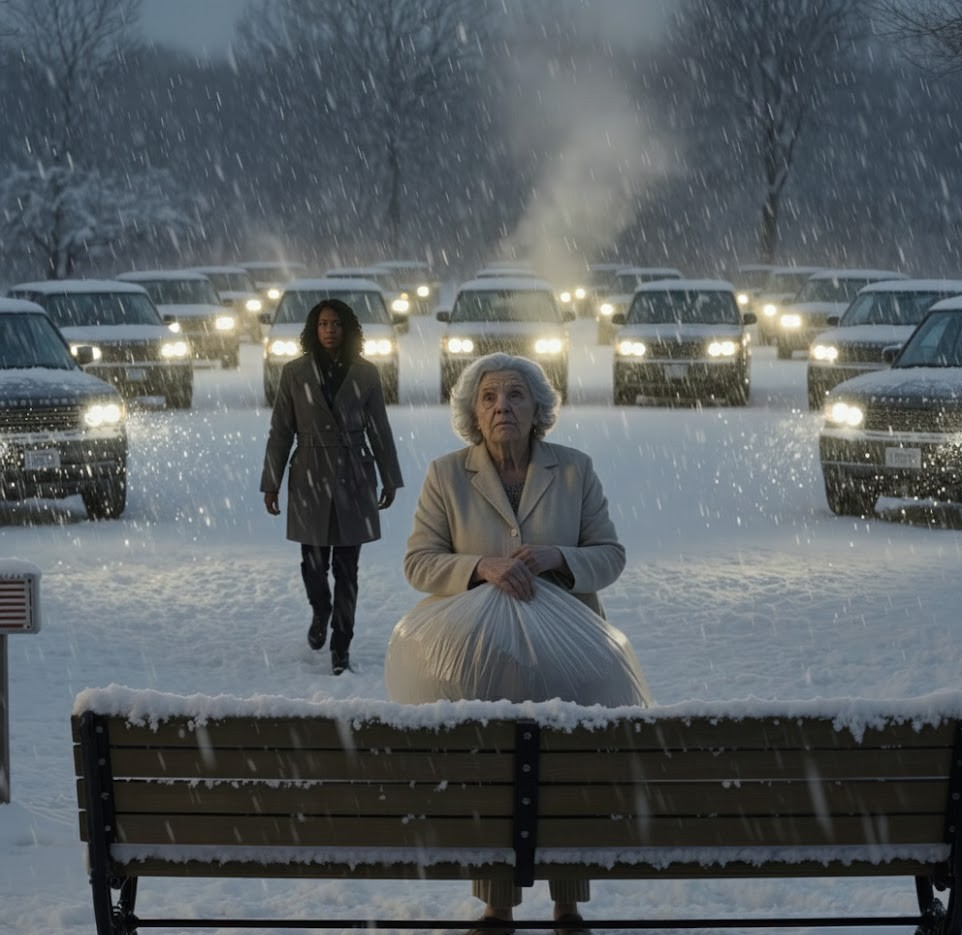
The snow came down heavy the night they pushed me out. I could barely stand — the cold biting through the thin coat I wore, wind catching my scarf, freezing tears I didn’t shed. I didn’t expect the knock at the door — polite but sharp, curt and final. My son’s wife stood there, eyes hard, voice cold: “Get your bag and go. We’re done with this.” No warmth. No hesitation. Just a sentence that split years of memory and trust in half. I grabbed the plastic bag they threw on the floor — a few old clothes, a scarf, worn shoes — the only trace I was once part of that home.
Outside, the snow blurred streetlights into halos. The roads, silent. The wind, roaring. I stood under a dim lamp, bag clutched close, heart pounding, mind chasing questions: Why? After everything? After years of loyalty, care, quiet sacrifices? Fear rose sharp in my throat, but I swallowed. I wrapped the scarf around my neck, tightened my grip on the flimsy bag, and started walking. My legs shook. My breaths came in shallow bursts. But I moved. Because standing still meant freezing. And I wanted to survive.
That night I found refuge at a 24-hour shelter — a small building filled with tired beds, older women with soft eyes, knobby sleeping mats, thin blankets that smelled of dust and faint detergent. I sat on a hard chair, clutching my bag, letting strangers watch with tired curiosity. No one knew me. No one expected me. I closed my eyes and remembered: the kitchen where I cooked meals, the garden we watered together, the family photos lining walls, laughter echoing in halls. It felt like memories of a different life. A life I was told no longer belonged to me.
I didn’t call my son. I didn’t beg. I didn’t demand explanation. I packed the few clothes I had in a corner, lit a small candle to warm my hands, and whispered a prayer — not for return, but for strength. For tomorrow. For a life not built on others’ moods or kindnesses, but on my own feet.
In the morning I walked to a small café on a side street. I ordered cheap tea, asked for a sandwich, sat on a creaky wooden chair — the wood cold under my fingers. Outside, the snow had turned to slush, cars passing by, people bundled in coats, children pulling sleds, laughter in distance. I was alive. Alone maybe. Homeless maybe. But alive. I counted the bills in my bag — small ones — and realized they would be enough for today. Maybe for tomorrow.
I found a job sweeping floors in a small grocery store — early morning hours, dusty boxes, harsh fluorescent lights, but honest work. My bones ached sometimes. My hands cracked. My back hurt. But each coin I counted at night tasted like survival. I slept on a rented mattress in a small room — no windows, but a ceiling over my head, a door I locked, silence I chose. I cooked simple meals: lentils, rice, flat bread. I prayed under blankets for warmth and safety.
Days passed. The snow melted. Streets turned muddy, children returned to school, neighbors closed their doors. I walked among them, but I felt different — not because of homelessness, but because I carried a fragile confidence inside: I survived. I didn’t crumble. I didn’t beg. I kept walking.
I wrote letters sometimes — to no one. On torn pages I scribbled hopes, fears, dreams. I told myself: “You are not trash. You are not a mistake. You are a woman. You are alive.” I folded them, hid them beneath the mattress. I burned the ones filled with anger. The ashes mixed with dust — a silent ritual to leave the past behind.
One cold morning I saved enough to rent a small apartment — narrow, cheap, walls plain, floor rough — but mine. I painted one wall pale yellow, placed a small rug on the floor, bought a threadbare blanket. I bought seeds from a market stall — basil, mint — planted them in old cups by the window. Each morning I watered them, let the sunlight through dusty glass warm the soil and my heart. I cooked for myself. I cleaned. I breathed again.
A few months later, I found a steady job as a cleaner in an office building. Morning shifts, empty hallways, echoing footsteps, fluorescent lights. I worked hard. I earned modest pay. I learned to stand straight. I learned that dignity isn’t in where you live — it’s in how you treat yourself when everything else collapses.
Sometimes at night I sit by my window, drink tea, watch distant lights flicker, hear traffic hum softly. I think of the snowstorm that night — the cold, the fear, the plastic bag, the door that closed. I think of the loss. But I also think of this: I made choices. I chose survival. I chose self-respect. I chose to live on my own terms.
I don’t know what they said — my son, his wife — the night I disappeared. I don’t know if they noticed the empty floor, the missing presence. I hope that guilt visits them sometimes. But I don’t wait. I don’t hope. I move on. I take each breath. Each day. I remember: Snow melts. Beginnings grow from broken ground. A plastic bag can become a suitcase filled with strength. And sometimes losing family means finding yourself.