I had always believed that family gatherings were built on warmth, shared experience, and the quiet strength of people who know each other deeply — birthdays and reunions, graduations and holidays. I never thought I’d find myself in the living room of my own home frozen in a moment so sharp and dangerous that it made my heart feel like a drum pounding under my ribs, as though instinct had suddenly overridden everything else I had ever known about peace and presence. It was a bright Saturday afternoon, and the house was full of chatter: children laughing over Lego towers on the carpet, cousins comparing baseball cards, my daughter-in-law-to-be — Rachel — helping her mother-in-law clear plates in the dining room, all of it seeming perfectly ordinary. My grandson, Jamie, was six years old, spirited, bright, and curious — the kind of boy whose eyes shined with wonder even at something as simple as a ladybug on the window sill. He was in the living room with me, playing quietly with toy cars. I was sipping my tea, glad for the noise and warmth and comfort of family around.
Then everything changed in a heartbeat.
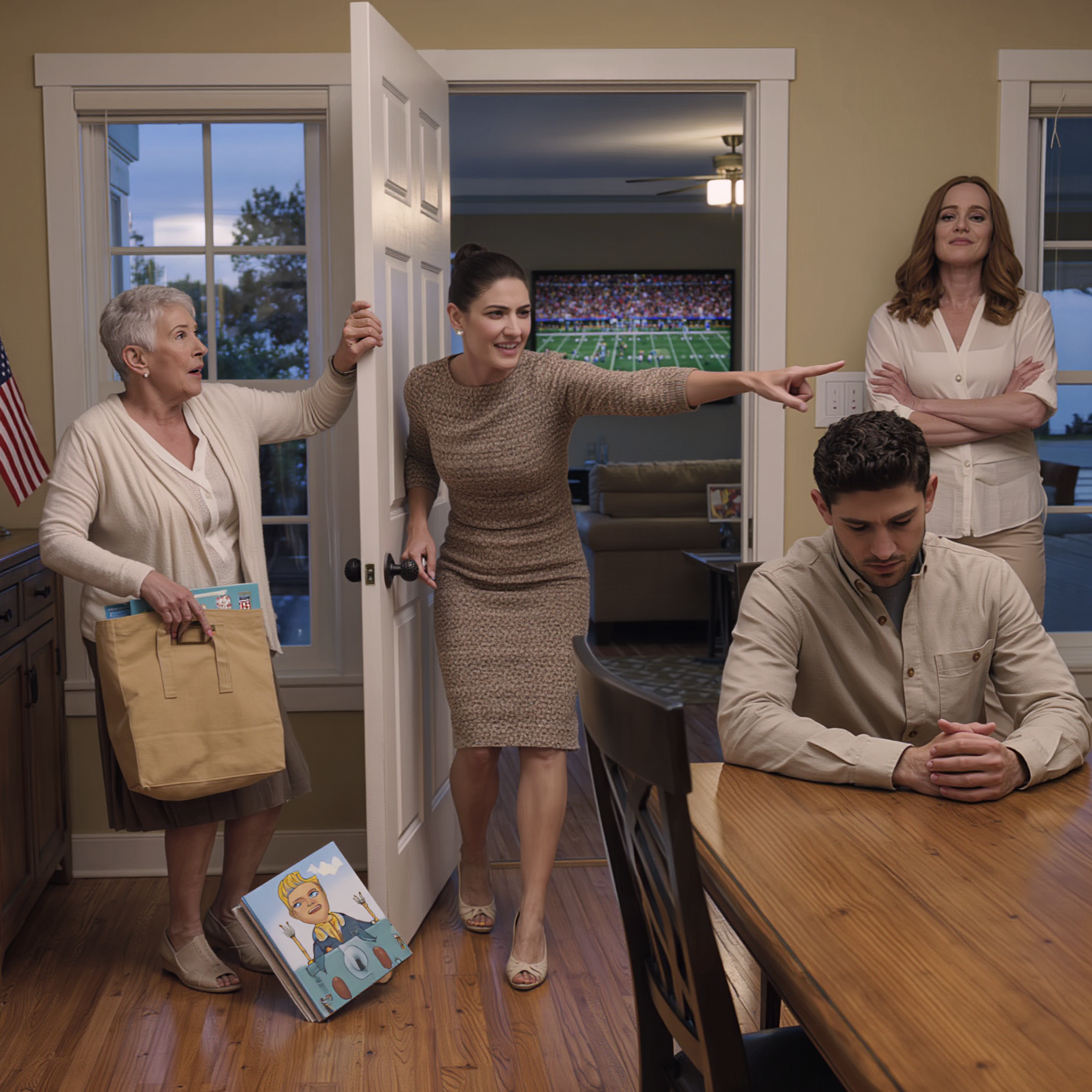
Rachel walked into the living room very casually — the ease of someone who’s convinced her role in this family has already been solidified — and she bent down to pick up Jamie’s toy cars without saying a word. I didn’t think anything of it at first; after all, she’s been around him before. But then she said — and I still hear the words like thunder — “Jamie, let’s go with me. There’s something better I want to show you.” Her tone was too casual, too dismissive of his attention to his game. The moment froze in my mind the way something dangerous does when you see it before you feel it: she gestured toward the front door as though she were taking him for a simple walk outside, not into anything hazardous.
Jamie looked up, eyes filled with that pure, trusting glow that six-year-olds have when someone they see as an adult speaks to them with familiarity. But something inside me jolted forward — something primal, something that bypassed thought and went straight to instinct. I stood up, set my cup down, and spoke without panic, without hysteria, without rushing forward like a wild animal defending territory — I spoke with a clear, calm, authoritative voice that resonated not just in the room, but in Jamie’s gaze immediately: “Jamie, sweetie — stay right here with me.” My voice wasn’t loud, it wasn’t harsh or sharp, it was just unanimously steady and grounded — the kind of voice that somewhere inside a child’s nervous system triggers safety.
Rachel paused, her hand still just inches from Jamie’s toy car bin. Their eyes met for a heartbeat — hers, sharp, calculating, like someone who thought her intentions would be unquestioned. And Jamie, sensing the shift in tone, turned to look at me with a slight hesitation I had never seen in him before. Just that fraction of doubt — that pause — was all it took for the moment to tip in the right direction.
I didn’t raise my voice. I didn’t snatch him away in a dramatic tangle of arms and noise. I simply said again, firmly and affectionately: “Jamie, come sit on Gran’s lap if you want to talk about something fun. I’m right here.”
He looked from Rachel to me, and in that sudden stillness, I saw more in his eyes than fear — I saw instinct choosing trust. Slowly, he moved closer to me, not pushing Rachel away, but simply following the safest voice in the room. The toy cars slid from his small hands into my waiting lap. And in that moment, Rachel stepped back — not with a denial of intention, but with a flicker of annoyance that was so subtle only I noticed it. Her face showed a glance of impatience, like someone who expected compliance and was stunned by refusal.
There was no dramatic shouting.
No tears.
No chaos.
Just awareness.
My son — who had been lingering in the kitchen doorway catching bits of conversation — walked in then, his expression shifting from curiosity to concern as he saw his mother hovering protectively by Jamie’s side. I didn’t accuse. I didn’t yell. I simply said, in the same calm that had stopped the moment before it grew darker: “I don’t know what she was going to do, but Jamie wasn’t ready to go anywhere. He’s with me.”
My son’s face registered that truth immediately — and just like witnessing the crack in a mirror, he tilted his head slightly as if seeing his fiancée for the first time in a different light. Rachel looked coolly back at him, her posture tightening, her mask of casual grace fading into something more fragile and sharp.
The room — which moments before had been filled with noise and laughter — fell into a quiet that wasn’t uncomfortable, but telling.
No one spoke right away.
And that was when something important unfolded: not confrontation, not drama, but clarity.
My son reached down and gently placed a hand on his son’s shoulder — not pulling him away, not blaming, just grounding him back into the presence of family. He looked at Rachel differently that moment — not with accusation, but with a dawning realization that loyalty isn’t claimed by titles or introductions, but by actions and how they respect what matters most: the safety and trust of someone too young to defend himself.
Later that night, after the guests had left and the house had settled into its quiet hum, my son and I spoke in a way we had never spoken before — honestly. Not with anger, not with resentment, but with sincerity about instinct, boundaries, and the primal, unfiltered sense of safety a parent or grandparent carries in their bones. He apologized — not with theatrical emotion, but with genuine realization — and thanked me for not escalating everything into chaos, but for protecting what matters silently, firmly, and wisely.
Nothing dramatic was announced.
No doors were slammed.
No public accusations were made.
But the energy between all of us changed — not with spectacle, but with truth quietly revealed.
That night, I learned that family isn’t just people you are related to. Family is also the instinct to protect, the clarity of voice in crisis, and the quiet courage to stand still when danger flickers without warning.
And my grandson?
He stayed close to me that evening — not out of fear, but out of the kind of trust that doesn’t form overnight, but in moments when the safest voice is the one that protects without panic and loves without condition.