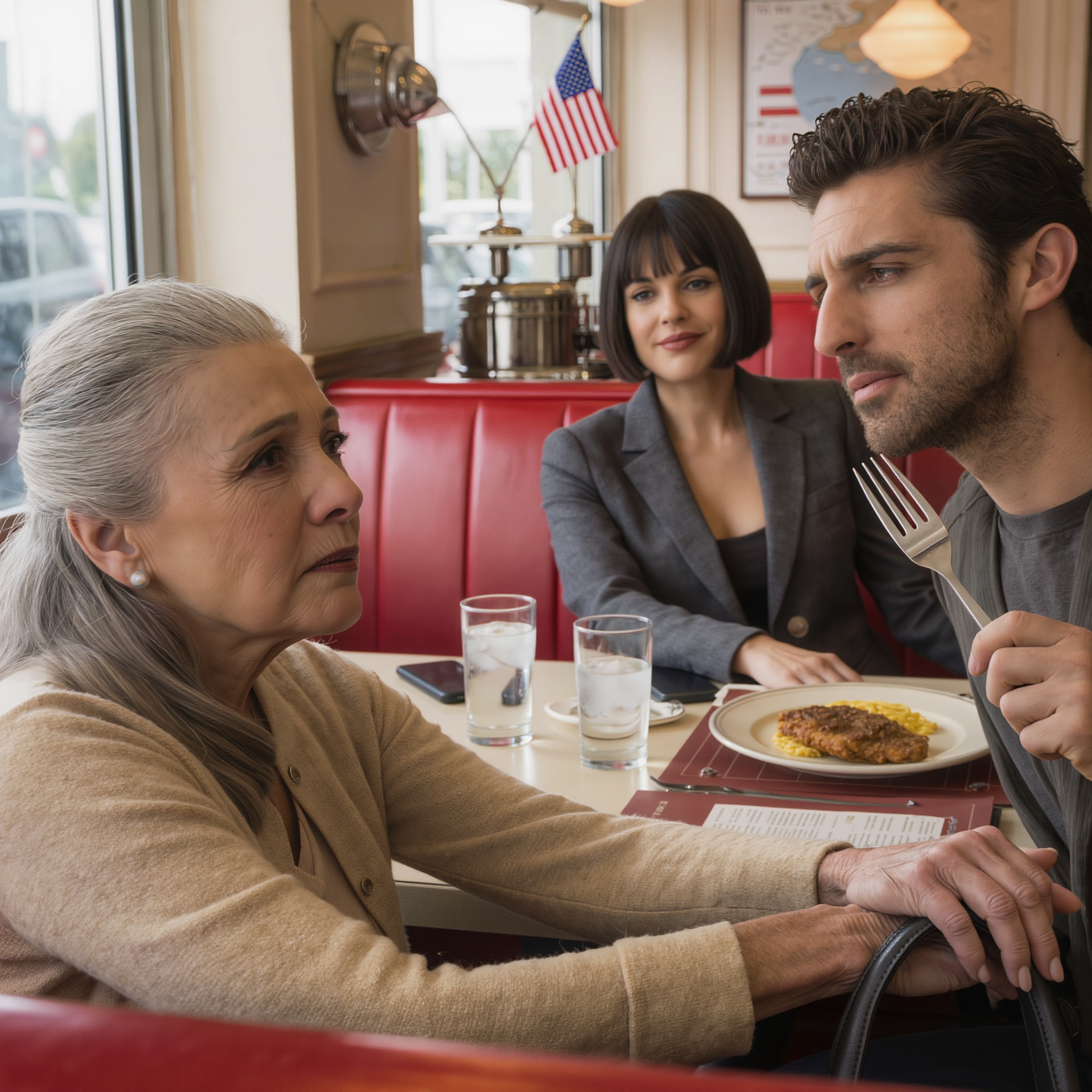
The Silent Supporter
I have always been a woman of quiet gestures. I believed that love didn’t need to be shouted from the rooftops; it was better expressed in the $20,000 “anonymous” deposit into my son’s bank account when his business was failing, or the way I spent every weekend for three years babysitting my grandkids so my son, David, and his wife, Megan, could “find themselves” again.
I lived in a modest two-bedroom bungalow, drove a ten-year-old sedan, and wore the same winter coat for a decade. To David and Megan, I looked like a woman who was barely hanging on—a grandmother who needed them for social connection and perhaps, eventually, financial help. They saw my frugality as poverty and my silence as weakness.
What they didn’t know was that I had spent forty years as a high-level corporate accountant. I knew how to grow money in the dark. I wasn’t “barely hanging on.” I was sitting on an estate worth nearly $4 million, and I was planning on leaving every cent to them.
Until that Sunday lunch.
The Smirk That Broke the Bond
We were sitting on their patio, the smell of expensive charcoal grill smoke in the air. I had brought a homemade apple pie, the kind David used to beg for as a child. I had mentioned, quite casually, that my water heater was making a strange rattling noise and asked if David could come by sometime next week to take a look.
Megan didn’t even wait for David to answer. She set her wine glass down with a sharp clink and looked at me with a smirk that felt like a physical slap.
“Honestly, Margaret,” she said, her voice dripping with condescension. “You need to stop relying on us for every little thing. We have our own lives, our own expenses, and our own stress. You’re constantly asking for ‘favors’ as if we’re your personal maintenance crew. Maybe it’s time you looked into a senior living facility where they handle those things for people who can’t take care of themselves.”
I felt the blood rush to my face. I looked at David, my only son, the man I had shielded from every storm. He didn’t look up. He didn’t tell her she was being disrespectful. He didn’t even stop chewing his steak. He just reached for the salt shaker and shrugged.
“She’s right, Mom,” David muttered, still staring at his plate. “We’re busy. You’ve gotta start being more independent.”
The Clarity of Silence
In that moment, the apple pie on the table felt like a metaphor for my life: I was offering sweetness to people who only wanted to bite the hand that fed them.
I didn’t argue. I didn’t cry. I didn’t tell them that the “favors” I asked for were my only way of trying to spend time with my son. I didn’t remind them that the house they were sitting in was paid for by a “loan” from me that they had never bothered to repay.
“I understand,” I said softly. I stood up, took my purse, and left the pie on the table. “I won’t rely on you anymore.”
As I drove home, the “quiet” woman in me died. The accountant took over. I realized that I had been funding a lifestyle for people who viewed me as a liability. They were waiting for my death not because they loved me, but because they assumed my bungalow and my “meager” savings were their birthright.
The Night of Change
That night, I sat in my study with a glass of scotch and my laptop. I called my lawyer, Sarah, on her private line.
“Margaret? It’s Sunday night, is everything okay?”
“I want to change the will, Sarah,” I said, my voice as cold as a mountain stream. “Everything. The trusts, the real estate, the investment portfolios. I want to trigger the ‘Independence Clause’ we discussed as a joke five years ago.”
We spent four hours restructuring the estate. By the time the sun rose, David and Megan were no longer the heirs to a fortune. Instead, the bulk of my estate was signed over to a foundation that provides vocational training for single mothers—women who actually knew the value of hard work and a helping hand.
To David, I left a single item: the ledger of every dollar I had ever given him, marked “Paid in Full by Your Independence.”
The Confrontation
I stopped calling. I stopped visiting. I hired a professional plumber to fix my heater and a landscaping service to mow my lawn. When Megan called three weeks later to ask if I could watch the kids for their “anniversary getaway,” I simply said, “I’m sorry, I’ve decided to stop relying on your need for me. I’m sure you can find a professional service.”
The shift panicked them. They sensed the change in the wind. Suddenly, they were the ones stopping by. They brought flowers. David offered to fix the fence.
But the “Independent Margaret” was already gone. I had sold the bungalow and bought a luxury condo in a city three hours away. I didn’t give them the new address.
I sent them a final letter.
“You told me to stop relying on you,” I wrote. “And I realized you were right. But you forgot that reliance is a two-way street. You relied on my silence, my money, and my undying patience. I have decided to take your advice and become fully independent of your expectations.”
The Final Lesson
David and Megan eventually found out about the will through a leak in our social circle. The frantic calls started, the “we didn’t mean it” texts, the “family is everything” emails.
I didn’t respond.
I am currently sitting on a balcony overlooking the ocean, sipping a coffee that I paid for with my own hard-earned money. I am not a “burden.” I am not a “maintenance project.”
I am a woman who realized that if you tell someone to stop relying on you, you better be prepared for the day they actually do.
They wanted independence? They got it. But they’re finding out the hard way that independence from a mother’s love comes with a very high price tag—one they’ll be paying for the rest of their lives.