The ranch had always been my pride — the fields rolling gently under the sun, the old wooden gate that creaked as it opened, the veranda where I used to drink my morning coffee while watching horses graze in the distance. This was the land my husband and I worked for decades to build, brick by brick, sweat by sweat, dream by dream. So when my son called and said he wanted to host a “celebration” at home — on the ranch — I thought: maybe healing can happen. Maybe joy can return. I prepared early in the morning, cooked hearty dishes, cleaned the old tables, set chairs under the big oak tree, placed lanterns along the walkway, ready for laughter, music, and family.
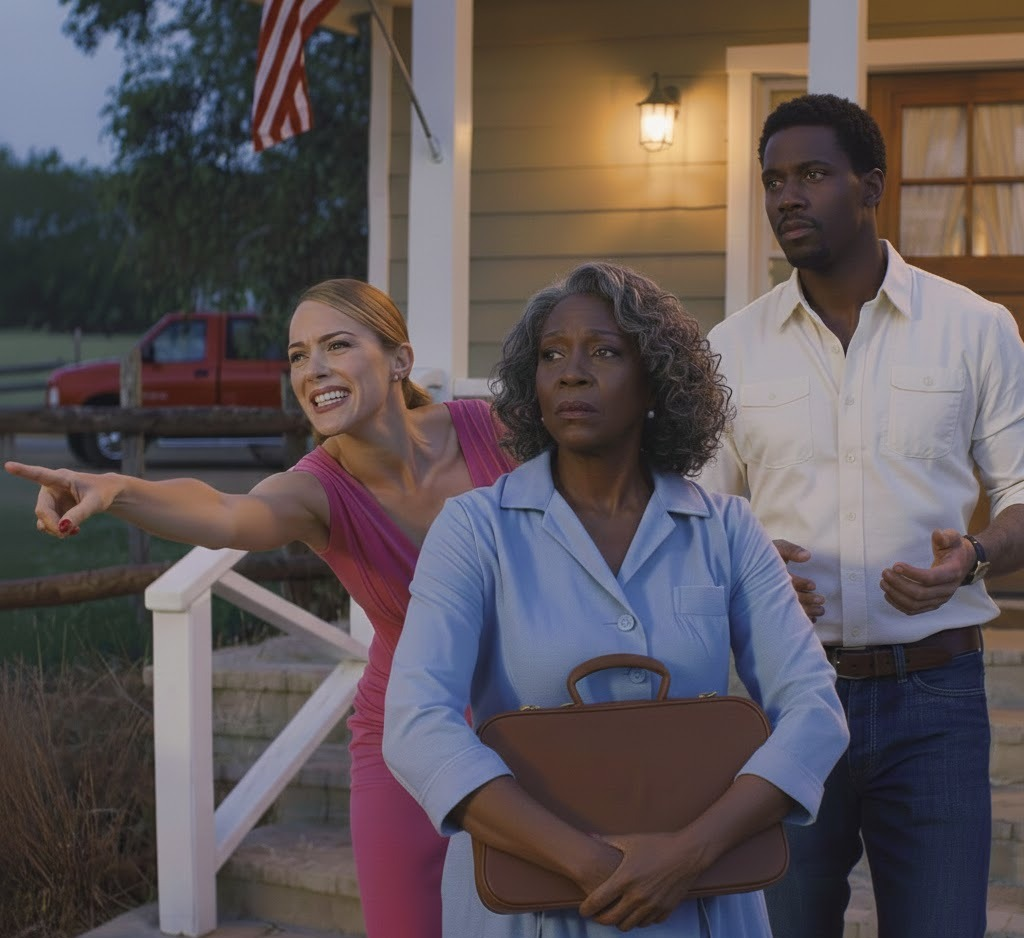
What awaited me was far from warmth. The moment I stepped into the yard, I felt eyes — not welcoming, but calculating. My daughter‑in‑law stepped forward with a forced smile, entourage in tow, her heels clicking harshly against the wooden floor of the veranda. The guests drifted, conversation flowing, until my husband’s old friends and my son’s relatives gathered around the barbeque pit. I carried the first plate of food out, offering a blessing and a gentle smile. For a second I thought the night might be different. But that hope died when my daughter‑in‑law rose, glaring, stepped forward, and said loud enough for everyone to hear: “This house, this ranch — it’s ours now. And we won’t have old burdens spoiling tonight’s fun.” She snatched the plate from my hands as though it were dirt, threw it harshly onto the ground, and spat the words — “Go sit somewhere else. You’re not welcome.”
Gasps. Awkward silence. Some tried to calm things, but voices mingled with discomfort, confusion, and the first stirrings of mockery. My heart pounded, chest tight, but I didn’t cry. I didn’t plead. I didn’t argue. I stood still, arms at my side, watching the food smear in dirt, watching guests exchange uneasy looks. Then I turned and walked away — past the lanterns, past the guests, past the laughter that tried to restart, into the dark riding path toward the old barn, under the wide sky heavy with stars.
I didn’t know what I would do. I only knew I couldn’t stay — not under humiliation, not under someone else’s rules. I gathered the few things I carried: a shawl, a small purse, a copy of the land deed tucked away in my old wallet. I headed to the local motel, a small room far from the ranch, with dust on the floor and a bed worn thin. I sat on that bed, listening to the quiet night, hearing the wind hush against the window, feeling my ribs ache — not from pain, but from disbelief.
In the morning I stood at the motel window, looked out at the street, the flickering neon signs, the distant traffic, and I made a decision. I would not sue. I would not beg. I would not cry to relatives or friends. I would do what I should have done years ago — I would claim what belonged to me. The deed of the ranch, the old house, the barns, the land — all in my name. My husband had signed it decades ago, quietly, so that after his passing — whenever that happened — I’d have a sanctuary, a future. I had hidden the papers away, trusted that my children would respect my rights, that love would prevail over greed. But love had turned to entitlement. The papers were mine, by law and by vow.
I returned to the town office under a grey sky. I presented the notarized documents. I explained calmly: I was the owner. I asked to register my name, to secure the property. The clerk nodded, stamped the forms, told me everything seemed in order. I signed, paid fees, and walked out with new official papers in hand — the ranch, the house, the land, all under my name alone. No heirs, no partners, no second‑class residents. I felt the weight of the papers like armor against betrayal.
The next day, I posted notices. A legal sale listing, polite and proper, announcing that the property was for sale — house, barns, fields, everything. I attached pictures of sunrise over the fields, the old oak tree, the veranda, the lantern‑lit walkways. I watched with quiet satisfaction as calls started coming in: investors, neighbors nearby, people looking for a peaceful countryside retreat. Offers began. All above what they paid when they took over the house without me.
Word traveled fast. My daughter‑in‑law found out when she opened her phone to a news alert — “Ranch for sale — large estate with house, barn and pasture fields.” She froze. She tried calling my son. He didn’t pick up. She messaged me. I didn’t reply. She came to the town office — but the clerk said everything was done. Ownership changed months ago. She had no right to stop it. The fields she walked on, the veranda she redecorated, the house she thought she mastered, all belonged to someone else now. The legal papers left no room for pity.
When the buyers came, they walked the fields, measured the land, wondered at the old barn, smiled at the sturdy oak, asked about water, fences, history. I answered them all with calm certainty — the ranch belonged to me, and I had every right to transfer it. The price was generous. The papers signed. Keys handed over. I watched them drive away with the estate I once called home, feeling neither triumph nor regret. I felt relief. I felt closure.
Standing under the open sky that night — not on the veranda, but on the balcony of my new small apartment in town — I thought of the oak tree, the barn, the wide fields. I thought of the heavy silence after the shouting, the look of satisfaction on her face when she kicked me out. I thought about all those years I gave, all the love, care, silent support. And I realized: some trusts are turned into debts. Some love into expectations. But when the foundation is betrayal, the only right response is to rebuild on your own terms.
My children visited, surprised to hear the news. They asked why. They asked regretfully. I told them: “Because dignity is worth more than any land. Because respect was lost. Because memories live in your heart, not on titles or fences.” They didn’t argue. Maybe they felt guilty. Maybe ashamed. Maybe neither. But I didn’t wait for their apology. I didn’t need it.
Now I wake with the sunrise peeking through city curtains, not over the pasture fields. I drink my coffee on a small balcony, listen to distant traffic, the hum of other lives beginning, and I breathe. My scars — old wounds — still ache sometimes. But they remind me: I didn’t bend. I didn’t break. I simply chose to protect what was mine — my dignity, my worth, my life.
And as I step into each new day, I carry with me not bitterness, not revenge, but peace: a quiet, honest peace — earned in silence, sealed with truth, rooted in self‑respect.