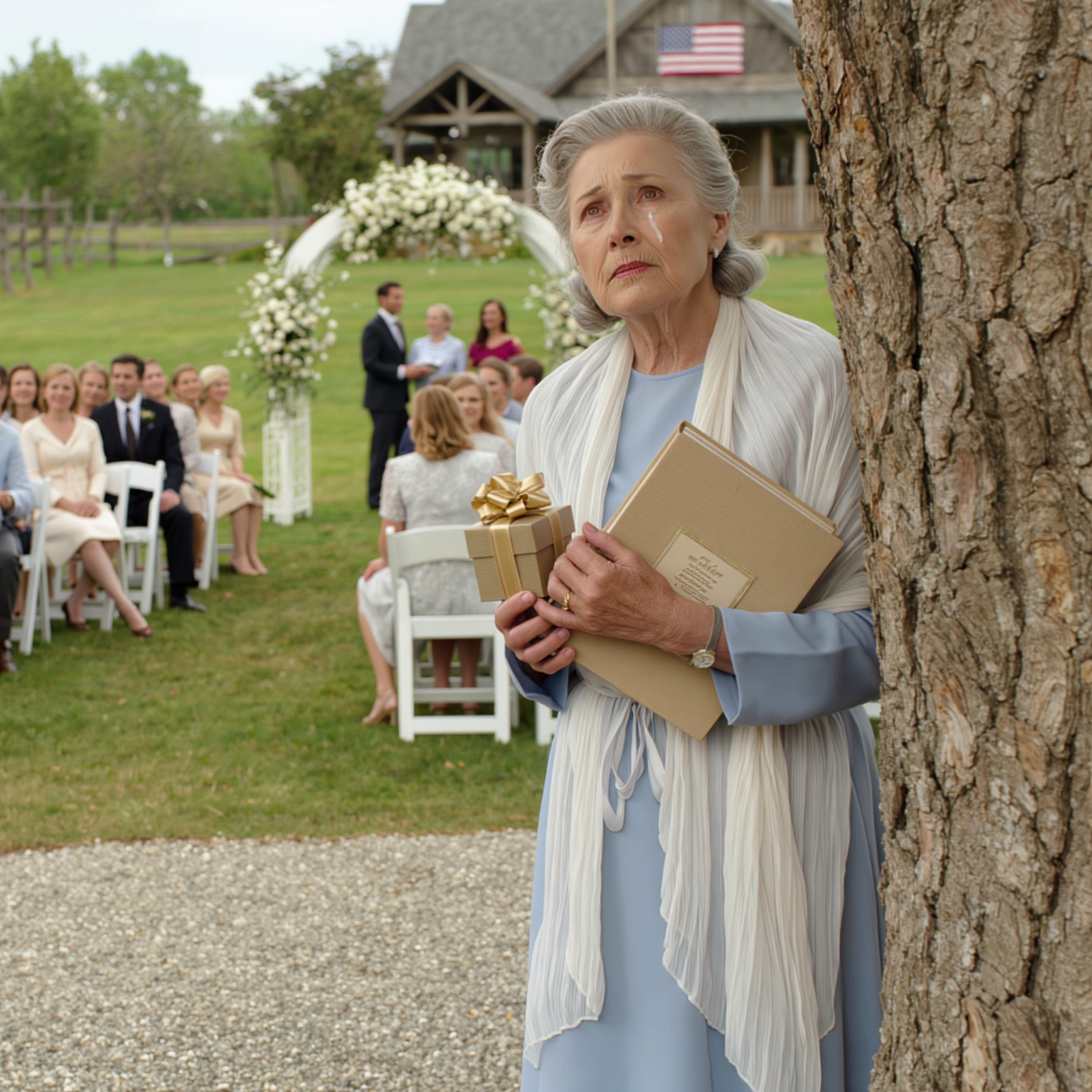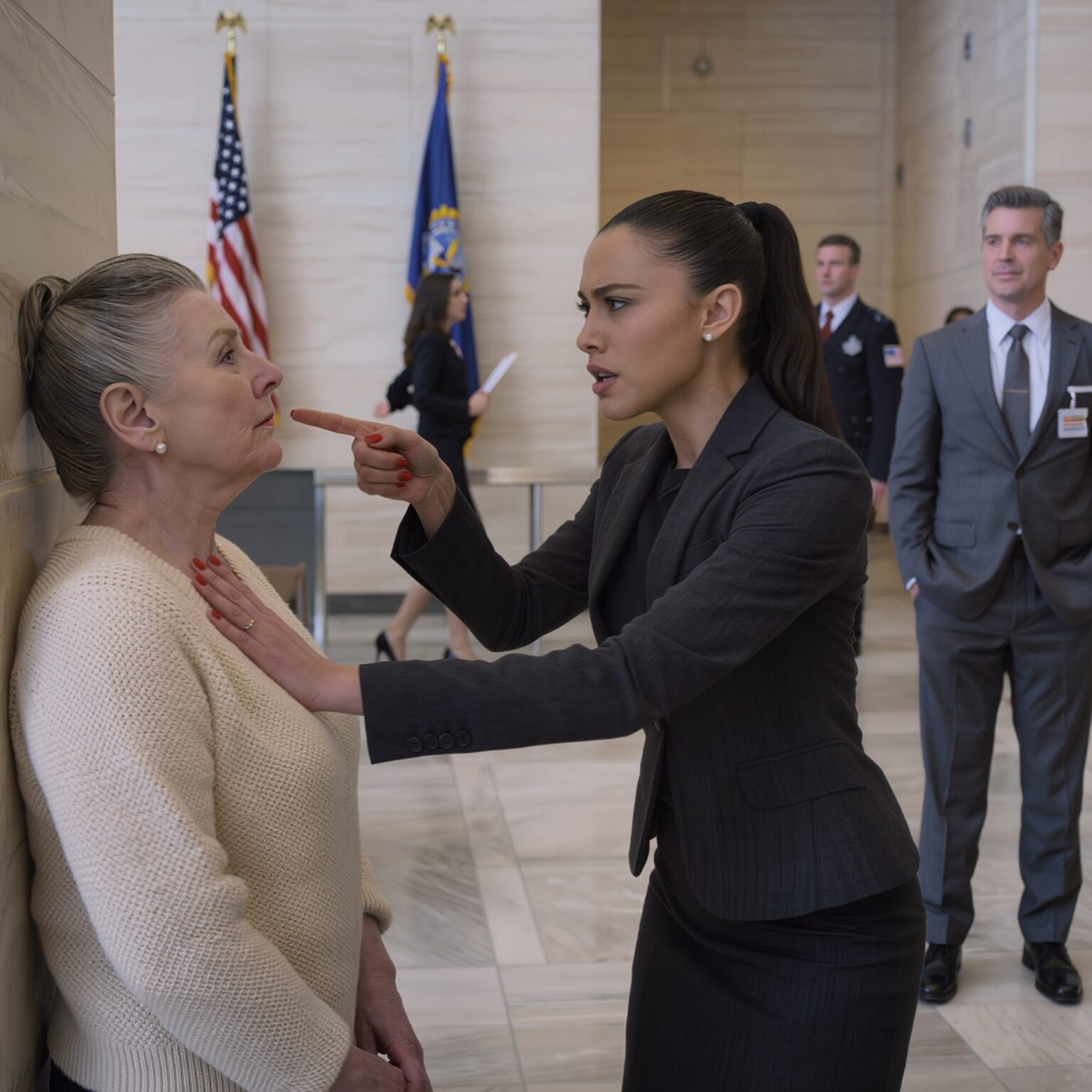
I stood on the cold concrete just outside the courthouse — not there for myself, but because this was the day my son and his wife were contesting parts of my late husband’s estate, a matter that should have been handled with decorum, respect, and perhaps even compassion. Instead, in front of attorneys, legal staff, and half a dozen strangers waiting for their own hearings, my daughter-in-law stepped toward me with clenched determination in her eyes, and before my mind could fully process what was happening, she had shoved me against the courthouse wall. The impact wasn’t violent — not the kind that leaves you bruised — but blunt enough to disorient, like the sensation you get when the ground subtly tilts beneath your feet and time itself feels jarred. Her voice, sharp as ice, cut through the ordinary courthouse hum: “Get out of our lives, you filthy old woman!” The words didn’t just land — they resonated in that open public space, reverberating off stone and glass and the collective gaze of onlookers who instinctively paused, mid-step, mid-breath, mid-everything.
My son stood there a few feet away, hands in his pockets — not rushing forward, not pulling her back, not speaking up or intervening in any way that suggested his mother mattered in that moment. His posture was not defiance or fear; it was indifference disguised as composure. To the world, it looked like calm neutrality. To me, it felt like emotional abandonment.
For a heartbeat I didn’t speak. Not because I was stunned — though I certainly was — but because in that instant my entire life surged into that one moment: childhood memories of scraped knees and bedtime stories, evenings my husband and I had shared discussing values and legacy, the countless Sundays when I cooked family meals believing that presence was the thread holding all of us close. None of that vanished in that confrontation. Instead, it crystallized. I remembered every moment of care I had offered, every time I showed up for birthdays and holidays, every phone call I made just to hear their voices — and I realized how unseen I felt right then, in that precise moment of collision between expectation and stark reality.
The world around us was still moving — lawyers stepping out with briefcases, people in suits talking on phones, a janitor pushing a cart of trash oversized enough to block out something smaller but no less significant happening on that stoop. But I felt the hum in my chest slow down, steady, like a quiet breath taken in the eye of sudden emotional weather.
I didn’t reach for anger.
I didn’t tremble or shrink.
I simply exhaled — once, fully, as though releasing that moment from the interior space where it tried to lodge itself as shame.
People nearby might have seen the shove and heard the insult and assumed the narrative of outrage. I saw something else in that moment: clarity. Not clarity about anger or hurt alone, but clarity about identity beyond someone else’s words.
My daughter-in-law might have crafted her moment to assert dominance, to undermine my dignity, to reduce me to some imagined caricature of age and irrelevance — but here’s the truth she didn’t anticipate: age does not equal worthlessness. And accusation does not define identity.
My son didn’t intervene. His hands stayed in his pockets as though the whole situation was an inconvenience rather than a familial rupture. I didn’t lash out. I didn’t beg for defense. I simply stood steady — not collapsing, not ironing my collar, not begging for validation — just present.
After a long moment of certainties dissolving and new understandings forming, I straightened my posture, smoothed the front of my coat, and spoke — not into that charged silence but into my own truth — loud enough for others to hear, calm enough that my voice did not tremble:
“This courthouse has walls that shelter all of us — not just those with power or position — but every person who stands for what is right.”
No accusations about daughter-in-law. No blame toward my son. Just truth, spoken with dignity rather than damage.
And then I walked into the courthouse — not away from the confrontation, but toward my own agency.
People watched, some shifting aside in discomfort, others hurrying past like nothing had happened at all. I felt neither judgment nor applause. I felt something subtler and far more resilient: self-possession. The realization that even when others choose to diminish you, your worth remains anchored in something they cannot touch: your own clarity of presence.
Later, my son sent a message — not an apology, not an explanation, not a recognition of what had happened — but a short sentence about logistics, about lawyers, about timing. I didn’t reply immediately. I didn’t respond with posture or defense or demand. I sat with my feelings for a long moment as though letting the truth settle into my bones rather than my ego.
There is a difference between being damaged by someone’s words and being defined by them. The former can hurt. The latter requires permission — a permission I did not grant.
When I finally did reply to my son, it was not from a place of war, nor was it from a place of collapse. It was simply steady:
“I am here. I have my own voice. I have my own place. And I am not invisible because someone chose a moment of anger.”
That was not an accusation.
That was not a demand.
It was a boundary defined with calm strength.
My daughter-in-law’s shove and insult did not erase the years I had spent showing up for birthdays, listening to childhood fears, celebrating weddings, sharing simple dinners, or offering compassion in moments when others lacked words.
It only revealed something I needed to see:
that love given should not be taken as entitlement, and presence honored should not be taken as assumption.
Courthouse walls may be cold and impersonal.
But what happened to me on those steps did not belong to their architecture.
It belonged to the human condition — the tension between judgment and compassion, immaturity and maturity, reaction and reflection.
And the unexpected result of that confrontation — the truth I recognized in my own chest — was this:
Dignity is not measured by whether others defend you —
but by whether you stand with clarity even when they do not.
I walked inside with my head held steady, not because the moment was erased,
but because I learned where my own strength lived.
And that matters far more than any shove, any insult, or any passerby on a courthouse day ever could.