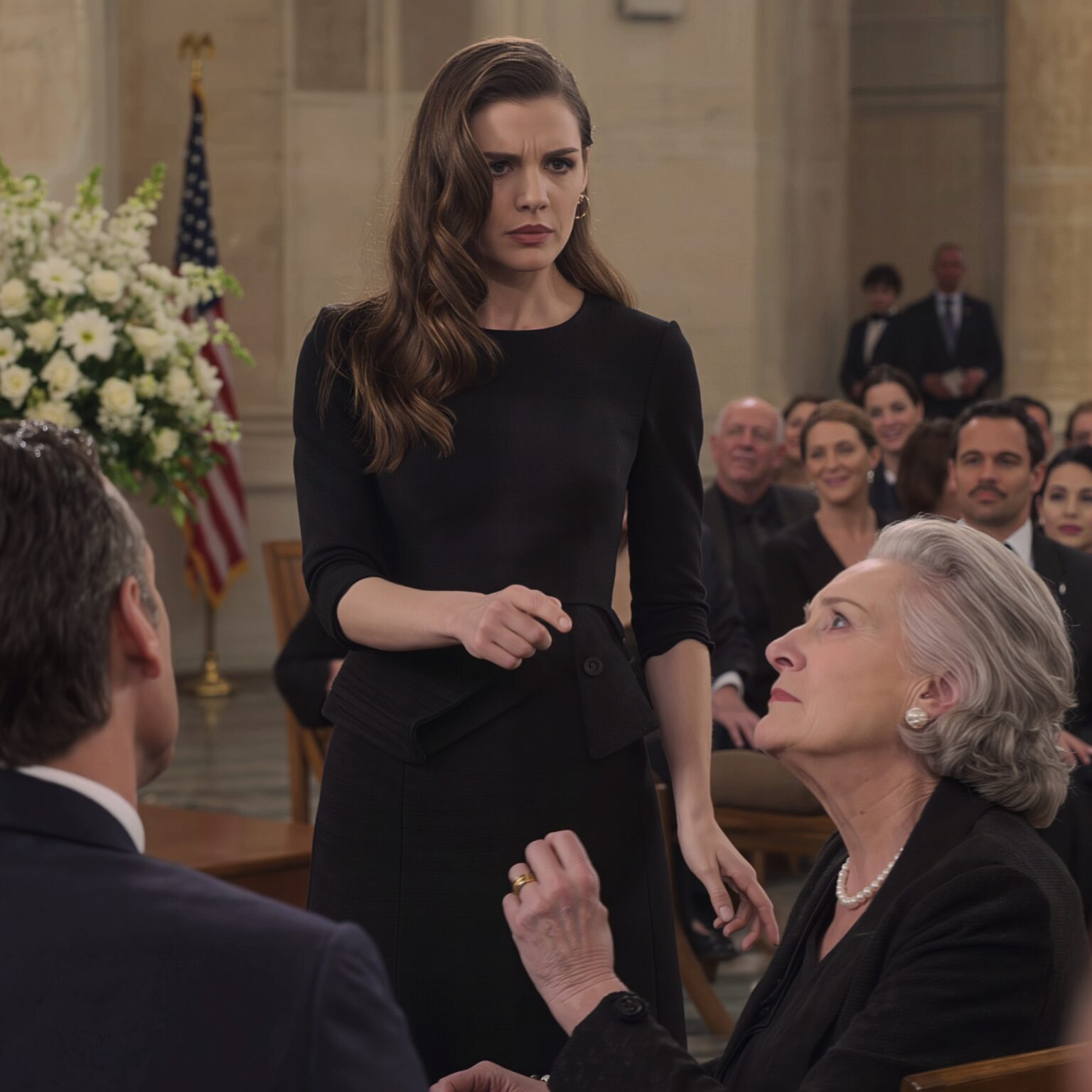
I still remember the exact moment my daughter uttered those words — clear, sharp, and cold — in front of our entire extended family at my husband’s funeral. The priest’s voice was steady and kind, echoing through the chapel about peace and love, and the scent of lilies was thick in the air. My husband’s casket lay before us, polished oak with silver accents, the flowers arranged lovingly around his nameplate. Friends wept softly, cousins held hands, everyone dressed in black or muted gray. And then there was my daughter, standing with her arms folded, eyes red not from grief but from something I hadn’t been able to name in that moment as anger or entitlement or something far darker. She looked at me, and with a voice that carried through the room like a sudden cold wind, she said, “Honestly… she’s the one who should be in the coffin, not Dad.”
The room went silent, like someone had cut the sound in half and only left static. I felt the music of normalcy drain out of that moment, like water being pulled down a drain. My breaths came slow, measured, not because I was calm but because my heart was trying — trying to keep itself together long enough to not fall apart in front of everyone. My husband had died peacefully — or as peacefully as one can define the end of life — and there we were, gathered to celebrate his memory, honor his life, and acknowledge the loss. And instead of comfort, my daughter delivered cruelty disguised as honesty. I didn’t reply. I didn’t argue. I didn’t cry in that moment. I stayed as still as stone at my seat, my lips pressed together not in silence of weakness, but in dignity that refused to be swallowed by humiliation. I stayed silent that day because I wasn’t sure if the world was real or if someone had just hit fast‑forward on heartbreak.
After the funeral, people murmured condolences that felt muffled under a cloud of odd tension. Some looked at me with sympathy, others with awkward avoidance. My daughter left the chapel quickly, like the words she spoke were a thunderclap she wanted to outrun. I sat in the empty pews long after the others had gone, gazing at the arrangement of white flowers and imagining what life looked like in the quiet absence of someone who had always been steady and kind. When I finally stood, leaving the chapel echoing behind me, I wasn’t thinking of retaliation, or revenge, or argument. I was thinking about something deeper: why someone I loved so dearly could say something so sharp and tender at the same time.
That week afterward was a blur of polite dinner invitations I didn’t want, family members who didn’t know what to say, and phone calls that felt like pre‑recorded sadness. My daughter avoided me like a shadow avoids the light — she moved through the house with the same awkward energy of someone who had opened a window and let in a storm they didn’t know how to close. My son kept his eyes down, trying to mediate with gentle gestures that never translated into meaningful words. My husband’s belongings sat where he’d left them — untouched reading glasses beside his favorite chair, a jacket hanging by the door, books half‑read on the bedside table. It was a small museum of what life used to be — and I walked through it every morning with the lightness of someone determined not to break apart, not to collapse under burden, not to remake my world out of grief alone.
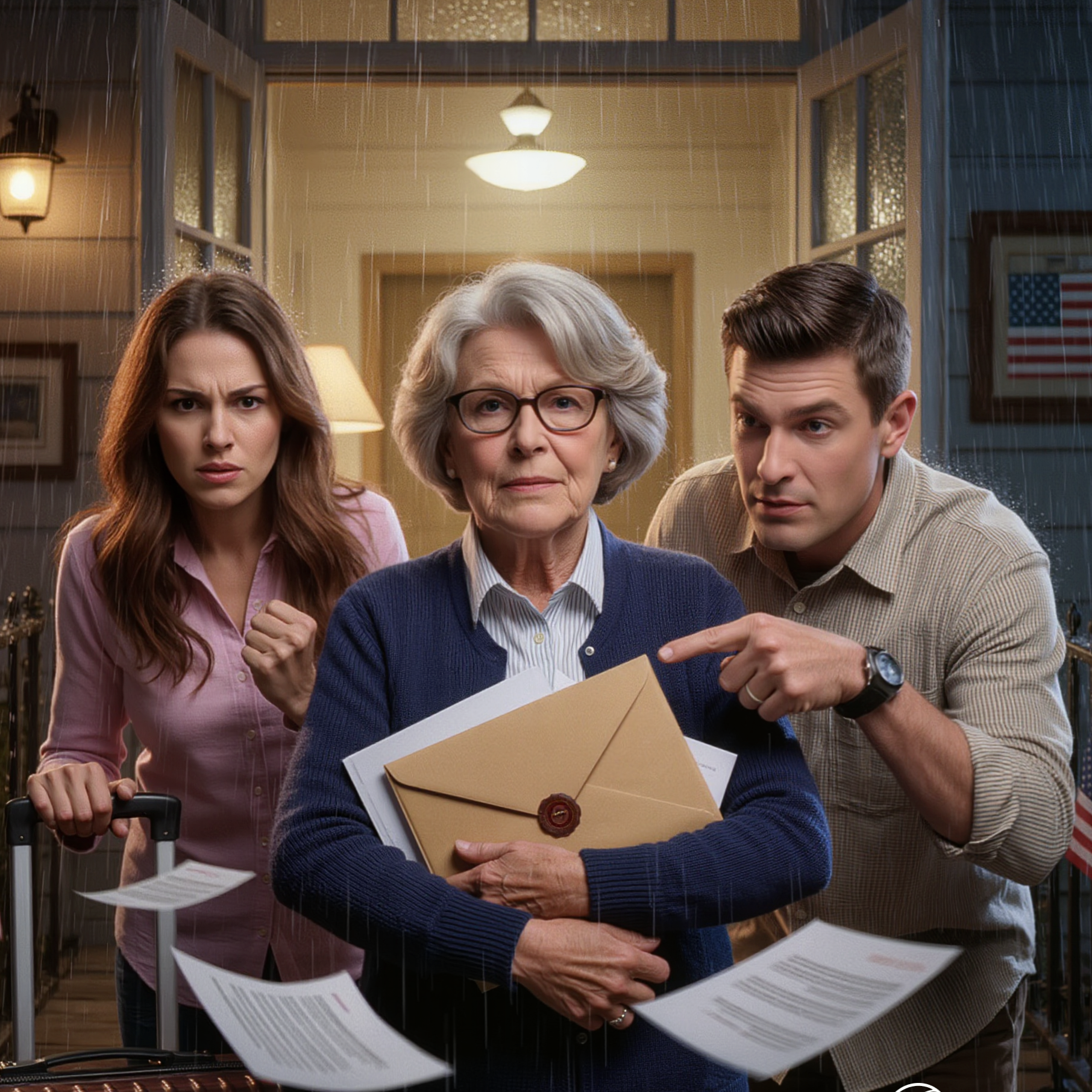
One evening, seven days after the funeral, my daughter stood in the kitchen just after dinner, arms folded again, eyes narrowed just slightly, and something small inside me steadied like a heart taking in breath after too long without it. I could see what she was trying to do — testing boundaries, asserting power, demanding control not by love but by entitlement. She had grown up thinking that polite obedience was the currency of respect, and now she believed that disrespect could buy her attention. She said, “Mom… Dad should have left everything to me.” As casually as someone picking salt from the table.
I didn’t respond instantly. I simply looked at her. My expression wasn’t shocked. It wasn’t angry. It was calm — the kind of calm that comes from deep internal clarity where fear and ego can no longer find purchase. “Oh, sweetheart,” I said softly, almost gently, “he wanted me to have the house. That was his wish. Your father made his intentions clear — not because he was unkind, but because he wanted a legacy of stability, not of entitlement.”
She blinked, as though she expected me to burst into tears, or demand apology immediately, or crumble at the sound of her voice. Instead, I told her, in the same soft tone I had used at the funeral, “I appreciate that you have strong feelings about inheritance… but I’m not interested in power struggles. I’m interested in peace.”
She scoffed lightly — a tiny sound she probably thought was sharp and witty — but I just smiled. Not smugly. Not as a threat. But as someone who knew the difference between choosing peace and tolerating disrespect.
After that conversation, I made my decision.
I refused to let her have the house.
Not out of spite — that would have been petty and cruel. But out of clarity. I called my lawyer, asked for Dad’s official will, and confirmed exactly what had been discussed years earlier in private between my husband and me. It wasn’t a veiled conversation. It wasn’t a misunderstood draft that might have changed over time. It was clear. My husband wanted me to have the home we built together — the home we filled with memories not just of children growing up, but of deep laughter, late night talks, quiet mornings, and warm light on rainy afternoons.
When I told my daughter that I wasn’t going to sell the house to “give her her share,” her face twisted into something recognizable — not sorrow, not understanding, but frustrated indignation. She called me stubborn. She called me unfair. She said I was choosing a home over family. Not once did she consider that a home, for me, is family — not walls or paint, but the echo of shared laughter and love that had nothing to do with entitlement, and everything to do with legacy.
I didn’t yell. I didn’t curse. I didn’t diminish her voice. I simply stood firm — the same way someone stands firmly in the quiet aftermath of loss, with the realization that some battles are not won with words but with dignity. She stormed out of the room, her anger crackling like static in the air, but I didn’t follow her. I stayed where I was, grounded in something deeper than conflict.
In the following days, my daughter avoided me as though I had become an inconvenient truth she wished didn’t exist. But something remarkable happened. Other family members, who had once looked at me with hesitation after the funeral, began to treat me with a renewed sense of respect. They saw that I wasn’t crumbling. I wasn’t pained. I wasn’t defeated by disrespect. Instead, I was standing in serenity that was not fragile — it was rooted.
I began to receive invitations again, not forced ones, but genuine ones — for tea with cousins, lunches with old friends, evenings spent reconnecting with siblings who no longer whispered behind my back but spoke openly, warmly, of shared memories and respect. I realized that when you refuse to accept mistreatment gladly, people begin to see you not as resistant, but as someone grounded in self‑worth.
A few weeks after the house decision, my daughter approached me again — not with accusations, not with demands, but with something soft and uncertain in her eyes.
“Mom,” she said quietly, “I… maybe I spoke without thinking. I was hurt and confused after dad died. I didn’t know how to express it.”
It wasn’t an apology. But it was closer to honesty than anything else she’d offered before. I nodded, not dismissively, but with genuine calm. “I understand that grief affects everyone differently,” I told her gently. “But I want our family to grow with respect, not resentment.”
She didn’t say much after that. But she didn’t raise her voice either. And in that moment of quiet understanding, something inside me softened — not the pain of her earlier cruelty, but the edges of a wound that had finally stopped bleeding.
Life after that didn’t magically become flawless. There were awkward dinners. There were moments of unspoken tension. But there were also moments of genuine connection — her voice at the phone saying, “Hi mom,” without sharpness. Her presence at family gatherings that didn’t feel hostile anymore. And most beautifully of all, a gradual rebuilding of a relationship that had been shaken, but not broken entirely.
Because dignity isn’t the absence of conflict.
Dignity is choosing peace even when it’s hard.
Dignity is standing firm without becoming cold.
And dignity — above all — is knowing your own worth even when others fail to see it.
And slowly, but surely, that’s how our family began to heal — not through confrontation, but through clarity, compassion, and unwavering self‑respect.