The Breaking Point of a Toxic Bond
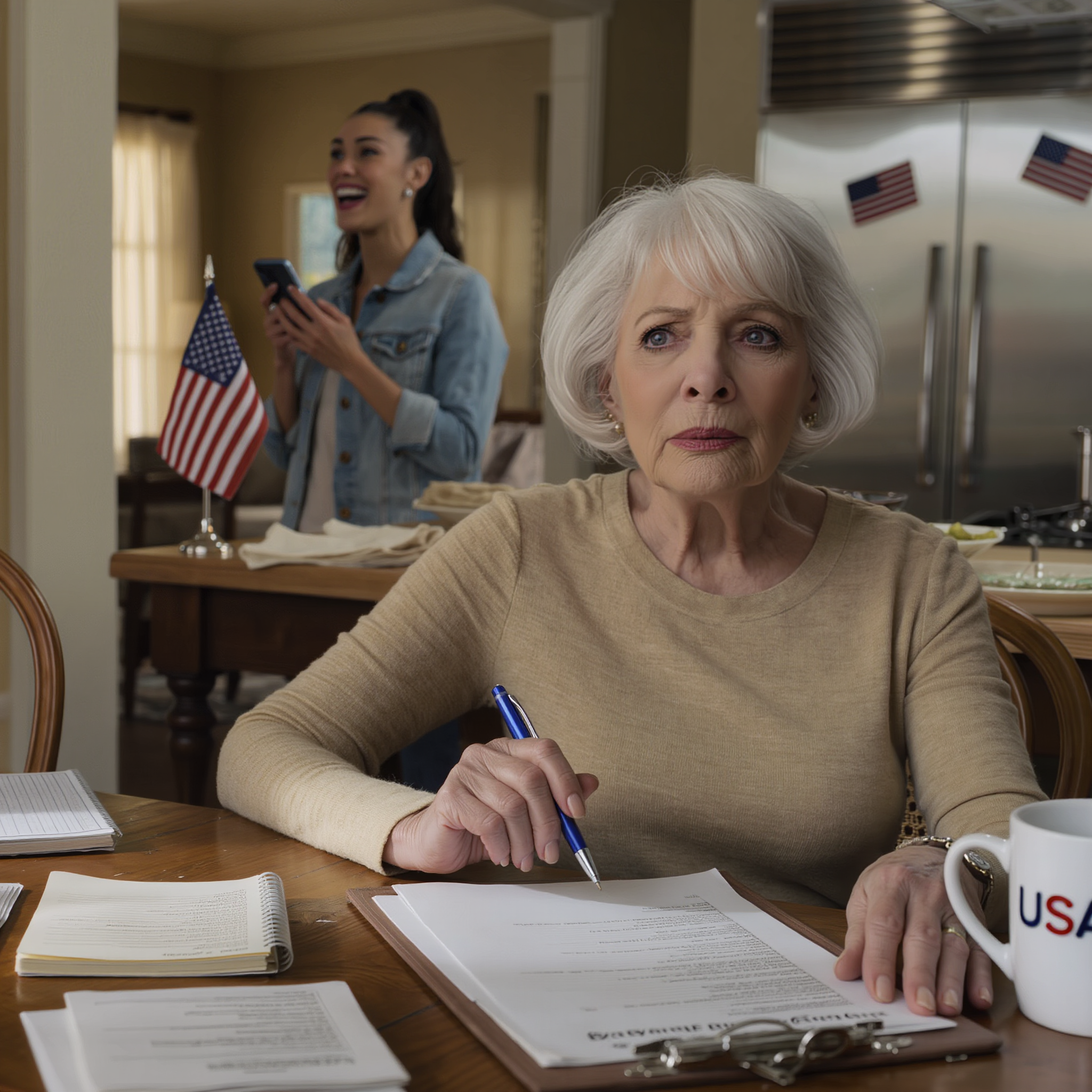
For the past five years, I have lived in a state of quiet, walking-on-eggshells submission within the walls of the large Victorian home in suburban Illinois. My daughter, Chloe, and her husband, Mark, moved in with me after they hit a “financial rough patch” in 2020. At first, it was supposed to be a temporary arrangement, a way for them to get back on their feet while I enjoyed the company of my grandchildren. But as the months turned into years, the power dynamic in the house shifted in a way that I can only describe as a slow-motion coup. Chloe, a woman whose temper had always been like a dormant volcano, began to act as though she were the mistress of the house. She would criticize my cooking, tell me which rooms I was allowed to occupy, and eventually, she began telling her friends that she had “taken in” her elderly mother out of the goodness of her heart. I stayed silent because I loved her, and because I believed that a mother’s duty was to absorb the storms of her children’s lives. I didn’t realize that by absorbing her anger, I was merely fueling her belief that I was a person without agency or value.
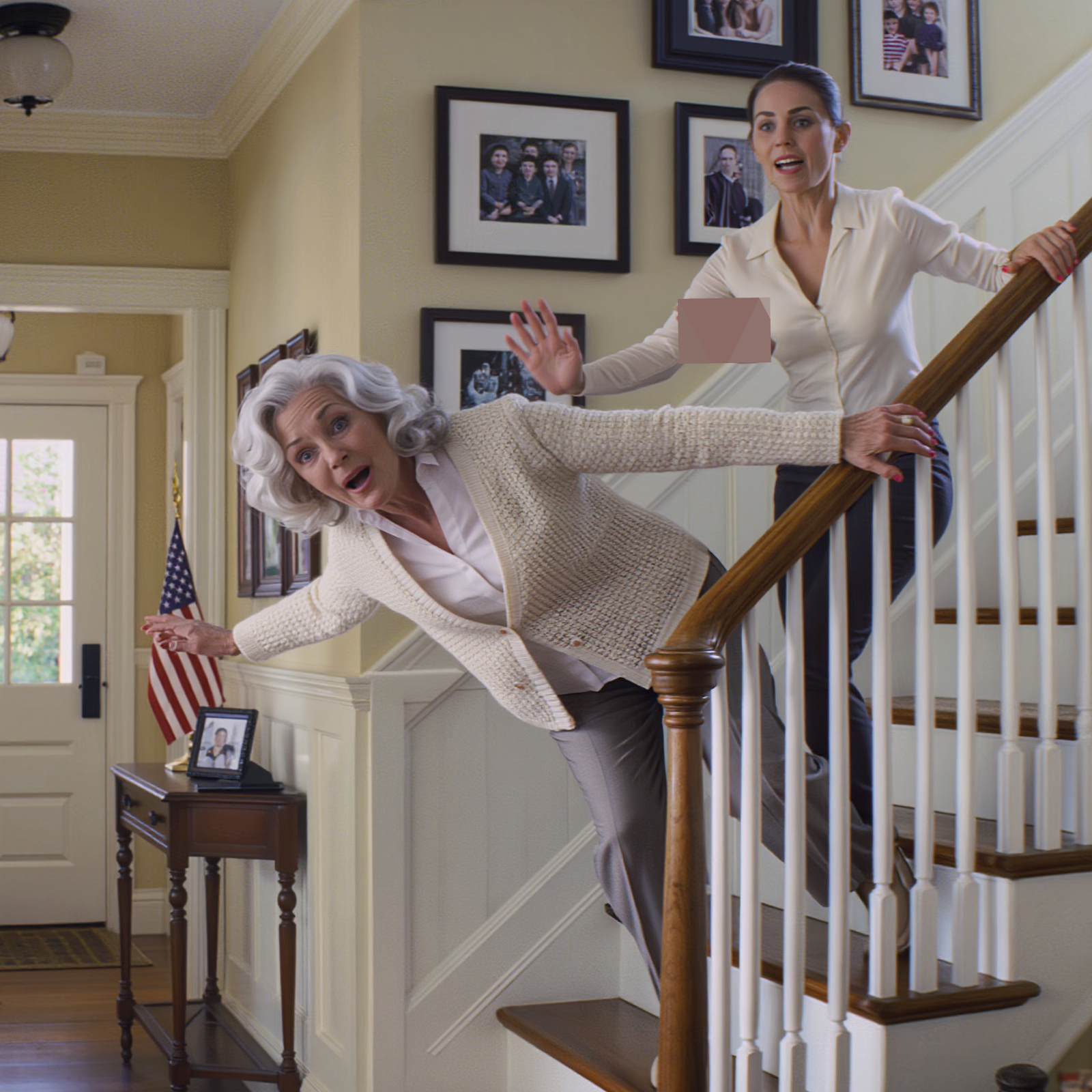
The resentment reached a fever pitch over something as trivial as a thermostat setting. It was a frigid Tuesday evening, and I had turned the heat up two degrees to soothe my aching joints. Chloe stormed into the hallway, her face contorted with a rage that seemed disproportionate to the offense. She began screaming about the “utility bills she was paying” and how I was a “drain on their resources.” When I finally stood my ground and reminded her that I contributed my entire pension to the household expenses, she snapped. The volcano erupted. She grabbed my arm and began dragging me toward the grand staircase. “I’m sick of you, Mom! I can’t take it anymore! You’re a ghost in this house, and I want you gone! Get out of my house!” Before I could even find my footing, she gave me a violent, two-handed shove. I felt the air leave my lungs as I tumbled backward, the world spinning in a blur of mahogany banisters and excruciating pain before everything went black at the bottom of the landing.
The Awakening of a Victim
I woke up in the hospital three days later with a shattered ankle, a concussion, and a heart that felt like it had been shredded. Mark was sitting in the chair by my bed, looking not at me, but at his phone. When he realized I was awake, he didn’t offer a word of comfort. “Chloe is distraught,” he said, his voice flat. “But she’s firm. We’re changing the locks while you’re in rehab. We’ve already put your things in storage. You can’t come back, Elena. It’s her house now, and she needs her peace.” I lay there, the beeping of the monitors the only sound in the room, and I felt a strange, cold clarity settle over me. They truly believed that because I had allowed them to live there, and because Chloe was the “heir,” the house was already hers. They had confused my kindness for a transfer of title.
What Chloe and Mark didn’t know—what I had never corrected because I wanted them to feel a sense of pride in their home—was the reality of the deed. When my husband, David, passed away, he didn’t leave the house to me in a simple will. He placed it in a “Life Estate Trust” with a “Behavioral Forfeiture” clause. David had always been wary of Chloe’s impulsive nature and her history of taking advantage of others. The trust stipulated that I held 100% ownership until my death, at which point it would pass to Chloe—unless she demonstrated “actions of physical or financial hostility toward the Life Tenant.” If such actions occurred, her status as the remainderman was immediately revoked, and the house would be donated to a local veterans’ charity, with me retaining the right to live there or sell it as I saw fit. By pushing me down those stairs, Chloe hadn’t just broken my bones; she had broken her own future.
The Legal Reclamation
I spent my time in rehab working with a lawyer named Mr. Henderson, who had been David’s closest friend. We didn’t send a warning. We didn’t call for an apology. We simply gathered the hospital records, the police report from the night of the “accident,” and the original trust documents. “She thinks she’s evicting you, Elena,” Mr. Henderson said, his eyes filled with a grim satisfaction. “But she’s actually evicting herself. She just hasn’t received the memo yet.” We waited until the day I was scheduled to be discharged. I didn’t go to the storage unit where they had dumped my life. I went to the house with a locksmith, a sheriff’s deputy, and a moving crew.
When we pulled into the driveway, Chloe was on the porch, holding a cup of coffee and looking every bit the triumphant homeowner. When she saw me in the passenger seat, her face twisted in a sneer. “I told Mark you weren’t welcome here, Mom! Call the police if you want, it’s my house!” The sheriff stepped out of the car and handed her the court-certified Trust Revocation order. “Actually, ma’am,” the deputy said, “the records indicate that as of yesterday, you have no legal right to this property. Your mother is the sole owner, and she has requested your immediate removal for cause.” The look of pure, unadulterated shock on Chloe’s face was the most honest emotion I had seen from her in years.
The Morning of the Great Reversal
The next two hours were a whirlwind of frantic phone calls and desperate begging. Mark arrived home to find their designer furniture being moved onto the lawn by my crew. Chloe was crying now, trying to claim it was all a “misunderstanding” and that she “didn’t mean to push me that hard.” I sat in the car, watching through the window, and realized that I didn’t feel the surge of pity I usually felt for her. I felt a sense of justice that had been delayed for far too long. They had tried to make me homeless while I was in a hospital bed; I was simply returning the favor while they were standing on their own two feet.
“You can’t do this, Mom!” Chloe screamed through the car window. “Where are we supposed to go? We have no savings! We spent it all on the renovations for this house!” I rolled down the window just an inch. “You spent it on a house that wasn’t yours, Chloe. You treated your mother like a guest you could discard. Now, you’re the guest. I suggest you find a place with no stairs—I hear they’re dangerous.” I rolled the window back up and watched as the sheriff escorted them to their car. They left with nothing but their personal clothes and the realization that their “inheritance” had vanished into the thin air of their own arrogance.
The Peace of a Quiet House
I moved back into my home that afternoon. The locks were changed back to my original codes, and the silence of the Victorian halls felt like a warm embrace. I sold the house a month later—it was too large for me and held too many shadows of the daughter I thought I knew. I took the proceeds and moved to a sun-drenched condo in Florida, near a group of friends who value me for who I am, not for what I can provide. I haven’t spoken to Chloe since that day in the driveway. I heard they are living in a cramped rental on the other side of town, struggling to pay the bills they once blamed on me. I learned that a mother’s love is unconditional, but her patience—and her property—is not. I sit on my new balcony now, the ocean breeze soothing my healed ankle, and I realize that sometimes, you have to fall down the stairs to see exactly where you truly stand.