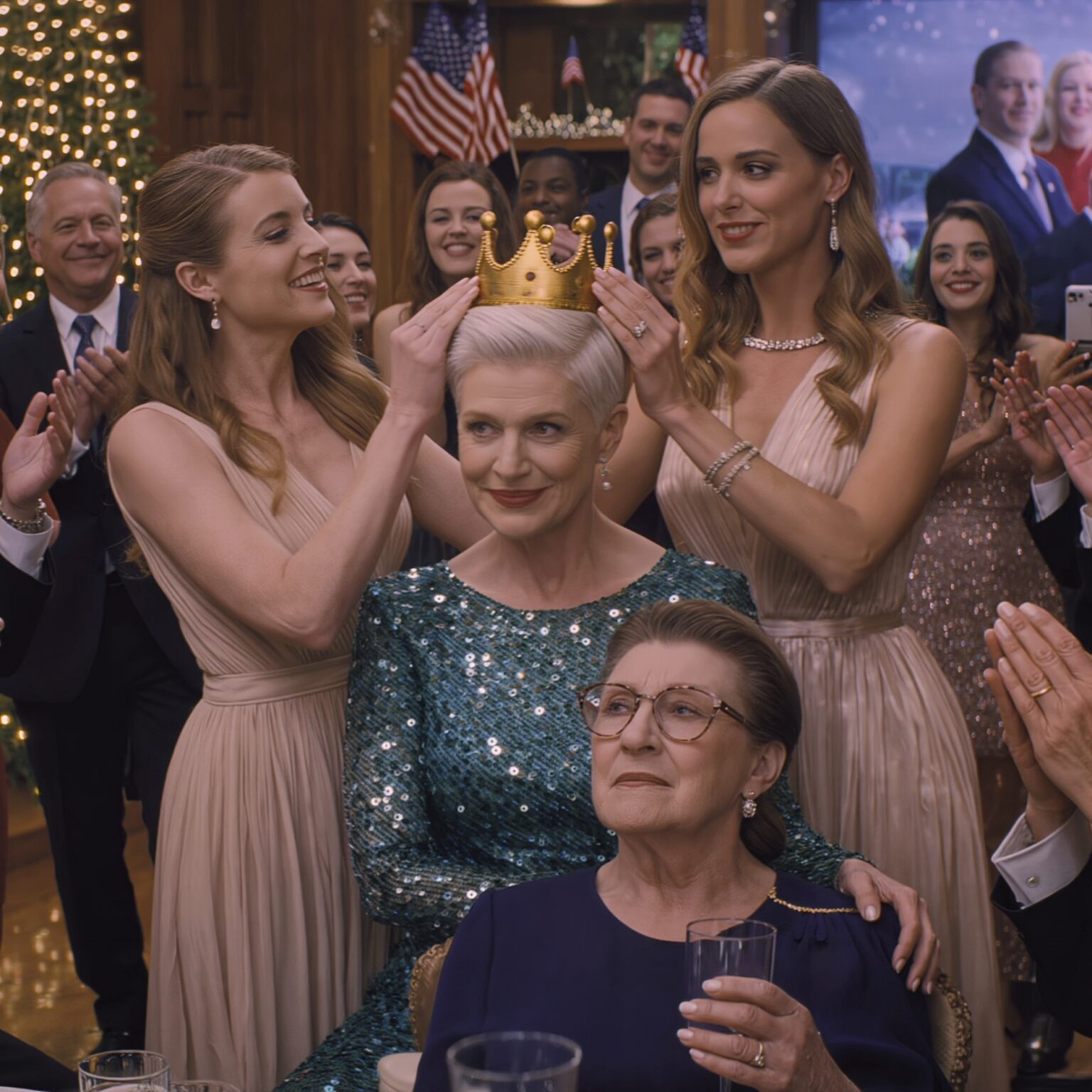
I sat at the dining table, the candles flickering softly, the silverware laid out plain but neat. The aroma of roasted chicken and warm bread drifted between us. My husband and son chatted quietly about work, the kids’ grades, the upcoming holiday. My daughter‑in‑law — I’ll call her Vanessa — leaned back in her chair, her lips curved into a half‑smile that seemed to sharpen in the candlelight. I didn’t notice it at first. I thought the air was just still, heavy from heat, from food, from memories of simpler times.
Then she spoke. Her voice was calm — too calm. “So,” she said slowly, looking me straight in the eye, “what does it feel like to be useless?” Her words cut through the quiet like ice. The smile didn’t reach her eyes; it was mocking, deliberate. I felt the room shift. I felt the clink of silverware stop. I felt the weight of silence grow heavy on the table.
My fork hovered mid‑air. My chest tightened. I pressed my lips together, forcing the breath not to tremble. The dinner moved on around me — bread torn, plates scooped, conversation resuming — but I felt removed. The question echoed in my mind: “Useless.” Two syllables, but a lifetime of judgment behind them.
I swallowed. I placed my fork down gently. I looked up at her. I let the room wait. The candlelight flickered on her face. I saw impatience, I saw disdain, I saw the expectation that I would shrink. That I would apologize. That I would bow.
But I didn’t.
I straightened in my chair. I didn’t raise my voice. I didn’t cry. I didn’t scold. I simply said: “I don’t believe I am.”
Vanessa’s eyebrows rose, like the corner of the world tilted just then. My husband cleared his throat. My son shifted uncomfortably. Silence gathered around us again — sharper. I took a breath, slow. I continued: “A dress doesn’t make a woman useful. A home doesn’t make a woman worthy. I have loved. I have sacrificed. I have built things with my hands, my heart, my days. If that’s useless… then perhaps I misunderstand the word.”
I paused. I let eyes meet hers — not with anger, but with calm clarity. I felt the old pain behind the question — the years of being sidelined, of whispered complaints, of invisible labor. The slow erosion of dignity under polite smiles and cold jabs. I felt the hurt, the sorrow, the exhaustion of pretending nothing was wrong.
I stood then, slowly, deliberately. Chairs scraped softly against the floor. The room held its breath. I didn’t wait for permission. I walked toward the door, shoulders squared, footsteps steady. My husband tried to reach out. He hesitated at the table. My son’s eyes flicked between me and the plate in front of him. Vanessa’s mocking smile vanished — replaced by tension, uncertainty, perhaps regret.
I opened the door. The night air entered quietly, brushing the edges of the room. I glanced back once. No tears. No bitterness. Just a steady calm. “I won’t stay here tonight,” I said softly. “I need rest.” And I walked out.
Outside, the street was empty. The stars thin behind city lights. I felt cold, yes — but also strangely light. I got into my car and drove, without destination. Each mile peeled layers of resentment, shame, silent hurts. I didn’t know where I was going. I just needed to breathe. To think. To remember who I was before the cruelty had started to feel like truth.
I rented a small room in a guest house on the edge of town for the night. I didn’t unpack. I sat on the bed with a glass of water, hands wrapped around it. I closed my eyes and felt the weight in my chest shift. The anger didn’t vanish. The pain didn’t disappear. But the silence — the silence that had settled in my bones after years of being dismissed — cracked.
The next morning I packed a few things: a scarf, a sweater, a photo of my husband and I from long ago, a small notebook I used to write recipes and poems when I was younger. I locked the door behind me and walked away. I didn’t look back.
In the days that followed, I found a small apartment — modest, quiet, doors that closed behind me without judgment. I set up my own little kitchen. I cooked for myself again. I drank tea on the balcony when the sun rose. I walked in the evenings through the nearby park, listening to leaves rustle, trying to remember what peace felt like.
I didn’t call him. I didn’t call them. I didn’t ask for forgiveness. I didn’t need validation. What I needed was distance. Space. The chance to find myself again outside the shadows of mocking words.
I learned slowly: dignity doesn’t come from approval. It doesn’t come when others treat you well. It’s something you build with your own hands, with your own choices, with the courage to leave when love becomes loneliness.
Sometimes I think of that dinner — the mocking smile, the cruel question, the stunned silence — and I feel sorrow. For the woman I was before. For the memories of comfort shaken by a single sentence. But even more, I feel pride. Because I chose myself instead of fear. I chose truth instead of shame. I chose freedom over silence.
And now — in my small apartment, with a pot of tea on the stove and a quiet life — I’m learning what it truly means to be useful.