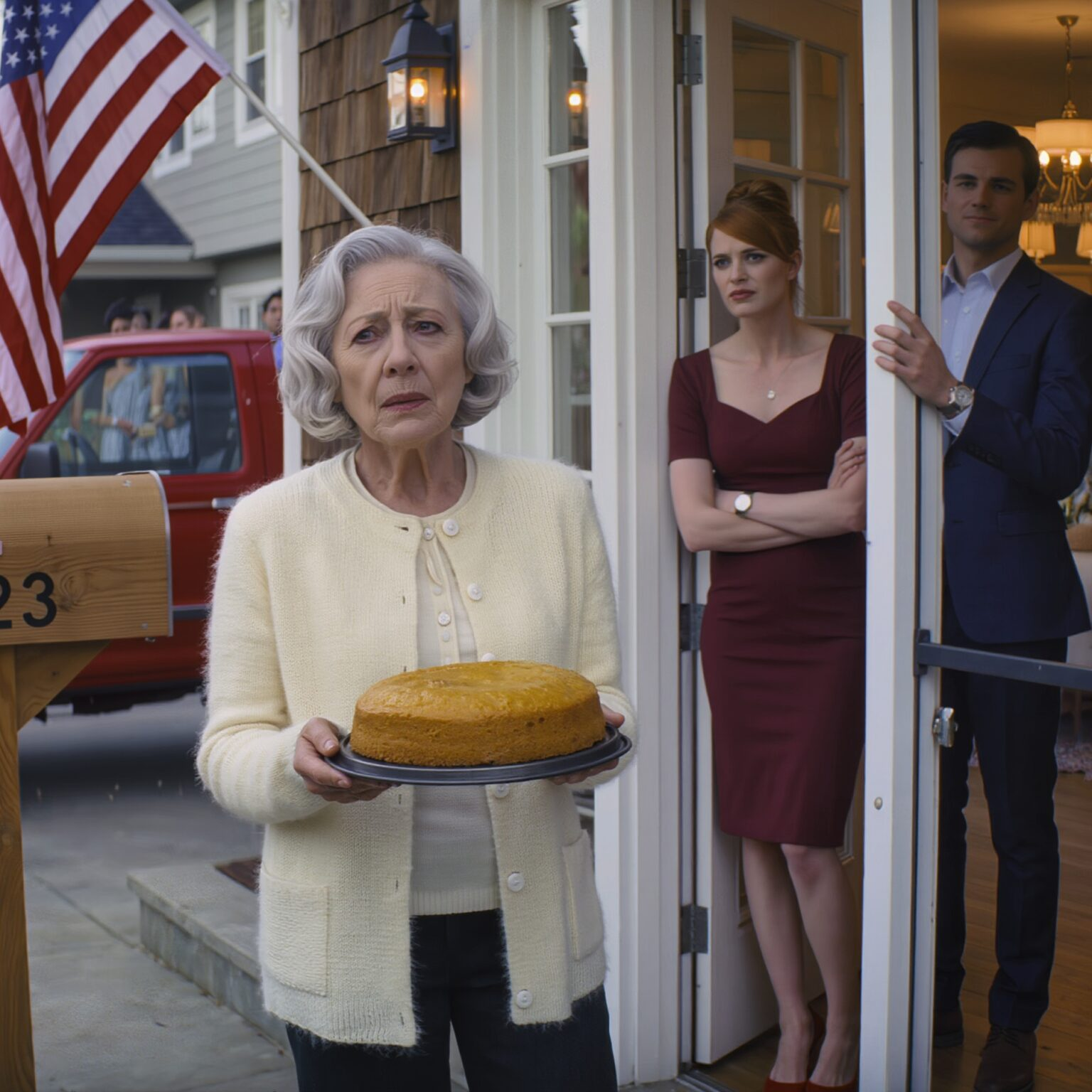
The message arrived at exactly 5:42 PM, a time I will remember with the same precision most people reserve for proposals or births or deaths, because the text was so brief, so neutral, and yet so final that it managed to erase weeks of preparation, hours of ironing, and the quiet excitement that had been building in my chest all afternoon. My daughter-in-law wrote: “Dinner with his family is canceled. You don’t need to come. We’ll do it another time.” No greeting, no apology, no explanation, not even a manufactured excuse about someone not feeling well or a sudden work emergency that might soften the cut. It was a clean dismissal. A surgical removal. I read it twice, even though the first reading was enough to understand exactly what it meant. The food I had prepared, the dress I had pressed, the perfume I had dabbed behind my ears, all of it became unnecessary in less than three seconds. I did not answer. I did not ask questions. I did not give her the satisfaction of desperation or confusion or polite acceptance. Instead, I set the phone down gently, too gently for how violently my heart was pounding, and I stood there in the middle of my quiet living room, with baked rosemary chicken still steaming on the counter and the little pistachio and rose milk tart I spent two hours making cooling in its porcelain dish, waiting for a celebration I clearly was never meant to attend.
It wasn’t just a dinner. It was the first formal gathering with her family since the wedding. It was supposed to be my moment, the symbolic welcome, the night where I would take my place in a new chapter of my son’s adult life, not by force or expectation but by presence. I wore the necklace my late husband gave me on our thirtieth anniversary, a gold chain with a single sapphire he said matched the exact color of my eyes when I laughed. I kept touching it as if his memory could steady me, as if he could whisper through metal and stone that I was imagining things, that I was still part of something, that exclusion couldn’t be this cold. But it was. It had been coming slowly for months, this shift from being cherished to tolerated, from consulted to informed to ignored. At first I thought I was too sensitive, too nostalgic, too unwilling to let my only child become orbiting in another woman’s gravity. But then the invitations became rarer, the quick Sunday visits evaporated, the photos of gatherings I was never told about surfaced and disappeared from social feeds faster than I could screenshot them. Tonight wasn’t a change. Tonight was the moment the mask simply dropped.
I didn’t turn off the oven. I didn’t wrap the dessert. I simply took my keys as if stepping out into the night could rearrange the ache in my bones. Manhattan Saturday nights are never quiet. Yellow cabs pulsed like arteries, restaurants spilled music and wine and words that belonged to people who were chosen, who were expected, who were wanted. I drove through the blur of traffic with no destination, only motion, because motion hurts less than stillness when the heart is learning the truth. It wasn’t until I passed their restaurant—the one they had chosen weeks ago, the one I had written in my planner with a small gold star beside it—that I realized fate, cruel or kind, was not finished with me.
They were there.
Inside. Laughing. Lit under warm golden chandeliers and velvet seating that held bodies more relaxed than I had seen my son in months. He was laughing—really laughing—with a softness around his eyes he once reserved only for me. Her parents were there, dressed in evening black and champagne silk, leaning close to him, speaking to him as if he had always belonged to them more than he had ever belonged to me. And she, my daughter-in-law, sat perfectly composed, radiant, polished, her expression open and warm in a way she had never gifted me, not even on the day she married my son. I stood on the sidewalk long before I realized that I had left the car at all. Cold wind rushed over my hands, but I couldn’t move. My son lifted his glass, toasted them with a smile that was equal parts gratitude and alignment. And then he looked up.
He saw me.
His face broke. Not dramatically, not with horror or alarm, but with the subtle collapse of someone whose conscience has been hiding in a locked room and just realized the door had been kicked open. I lifted nothing. I waved at no one. I made no scene. I simply stood outside of the life I once nurtured and watched him sit comfortably in another woman’s curated version of family. Then she turned, following his line of sight as if her intuition had been trained for this exact moment. Our eyes met through glass and distance and decades of expectation. She tilted her head almost imperceptibly, not in apology or shock or discomfort, but with thin, unmistakable irritation, the expression of a person who thought she had eliminated a variable only to find it standing right there in the cold, wearing the necklace of a dead husband.
She whispered to him. I couldn’t hear her voice, but I didn’t need to. The language of exclusion requires no sound. He looked down at his napkin, then his phone, then his drink, anywhere but toward the woman who once held him through fever and heartbreak and midnight terrors about the shadows in his childhood room. I stayed long enough to know this was not a misunderstanding, long enough to know they didn’t cancel dinner. They canceled me.
I walked back to my car with steps measured and heavy, the way a judge might return to chambers after delivering a sentence. The city hummed on, unaware that in a single hour I lost not just a dinner invitation but the illusion that I still belonged in their world. I drove home with the radio silent, the city lights distant, and the tart untouched on the passenger seat, its delicate pistachio crust cracking slightly with every bump in the road, like a heart breaking quietly without witnesses.
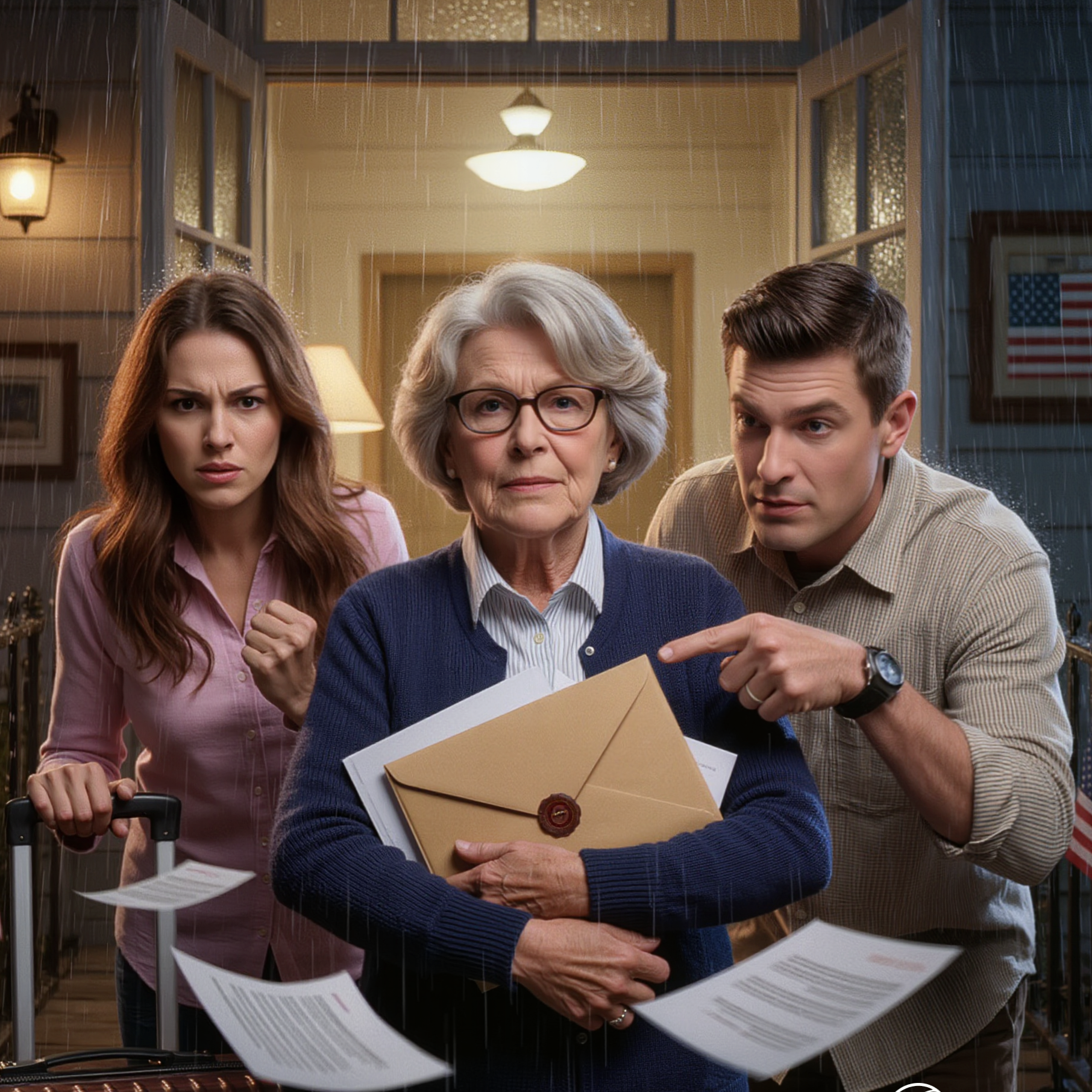
The next morning, after sleeping not at all though I closed my eyes repeatedly just to pretend, I printed the photo I took of them at the restaurant. At first I had taken it without thinking, more reflex than record, but in daylight it became proof—not of betrayal but of clarity. I placed the photo in a cream envelope, expensive stationery meant for thank-you notes and holiday wishes. Instead of a card, I took a single sheet of paper and wrote twelve words that cost me twenty years of motherhood to learn:
If I am no longer family,
then neither are my time, my help, or my silence.
I did not sign it with love. I did not sign it at all.
That afternoon, I donated the dessert dishes I always used when they visited. I folded table linens that had seen birthdays and Easter brunches and late-night tearful confessions. I polished the sapphire necklace once, slowly, the way my husband used to trace the stone with his thumb gently before clasping it for me in the hallway mirror. I whispered to him in the quiet room where his photo still sits framed beside a vase I never remember to fill with fresh flowers. “They don’t need me,” I said. Silence answered, but in that silence was a strange kind of release.
That night, I ate the leftover rosemary chicken alone, though alone didn’t feel tragic anymore. It felt honest. I packed away the tart for the church luncheon on Sunday; someone there would enjoy it without turning generosity into currency or hierarchy. I turned off the lights earlier than usual, not in defeat but in acceptance. There is a grief reserved not for death, but for the living who choose to forget the ones who raised them. It is quieter, but heavier.
In the weeks that followed, my son called three times. I let all three go to voicemail. His messages were half-hearted, apologies wrapped in excuses, explanations that needed context I no longer owed him. My daughter-in-law texted once, sterile and administrative: “We think it would be best to plan visits monthly instead of weekly. Just for scheduling.” I did not respond. I had already spoken in the only language she understood—boundaries clean enough to be surgical.
Family, it turns out, is not guaranteed by blood or birth or decades of sacrifice. It is confirmed by presence, protection, gratitude. And when those vanish, the title is only decorative.
That night in Manhattan, when laughter sparkled behind a pane of glass and I stood in the wind like an outsider at my own museum, I did not lose a son. I simply recognized that I had already been replaced, not by cruelty or accident, but by choice.
Some endings are loud. Some explode into arguments and slammed doors and broken plates. But some, like mine, are quiet, dignified, and absolute. They settle into the bones like winter, and with time, they stop hurting. They simply reshape.
I no longer cook elaborate meals waiting for texts that might cancel at the last minute. I no longer press dresses for evenings where I am only tolerated. I fill my calendar with people who remember my birthday without reminders, who sit across from me and look directly into my eyes, not over my shoulder toward better company. The sapphire necklace stays in its velvet box now, not because I lack occasions but because some jewels are not meant to be worn where they are not valued.
The world outside my apartment still glows with dinners and toasts and invitations I will not receive. But my living room is warm, my table set for one with quiet grace, and my heart, finally, no longer waits for the doorbell to ring.
I was not canceled.
I was liberated.