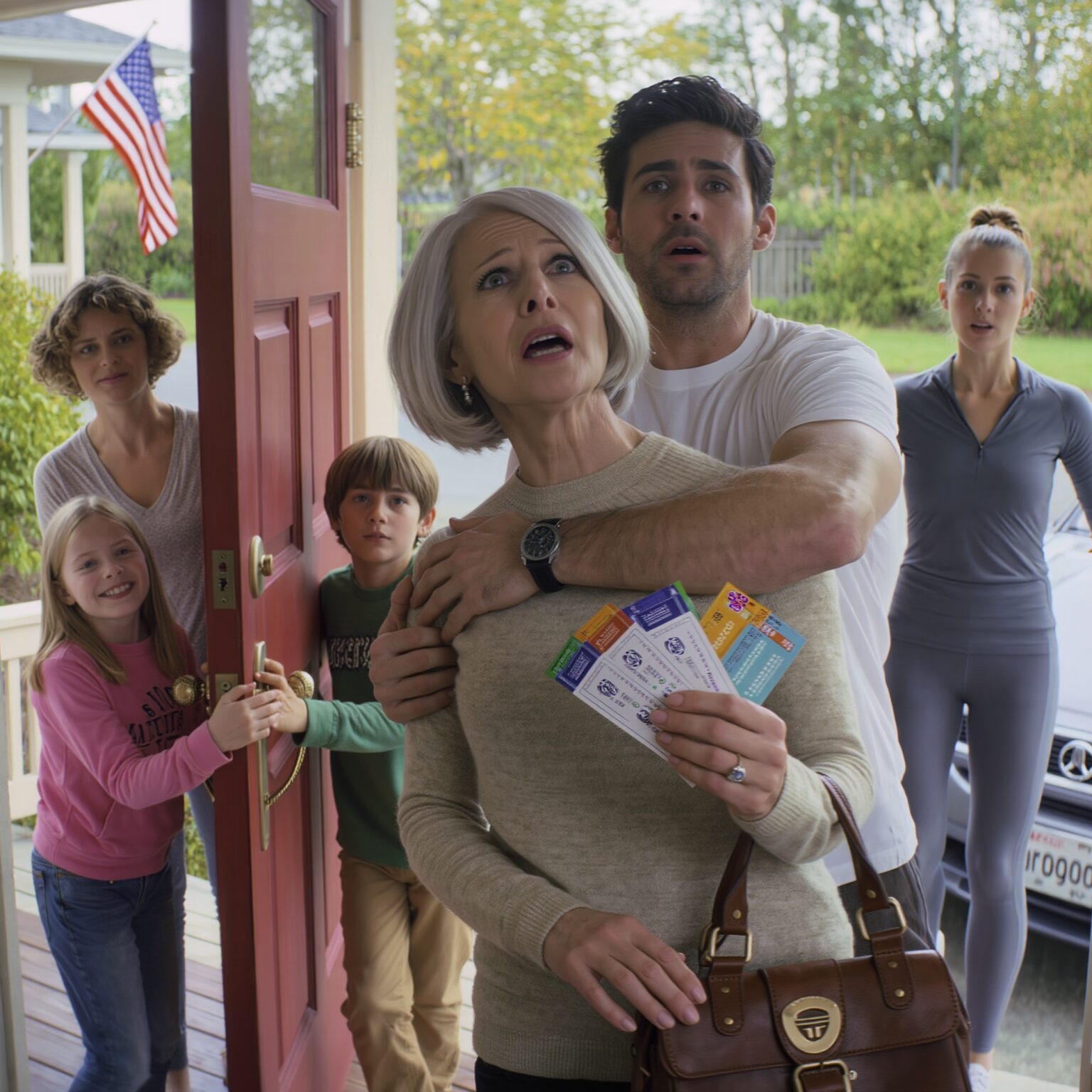
That Saturday morning started like most Saturdays do — the sun slipping through my Portland kitchen window in a way that felt gentle and ordinary, and me humming to myself while making a cup of coffee strong enough to burn the sleep from my bones. The morning light made the old hardwood floors gleam in pale gold, and I was leaning over the counter when I glanced at that crumpled lottery ticket I’d forgotten to throw out. I had bought it on a whim the day before — half joking with the clerk that “a little luck couldn’t hurt.” I unfolded it slowly, the edges still softened from being shoved in the pocket of last week’s jacket, and opened my laptop to the official lottery site out of pure curiosity more than expectation. Then my breath hitched — a tiny, subtle thing, at first, like the pause between two notes in a song — when the first number matched. Then the second. Then the third. And before I fully understood what was happening, all seven tiny numbers on that battered slip of paper exactly matched the ones blinking up at me on the screen. Eight point seven million dollars. Just like that — in a few quiet moments while the sun warmed the kitchen table and the coffee steamed beside me — my life had the potential to shift in ways I had never honestly allowed myself to imagine.
My first instinct was to call my son — always my first thought when something of importance happened — but then I remembered how he had once looked at me across that tense family dinner table years ago and said with thin-lipped certainty that I needed to be more realistic about life and money. I remembered how his wife had nodded with a polite, slightly condescending smile, as though my life was something quaint and distant, like a childhood memory. I remembered every time he had shrugged off my questions, every holiday where I felt overlooked, every remark disguised as advice that left me feeling small. I remembered all those things with startling clarity — not bitterness, but as data points in the story of who I had been to the people I loved most. And in that sudden, quiet flash of recognition, I realized something startling: I didn’t want my first call to be to the person who taught me to minimize myself. I wanted this moment — this possible rebirth of possibility — to honor the me who had shown up for decades without being seen.
So instead of dialing his number, I sat back in my chair and let the light spill over the tip of the ticket and the reflection of the screen dancing in the steam rising from my coffee. I didn’t leap. I didn’t panic. I simply breathed — once, deeply — as though the universe had quietly offered me a chance not to rewrite my past, but to reshape my future. I thought about what $8.7 million could mean not as a payday, but as a platform for dignity and intention. I thought about the years I had worked, the sacrifices I had made, the dreams tucked away like pressed flowers in the pages of old journals. I thought about my heart, which had grown quiet from years of soft endurance, and how it still beat with curiosity, hope, and that stubborn spark of self-worth I had never fully acknowledged out loud.
Instead of calling my son, I walked to the window, cradling that crumpled ticket in my hand like something delicate but unbreakably important. I watched the sunlight move across the yard, across the neighbor’s rose bushes, across the street where houses rose in gentle lines like chapters in a book. I realized then that this moment wasn’t about proving anyone right or wrong. It wasn’t about validation. It was about choice. I could choose to step into possibility on my own terms — not by reclaiming old wounds, but by affirming my own worth in a way that didn’t depend on anyone else’s approval.
I made another cup of coffee — this time not out of routine, but with intention — and sat down at the table with my laptop, the ticket, and a quiet heart that felt open rather than anxious. I didn’t draft texts to anyone. I didn’t make calls. I simply let the reality settle around me like sunlight warming skin after winter.
Then I began to think about giving — not in the conditional, transactional sense that had marked so many of my earlier relationships, but in the realm of true generosity. I thought of causes that had once stirred a fire in me but had been tucked away by the routines of life: a shelter for women seeking new beginnings, a scholarship fund for students from my old neighborhood, a community garden in a part of town that needed beauty and nourishment. I realized this windfall — sudden, astonishing, inexplicable — could be a vehicle not just for comfort, but for impact.
Eventually — hours later, with a calm clarity that felt like a gift in itself — I did call my son. Not to announce the win. Not to ask for his share. Not to test his loyalty or ask for validation. I just asked how he was doing — and listened. The conversation was short, polite, familiar. There was no dramatic reveal, no overt tension, no triumph or bitterness. Just connection — imperfect, ordinary, human.
Because I understood something deep then:
We show up for life not by proving worth to others,
but by living in a way that honors our own truth.
I saved the call announcing the winnings for another time — not because I lacked courage, but because I wanted respect for the moment, not dramatics. I wanted integrity to be the first impression of this new chapter, not ego or entitlement.
Later that day, I wrote morning pages in my journal — a practice I had almost forgotten — and on the first line I wrote:
Today I choose possibility without apology.
And I meant it.
Not because the money made me worthy,
but because I finally saw my own worth without needing anyone else’s affirmation.
That — more than $8.7 million ever could —
was the beginning of my actual second act.