I had spent the entire morning getting ready for my son’s birthday party, standing in front of the mirror longer than I wanted to admit, smoothing out small imperfections that felt larger than they were. Turning sixty had taught me many things, but one lesson still hadn’t fully settled in my bones — the realization that no matter how much love you pour into some people, they will always find a way to see you as an inconvenience rather than a blessing. My fiancé stood behind me as I adjusted my earrings, offering a soft smile and asking if I was sure I wanted to go. I told him yes, because this was my son, because birthdays still mattered to me, because hope, even when bruised, can be stubborn in the most inconvenient ways.
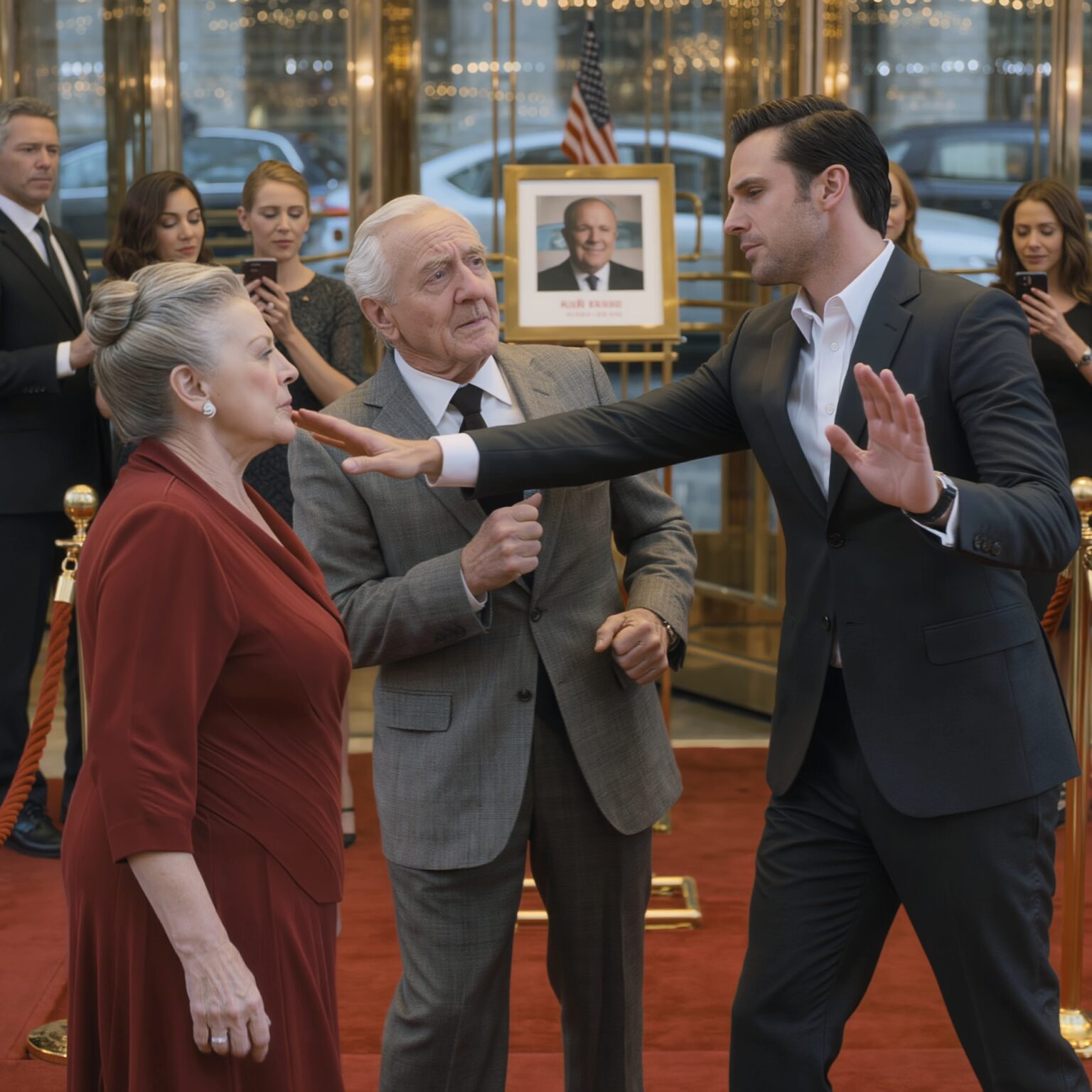
We arrived at the venue a little early, gifts in hand, laughter spilling out from inside the hall before we even reached the door. I remember thinking how familiar that sound once was — family laughter used to feel like home instead of a closed gate. As we approached the entrance, something caught my eye. A printed photo taped crookedly to the glass. My breath caught when I realized it was me. Next to it was another photo — my fiancé — both images pulled from social media without shame or hesitation. Above them, written in thick black marker, were words that made my hands tremble despite years of learning how to hold myself together: “THESE PATHETIC PEOPLE ARE STRICTLY FORBIDDEN TO ENTER.”
For a moment, the world narrowed to the sound of my own heartbeat. I didn’t cry. I didn’t gasp. I simply stood there, staring at the evidence of how far cruelty can go when it’s dressed up as loyalty, humor, or protection of someone else’s ego. Guests walked past us, some pretending not to notice, others pausing just long enough to look at the sign and then at me, curiosity flickering across their faces like a guilty reflex. Inside the hall, music continued to play, balloons floated against the ceiling, and my son was celebrating another year of his life without the woman who had given him his first breath.
My fiancé gently squeezed my hand and leaned in, whispering, “Are you okay?” I looked at him, really looked at him — this man who had stood by me when my marriage fell apart, who never once asked me to choose between dignity and love. And in that moment, something inside me shifted. I smiled. Not the tight, polite smile people wear to survive embarrassment, but a calm, knowing smile that surprised even me. I took a step back from the door, straightened my posture, and felt a strange sense of relief wash over me. The sign didn’t humiliate me — it exposed them.
I didn’t knock. I didn’t argue. I didn’t demand an explanation. Instead, I pulled out my phone and took a photo of the sign. Not for revenge, not for social media, but for clarity. Some things deserve to be remembered exactly as they are, without rewriting or excuses. Then I placed the gift we had brought gently on a nearby table outside the entrance — wrapped carefully, chosen with love, now repurposed as a quiet goodbye rather than a celebration.
As we walked away, memories surfaced uninvited. Late nights rocking my son to sleep. School lunches packed with care. Sacrifices made quietly, without expectation of applause. I realized that this wasn’t an isolated moment of cruelty — it was simply the loudest version of something that had been happening for years. The jokes at my expense. The dismissive comments. The way my opinions were tolerated but never respected. The way my happiness had become inconvenient once it no longer revolved entirely around him.
Later that evening, my phone began to buzz. Missed calls. Messages ranging from awkward apologies to defensive explanations to outright accusations that I was “making a scene” by leaving. One message from my son stood out. He didn’t apologize. He didn’t ask how I felt. He simply wrote, “You embarrassed us by walking away.”
That was when I finally understood. People who benefit from your silence will always resent your boundaries. I didn’t respond immediately. I sat with my fiancé on our balcony instead, watching the sun dip below the skyline, feeling a sense of peace that had nothing to do with being chosen and everything to do with choosing myself.
In the days that followed, the story spread through the family like wildfire. Some relatives reached out quietly, admitting they had seen the sign and felt uncomfortable but didn’t know what to say. Others stayed silent — silence often being the loudest form of agreement. I didn’t chase explanations. I didn’t ask for apologies. I simply stopped showing up where I was clearly not wanted.
Weeks later, something unexpected happened. A cousin posted photos from the party online, and the sign appeared in the background of one image. Comments followed. Questions were asked. And for the first time, the narrative wasn’t controlled by whispers or private justifications. People saw the cruelty plainly, without filters or excuses. I didn’t comment. I didn’t defend myself. I let the truth stand on its own.
My son eventually called. His voice was uncertain, stripped of the confidence that once came from knowing I would always forgive first. He said he hadn’t realized how bad it looked. He said his wife thought it would be “funny.” He said emotions were high. I listened quietly, then told him something I should have said years earlier: love does not require humiliation, and family does not mean permission to hurt without consequence.
Today, my life is smaller but lighter. Fewer phone calls. Fewer forced gatherings. But more honesty. More peace. My fiancé and I are planning a quiet wedding — no drama, no performances, no people who confuse control with love. Sometimes, late at night, I still think about that sign on the door. Not with pain, but with gratitude. Because in trying to keep me out, they finally showed me where I no longer belonged — and that clarity was the greatest gift I never asked for.
And the truth is this: we didn’t smile because we were weak. We smiled because we were free.