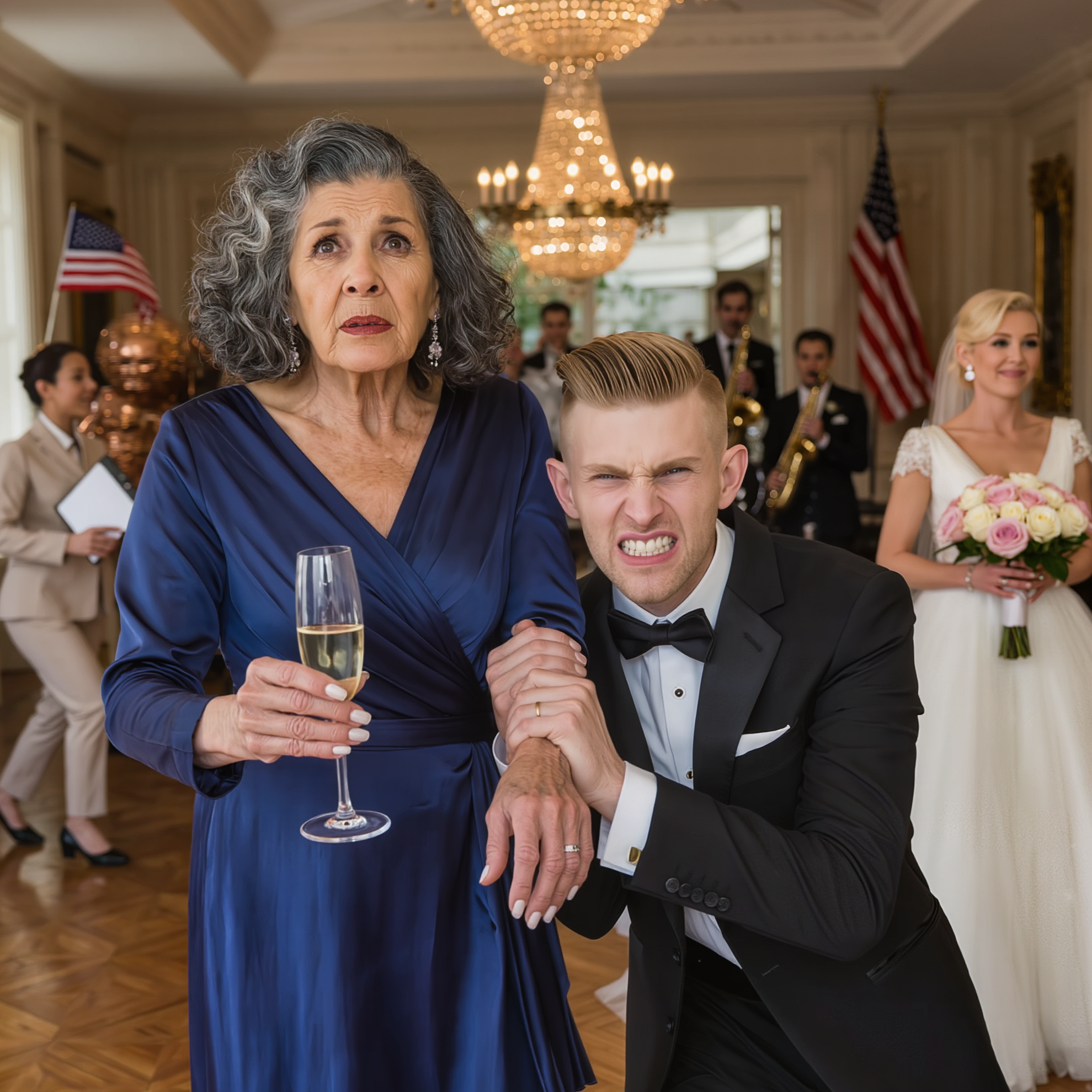
When my son got married, I carried a secret into that beautifully decorated hall — a secret I had deliberately never shared with anyone, not even my own children. Months before the wedding, after years of being widowed and quietly rebuilding my life, my late husband’s estate had settled — leaving me a 500-acre ranch in eastern Washington, complete with grazing pastures, a modest farmhouse, a spring-fed pond, and forests that seemed to whisper in the wind like they knew secrets they kept well. It was a place I loved quietly, a place that reminded me of steady sunsets and simple mornings rather than wealth or status. I had intended to tell my son and his bride eventually, when the time felt right — but not on their wedding day. A wedding day should be about new beginnings, joy, unity — not shifting dynamics of wealth and expectation. I tucked that truth away in the deepest part of my heart and walked down the aisle with a smile, not because I didn’t care about the ranch, but because I cared enough not to burden that moment with complications it didn’t need.
Thank God I made that decision.
Because just one week after the wedding, the true colors of my new daughter-in-law began to show in ways I never anticipated. We had gathered for a small post-wedding lunch, a casual affair meant to share leftovers and laughter, but the moment she walked in, her expression was guarded — not warm, not eager to greet family, but calculating like she was sizing up the room for advantage. My son greeted her with affection, but there was already a subtle tension between them that I hadn’t noticed before — small silent pauses, forced smiles exchanged in the kitchen, tiny glances of irritation disguised as routine conversation. I brushed it off at first — newly married couples adjust, I told myself — but then I noticed the sharpness in her voice, the way she interrupted others, the way she subtly commanded attention as though she deserved it.
That afternoon, as cousins nibbled on sandwiches and grandparents swapped stories about their youth, my daughter-in-law cornered my son in the kitchen. I could hear fragments of their conversation — words like investment, property, joint assets — and a sense of dread crept up my spine. It wasn’t anger. It was recognition — the kind that makes your heart thrum with unease before a moment changes everything.
Later, when we all gathered around the living room with cups of coffee, she made a comment so casual in tone it would have been easy to overlook if not for the deeper intent beneath it. “Do you think your mom will sell her place someday?” she asked my son — my husband’s son — with a curious tilt of her head, as though she was thinking aloud but actually fishing for information. My son, oblivious, replied absentmindedly, “Mom’s always loved that ranch. She’d never sell.” But it was too late — the seed had been planted. Her eyes didn’t reflect warmth. They reflected calculation.
Still, I didn’t speak up. I smiled, exchanged pleasantries, deflected the conversation back to the wedding registry and upcoming holidays. I had chosen silence already once, and I honored that choice — but something in me began to watch, quietly and carefully, like a shadow studying movement in the corner of a room.
A few days later, while my son was at work, she invited herself over “to help with organizing photos” — an offer that sounded generous on the surface but carried an undertone of inspection rather than assistance. She breezed through the house with a chipped mug in one hand and a clipboard in the other, asking pointed questions about how often I visited the ranch, if I planned to rent it out, or if I had anyone who might be interested in purchasing it. I handed her cups of tea politely, not revealing a flicker of surprise. I didn’t contradict her questions with laughter or offense — but I stored the moment like a bookmark in a book I hadn’t expected to reopen.
When my son called later that evening and asked me to keep things peaceful, I didn’t argue. I told him I wasn’t bothered — that family dinners were best served with comfort and patience — but in my chest a faint caution lit up like a distant alarm signal. I began to see how fast greed can dress itself in polite curiosity, how quickly admiration can turn into entitlement, and how a seemingly innocuous question can become the first step toward a vested interest.
A few weeks after that, I received an unexpected invitation to dinner — not from my son, but from my daughter-in-law. I hesitated, not because I didn’t want to engage, but because I knew that sometimes questions about property are meant to harvest information rather than care. She praised the wedding, complimented the décor, asked about my hobbies, and smiled when I spoke of the ranch — long green hills, wildflowers in spring, the way the morning sun touched the meadow as though it meant to paint joy into every blade of grass. She listened politely, but her eyes shimmered with something more — curiosity, delight, calculation all mingled in one expression that didn’t quite match her words.
I didn’t reveal anything. I didn’t correct her. I simply spoke of the ranch as though it was a painting I loved, not a commodity I owned. And when dessert was served — a simple tart with fresh berries — I excused myself politely.
Later that night, in the quiet sanctuary of my own home, I opened a drawer and pulled out the original letter from my late husband — the one outlining his wishes, his love, his thoughtful provision that was not tied to obligation but to legacy. I held it for a moment and whispered a quiet thanks for the decision I had made at the wedding — to keep its contents sacred until the right time. My husband had not left me the ranch because I needed protection from life. He left it to me because he knew my heart — steady, grounded, not swayed by opinions or pressures. He trusted me with something enduring, not something transactional.
In the weeks that followed, I watched my son and daughter-in-law navigate their own illusions of ambition. She continued to ask seemingly casual questions, always circling closer to the idea of what the ranch might be worth rather than what it meant. My son, caught in a swirl of young marriage and new responsibilities, often avoided the topic entirely — perhaps sensing his wife’s keen interest but unsure how to balance curiosity with respect.
I didn’t confront her directly. I didn’t create a scene. I simply lived my life with the calm certainty of someone whose foundation was built on far more than assets — built on memory, experience, and authenticity. I visited the ranch often, walking its rolling fields alone, listening to the wind through the trees that seemed older than time, and letting the quiet beauty remind me that some inheritances are worth more than money.
Eventually, the truth did rise — not in an argument, not in a confrontation, but in a moment when my daughter-in-law assumed I would react with pride or defensiveness to a question about selling. Instead, I smiled gently, told her, “That place means more to me than any price,” and turned the topic to something more human — the joy of shared meals, the pleasure of simple mornings, the fact that life is richest where memory grows deepest.
And in that simple smile — calm, unshakeable, unswayed by hints of greed — everything became clear: true legacy isn’t inherited because it’s expensive. It’s inherited because it’s cherished.
And not even silence — not even strategic quiet — could ever overshadow that truth.